There is a moment that happens to almost every first-time visitor to Seville, and it tends to arrive without warning — stepping through the gates of the Real Alcázar as the Moorish palace complex opens before you in a sequence of tilework courtyards so beautiful you simply stop walking. Or at midnight in Triana, when a guitarist begins playing cante jondo, the song from the depths. This guide covers everything you need: the best time to visit, how to get there and around, the top attractions, the food and drink culture, the neighborhoods, and the practical tips that will help you fall irreversibly in love with one of Europe's greatest cities.
"Quien no ha visto Sevilla, no ha visto maravilla" — whoever has not seen Seville has not seen a wonder.
Why Visit Seville
Seville is home to the third-largest cathedral in the world, a royal palace complex that is both a UNESCO World Heritage Site and still an official royal residence, and a medieval Jewish quarter whose street plan has barely changed in 600 years. But the city's real appeal is atmosphere, not monuments — it is the home of flamenco as a living artistic tradition, the city of Semana Santa's extraordinary religious processions, and the Feria de Abril's week-long celebration of sherry, tapas, and sevillanas dancing.
And it is a city of extraordinary daily pleasures — the best tapas culture in Spain, a world-class sherry tradition from nearby Jerez, and a quality of southern light that makes simply walking through the city feel worth savoring.
Best Time to Visit Seville
Spring (March–May): unambiguously the best season — 20–28°C, orange blossom scenting the streets, and the two greatest events of the Sevillano year: Semana Santa (Holy Week), when 58 brotherhoods carry ornate floats through the streets over seven nights, and the Feria de Abril two weeks after Easter. Book accommodation six to twelve months ahead for either.
Autumn (September–November): the excellent alternative — the fierce summer heat breaks by mid-September, returning to a comfortable 20–28°C with thinner crowds and lower prices.
Winter (December–February): mild by European standards (12–18°C), quiet and authentically local, with excellent museum access and the lowest prices of the year.
Summer (June–August): avoid if possible — temperatures of 40–45°C make outdoor sightseeing punishing; the Sevillano schedule shifts to very early mornings and late nights.
How to Get to Seville and Around
Seville Airport (SVQ) sits 10km northeast, served by Ryanair, easyJet, Vueling, and Iberia. The EA Especial bus connects to the center in ~35 minutes for €4; taxis cost ~€25–€30. By AVE high-speed train: the finest way to arrive — Madrid to Seville in 2.5 hours, Córdoba in 45 minutes, Málaga in 2 hours.
Seville's historic center is compact and best explored on foot — the Cathedral, Real Alcázar, Barrio de Santa Cruz, and Triana are all within comfortable walking distance. Cycling: one of Spain's finest urban networks, over 180km of dedicated bike lanes, with the SEVICI bike-share scheme. Tram (Metrocentro): runs through the historic center along the Avenida de la Constitución.
Top Attractions in Seville
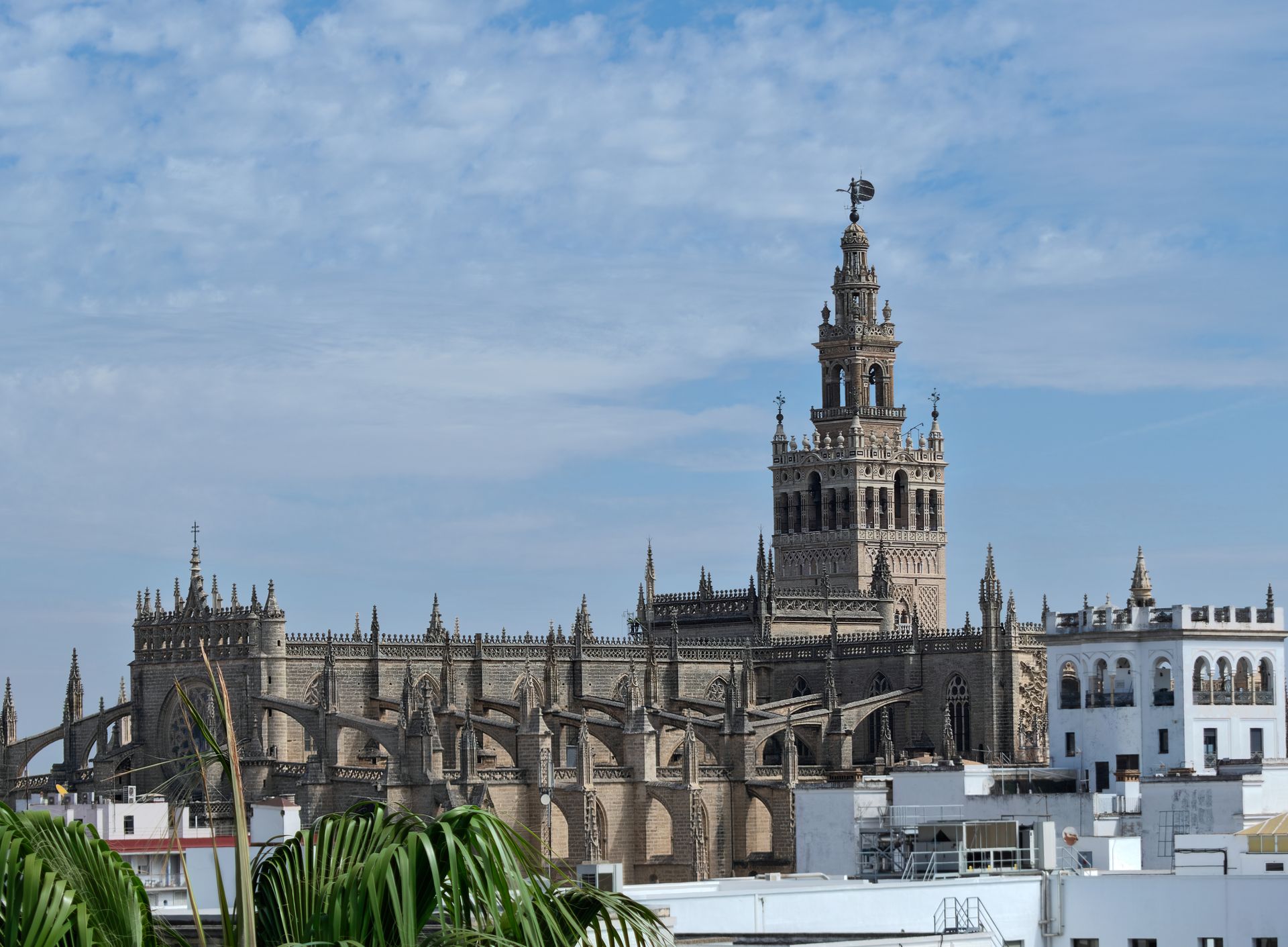
1. Seville Cathedral and La Giralda: the largest Gothic cathedral in the world, built 1401–1506 on the site of the Almohad mosque, whose minaret — the Giralda — remains one of the most recognizable landmarks in Spain. The Capilla Mayor's retablo is the largest altarpiece in the world; Columbus's tomb sits in the south transept.
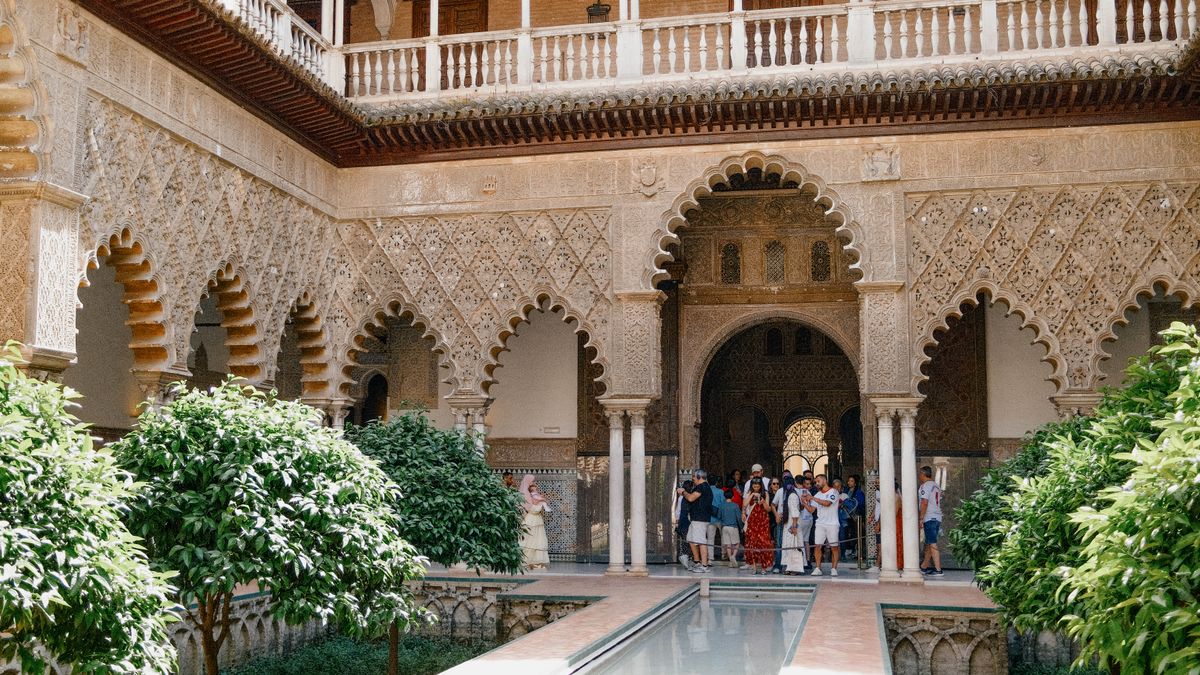
2. Real Alcázar: the oldest royal palace still in active use in Europe, and one of the finest expressions of Mudéjar architecture anywhere. The Patio de las Doncellas and the Salón de los Embajadores' gilded dome are extraordinary, and the seven-hectare gardens are especially beautiful in spring. Book weeks ahead — this is the single most important advance booking in any Seville trip.
3. Barrio de Santa Cruz: the former judería, a labyrinthine neighborhood of whitewashed alleys and flower-filled courtyards, best explored in the early morning before tour groups arrive.
4. Casa de Pilatos: the private palace of the Medinaceli family, a masterwork of Renaissance and Mudéjar architecture around a patio combining Italian marble columns with Mudéjar tilework, plus a notable Roman sculpture collection.
5. Metropol Parasol (Las Setas): a vast wooden parasol canopy over the historic Plaza de la Encarnación, its basement housing the Antiquarium's Roman ruins and its rooftop offering a fine panoramic view.
6. Plaza de España: built for the 1929 Ibero-American Exposition, a semicircular ensemble with a canal crossed by Venetian-style bridges and 48 tiled alcoves representing Spain's provinces.
7. Triana: across the river, the birthplace of flamenco and Seville's ceramics tradition — Calle Betis is one of the finest riverside streets in Spain for a sundowner.
8. Flamenco: a living artistic tradition rather than a museum piece. Casa de la Memoria, El Arenal, and the Museo del Baile Flamenco offer genuinely high-quality tablao performances; neighborhood peñas flamencas offer something more authentic still.
What to Eat and Drink in Seville
Seville has the finest tapas culture in Spain, and many bars still offer a free tapa with every drink. Pescaíto Frito: a mixed plate of small fish and seafood, lightly battered in chickpea flour and fried to crisp perfection. Salmorejo: a thick, cold purée of tomatoes, bread, and garlic, topped with egg and jamón. Espinacas con Garbanzos: spinach and chickpeas in cumin-spiced tomato sauce, with clear Moorish antecedents. Caracoles: tiny snails in a spiced broth, eaten with a toothpick and a cold Cruzcampo beer. Sherry: the fortified wine of the Jerez-Sherry-Sanlúcar triangle — fino, the driest style, is the ideal partner for jamón and pescaíto frito; manzanilla is the coastal version; amontillado and oloroso are richer and more complex.
In Seville, lunch is at 2–4 PM and dinner at 9–11 PM — adapting to this rhythm rather than fighting it produces a dramatically better food experience.

Seville's Best Neighborhoods
El Arenal: between the cathedral and the river, centered on the Maestranza bullring, outstanding for evening tapas bars. Barrio de Santa Cruz: the ancient Jewish quarter, the most atmospheric and most visited neighborhood. La Macarena: the working-class neighborhood north of the center, most authentically local, excellent for tapas without tourist premiums. Alameda de Hércules: the bohemian, tree-lined promenade with independent bars and the best late-night scene. Triana: across the river, the soul of Seville.
Seville Travel Tips for First Timers
The single most important piece of practical advice is booking the Alcázar early — everything else follows from adapting to the city's rhythm and its serious heat.
Trail Notes
- Book the Real Alcázar weeks in advance at alcazarsevilla.org — it sells out on popular dates.
- Embrace the Sevillano schedule: lunch at 2–4 PM, dinner at 9–11 PM.
- The heat is serious — carry water, wear a hat, and retreat indoors during the 2–5 PM peak.
- Walk the Barrio de Santa Cruz before 9 AM, before the tour groups arrive.
- Seville is a city for walking and cycling, not taxis — rent a SEVICI bike for the river paths.
- Learn a few words of Spanish — Seville is less internationally oriented than Madrid or Barcelona.
- The best impromptu flamenco tends to happen after midnight in neighborhood peñas.
- Not all bars offer free tapas — it's more common in traditional neighborhood bars than tourist-facing ones.
- Day trips to Córdoba (45 min by AVE) and Jerez de la Frontera (1 hr) are outstanding.
Suggested 3-Day Seville Itinerary
Day One: the Barrio de Santa Cruz at dawn, the Real Alcázar at opening, Seville Cathedral and the Giralda tower climb, Casa de Pilatos, an evening of fino sherry and jamón.
Day Two: cycling along the Guadalquivir to Plaza de España, Triana's market and ceramics workshops, the Metropol Parasol, a tablao flamenco performance.
Day Three: a day trip to Córdoba for the Mezquita-Catedral, returning for a tapas bar crawl in La Macarena and a late drink on the Alameda de Hércules.
Seville Budget Guide
Seville is one of the best-value major cities in Western Europe. A tostada breakfast costs €2–€3.50; a menú del día set lunch €10–€15; a tapas bar evening for two with sherry €15–€25 per person. The Cathedral and Giralda cost €12; the Real Alcázar €14.50; a tablao flamenco performance €20–€40.
A comfortable daily budget of €80–€110 per person covers mid-range accommodation, excellent tapas meals, two or three attractions, and transport.
Final Thoughts: Seville Will Get Into Your Blood
Few cities in Europe can match the combination of monumental beauty, living artistic tradition, extraordinary food and drink culture, and the specific quality of daily life that Seville offers with such generosity. The flamenco will find you eventually, if you let it. The sherry will make sense. The heat will become part of the experience rather than an obstacle to it.