Stepping out of Marrakech's train station into a wall of heat, noise, and color — a snake charmer's cobra swaying nearby, the call to prayer echoing across the medina's rooftops — makes clear that Morocco is unlike anywhere else in the world. A country where Africa meets Arabia, where ancient traditions collide with modern aspirations, and where every sense is constantly engaged. Morocco rewards both careful planning and surrendering to the adventure.
That sensory overload — simultaneously overwhelming and intoxicating — defines Morocco.
Best Time to Visit Morocco
Spring (March–May) offers Morocco's best conditions — warm but not scorching (18–26°C), snow still capping the Atlas peaks, and comfortable desert temperatures. Fall (September–November) rivals spring, with late September through October arguably the single best window — perfect temperatures, harvest markets, and fewer tourists than spring. Summer (June–August) brings scorching city and desert heat (35–45°C) though coasts and mountains remain pleasant. Winter (December–February) is the best budget season — cold desert nights but sunny days, drastically fewer tourists, and the lowest prices.
Marrakech and Fez
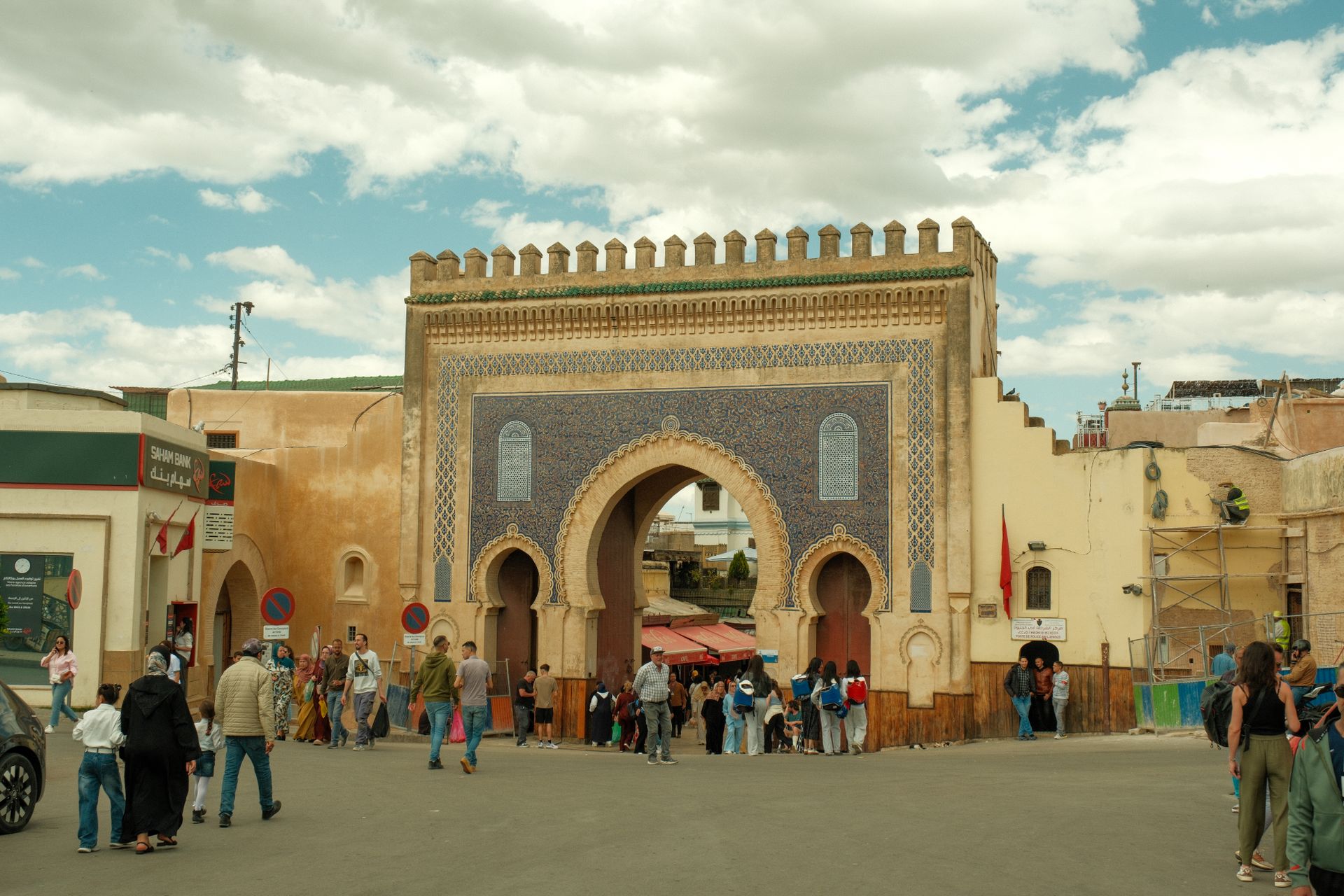
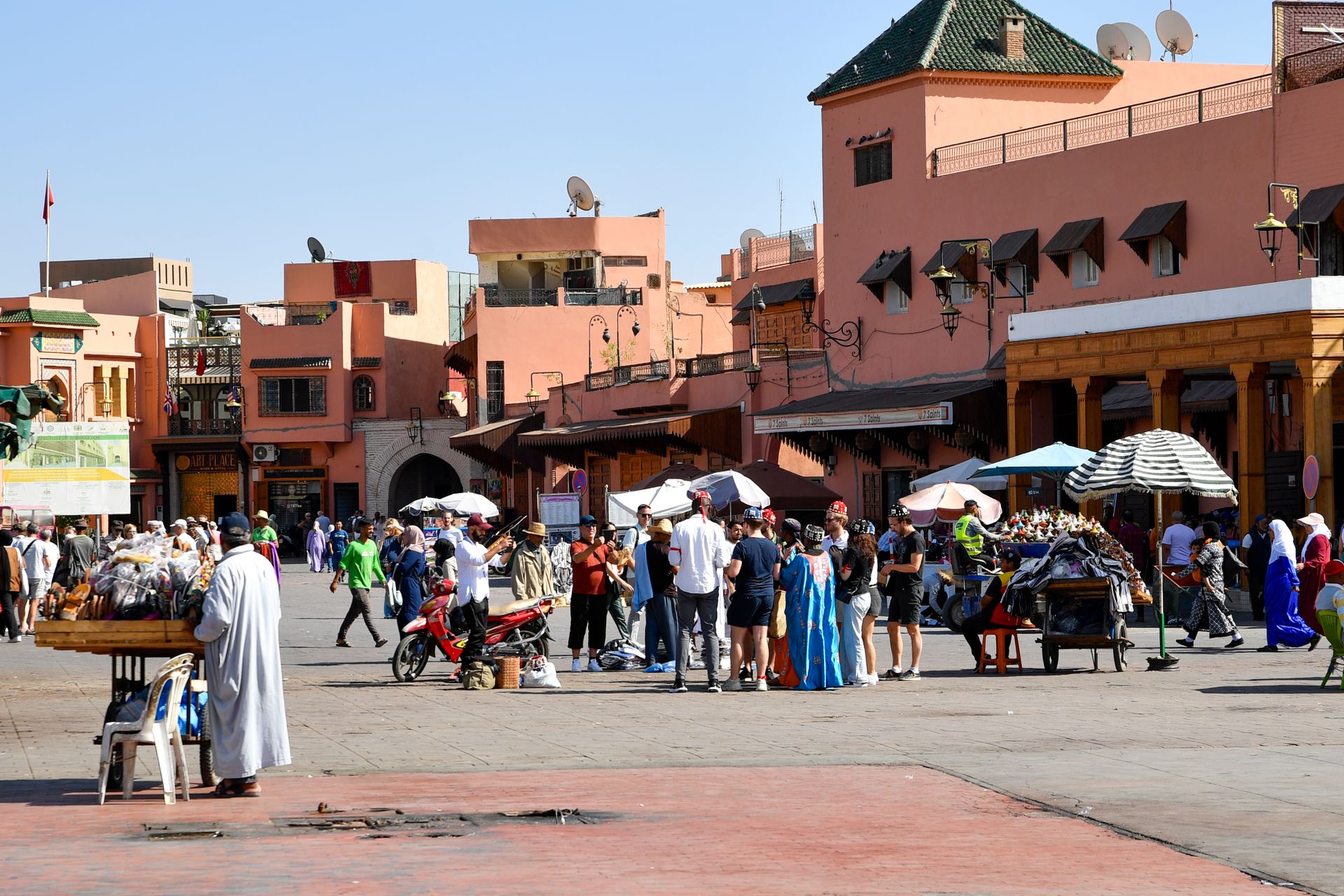
Marrakech (2–4 days) epitomizes Morocco for most first-time visitors — Jemaa el-Fnaa square transforms from juice vendors and snake charmers by day into food stalls and street performers by night. The Bahia Palace, the Saadian Tombs, and the Majorelle Garden provide peaceful counterpoints to the souks' intensity. Fez (2–3 days) preserves medieval Morocco more authentically — Fes el-Bali, the world's largest car-free urban zone, is a labyrinth of 9,000+ alleys where the Chouara Tannery's dyeing pits remain one of the most iconic sights in Moroccan travel. Hire an official guide for your first day — the medina is genuinely impossible to navigate independently at first.
Chefchaouen, the Sahara, and the Atlas Mountains
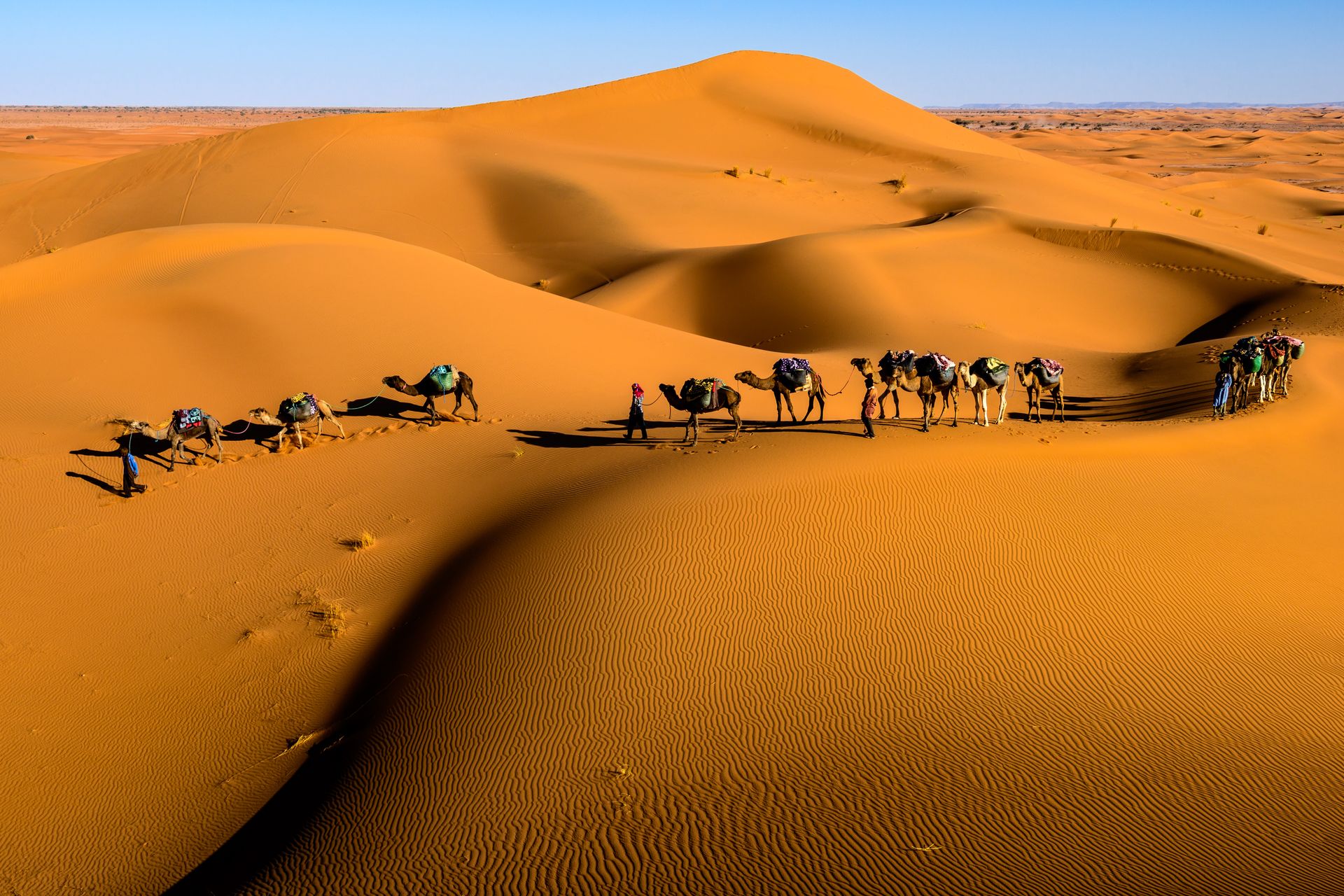
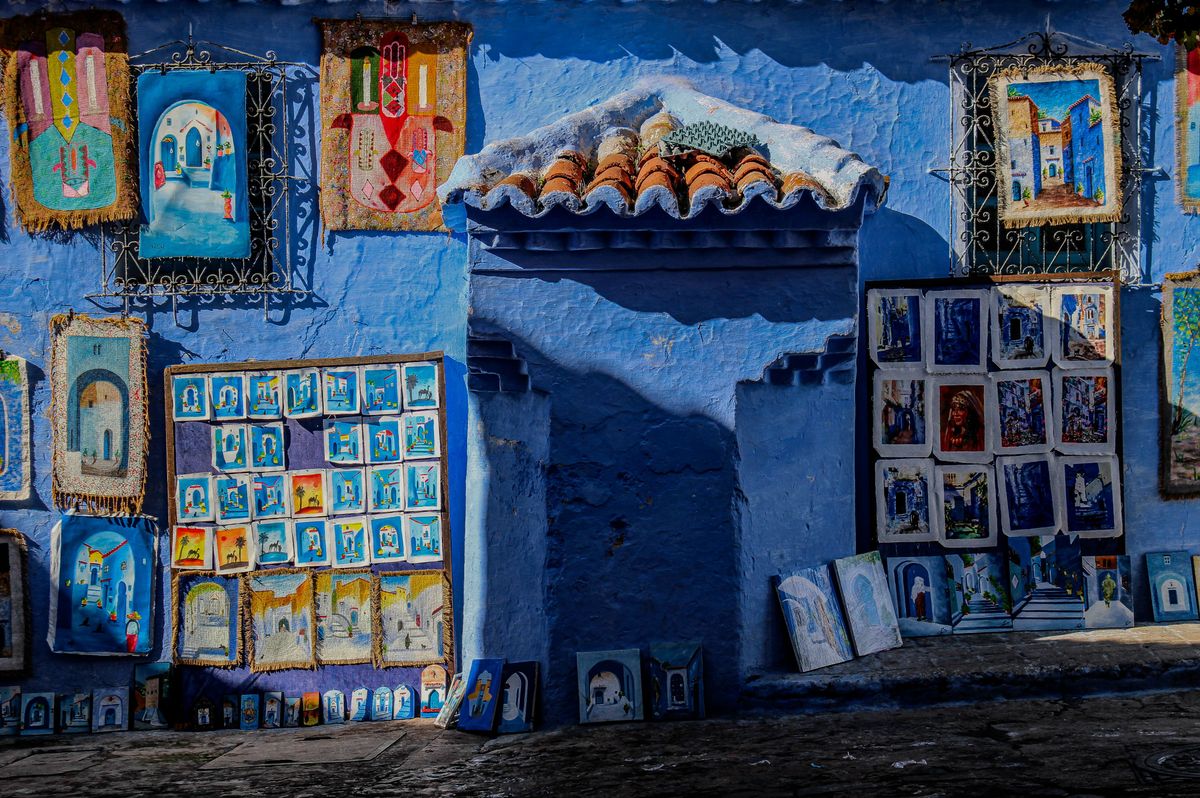
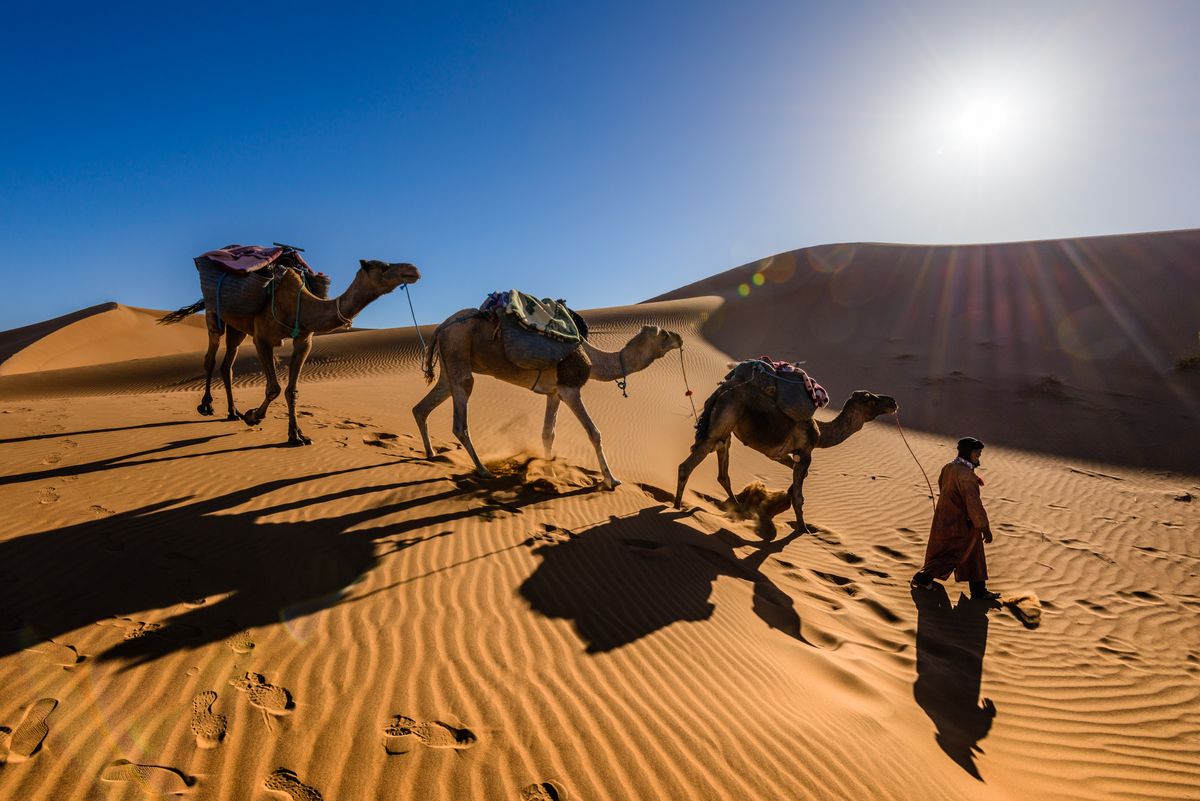
Chefchaouen, the Blue Pearl, offers a welcome break from the larger cities' aggressive selling — endlessly photogenic blue-painted streets, a hike to the Spanish Mosque for sunset views, and a relaxed mountain pace. The Sahara Desert is essential — Merzouga's Erg Chebbi dunes are the most accessible, with camel treks to overnight Berber camps and spectacular stargazing; M'Hamid offers a more remote, authentic alternative. The Atlas Mountains hold Imlil, the base for Mount Toubkal treks (North Africa's highest peak), and Ait Benhaddou, the UNESCO kasbah familiar from countless films.
Essaouira, Casablanca, Rabat, and Tangier
Essaouira provides the perfect antidote to inland intensity — a relaxed walled medina, a working fishing harbor's blue boats, and fresh seafood grilled portside; it works as a Marrakech day trip but deserves an overnight stay for its sunset-to-sunrise transformation. Casablanca's Hassan II Mosque, one of the few in Morocco open to non-Muslim visitors, is the primary reason to stop in this working economic capital. Rabat, the capital, offers a calmer, more orderly feel — the Kasbah of the Udayas' blue-and-white streets over the ocean, the Hassan Tower, and the Chellah ruins. Tangier, the northern port gateway, carries a distinct character shaped by European proximity and Beat Generation history — the Kasbah, Hercules Caves, and Cap Spartel, with day-trip access to Chefchaouen or a ferry to Spain.
Moroccan Food and Culture
Tagine, the slow-cooked stew named for its conical clay pot, and couscous, traditionally Friday's lunch, are Morocco's culinary backbone. Pastilla, a sweet-savory pigeon or chicken pie dusted with cinnamon, is a genuine revelation. Mint tea, poured from height to create a froth, is central to Moroccan hospitality — refusing it can cause offense, though one polite refusal is understood. Bargaining is expected in souks (start at 40–50% of asking price) but not in fixed-price shops or restaurants. Dress modestly — shoulders and knees covered shows respect in a relatively liberal but still Muslim country.
Morocco Travel Tips for First Timers
Morocco challenges first-time visitors initially — push through the first few days and the country reveals its magic.
Trail Notes
- Accept getting lost in the medinas — it's inevitable and leads to unexpected discoveries.
- Agree on prices before any transaction — souks, taxis, and guides alike.
- Always ask permission before photographing people.
- Watch for the classic "closed for prayer/holiday" scam steering you toward a commission-earning alternative.
- Carry small denomination dirhams — large notes are hard to change in souks.
- Drink only bottled water.
- Riads, not hotels, are the accommodation of choice — courtyard mansions inside the medinas with rooftop breakfasts.
Getting Around Morocco
Trains connect the major cities efficiently and comfortably — Marrakech to Casablanca (3 hours), Casablanca to Rabat (1 hour) or Tangier (5 hours) or Fez (4 hours). CTM buses cover routes trains don't reach. Grand taxis (shared Mercedes, six passengers) connect nearby towns cheaply; petit taxis handle city trips and should run on the meter or an agreed fixed price. Renting a car brings freedom for the Atlas and desert regions but also aggressive local driving and rough remote roads — hiring a driver for specific routes is often the better trade-off. Within medinas, walking is the only option, and getting lost is simply part of the experience.
Common Scams to Watch For
Beyond the fake-guide and "closed for the holiday" tricks already noted: at the Fez tannery, unofficial "guides" offer to lead you to a viewpoint and then apply heavy sales pressure for leather goods — visit independently or with an official guide instead. Carpet shops can involve extended tea and conversation before serious pressure to buy — only enter if genuinely interested, and don't feel obligated by the hospitality. Watch for goods priced in euros or dollars rather than dirhams, and always double-check restaurant bills for incorrect totals or added items.
Sample Itineraries
Classic Morocco (10–12 days): Marrakech, Essaouira, Fez, Chefchaouen, returning via Rabat or Casablanca — hits the major highlights without exhaustion, all connected by train or bus. Morocco Plus Desert (12–14 days): Days 1–3 Marrakech — essential exploration of the medina and gardens. Days 4–6: Desert trip — through the Atlas, Ait Benhaddou, the Dades Valley, to Merzouga for a camel trek and desert camping. Days 7–8: Fez — ancient city immersion. Days 9–10: Chefchaouen — mountain tranquility. Days 11–12: Essaouira — beach relaxation before returning to Marrakech for departure. Northern Morocco Focus (7–10 days): Tangier, Chefchaouen, Fez, then Casablanca/Rabat — less traveling, deeper regional immersion. Adventure Morocco (14–16 days): Marrakech, a multi-day Toubkal summit trek, the Sahara, the Dades and Todra Gorges, and Atlas Berber villages, for travelers prioritizing hiking and desert time.
Morocco on a Budget
Budget travelers spend $25–40 per day; mid-range comfort runs $60–100; comfortable travel with private transport and guides runs $120–200+. Riads offer extraordinary value — a moderate splurge on accommodation here produces a genuinely transformative experience in beautiful surroundings. A handful of essential phrases go a long way: "salam aleikum" (hello), "shukran" (thank you), and especially "la shukran" (no, thank you) for politely declining unwanted offers.
Making Your Morocco Journey Unforgettable
Balance guided and independent exploration — hire guides for initial orientation and historical context, but also wander independently to build your own relationship with each place. Connect with locals beyond transactional relationships, embrace Morocco's contradictions — ancient and modern, conservative and surprisingly liberal — and let the country's chaos and beauty work their magic on you.