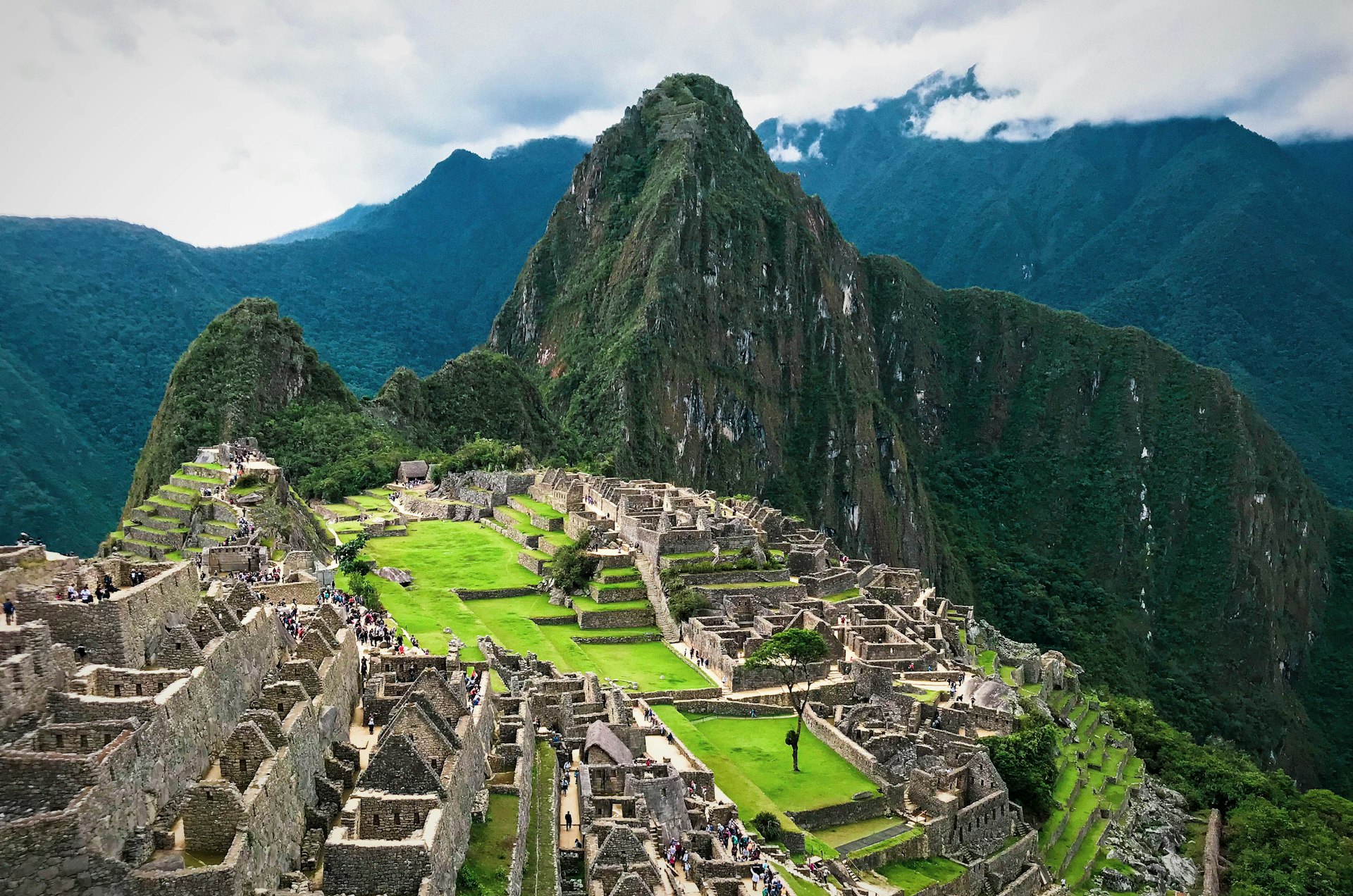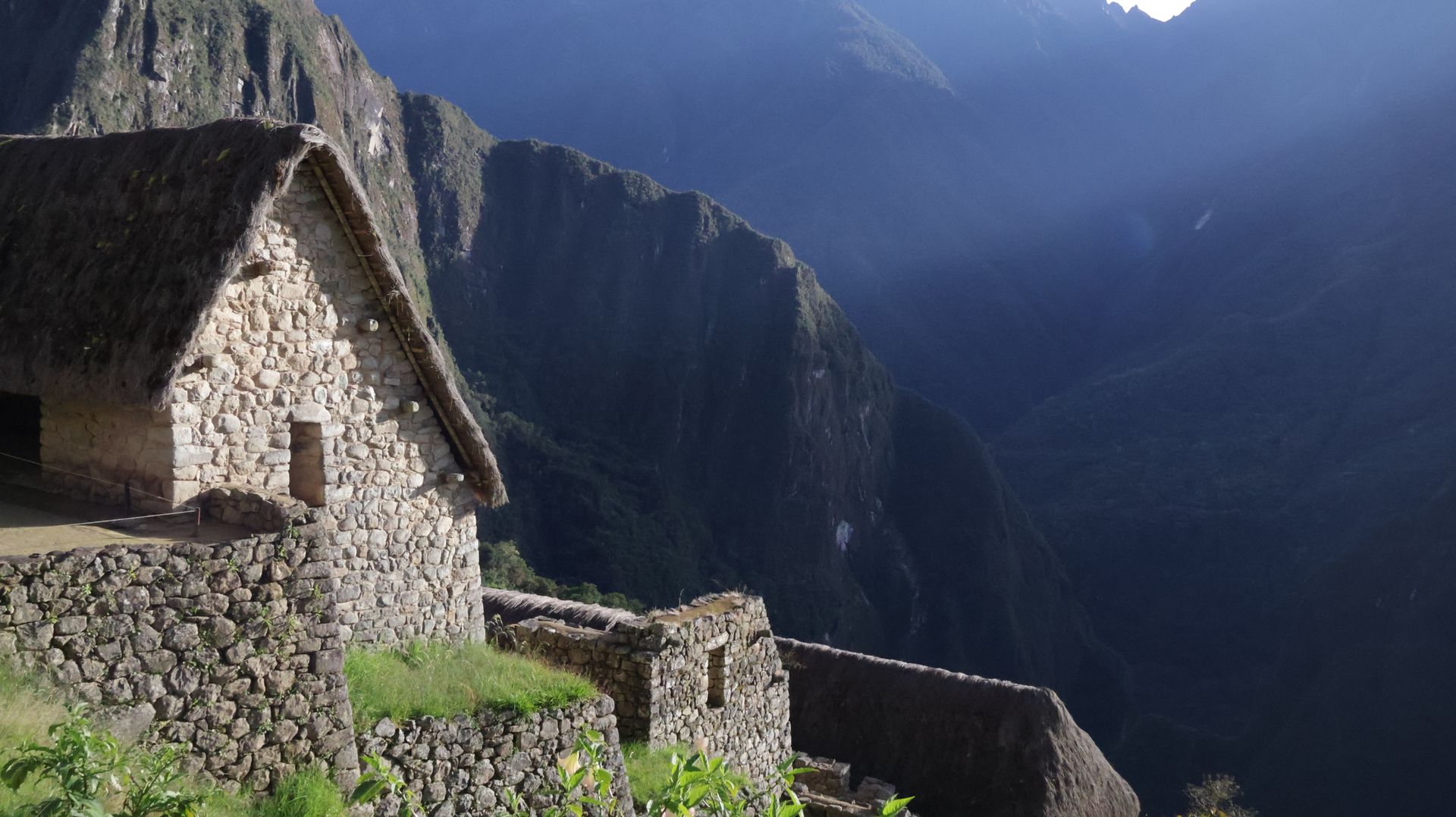
Machu Picchu reveals itself in stages: the physical earning of the Inca Trail, or the Sacred Valley's cinematic reveal from the train window, then the Sun Gate or main entrance, and the city itself — a perfectly engineered civilization's crown achievement perched on a narrow ridge at 2,430 meters, morning mist moving through the ruins like the empire's ghost returning to inspect its finest work. But Peru is not Machu Picchu plus everything else — it is the Amazon's biodiversity rivaling the Congo Basin, the Colca Canyon deeper than the Grand Canyon, Lake Titicaca's floating reed islands, and a Lima food scene now the most celebrated in South America.
The Treasury-equivalent moment: Machu Picchu's morning mist moving through the ruins, visible only in the first two hours after dawn.
Lima: South America's Culinary Capital
Lima has transformed from a Cusco transit city into the continent's most celebrated food destination, built on Peru's ingredient diversity (3,000+ native potato varieties, coastal seafood, Amazonian fruits), Nikkei (Japanese-Peruvian) fusion, and Chinese-Peruvian chifa tradition. Central and Maido, both regularly ranked among the World's 50 Best Restaurants, require booking 4–8 weeks ahead. Miraflores holds the Larco Museum's extraordinary pre-Columbian gold collection and the Huaca Pucllana pyramid mid-city; Barranco's 19th-century pastel architecture and evening bar strip capture Lima's creative renaissance best.
Cusco: The Navel of the World
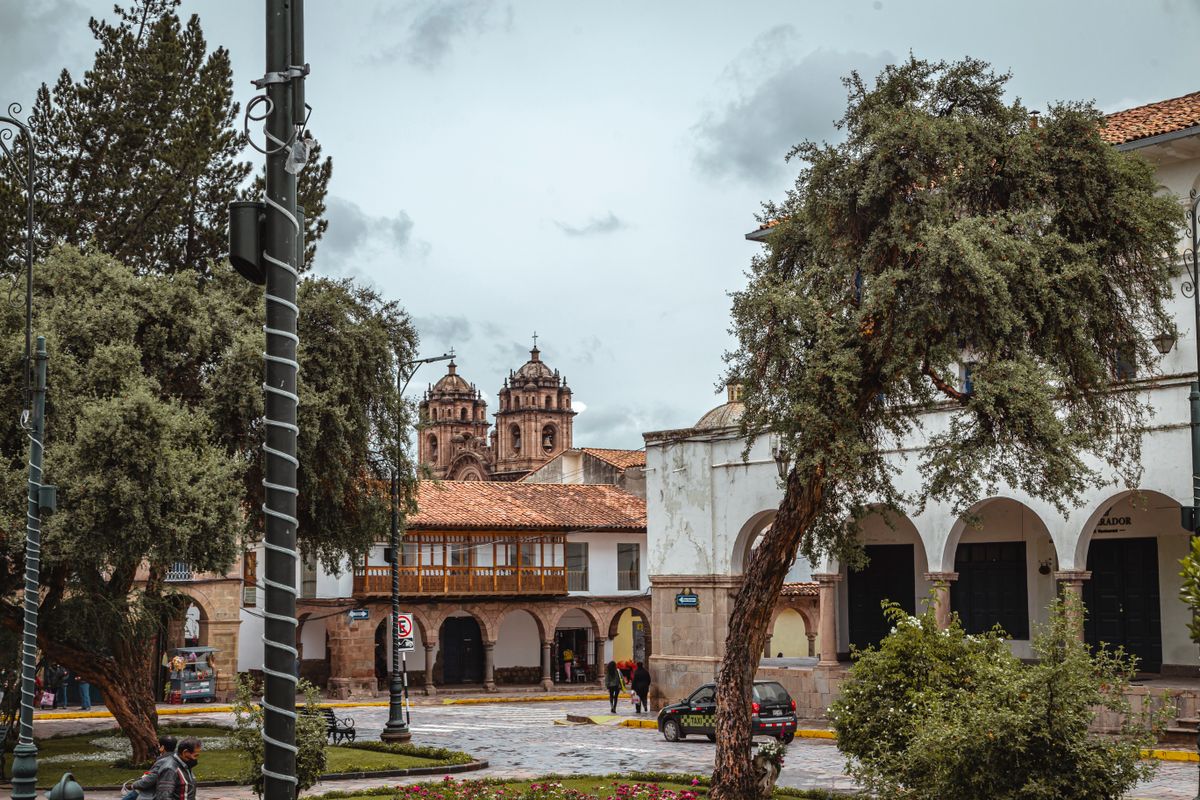
Cusco was the Tawantinsuyu's capital — the largest pre-Columbian empire, with 40,000km of roads and perfectly fitted polygonal stonework whose joints reject even a knife blade. The Qorikancha (Temple of the Sun) shows the specific collision of civilizations: its curved, perfectly fitted Inca wall is visible through the Spanish colonial cloister built directly atop it. San Blas neighborhood, with its artisan workshops and red-tile roof views, is the essential Cusco walk. Sacsayhuamán, above the city, has stones weighing up to 125 tonnes fitted without metal tools or wheels — the single most physically awe-inspiring Inca construction accessible on foot from the center.
The Sacred Valley
The Urubamba Valley holds Peru's richest concentration of Inca sites at lower altitude than Cusco, aiding acclimatization. Pisac has the largest surviving Inca terrace system and a celebrated Sunday market. Ollantaytambo is the only Inca city continuously inhabited since Inca times, its urban grid still the town's address system, its unfinished Temple of the Sun the most ambitious stone-working project underway at the Spanish conquest. Moray's concentric circular terraces functioned as an Inca agricultural research station, exploiting a 15°C temperature gradient; the nearby Maras salt pans, ~3,000 pools fed by a single spring, are the valley's most visually extraordinary non-Inca site.
Machu Picchu: Complete Planning Guide
Entry is capped at 4,500 visitors/day across timed morning and afternoon slots and four designated circuits — Circuit 2 is the most comprehensive for most visitors. Book directly at machupicchu.gob.pe as early as possible: peak season (June–August) permits sell out 2–3 months ahead. Huayna Picchu (the iconic peak behind the citadel, 400 permits/day) and Machu Picchu Mountain are separate add-on permits booked 3–6 months and 4–6 weeks ahead respectively.
Getting there: the 4-day Inca Trail (500 people/day including guides, book at the February opening) provides the dawn Sun Gate arrival; the train (PeruRail/Inca Rail Vistadome, 3.5 hrs from Cusco or 1.5 from Ollantaytambo) is the common approach; the Hidroeléctrica route (bus plus a 3-hour walk along the tracks) saves USD 80–120. Stay overnight in Aguas Calientes and take the first 6am entry slot to catch the site's morning mist before the day-trip crowds arrive around 9–10am.
Lake Titicaca, the Amazon, and Colca Canyon
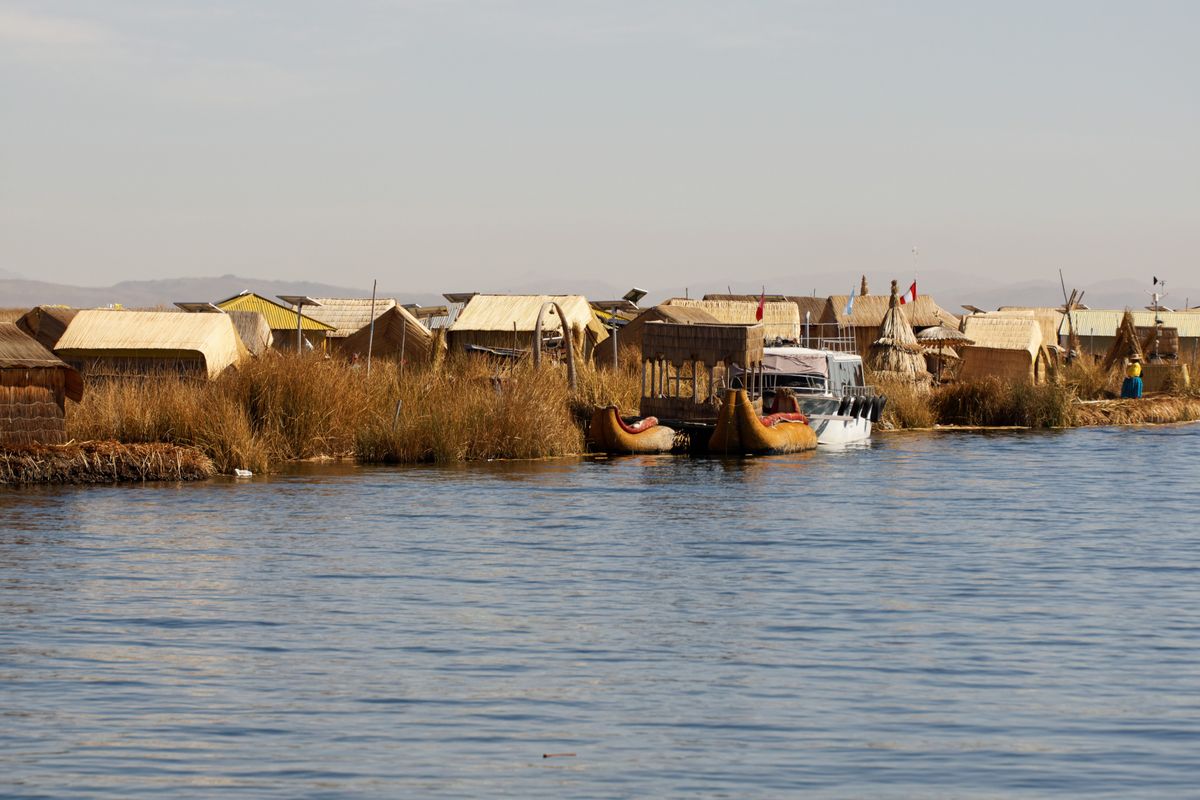
Lake Titicaca, the world's highest navigable lake (3,812m), holds the Uros floating reed islands (built and maintained entirely from totora reed) and Taquile Island, whose UNESCO-recognized men's knitting tradition and 2-hour cross-island walk reward an overnight homestay. The Peruvian Amazon (Madre de Dios, accessed from Puerto Maldonado, and the Manu Biosphere Reserve) holds the highest biodiversity density of any accessible ecosystem on Earth — the Chuncho clay lick draws hundreds of macaws daily, and giant river otter families work the Sandoval Lake oxbow. Arequipa, the "White City" built entirely from pale volcanic sillar stone, has its own defining sight in the Santa Catalina Convent — a walled convent-city occupying a full block, its cobalt-blue and terracotta-orange streets closed to the outside world until 1970. Arequipa is the gateway to Colca Canyon — more than twice the depth of the Grand Canyon, with condors gliding at eye level from the Cruz del Condor viewpoint at dawn.
Altitude Acclimatization: The Critical Variable
Cusco (3,400m), Titicaca (3,812m), and the Inca Trail's highest pass (4,200m) make altitude sickness (AMS) a near-universal challenge regardless of fitness. The recommended sequence is Lima (sea level) → Cusco (2 days acclimatizing) → Sacred Valley (lower than Cusco) → Machu Picchu → Titicaca (highest, saved for last). During the first 48 hours at altitude: walk slowly, avoid alcohol, hydrate aggressively (3–4L/day), and eat light. Coca tea is the traditional remedy; Diamox (acetazolamide), started 24 hours before ascent, is genuinely effective — consult a travel health provider beforehand. Never continue ascending with significant AMS symptoms; descent is the only reliable treatment for severe cases.
Peru Travel Tips for First Timers
Booking Machu Picchu permits before anything else is the single most important piece of Peru trip planning.
Trail Notes
- Book Machu Picchu entry permits 3–6 months ahead for peak season — they cannot be purchased at the gate.
- Book the Inca Trail separately and even earlier — permits open in February and sell out within hours for peak dates.
- Use Uber or Beat in Lima rather than street taxis.
- Carry small soles for markets and rural areas; cards work in cities.
- Pack layers — Andean days are warm, nights are cold at altitude.
- No vaccinations are required for entry, though Yellow Fever is recommended for Amazon jungle lodges.
Sample 10-Day Peru Itinerary
Lima (2 nights) → Cusco (2 nights, acclimatizing) → Sacred Valley (2 nights) → Aguas Calientes (1 night) → Machu Picchu day visit → Cusco (1 night) → Lima (1 night) for departure. Add Lake Titicaca (2 nights) and Colca Canyon/Arequipa (2 nights) for a 14-day comprehensive version.
Final Thoughts: The Country That Contains Multitudes
A country that simultaneously contains the world's most celebrated archaeological site, South America's most celebrated restaurant, the deepest canyon on the continent, the highest navigable lake, and a slice of the Amazon's densest biodiversity resists any simplification to "Machu Picchu plus a few days in Cusco." Book the permit. Arrive in Lima hungry. Acclimatize properly. Peru will take care of the rest.