Europe is not a continent that typically invites comparison with other planets. Its reputation is built on the human and the historical — on the accumulated architecture of three thousand years of civilization, on the cathedrals and the piazzas and the wine and the art and the particular quality of urban life that the continent has refined over millennia. When people think of Europe, they think of Paris in the rain and church bells in a Tuscan valley. They do not, typically, think of lunar landscapes and volcanic craters and geothermal vents steaming in the middle of ancient lava fields. And yet.
Landscapes and environments that share more with the visual vocabulary of science fiction than with anything typically described in European travel guides.
A different physical reality
Europe contains, within its relatively compact geography, a collection of landscapes and places so extreme in their beauty, so alien in their visual character, so completely outside the frame of anything that the continent's urban and cultural traditions would lead you to expect, that arriving in them produces in the visitor a specific and profound disorientation — the feeling of having stepped not merely into a different country but into a different physical reality, where the organizing principles of the world you know have been temporarily suspended and replaced by something older, stranger, and in its own way more magnificent.
These are the places that feel like another planet. Not in the metaphorical sense in which people describe anywhere sufficiently different from home. In the more specific sense of landscapes and environments that share more with the visual vocabulary of science fiction and geological imagination than with anything typically described in European travel guides — the black volcanic deserts of the Canary Islands, the alien rock formations of the Turkish coast, the geothermal infernos of Iceland's interior, the salt flats and pink lakes of the Mediterranean's strangest islands, the cave cities carved from volcanic rock, the basalt columns rising from northern seas like the pillars of a sunken civilization.
This guide covers the places in Europe — and in the European sphere, which includes the Azores, the Canaries, and Iceland — that most completely produce this sensation of planetary displacement. Each one has been selected not for strangeness alone but for the combination of extraordinary visual character, genuine accessibility, and the specific quality of experience that comes from standing somewhere that makes you feel, briefly and productively, that you do not know where you are.
1. Lanzarote, Canary Islands, Spain — The Volcanic Planet
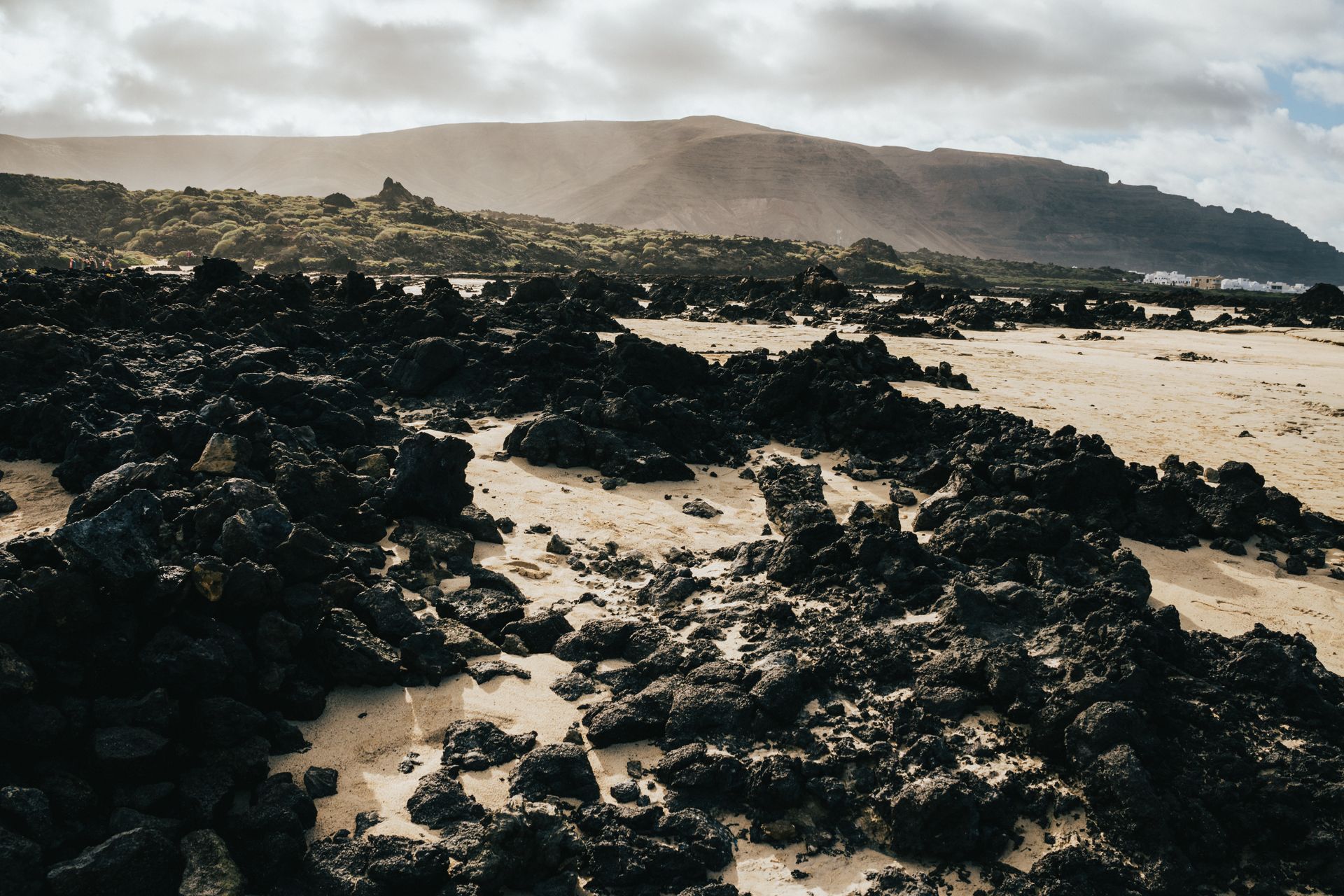
Lanzarote is the most otherworldly inhabited place in Europe and one of the most extraordinary volcanic landscapes on Earth. The island's Timanfaya National Park — covering the southwestern third of the island in the lava fields produced by the volcanic eruptions of 1730–1736 (which lasted six years and covered a quarter of the island in lava) — is a landscape of such complete and total alieness that NASA has used it as a Mars analogue for astronaut training, and it is difficult, standing in the center of the Montañas del Fuego (Mountains of Fire), to dispute the comparison.
The Timanfaya volcanic landscape is accessible on foot (the Tremesana route guided walk) and by road — the Ruta de los Volcanes scenic drive winds through the most dramatic sections of the lava fields, passing cones and craters and solidified lava rivers whose surface textures range from smooth and ropy (pahoehoe lava) to sharp and jagged (aa lava) in a geological vocabulary that feels fundamentally unearthly.
The heat demonstration at the Islote de Hilario — where park rangers pour water into a hole in the ground to produce an instant geyser of steam, and where meat is grilled in a wire basket lowered into a volcanic vent — communicates the geological reality of the island's still-active interior with a dramatic directness. The temperature 10 cm below the surface here is approximately 400°C.
Beyond Timanfaya, the Jameos del Agua — a lava tube system running from the volcanic interior under the ocean, whose cave lake is home to a blind albino crab found nowhere else in the world — was developed as an arts venue by the Lanzaroteño artist César Manrique, whose philosophy of integrating architecture with volcanic landscape produced some of the finest examples of vernacular modernism in Europe.
Getting there: Fly to Arrecife Airport (ACE) from major European hubs. The island is best explored by rental car.
Don't miss: Timanfaya National Park on the Tremesana guided walk, the Ruta de los Volcanes drive, Jameos del Agua, the Fundación César Manrique in Tahíche, the salt flats of the Salinas de Janubio.
Best time to visit: Year-round — Lanzarote's climate is consistently warm and dry. Spring and autumn avoid the peak summer crowds.
2. Cappadocia, Turkey — The Fairy Chimney Planet
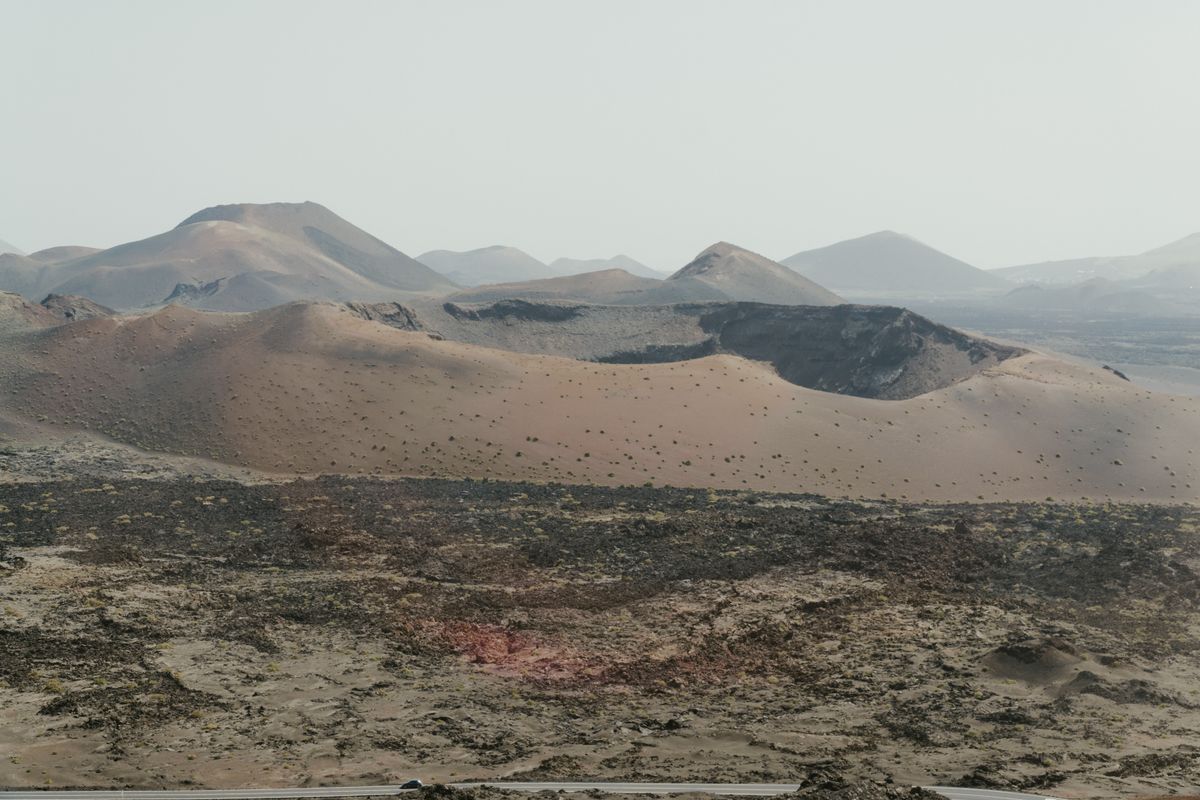
Cappadocia is the most immediately disorienting landscape in the European geographical sphere — a region of central Anatolia whose volcanic tuff has been eroded by wind and water into the extraordinary formations known as peri bacaları (fairy chimneys): conical rock columns rising from the valley floors in clusters of hundreds that produce a landscape unlike anything else visible from the surface of this planet.
The Göreme valley — the UNESCO World Heritage core of the region — has been inhabited for thousands of years; the Hittites, then the Byzantines, carved their homes, churches, monasteries, and entire underground cities directly into the soft tuff. The Göreme Open-Air Museum, a Byzantine monastic complex decorated with some of the finest 10th and 11th-century frescoes outside Constantinople, is outstanding.
The balloon flights — dozens of hot air balloons launching before dawn to float over the fairy chimney valleys in the first light — are Cappadocia's most famous experience and entirely justify their reputation. The Derinkuyu Underground City, descending 85 meters through eight levels capable of housing 20,000 people, produces one of the most profound archaeological experiences in the world.
Getting there: Fly to Nevşehir Kapadokya (NAV) or Kayseri (ASR) from Istanbul or several European cities. Best explored by rental car or local dolmuş minibuses.
Don't miss: Dawn hot air balloon flight (book weeks ahead), Göreme Open-Air Museum, Derinkuyu Underground City, the Ihlara Valley gorge walk, staying in a cave hotel.
Best time to visit: April to June and September to November. December to February is cold but magical for snow-dusted fairy chimneys and far fewer visitors.
3. Landmannalaugar, Iceland — The Rainbow Mountains Planet
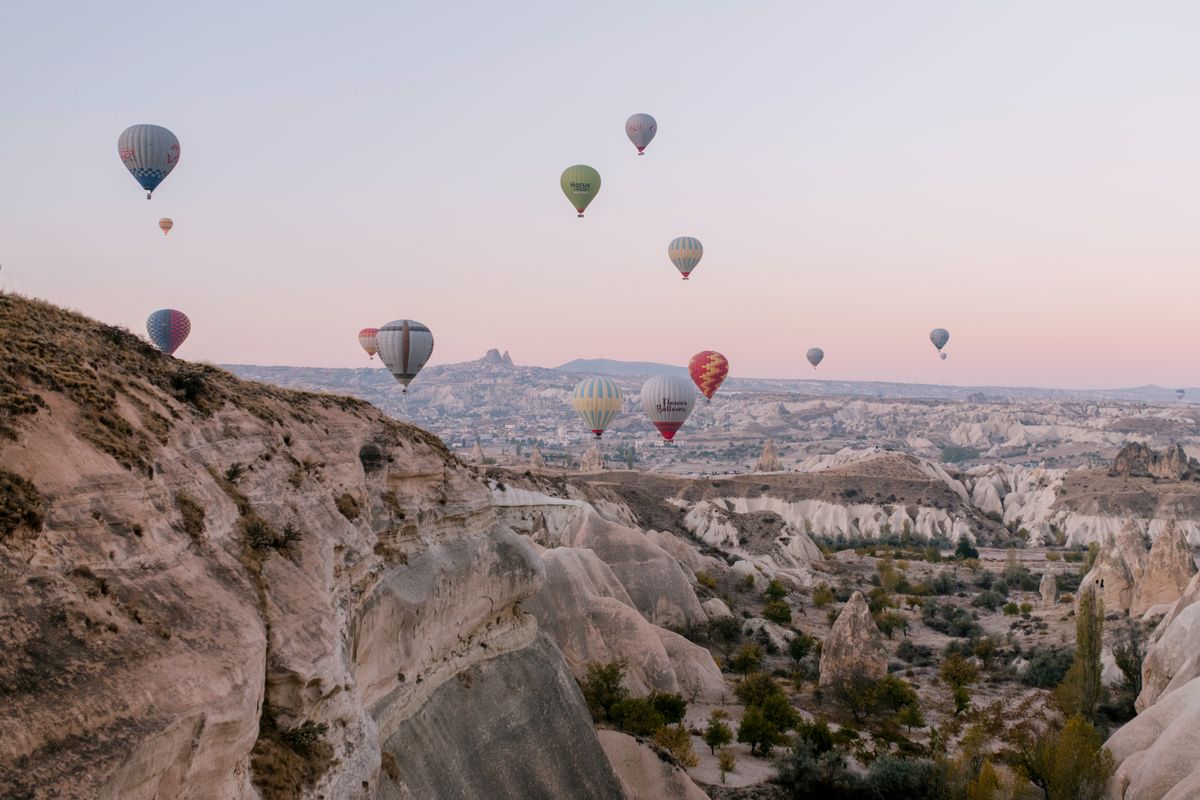
Iceland as a whole belongs in any discussion of otherworldly European landscapes. But Landmannalaugar, in the central highland interior accessible only in summer, distils Iceland's most alien qualities into a single landscape of maximum intensity: multicolored rhyolite mountains in shades of green, yellow, pink, purple, and red, hot springs bubbling from the ground, and lava fields of obsidian black stretching between the colored hills.
The rhyolite mountains reach their maximum visual intensity along the first section of the famous Laugavegur Trail (the four-day hiking route to Þórsmörk, widely considered the finest long-distance hike in Europe). The natural hot spring pool at Landmannalaugar, where hikers soak surrounded by the extraordinary landscape, creates an experience of such concentrated geological drama that the human nervous system requires several hours to process it.
Getting there: Drive from Reykjavik (3.5–4 hours, 4WD essential) or take the Reykjavik Excursions highland bus (June to September only).
Don't miss: The natural hot spring at base camp, the first day of the Laugavegur Trail, the obsidian lava field of Laugahraun, night camping under the midnight sun.
Best time to visit: Late June to August — the only time the highland roads are reliably open.
4. Dallol, Danakil Depression — Beyond Earth Entirely
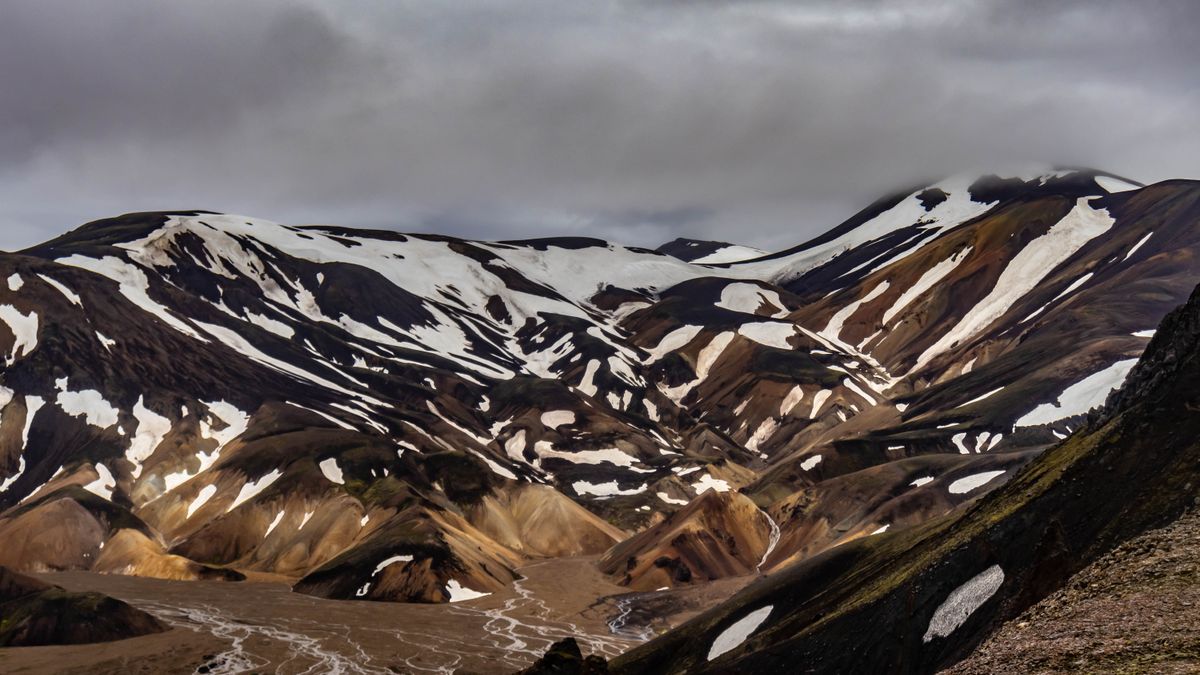
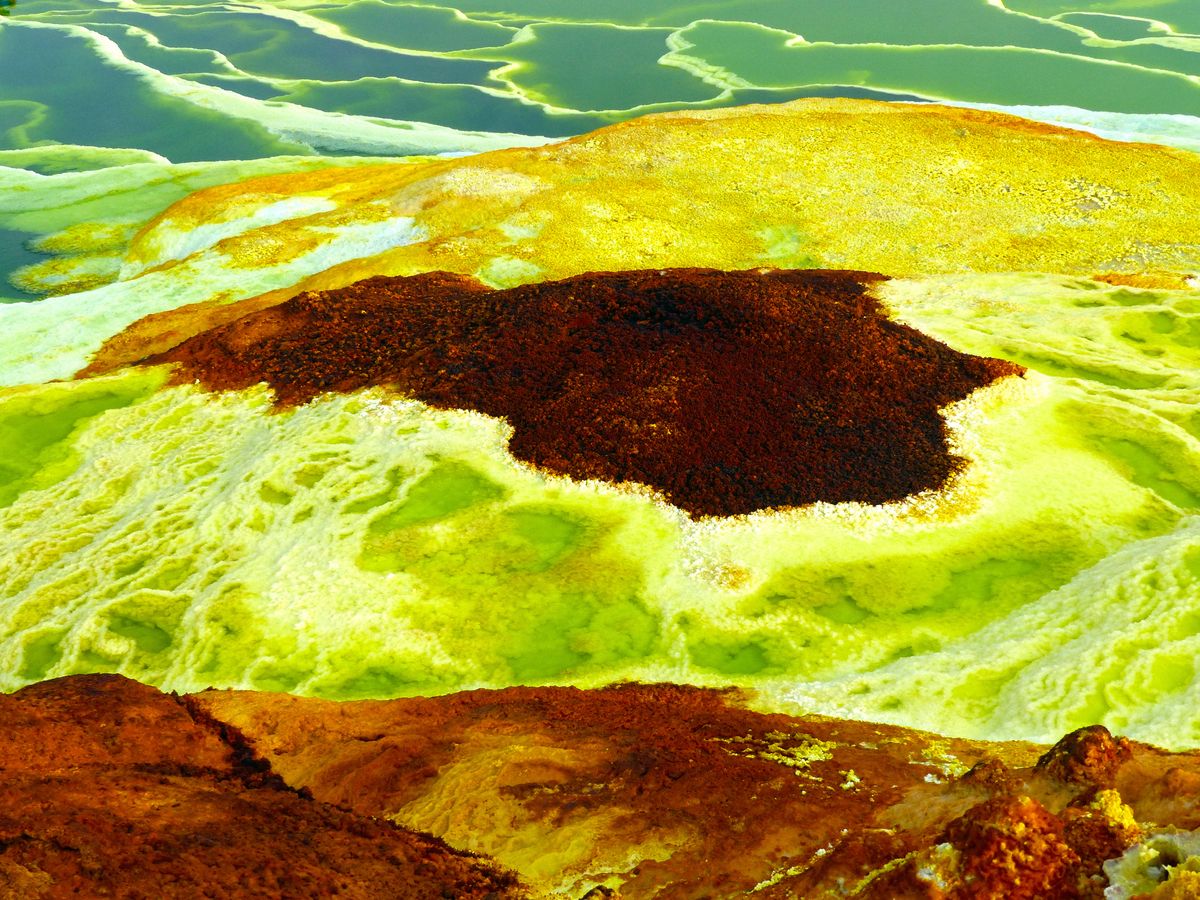
Strictly speaking, the Danakil Depression is in Ethiopia rather than Europe, but for European travelers it merits inclusion as the most extreme landscape accessible from European airports and the destination most completely unlike any other on Earth. The Dallol hydrothermal area — at 116 meters below sea level the lowest land point on Earth, in the hottest inhabited place on the planet — is a landscape of hydrothermal springs, salt formations, sulfur fields, and mineral deposits in colors — acid yellow, neon green, blood red — that appear digitally altered and are entirely natural.
The Danakil is accessible from the Ethiopian town of Mekelle on organized tours, traversing a landscape from salt flats (where the Afar people harvest salt using centuries-old methods) to the Erta Ale volcano (one of the world's few permanent lava lakes) to the Dallol color fields.
Getting there: Fly from European hubs to Addis Ababa, connecting to Mekelle. All Danakil tours are organized from Mekelle with mandatory armed escort.
Don't miss: Erta Ale lava lake at night, Dallol hydrothermal field at sunrise, the Afar salt caravans on the Karum salt flat.
Best time to visit: November to March — summer months regularly exceed 50°C and make the journey genuinely dangerous.
5. The Azores, São Miguel, Portugal — The Green Planet
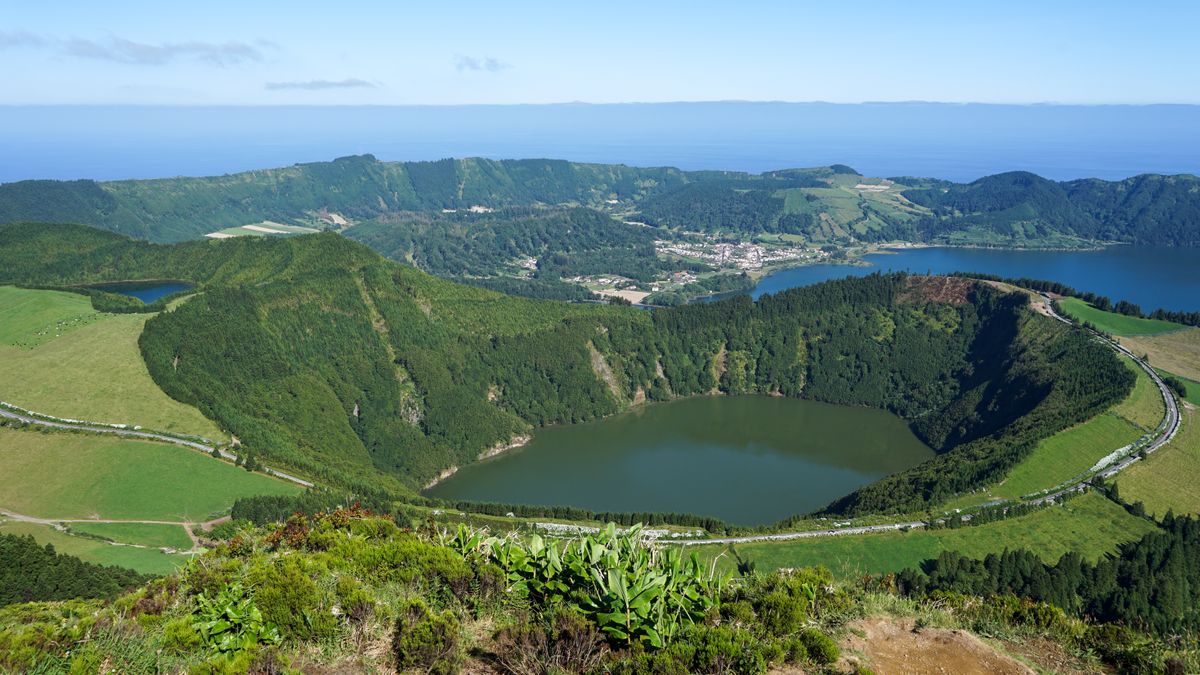
The Azores archipelago — nine volcanic islands in the mid-Atlantic — is the greenest and most improbably lush volcanic landscape on Earth. São Miguel, the largest island, concentrates the Azores' most dramatic geological features into a single landscape: the twin calderas of Sete Cidades (one lake emerald green, one cornflower blue), the Furnas valley (a geothermal depression of steaming fumaroles and hot springs where the local cozido das Furnas stew is slow-cooked underground), and the Caldeira Velha waterfall through tropical tree fern forest.
The Sete Cidades caldera — 12 km wide, formed by a volcanic collapse approximately 22,000 years ago — is the finest single landscape in the Azores. The view from the Vista do Rei belvedere on the caldera rim is among the finest panoramic views in European travel.
Getting there: Fly to João Paulo II Airport, Ponta Delgada (PDL), from Lisbon (2.5 hours) and several European cities including London.
Don't miss: Vista do Rei belvedere at dawn, the Furnas valley fumaroles and a cozido das Furnas lunch, Caldeira Velha waterfall, whale watching from Pico island.
Best time to visit: May to October, when the hydrangeas are in full blue flower.
6. Hvítserkur, Iceland — The Stone Beast Planet
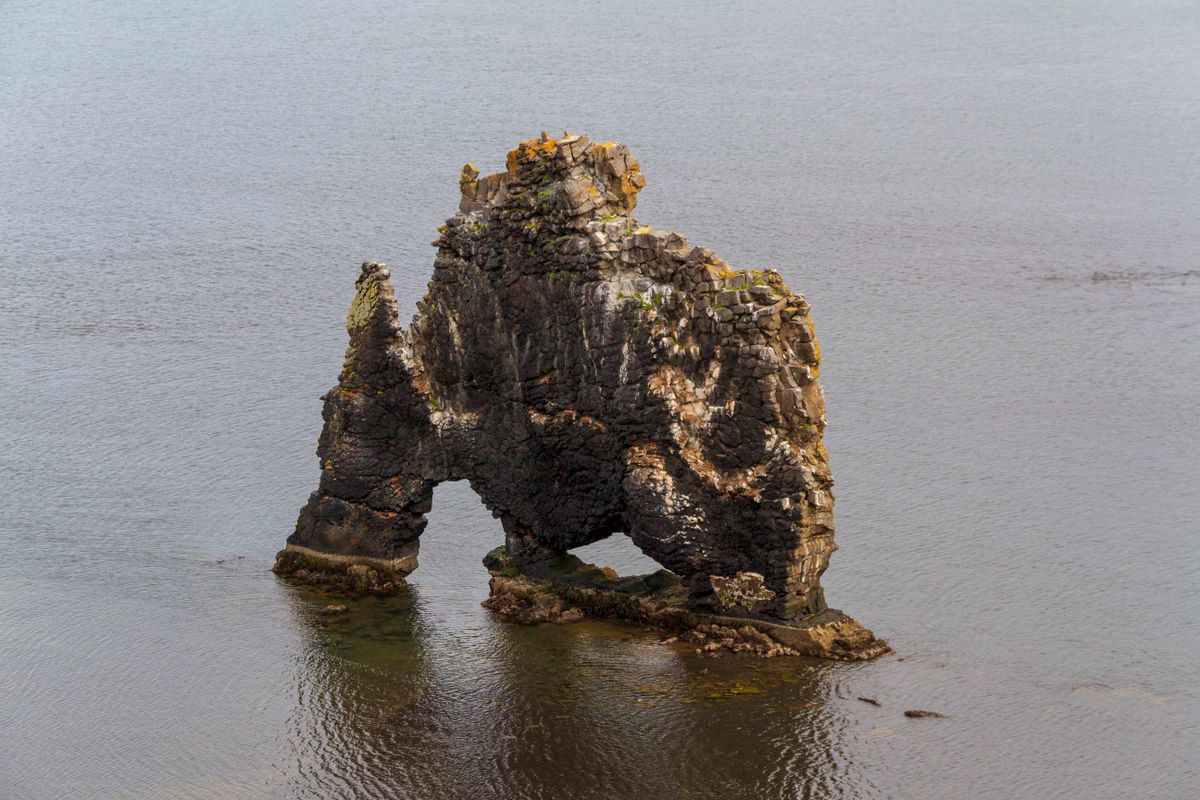
Iceland returns to the list for a specific formation on the Vatnsnes peninsula — the Hvítserkur basalt stack, a 15-meter volcanic rock formation worn by centuries of wave erosion into a shape so precisely resembling a drinking rhinoceros that the resemblance appears deliberately sculptural rather than geological. At low tide it sits on a rock shelf; at high tide it appears to float on the sea's surface.
The Vatnsnes peninsula more broadly is one of Iceland's finest and least visited coastal landscapes — seal colonies on black sand beaches, and mountain reflections in the still waters of Miðfjörður bay. The Westfjords beyond hold the largest Atlantic puffin colony in the world at Látrabjarg, the westernmost point in Europe.
Getting there: Drive from Reykjavik (approximately 3.5 hours) on the Ring Road and Vatnsnes peninsula loop.
Don't miss: Hvítserkur at low tide and at sunset, the Vatnsnes seal beaches, the Westfjords if time allows.
Best time to visit: June to August for accessibility and the midnight sun. October to March for Northern Lights.
7. Pamukkale, Turkey — The Cotton Castle Planet
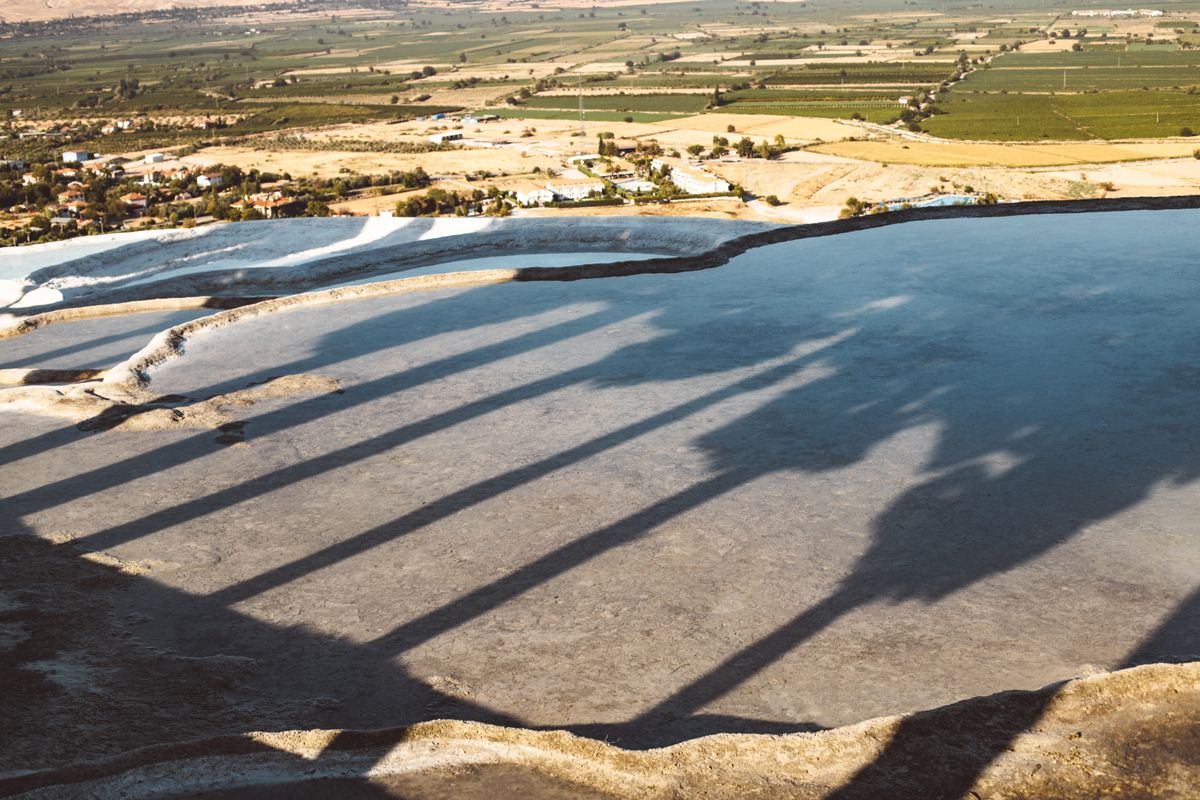
Pamukkale — the "Cotton Castle" in Turkish — is one of the most surreal natural formations in the world: a hillside covered in brilliant white terraced pools of calcium carbonate-rich thermal water, cascading from one natural travertine terrace to the next in a formation so white and so geometrically regular that from a distance it appears permanently snow-covered.
Hierapolis above the terraces — a UNESCO World Heritage Site combining geological wonder with one of the most important Greco-Roman cities in Asia Minor — adds historical complexity. The Antique Pool (Cleopatra Pool), where you swim among 2,000-year-old marble columns in 36°C water, is one of the most extraordinary swimming experiences in the world.
Getting there: Fly to Denizli Çardak Airport from Istanbul, or take the Pamukkale Express overnight train from Istanbul to Denizli (approximately 12 hours).
Don't miss: Walking barefoot in the travertine pools at sunset, the Hierapolis necropolis, the Antique Pool swim.
Best time to visit: April to June and September to October.
8. The Giant's Causeway, Northern Ireland — The Hexagonal Planet
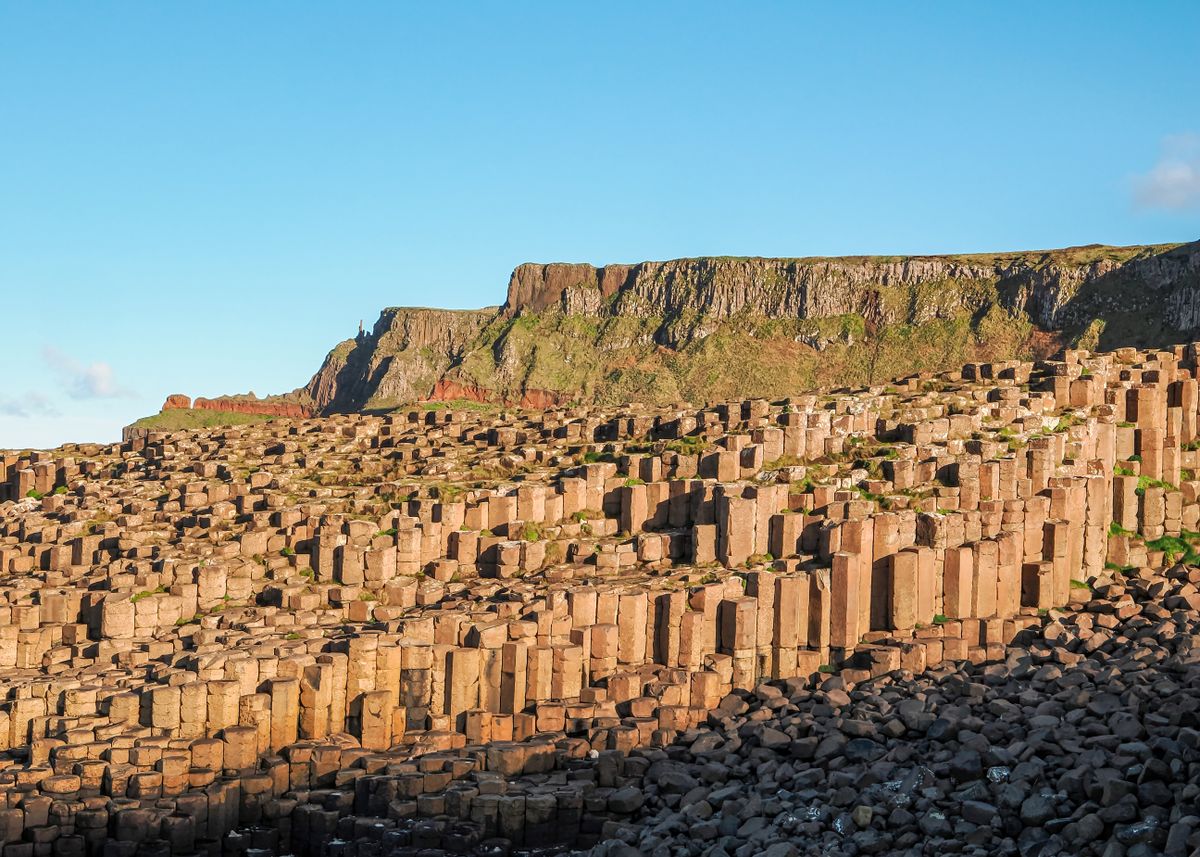
The Giant's Causeway — where approximately 40,000 interlocking hexagonal basalt columns descend from the clifftops to the sea — is the most geometrically precise natural landscape in Europe. The columns, formed approximately 60 million years ago when volcanic lava contracted as it cooled, range from 15 to 40 cm in diameter and up to 12 meters in height.
The Irish legend — that it was built by the giant Fionn mac Cumhaill as a bridge to Scotland — is more satisfying narratively than the geological explanation and equally plausible standing on the columns and looking at their extraordinary regularity. The Antrim Coastal Road connecting the Causeway with Bushmills (home of the world's oldest licensed whiskey distillery) provides one of the finest coastal drives in the British Isles.
Getting there: Drive from Belfast (approximately 1.5 hours) or Derry/Londonderry (45 minutes).
Don't miss: The columns at low tide, the clifftop walk to the Chimney Tops headland, the Old Bushmills Distillery tour, the Carrick-a-Rede Rope Bridge.
Best time to visit: May to September for the best weather.
9. Saline di Trapani, Sicily — The Pink Salt Planet
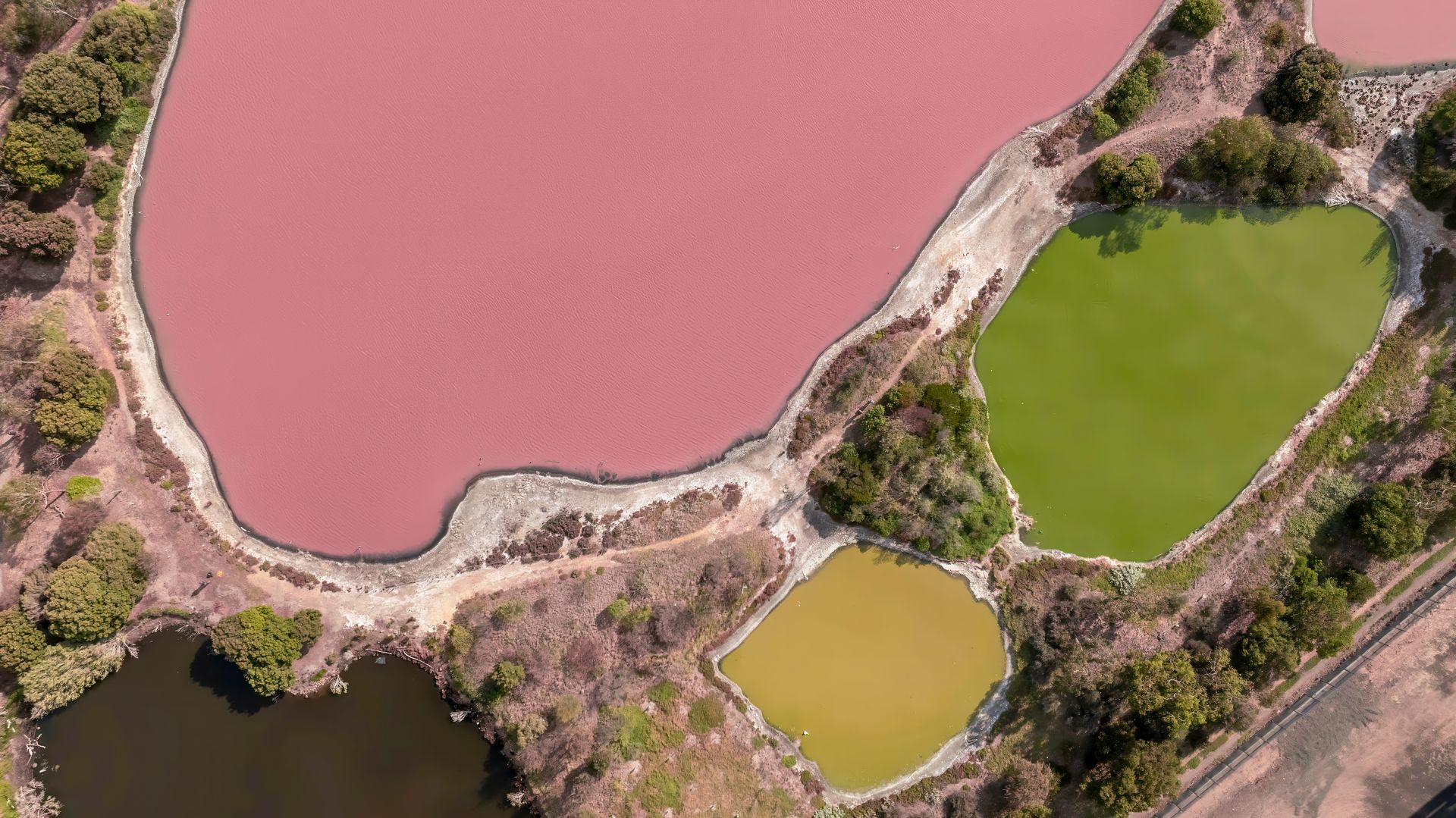
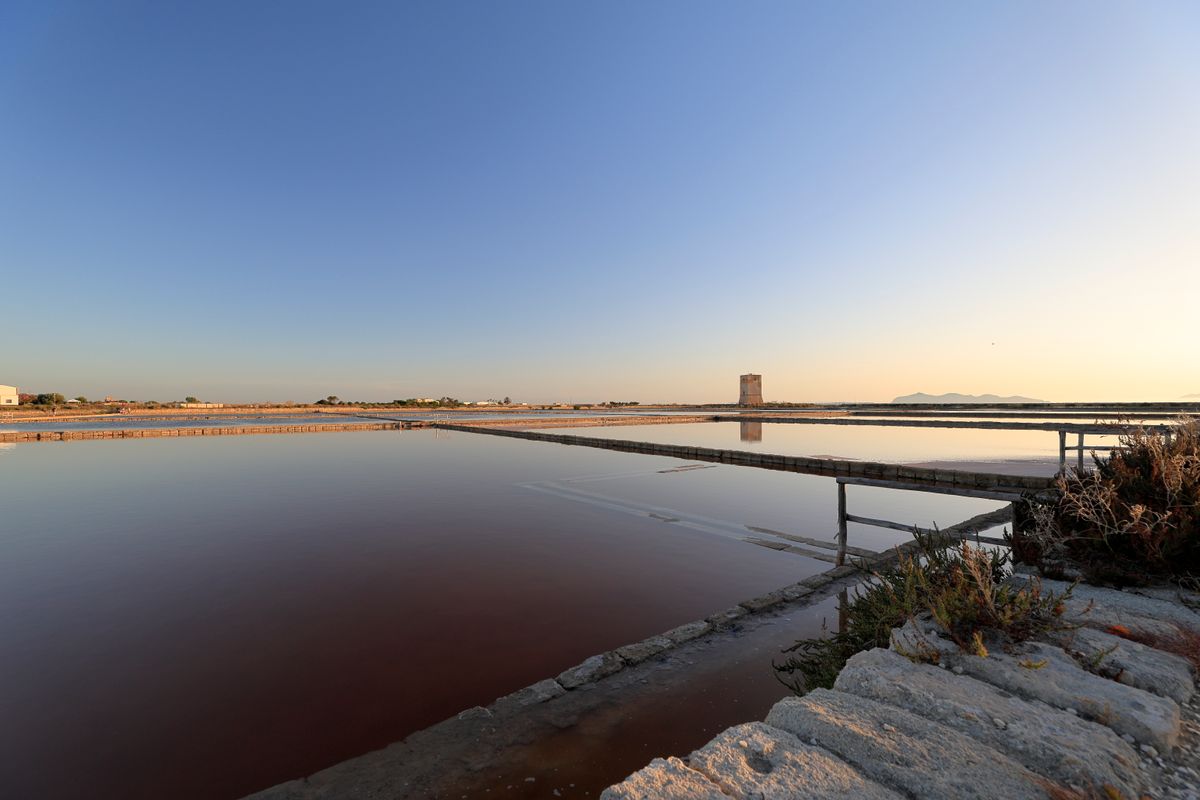
The Saline di Trapani — salt flats extending along Sicily's western coastline — are among the most unexpectedly beautiful industrial landscapes in Europe: shallow evaporation pans whose water ranges from pale pink to deep magenta depending on salinity and algae population, punctuated by ancient windmills that have pumped seawater through the salt system for five centuries.
The pink color, caused by halophilic algae and brine shrimp, intensifies through the day as the light moves across the water's surface. At sunset, when the low western light turns the pink water gold, the landscape achieves a quality of visual drama that is simultaneously entirely natural and completely theatrical.
Getting there: Fly to Trapani Birgi Airport (TPS) or Palermo. The salt flats are a 10-minute drive south of Trapani.
Don't miss: The salt flats at sunset, the Saline Ettore e Infersa windmill and salt museum, the Egadi Islands day trip.
Best time to visit: June to September when salt production is at maximum and the colors are most intense.
10. Socotra Island, Yemen — The Dragon Blood Tree Planet
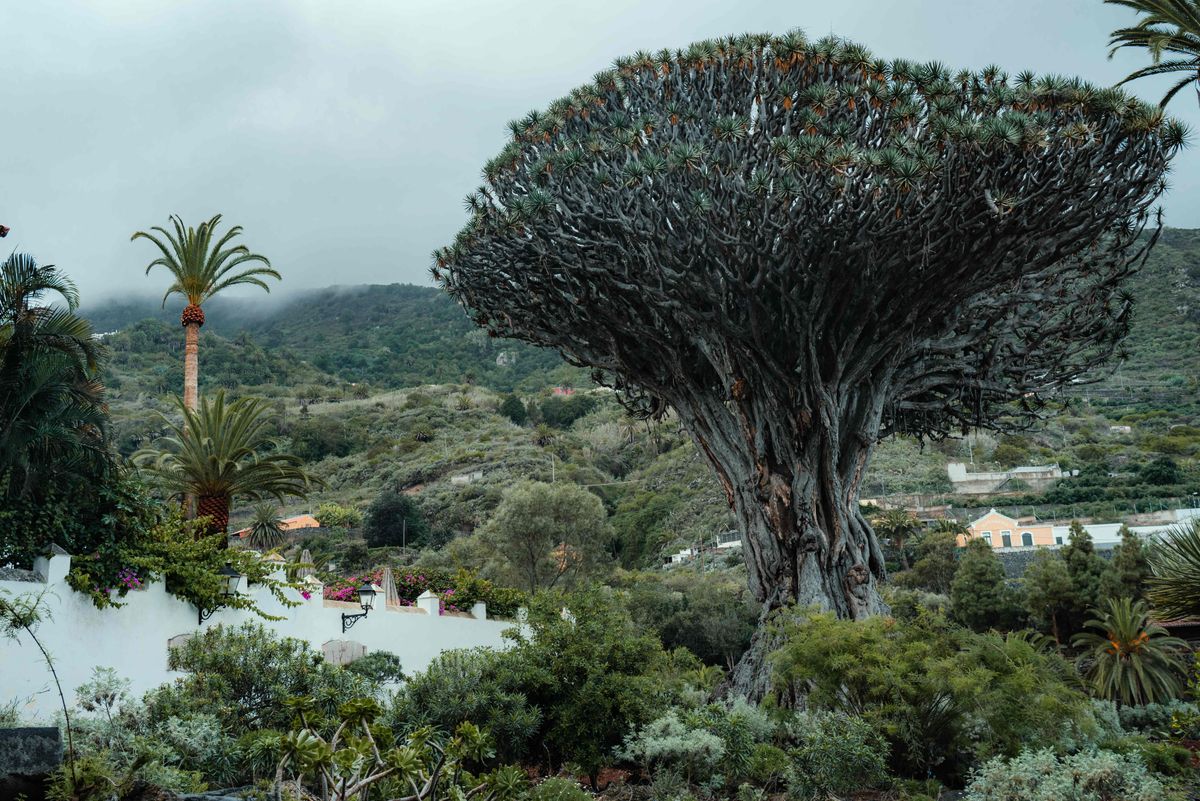
Socotra Island, technically part of Yemen but geographically equidistant between the Horn of Africa and the Arabian Peninsula, is the most biologically isolated and most visually alien inhabited island on Earth. Its 300 endemic plant species include the dragon blood tree, whose perfectly umbrella-shaped canopy grows from a thick trunk of smooth grey bark and produces a deep red resin used as medicine and dye for thousands of years.
A plateau covered in dragon blood trees — their identical flat umbrella canopies creating a forest of alien geometry — is the definitive Socotra image, and it is entirely real. Access has been restricted by the Yemeni conflict since 2015; research current accessibility and use only established, locally connected tour operators.
Getting there: Charter flights from Abu Dhabi (UAE) when accessible.
Don't miss: The Diksam plateau dragon blood tree forest, the Detwah Lagoon, the Hoq Cave.
Best time to visit: October to April when the monsoon season has ended.
11. Wadi Rum, Jordan — The Red Desert Planet
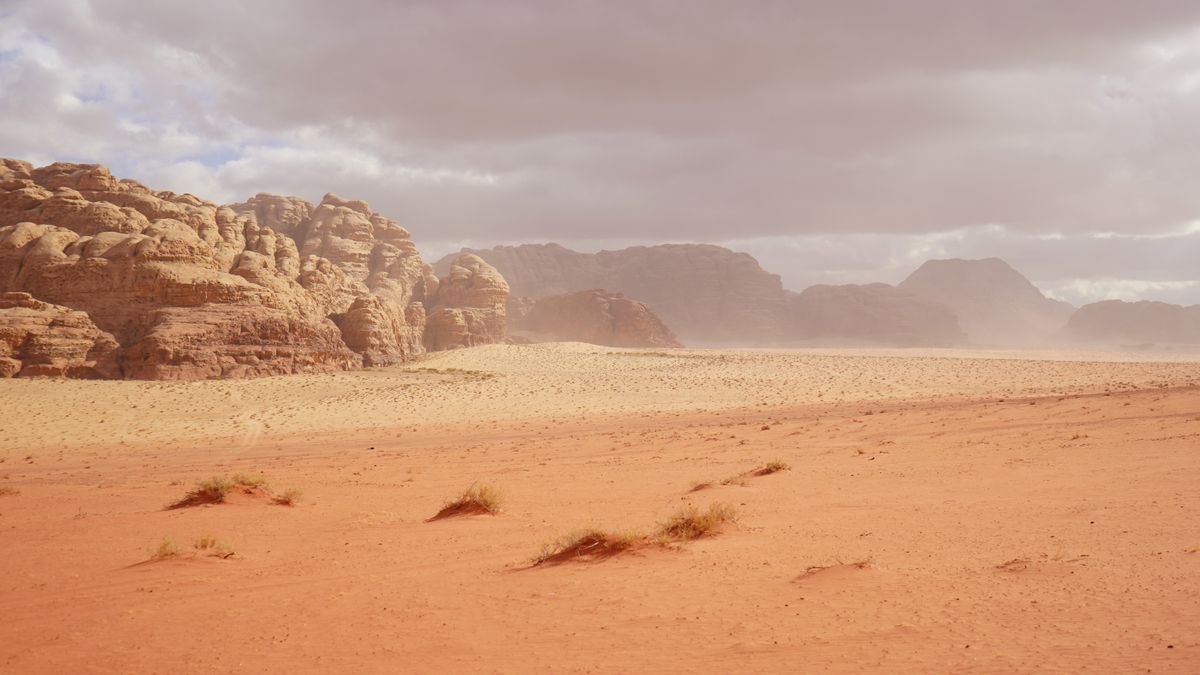
Wadi Rum is technically in Jordan rather than Europe, but its accessibility from European airports makes it essential on any serious list. The "Valley of the Moon" — a protected desert wilderness of dramatic sandstone and granite inselbergs rising from orange and red sand desert floors — is the landscape that Stanley Kubrick considered for 2001: A Space Odyssey's lunar sequences and that has since appeared in The Martian, Dune, and Lawrence of Arabia. The iron oxide in the rock and sand produces the extraordinary red-orange coloration that distinguishes Wadi Rum from every other desert on Earth.
Sleeping in a desert camp under the stars, with rock formations visible in silhouette and the Milky Way overhead in the absence of any light pollution, is one of the finest overnight experiences available in travel.
Getting there: Fly to Aqaba (AQJ) from Amman or take the 4-hour bus. Most visitors combine Wadi Rum with Petra.
Don't miss: A jeep tour of the major rock formations, an overnight in a Bedouin desert camp, stargazing after midnight.
Best time to visit: March to May and September to November.
12. Etna and the Sicilian Volcanic Landscape — The Active Planet
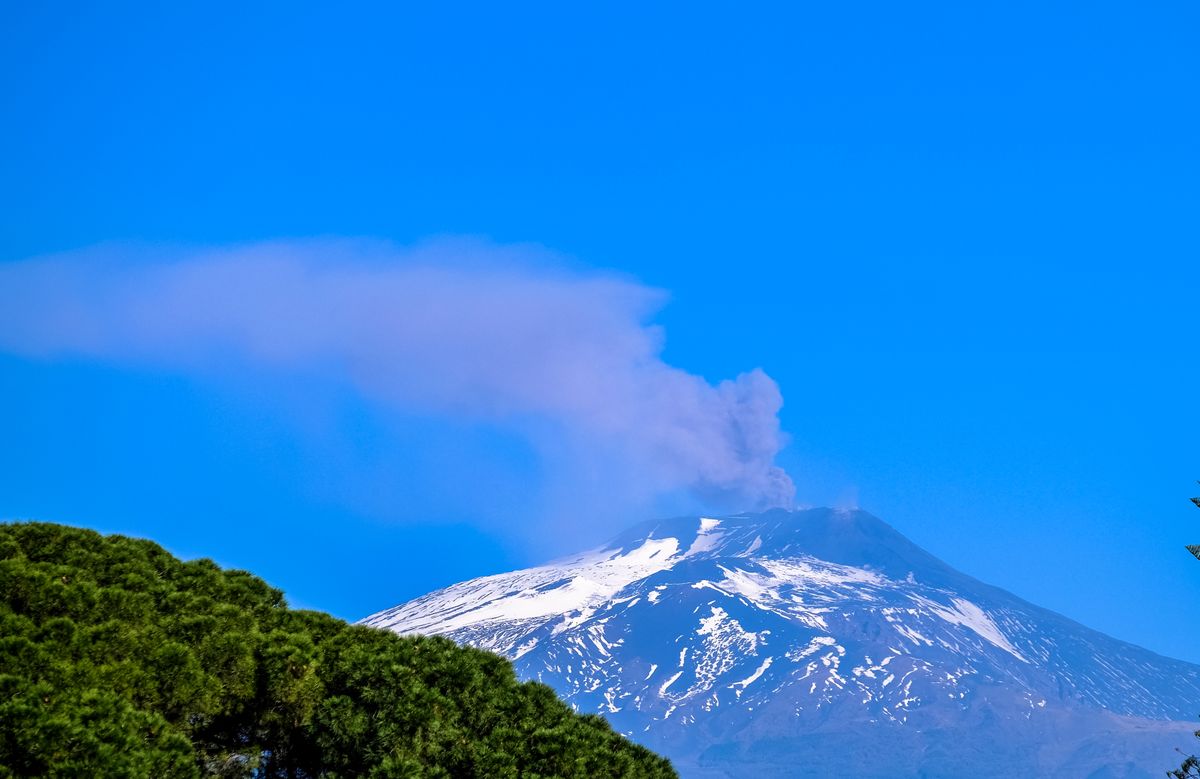
Mount Etna — Europe's highest active volcano and one of the most active on Earth — is the most viscerally geological landscape in Europe. Etna erupts regularly, its summit craters producing lava fountains and ash plumes visible from Catania and across the Sicilian coastline, making it the most actively alien of all the volcanic landscapes in this guide.
The lower flanks of Etna produce some of the finest agricultural landscapes in Sicily — the Bronte pistachio, grown in volcanic soil at 700 meters, and the Etna DOC wines of extraordinary mineral character. The summit crater area, accessible on foot with a guide or by cable car and 4WD bus, provides the most completely alien landscape in Europe.
Getting there: Fly to Catania Fontanarossa Airport (CTA). Etna is 30 km from Catania, accessible by the Ferrovia Circumetnea railway or by car.
Don't miss: The cable car and 4WD ascent to the summit area, the Valle del Bove caldera, Etna wine tasting at a volcano-flank winery.
Best time to visit: May to October for summit access.
How to Plan an Otherworldly Trip
Combine geological and cultural destinations. Every destination in this guide is within a day's travel of outstanding historical and cultural experiences that provide contrast and context. Lanzarote with mainland Spain, Cappadocia with Istanbul, the Azores with Lisbon, Sicily's salt flats with the extraordinary archaeological sites of western Sicily.
Go early and go late. The alien quality of these landscapes is most intense at the extremes of the day — dawn and dusk, when the light is lowest, the colors most saturated, and the human presence most reduced.
Hire local guides for geological landscapes. The volcanic and geological landscapes in this guide all benefit from expert interpretation — the geology of Timanfaya explained by a park ranger, the fairy chimney formation history explained by a Cappadocia guide.
Respect the environments. Several destinations in this guide — Timanfaya, Pamukkale, the Giant's Causeway — have suffered significant damage from visitor numbers and behavior. Follow marked paths, obey access restrictions, and treat these geological formations with the respect due to things that took millions of years to create.
Final Thoughts: The Earth Is Stranger Than We Remember
The places in this guide exist as a corrective to a specific kind of travel complacency — the assumption that the world has been fully catalogued, that there is nothing left that will make us feel genuinely, productively disoriented by the strangeness and beauty of the planet we inhabit.
Standing in the middle of the Timanfaya lava fields with nothing but black and red volcanic rock in every direction. Looking down at the two-colored Sete Cidades lakes from the caldera rim. Walking barefoot through the warm mineral pools of the Pamukkale travertines. These are not experiences that fit comfortably into the usual categories of travel — they are geological and planetary and somehow fundamental, reminders that the Earth is a stranger and more extraordinary place than daily life typically allows us to remember.
The most alien planet accessible from any European airport is the one you are already living on. You just need to go to the right part of it.