There is a category of place that defeats the normal cognitive equipment we bring to travel. Not merely beautiful, not merely historically significant, but genuinely, persistently unreal in the specific sense that the information arriving through your eyes refuses to be processed by the part of your brain responsible for categorizing ordinary experience. The place looks like a dream. It looks like something that should not exist.
A moment of complete cognitive arrest, followed by the slow, uncertain recalibration of someone who has just discovered that the world contains more categories than they thought.
The mismatch between eyes and brain
Every destination in the world is, technically, real. The places in this guide are technically real also. They simply do not feel that way. This is not the same quality as beauty, which is common, or rarity, which is less common. It is something more specifically cognitive — the experience of a mismatch between what the eyes report and what the brain is prepared to accept, a quality of visual and spatial information that exceeds the normal parameters of landscape experience.
The places in this guide were selected for the specific intensity of this feeling. Some produce it through color — colors so saturated or so improbable that the landscape appears filtered or digitally enhanced when it is entirely natural. Some produce it through geometry — forms so precise or so regular that they appear designed. Some produce it through scale, and some through the specific surrealism of combination — the impossible juxtaposition of elements that have no business being in the same place simultaneously.
1. Lake Hillier, Western Australia — The Pink Lake
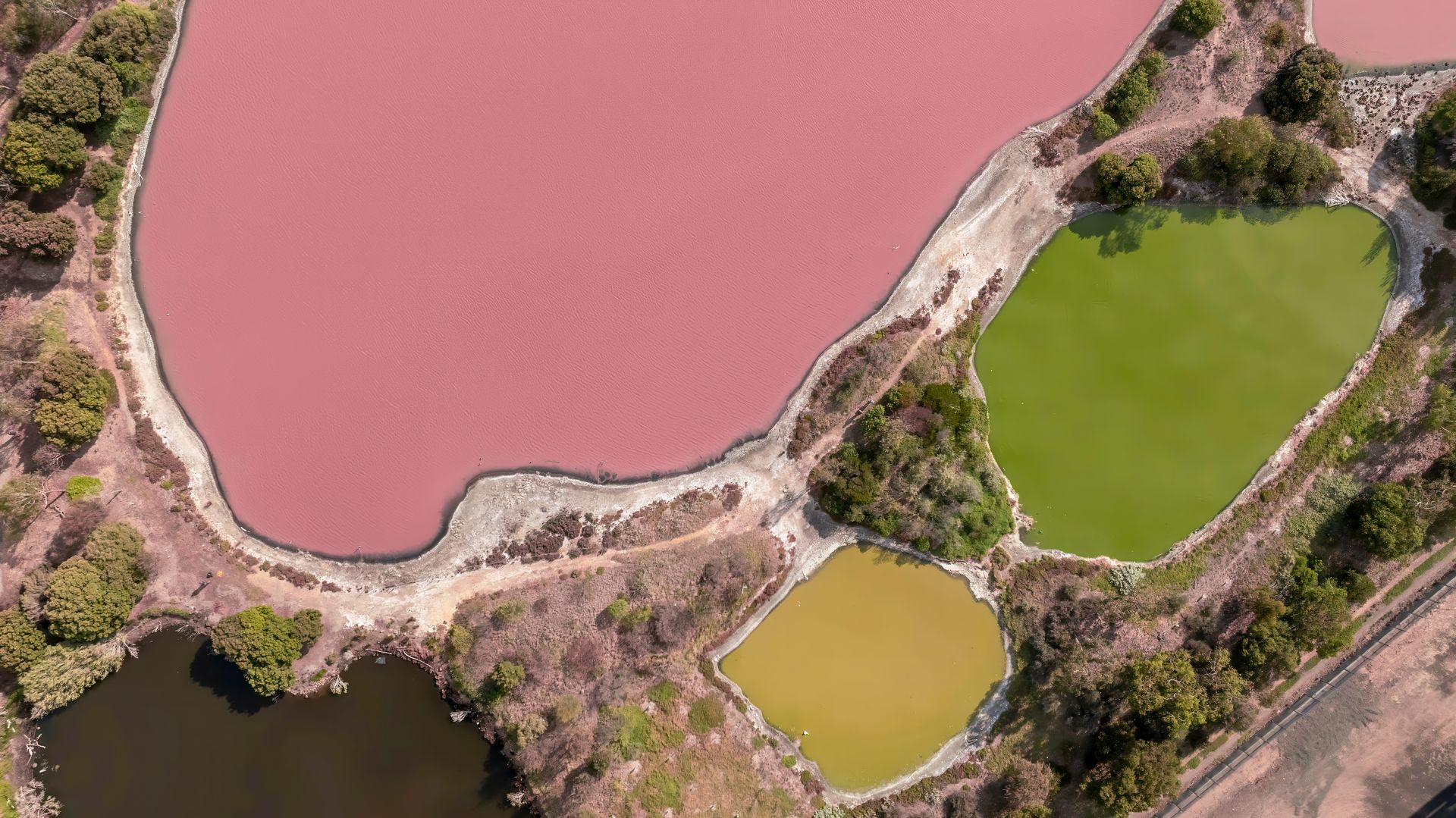
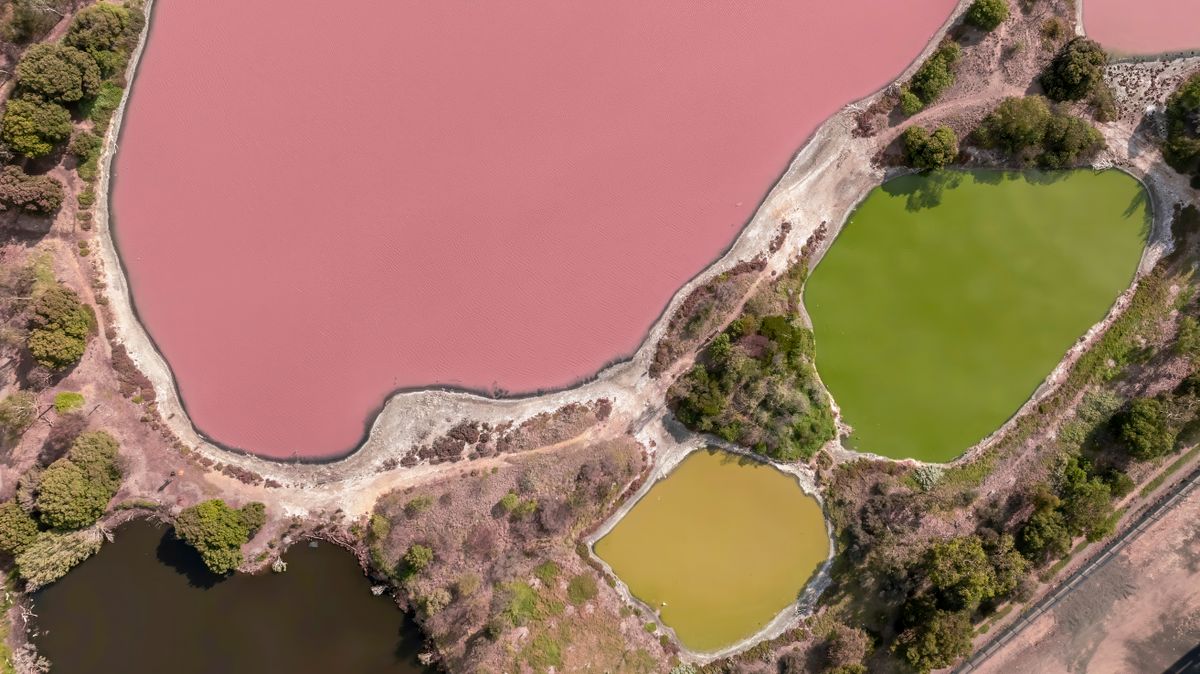
Lake Hillier sits on the edge of Middle Island off the southern coast of Western Australia, separated from the Southern Ocean by a narrow strip of eucalyptus forest, and it is pink. Not pale rose, not faintly tinted — but a deep, saturated, confectionary pink, entirely consistent from shore to shore and entirely unchanged when a cup of the water is removed from the lake. The color is caused by the halophilic algae Dunaliella salina and the pink-pigmented bacteria Salinibacter ruber that thrive in the lake's extreme salinity.
The effect from the air — the standard way to experience Lake Hillier, since Middle Island has no permanent infrastructure — is the most immediately unrealistic image in Australian natural geography: a perfect oval of vivid pink water against dark green eucalyptus forest against deep blue ocean.
Getting there: Scenic flights from Esperance (approximately 45 minutes) provide the aerial view. Helicopter tours land on Middle Island for direct access.
Don't miss: The aerial view of the color contrast between the lake and the surrounding ocean — the lake water, collected in a container, retains its pink color.
Best time to visit: October to April for the finest weather and clearest aerial visibility.
2. Zhangye Danxia, China — The Painted Mountains
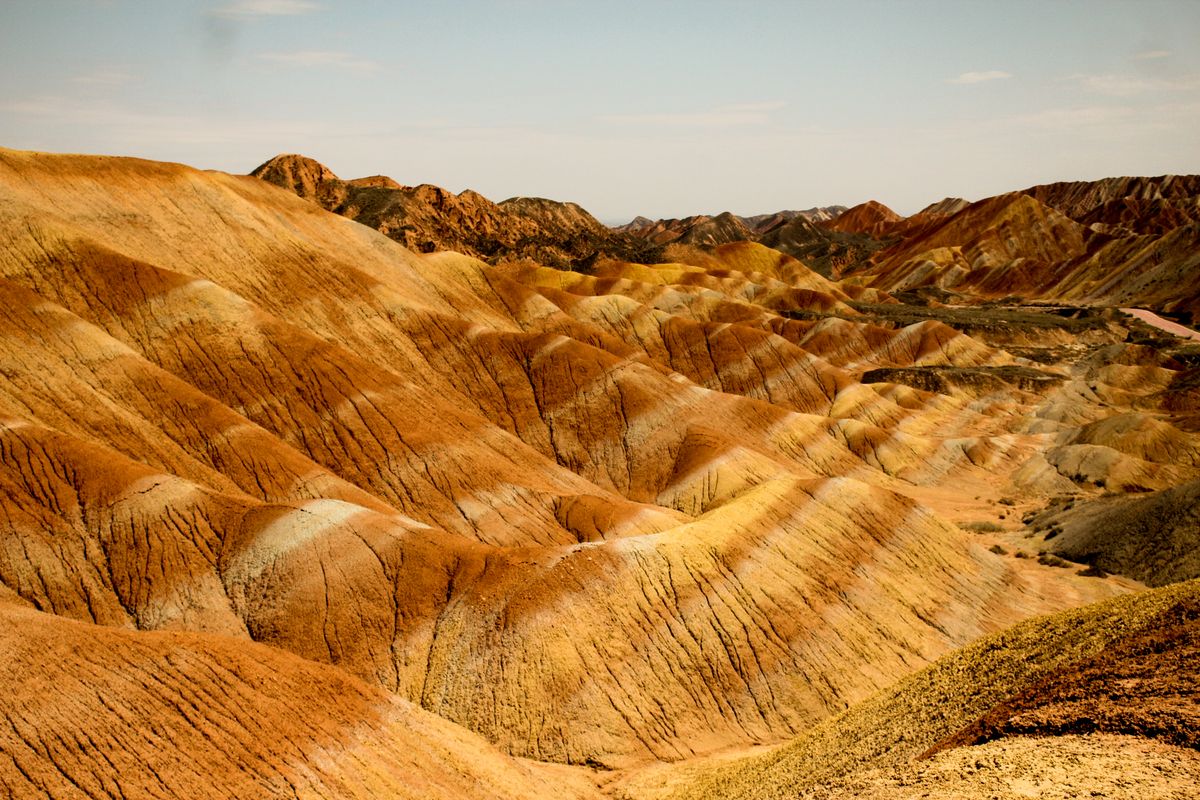
The Zhangye Danxia Landform Geological Park in Gansu Province contains the most intensely and most variously colored mountain landscape on Earth — striated cliffs and rolling hills of red sandstone layered with bands of yellow, orange, green, white, and deep purple, exposed by erosion over 24 million years.
The colors are caused by different mineral compositions of successive sedimentary layers — red and orange from iron oxide, green from chlorite, white from calcium carbonate, purple from manganese. The geology is entirely comprehensible. The visual result appears to have been produced by a process more closely related to textile dyeing than geological sedimentation.
Getting there: Fly or take the high-speed train to Zhangye from Lanzhou (2 hours) or Xi'an (4 hours). The park is 30 km from Zhangye city.
Don't miss: The No. 4 viewing platform for the finest panoramic overview, the dawn light on the western cliff faces.
Best time to visit: June to September for the clearest skies and richest colors.
3. Waitomo Glowworm Caves, New Zealand — The Underground Galaxy
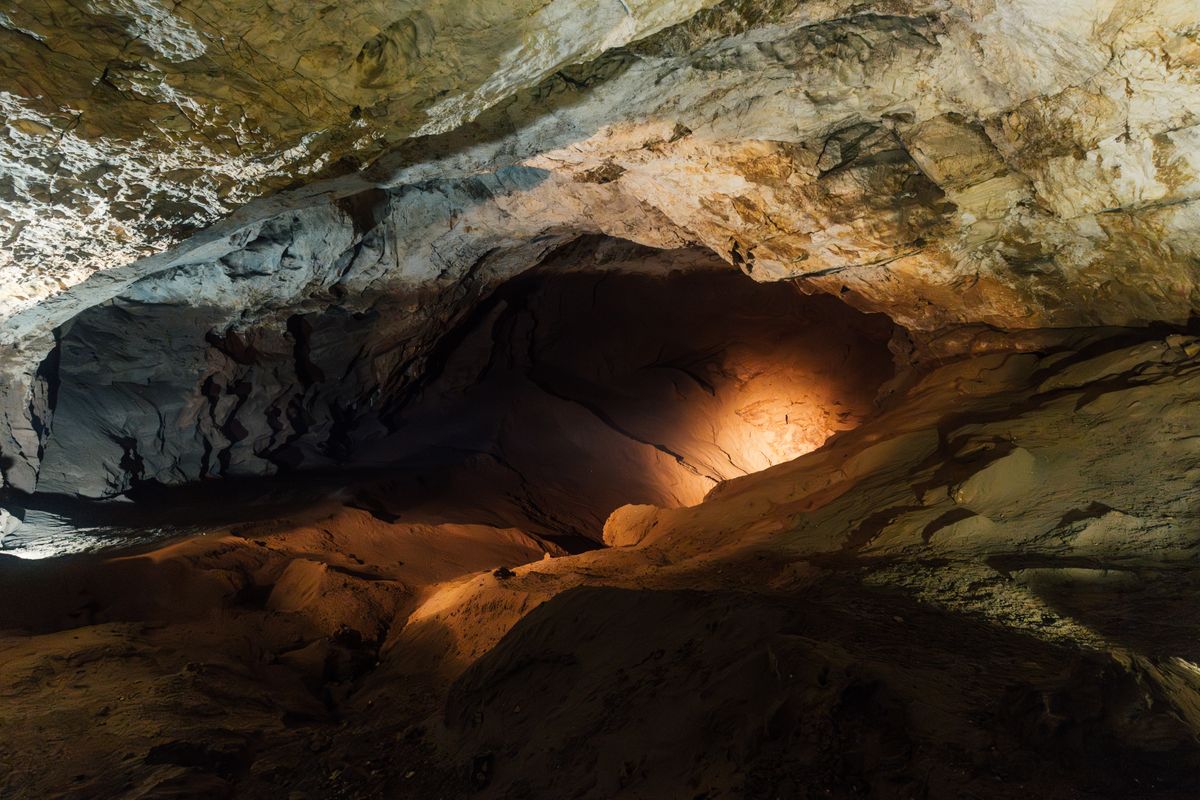
The Waitomo Glowworm Caves contain one of the most genuinely unreal visual environments accessible to tourists anywhere in the world — an underground limestone cavern whose ceiling is covered in thousands of Arachnocampa luminosa, a bioluminescent fungus gnat larva found only in New Zealand, whose blue-green light covers every surface of the cave ceiling in a display indistinguishable from a clear night sky of extraordinary star density.
The experience is delivered by boat through the Cathedral Cave, the largest cavern in the system, its ceiling alive with the light of approximately 10,000 glowworms. The silence enforced in the boat passage — guides require complete quiet, the boat moves without paddles — creates an acoustic stillness that the visual impossibility of the glowing ceiling transforms into something vertiginous and dreamlike.
Getting there: Drive from Hamilton (45 minutes) or Rotorua (1.5 hours). Book at waitomo.com.
Don't miss: The Cathedral Cave boat tour, the black water rafting option, the Ruakuri Cave second system.
Best time to visit: Year-round. Shoulder season (April–June, September–November) for smaller tour groups.
4. Socotra Island, Yemen — The Dragon Blood Forest
Socotra's dragon blood trees deserve revisiting here in the specific context of unreality, because the visual experience of a mature Dracaena cinnabari forest — the flat-topped umbrella canopies of hundreds of trees in perfect geometric alignment, rising from grey limestone above the Arabian Sea — is the most persistently unreal biological landscape in the world.
Each tree individually is extraordinary. But the forest, hundreds of trees together on the Diksam plateau, each maintaining its perfect umbrella form as if placed by a landscape architect, is something no single tree prepares you for. The trees look designed — like the product of a civilization that wanted shade structures for a very large outdoor space.
Getting there: Charter flights from Abu Dhabi when accessible. Check current travel advisories.
Best time to visit: October to April when temperatures are manageable.
5. Fly Geyser, Nevada, USA — The Accidental Sculpture
Fly Geyser is one of the finest examples in the world of a place whose unreality is produced by a specific combination of biological and geological accident — an accidentally created geothermal feature whose extraordinary colors and forms have developed over sixty years of continuous mineral deposition into something that appears to be the work of a visionary sculptor rather than a drilling error.
The geyser was created in 1964 when a geothermal energy company drilled a well and hit a pocket of superheated water. The well was not properly capped, and the water has been erupting ever since, depositing calcium carbonate and silica minerals covered entirely in vivid green and red thermophilic algae. Against the flat grey alkaline desert of the Black Rock Desert, it is the most immediately unreal chromatic combination in American landscape photography.
Getting there: Fly Geyser is on private property (Fly Ranch), owned by the Burning Man organization. Access is by guided tour only (burningman.org/flygeyser).
Best time to visit: Spring and autumn for the finest weather.
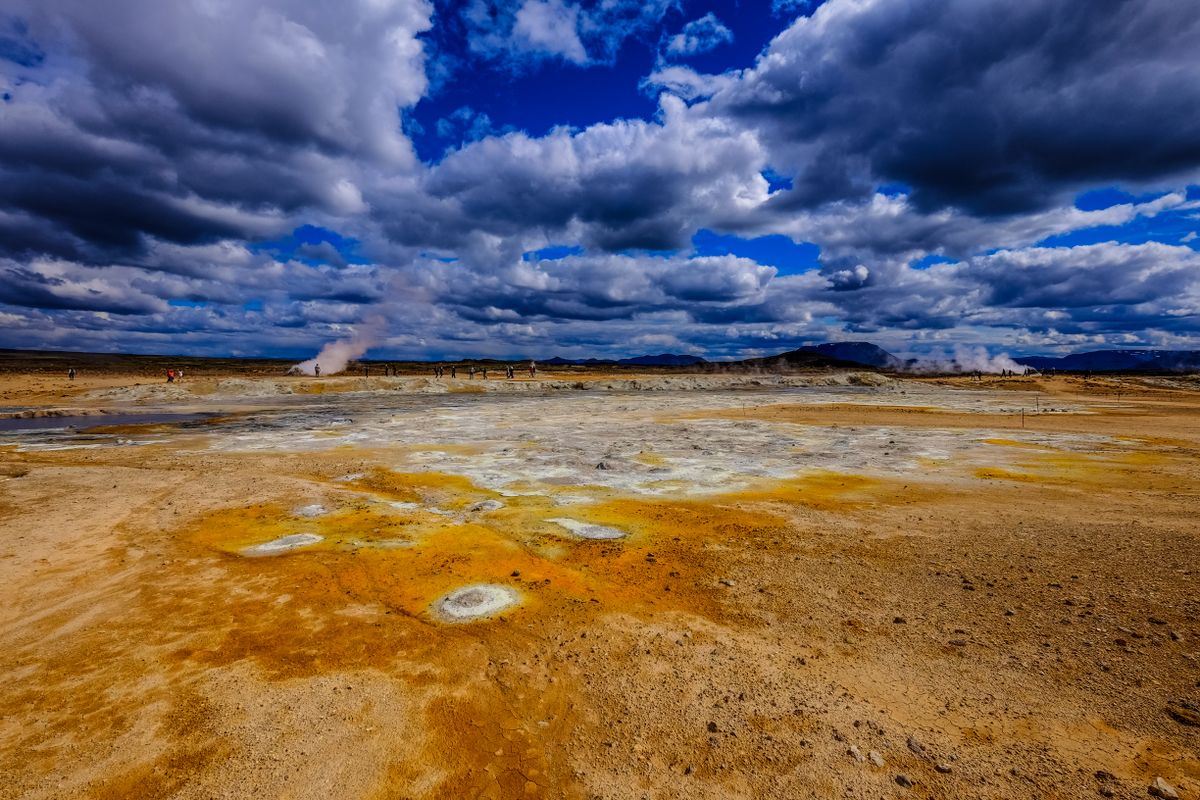
6. Torres del Paine, Chile — Impossible Granite
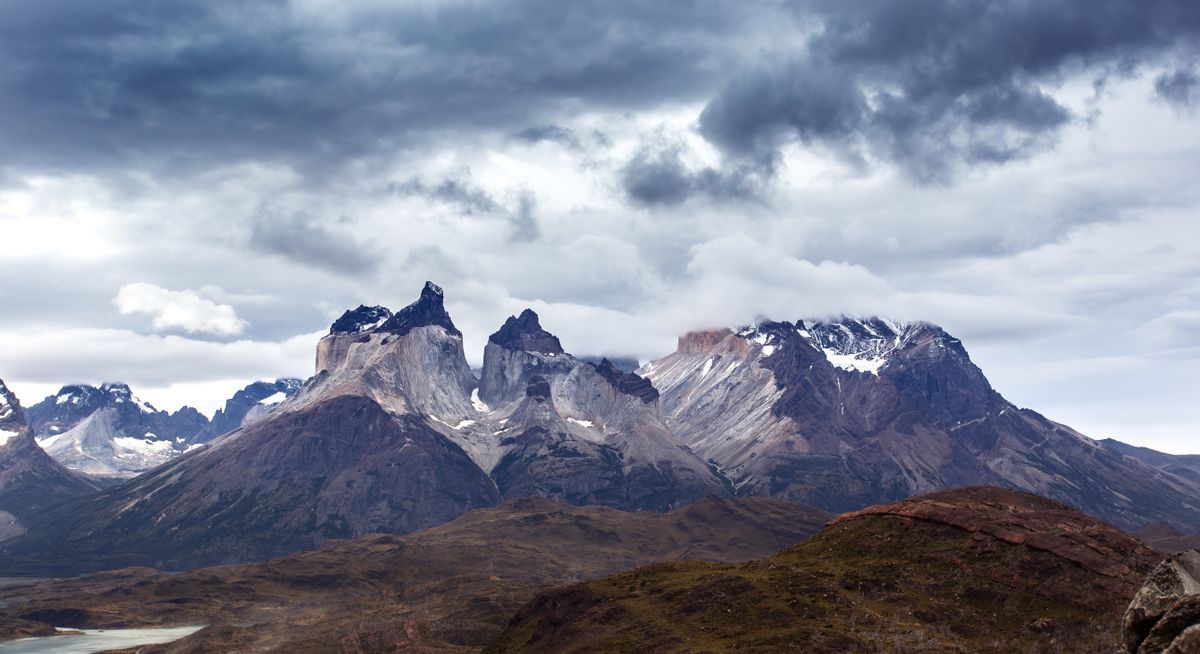
Torres del Paine National Park in Chilean Patagonia contains what are widely agreed to be the most dramatically improbable mountains in the world — three granite towers that rise 2,500 meters from the Patagonian steppe in vertical walls of nearly unbroken granite, so geometrically extreme that they appear to have been placed by something with no interest in geological plausibility.
The standard viewpoint — the Mirador Las Torres, reached by a 4–5 hour hike — looks across a turquoise glacial lake at the three towers rising directly above, their vertical faces changing color through the day from grey to gold to pink. The lake's extraordinary turquoise color, caused by glacial flour, is too saturated to appear natural against the grey granite and grey Patagonian sky.
Getting there: Fly to Punta Arenas from Santiago (3 hours) then bus to Puerto Natales (3 hours). Book trails and refugio accommodation months ahead at torresdelpaine.com.
Best time to visit: November to March (Patagonian summer).
7. The Cave of Crystals & the Pulpi Geode — The Crystal Cathedral
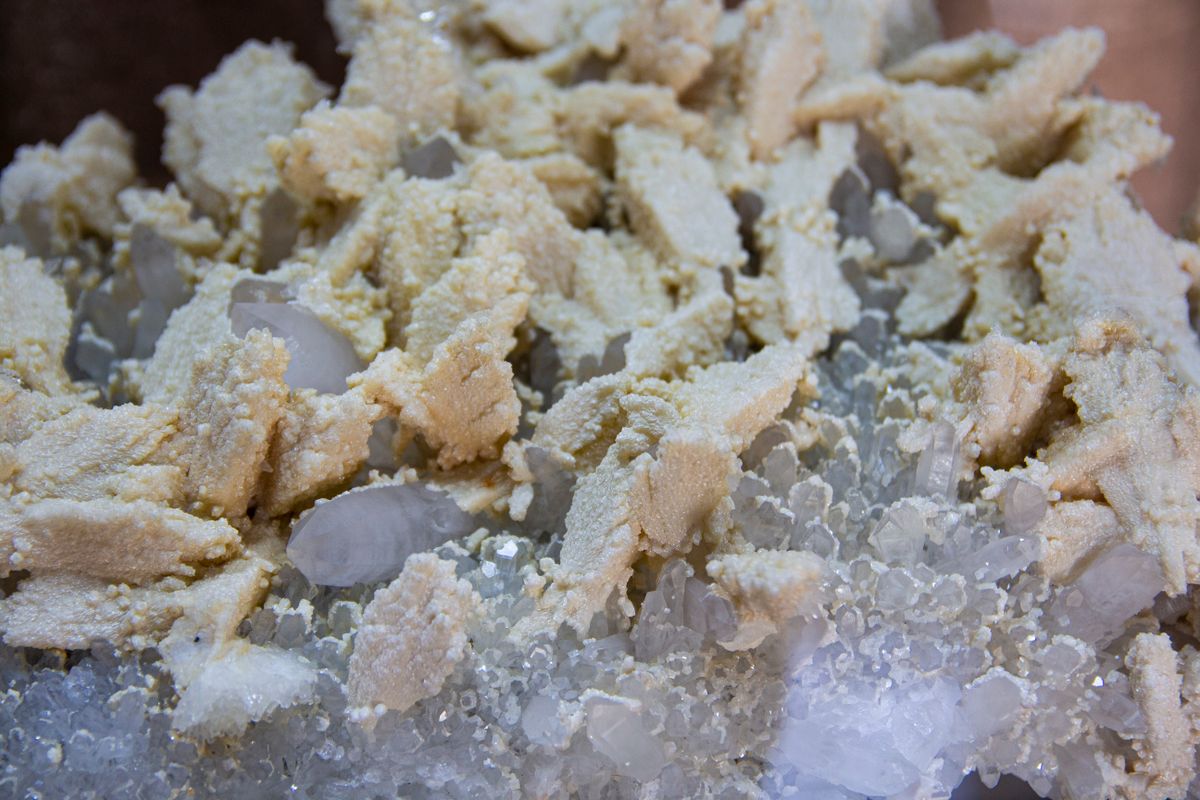
The Cave of Crystals in the Naica mine, Chihuahua, Mexico, discovered in 2000, contains the largest natural crystals ever found — selenite gypsum crystals up to 11 meters long, formed over 500,000 years. The cave is not currently accessible to tourists — extreme conditions inside (50°C, 99% humidity) make standard visitation impossible.
For accessible crystal environments: the Pulpi Geode near Almería, Spain — a 10-meter geode of selenite crystals discovered in 1999 and accessible on guided tours — provides the finest publicly accessible crystal cave experience in the world, its crystals up to 2 meters long, transparent and colorless, lining a chamber large enough to stand inside.
Getting there: Drive from Almería (45 minutes) to Pulpi. Tours run daily with limited capacity — book weeks ahead at museopulgidelinea.com. Entry approximately €13.
8. Bioluminescent Bays, Puerto Rico — The Living Sea
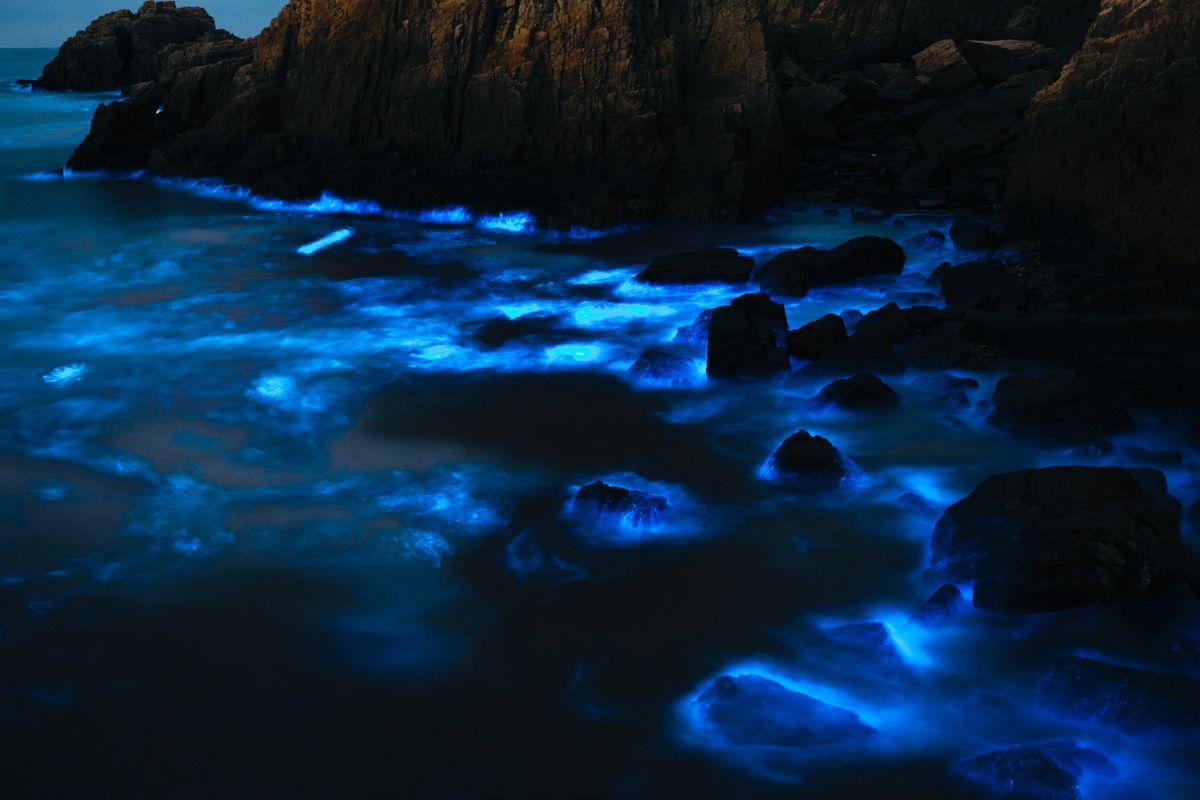
The bioluminescent bays of Puerto Rico — Mosquito Bay on Vieques Island, Laguna Grande, and La Parguera — contain the highest concentrations of bioluminescent dinoflagellates in the world, their waters producing blue-green light when disturbed by movement, in a display that is among the most genuinely unreal visual experiences available in the natural world.
Kayaking through Mosquito Bay on a moonless night, each paddle stroke producing a swirl of glowing blue-green light, a hand trailed in the water producing a glowing outline of every finger — the experience is one of direct interaction with the phenomenon rather than observation of it from a distance.
Getting there: Fly to Vieques (VQS) from San Juan (20 minutes) or ferry from Ceiba (30 minutes). Book kayak tours in advance.
Best time to visit: Year-round, but most intense on new moon nights.
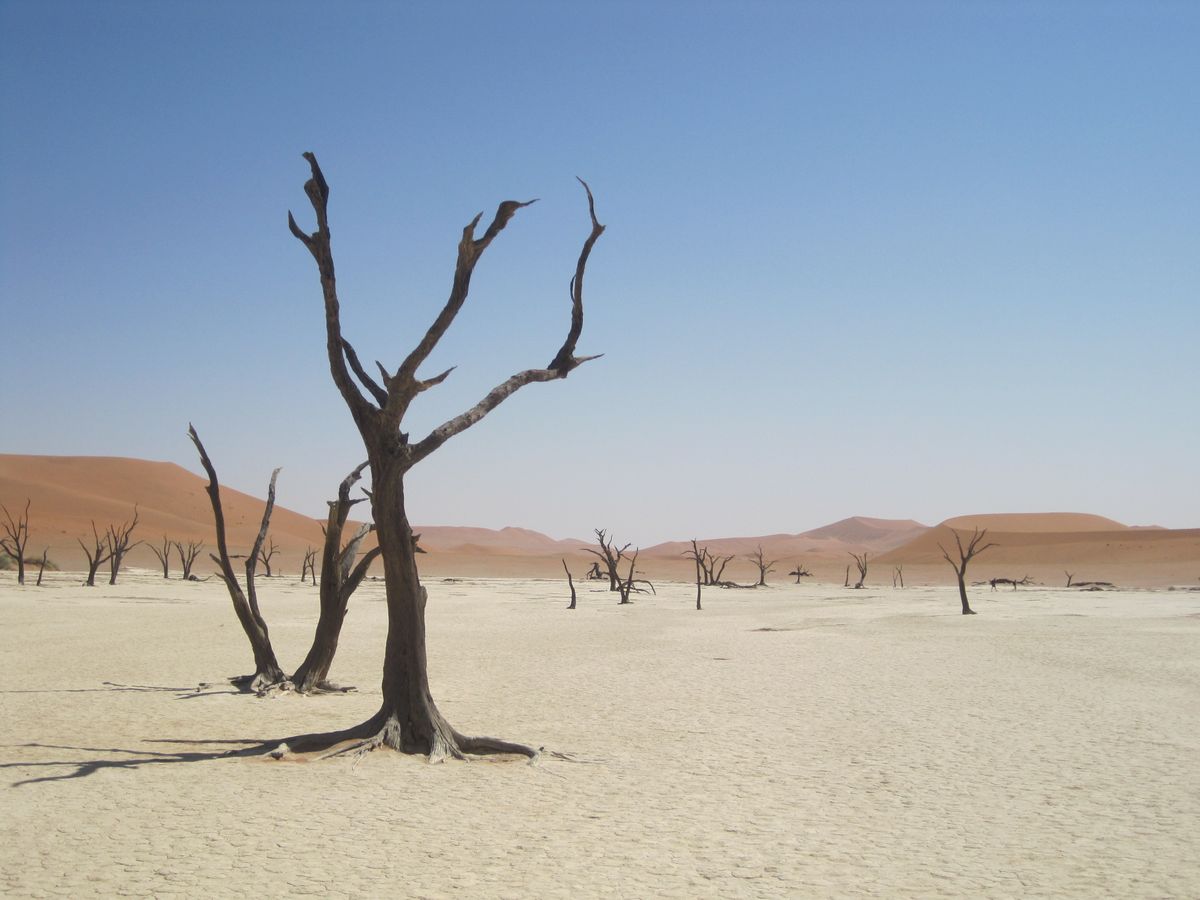
9. Dead Vlei, Namibia — The Surrealist Painting
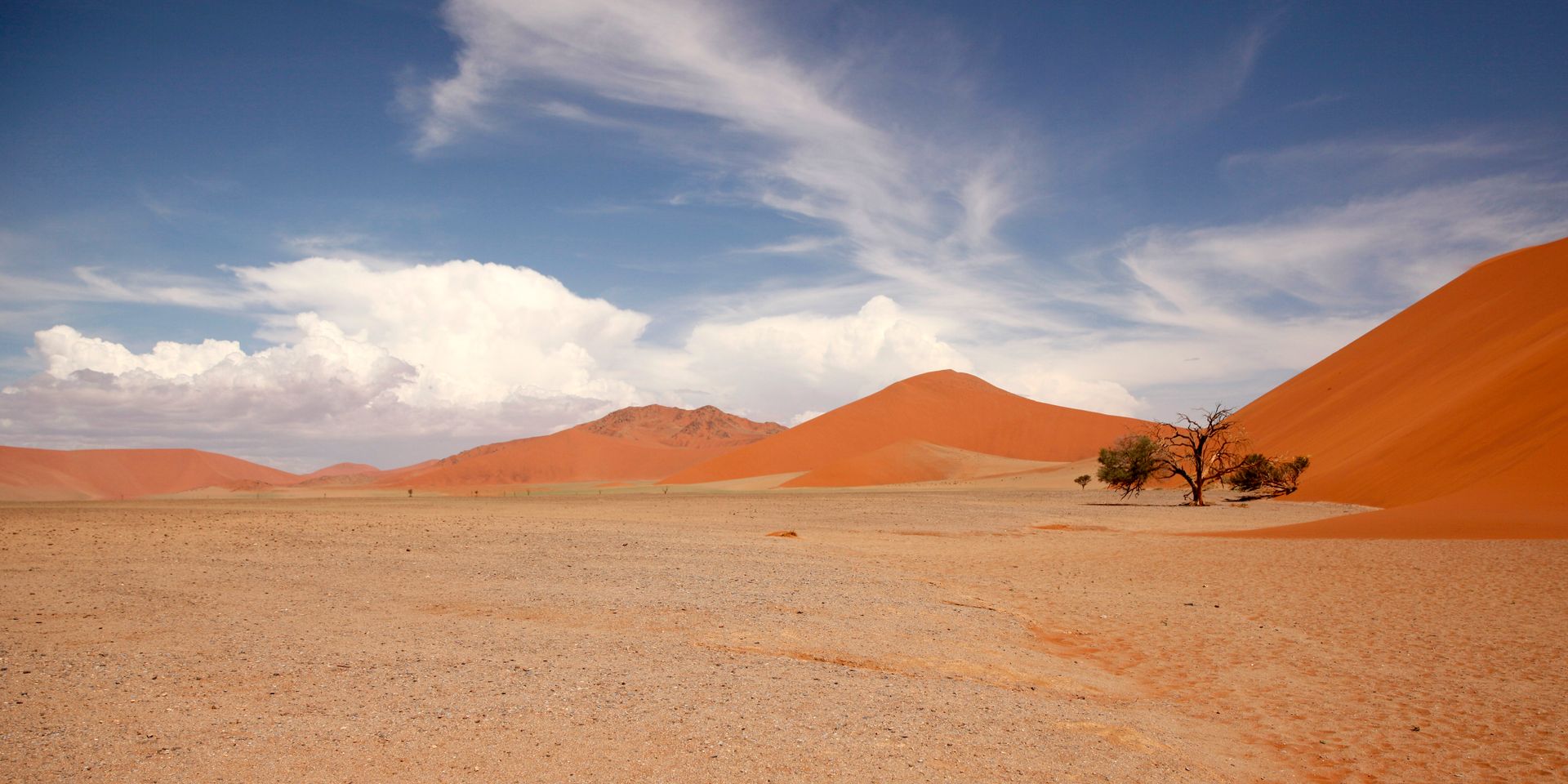
Dead Vlei is a white clay pan in the Sossusvlei area of the Namib-Naukluft National Park, surrounded by some of the tallest sand dunes in the world, containing approximately 900-year-old dead camel thorn trees whose black, desiccated trunks have been preserved by the extreme aridity of the Namib Desert since the dunes blocked the river that once fed the pan.
The visual result is the most precisely surrealistic landscape in Africa: black, skeletal tree forms standing in cracked white clay, surrounded by orange and red dunes 300–400 meters high, under a blue Namibian sky of extreme clarity. The colors — white, black, orange, red, blue — combine in a composition of such deliberate-seeming precision that the entire scene appears arranged rather than found.
Getting there: Fly to Windhoek and drive to Sesriem (approximately 5 hours). Enter the park at the Sesriem gate (open at sunrise) to reach Dead Vlei at dawn.
Don't miss: Dead Vlei at dawn, the climb of Dune 45, the 1 km Deadvlei walk in the cool of early morning.
Best time to visit: May to October (dry season) for the clearest skies and most extreme color contrast.
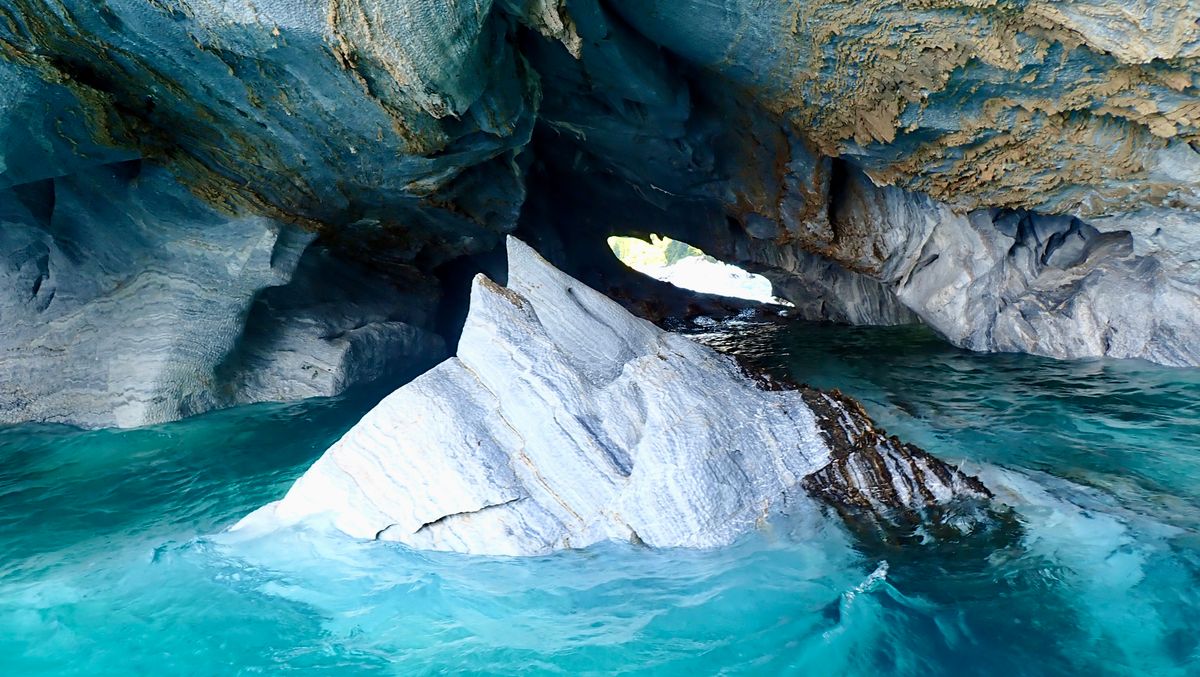
10. The Marble Caves of General Carrera, Chile/Argentina — The Blue Cathedral
The Marble Caves of General Carrera Lake — the second largest lake in South America — are cave formations carved by glacial meltwater into pure white and grey marble, whose polished surfaces and geometry produce an interior color environment of such intense and variable blue that entering by boat feels like entering a different physical reality.
The saturated turquoise color of the water, produced by glacial flour, reflects off the polished marble in a way that fills the interior with blue light of extraordinary intensity, the specific shade shifting as the light angle changes and the boat moves through the cave passages.
Getting there: Fly to Coyhaique and drive to Puerto Río Tranquilo (approximately 3.5 hours). Boat tours run daily in season.
Best time to visit: December to February (Patagonian summer) for the finest weather and best water clarity.
The Unreality of the Real World
The places in this guide have one thing in common beyond their specific visual impossibilities: they all exist in the face of a deep human expectation that the world, however beautiful, should behave according to the rules that daily experience has established. The pink lake should not be pink. The cave ceiling should not look like the Milky Way. The water should not glow.
And yet. The geological and biological processes that produce these places operate over timescales that make human history appear instantaneous, producing occasionally results that the human visual system and cognitive apparatus are simply not equipped to process as normal. These are the places where that processing failure is most complete, most persistent, and most rewarding.
The most alien planet accessible from any airport is the one you are already living on. Stand somewhere that should not exist, and the world looks different afterward.