Greece's islands divide into five distinct archipelagos, each with a personality as different as their position on the Aegean suggests. The Cyclades hold the white-and-blue architecture of global "Greek islands" imagery; the Dodecanese pair extraordinary history with beach quality at lower prices; the Ionians face Italy and are green where the Cyclades are arid; the Sporades and Northeast Aegean islands reward travelers seeking the Greece that exists outside the tourist economy.
The ferry is not merely transport. It is the mechanism that makes the contrast between islands possible.
The Classic Cyclades Route (10–14 Days)
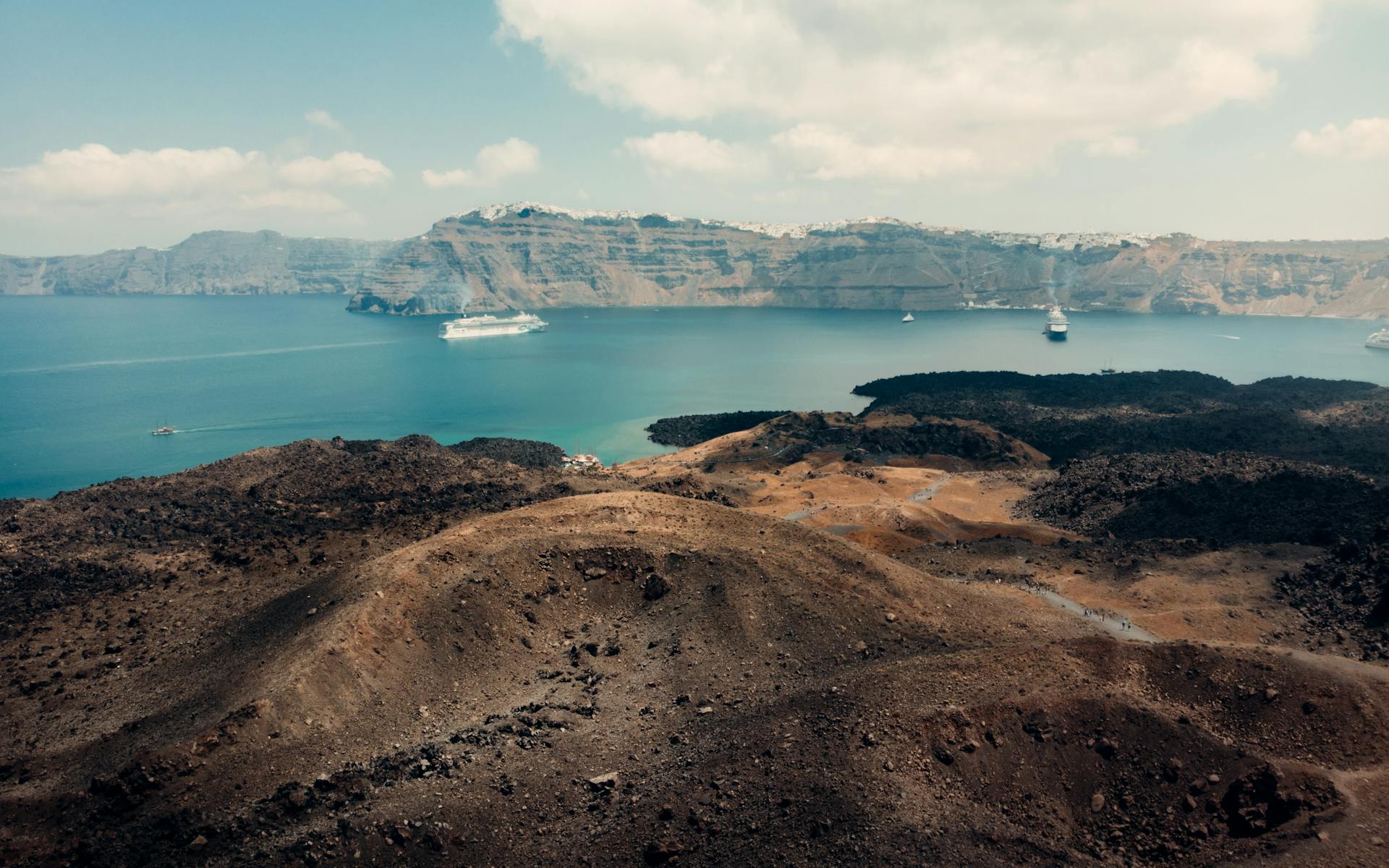
Athens → Santorini → Folegandros → Milos → Sifnos → Paros → Naxos → Mykonos → Athens covers the Cyclades' five most distinct personalities. Santorini's caldera — formed by a volcanic eruption 3,600 years ago — delivers the most anticipated sunset in Greece from Oia, though the pre-dawn walk along the rim to Fira avoids the 2,000-person crowd entirely. Naxos, the largest and most self-sufficient Cycladic island, has the finest food culture in the group and 20+ kilometers of golden family-friendly beach. Milos's Sarakiniko beach — a lunar landscape of wave-smoothed white volcanic rock — has become the decade's most shared Greek island discovery.
The Dodecanese and Ionian Alternatives
Rhodes's Old City is the most complete surviving medieval city in Europe, inhabited continuously for 700 years; Symi's neoclassical sponge-merchant mansions create the most dramatic harbor arrival in the Aegean; Patmos, where St. John wrote the Book of Revelation, offers genuine contemplative tranquility.
The Ionian Islands — Corfu, Kefalonia, Ithaca, Zakynthos — require car transport between sections but reward the effort with lush, Venetian-influenced Greece unlike the arid Cyclades. Kefalonia's Myrtos Beach, white pebble beneath limestone cliffs, is among Europe's most photographed beach views.
Sifnos, Paros, and Folegandros
Paros anchors the Cyclades ferry network without requiring a return to Piraeus, pairing genuine village life in Naoussa and Parikia with the best windsurfing conditions in Greece. Folegandros — a Chora perched on a 200-meter cliff, no cars, a resident population of 700 — is the island Greece's most experienced travelers most consistently name as the finest balance of drama and restraint in the Cyclades. Sifnos, birthplace of Greece's first modern cookbook author, maintains a genuine culinary identity around slow-cooked chickpea soup and clay-pot lamb, backed by 140km of the best-marked hiking trails in the island group.
The Sporades and Northeast Aegean
Beyond the Cyclades, Dodecanese, and Ionians lie two lesser-visited archipelagos worth the detour. The Sporades — Skiathos, Skopelos, and Alonissos — are the greenest Aegean islands, pine forest descending to crystalline bays, with Alonissos hosting Europe's rarest marine mammal, the monk seal, in a dedicated marine park. The Northeast Aegean islands — Ikaria, Samos, Lesbos, Chios, and Thassos — are the least touristed of Greece's major groups; Ikaria, one of the world's five Blue Zones, owes its residents' exceptional longevity to a specific combination of diet, physical activity, and an unhurried afternoon-nap culture.
The Ferry System
Blue Star Ferries and Hellenic Seaways run conventional vessels; SeaJets and Golden Star Ferries run faster but pricier catamarans. Book through Ferryscanner or Ferryhopper 4–6 weeks ahead for July–August departures. Piraeus is the main hub (20 minutes by metro from central Athens); the smaller Rafina port offers a less stressful embarkation for Cycladic routes. The Meltemi — a strong July–September northerly wind — regularly cancels high-speed services above 25 knots; build buffer days into peak-season itineraries.
When to Go
May and June offer swimmable seas, thin crowds, 30–50% lower prices, and superior restaurant attention. September and October are nearly as good, with the warmest swimming (26–28°C) and dramatically reduced August 15th post-holiday crowds. July and August are genuinely extraordinary but require accommodation booked 4–6 months ahead, particularly for Santorini and Mykonos.
Budget and Planning
Budget island hoppers spend €80–120/day; mid-range €150–250; comfort €300–600. Santorini and Mykonos carry a significant price premium — offset it by extending time on Naxos, Sifnos, or Paros. The golden rule: 4–5 islands with 2–3 nights minimum each in a two-week trip; if ferry time exceeds 20% of the trip, you're visiting too many islands.
Final Thoughts
Santorini and Naxos, 130 kilometers apart, are entire worlds different — different geology, architecture, food, and pace, all Greek and all surrounded by the same Aegean. That accumulated contrast across 4–5 islands is what no single destination, however extraordinary, can deliver alone.