Portugal has a way of catching people off guard. You arrive expecting pleasant weather, good wine, and pretty tiles — and you leave having experienced something far deeper. A country of extraordinary historical reach, whose explorers once mapped the known world, Portugal wears its remarkable past with a quiet, unhurried grace entirely its own. It is a country of profound contrasts: the labyrinthine Alfama, where fado drifts from open doorways, sits minutes from vibrant contemporary restaurants; the Alentejo's cork-forested plains stretch in near-biblical silence; the Douro rises in terraced vineyard steps above a UNESCO-protected river landscape.
It is the saudade — a Portuguese word with no direct English translation, describing a bittersweet longing for something beautiful and lost — that permeates the country's music, literature, and soul.
Why Portugal Should Be Every First-Time Traveler's European Dream
Portugal spent much of its modern history as Europe's westernmost secret, overshadowed by its larger neighbor Spain — an era now emphatically over, with Lisbon and Porto established among the continent's most exciting cities and the interior still rewarding those who venture beyond the obvious. What makes it special is hard to reduce to a list: the azulejo tiles turning ordinary house fronts into an open-air museum, the pastéis de nata that explain why food culture matters here, and an Atlantic light that makes every landscape glow.
Portugal also delivers outstanding value by Western European standards — a three-course meal with wine in Lisbon costs a fraction of Paris or London, and a night in a restored historic hotel in the Alentejo undercuts equivalent Tuscan accommodation, all served by an extensive, affordable rail network that makes independent travel straightforward.
Best Time to Visit Portugal
Spring (March–May) is widely considered the finest season — the countryside at its greenest, temperatures 16–24°C, and the almond blossoms of the Algarve in late February and early March among the most beautiful spectacles in Europe. Summer (June–August) brings the largest crowds and highest prices, with the Festas de Lisboa (June 12–13) a highlight. September and October are arguably the best months of all for experienced travelers — the Douro Valley's grape harvest (vindima) is one of Europe's great seasonal events, crowds thin dramatically, and mild weather persists into November. Winter is the mildest in mainland Europe, with Lisbon rarely below 8°C and the Algarve enjoying 15–18°C highs.
How to Get to Portugal and Around
Lisbon's Humberto Delgado Airport and Porto's Francisco Sá Carneiro Airport are the main gateways. Lisbon's Metro Red Line connects the airport to the city center in 20–30 minutes for ~€1.70; Faro Airport in the Algarve receives extensive European charter and low-cost traffic.
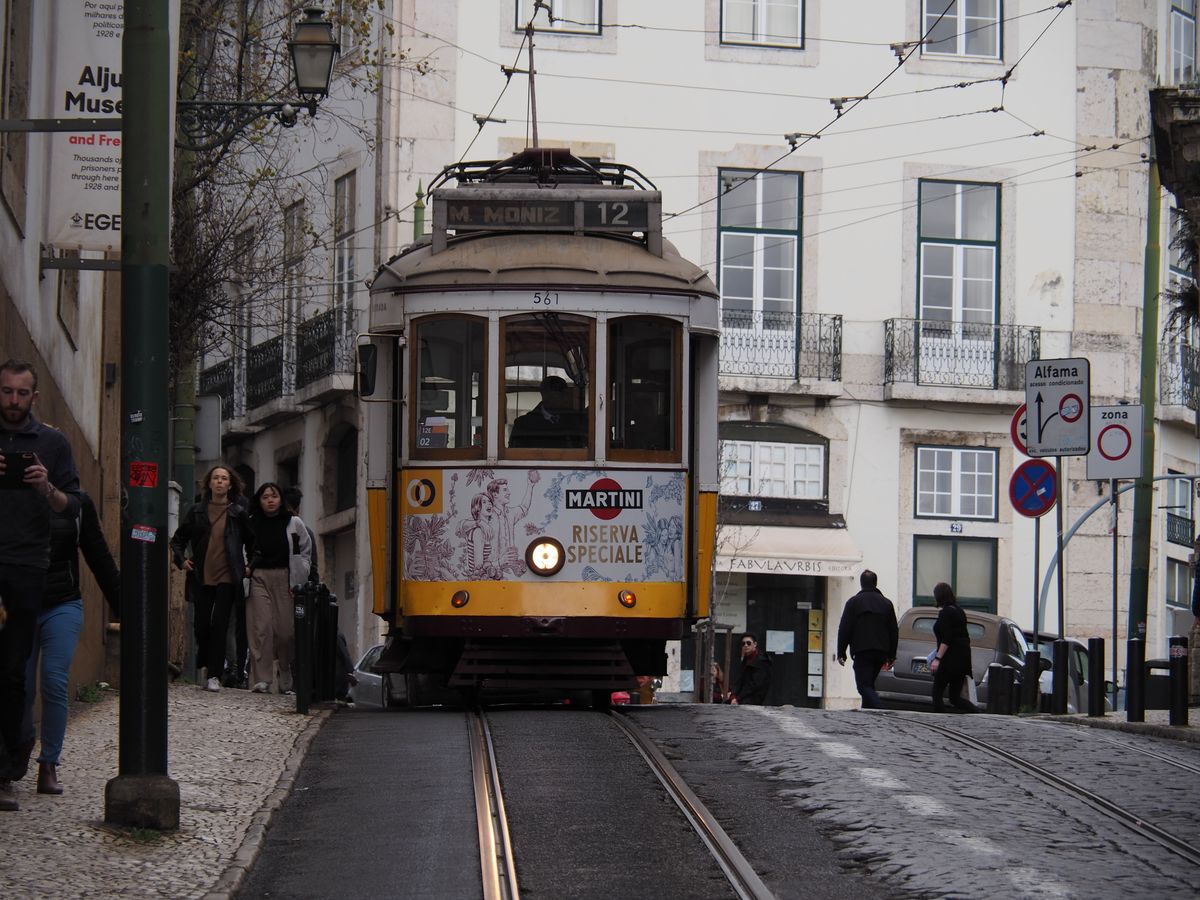
Train (CP): the Alfa Pendular high-speed service connects Lisbon and Porto in ~3 hours via Coimbra; the Douro Line from Porto to Pocinho is one of the most scenic train journeys in Europe. Car Rental is invaluable for the Alentejo, the Douro, and the Minho, though driving in central Lisbon and Porto is not recommended — both have very limited parking. Lisbon's Tram 28 rattles through the Alfama and is as much sightseeing as transport.
Top Destinations in Portugal for First-Time Visitors
1. Lisbon: the Alfama's ancient Moorish alleys and São Jorge Castle, Belém's Jerónimos Monastery and Torre de Belém, and the Museu Nacional do Azulejo's comprehensive tile-making survey.
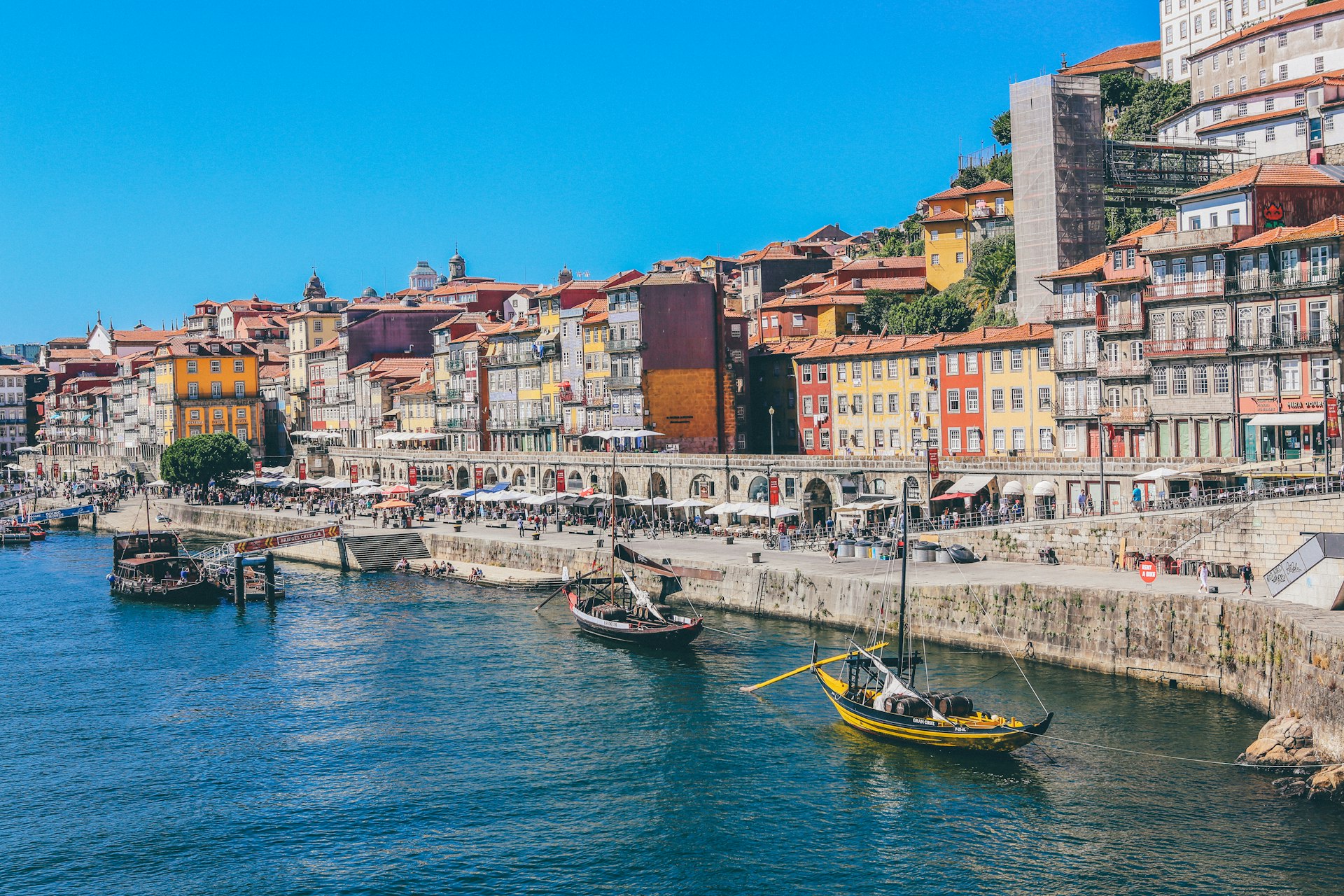
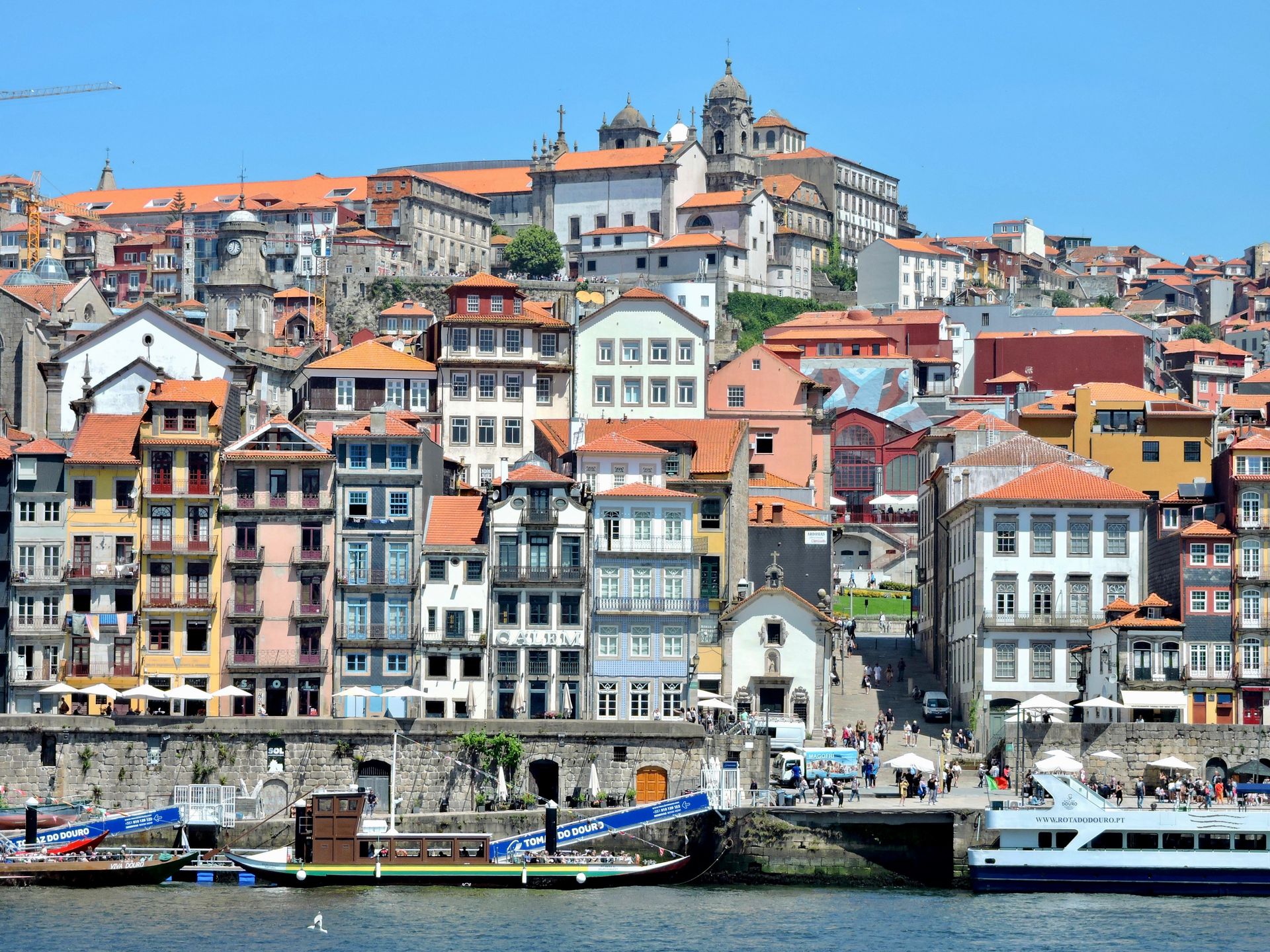
2. Porto: the Ribeira district's UNESCO-listed tilework facades tumbling to the Douro, Vila Nova de Gaia's historic port wine lodges, and the neo-Gothic Livraria Lello bookshop.
3. The Algarve: the wild, dramatic western coast around Sagres and the Costa Vicentina, the famous Benagil sea cave, and the refined, unhurried town of Tavira in the east.
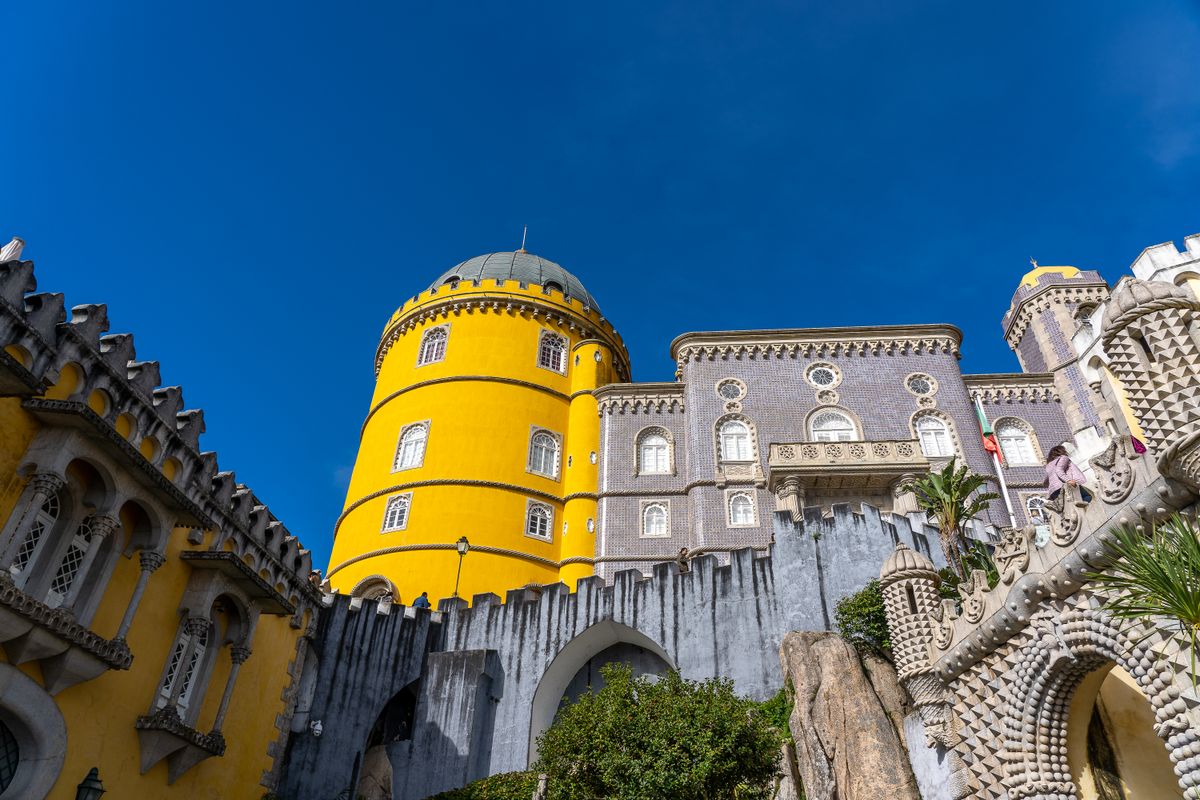
4. Sintra: a UNESCO World Heritage landscape of romantic palaces just 40 minutes from Lisbon — the vivid Palácio Nacional da Pena, the mysterious Quinta da Regaleira, and the moss-covered Moorish Castle.
5. The Douro Valley: terraced vineyards rising from the river for over 100km, the birthplace of port wine, best explored by train, boat, or the narrow vineyard roads around Peso da Régua and Pinhão.
6. The Alentejo: vast cork-oak plains and medieval hilltop towns — Évora's Roman temple and haunting Chapel of Bones, and the perfectly preserved village of Monsaraz.
7. The Minho and Northern Portugal: Guimarães, where Portugal was born in 1128, and Peneda-Gerês National Park's granite mountains, both largely free of international crowds.
8. Madeira and the Azores: Madeira's dramatic laurel forests and levada trails; the Azores' volcanic calderas and world-class whale watching on São Miguel.
What to Eat in Portugal
Pastéis de Nata, the custard tart that conquered the world, is best warm from the oven at Pastéis de Belém, in continuous operation since 1837. Bacalhau (salt cod), said to be prepared 365 different ways, is Portugal's most beloved ingredient — Bacalhau à Brás and com Natas are the essential versions. Grilled Sardines are the definitive summer dish, especially during June's Festas de Lisboa. Francesinha, Porto's excessive layered sandwich drenched in a spiced tomato-beer sauce, should be attempted at least once. Petiscos, Portugal's answer to tapas, are best in Lisbon's Mouraria neighborhood. Port wine from the Douro, Vinho Verde from the Minho, and the increasingly celebrated whites of the Dão round out one of Europe's most underrated wine countries.
Portugal Travel Tips for First Timers
Small courtesies and advance bookings go a long way in Portugal — a country that rewards patience over rushing.
Trail Notes
- Learn a few words of Portuguese — bom dia and obrigado/obrigada are warmly appreciated.
- Book Sintra's palaces and the Jerónimos Monastery well in advance, especially in summer.
- Eat the menu do dia — a two or three-course set lunch for €8–€13 is one of Europe's great budget-travel secrets.
- Validate train and bus tickets before boarding — inspectors do check.
- Avoid driving in Lisbon and Porto — limited parking and confusing one-way systems.
- Watch for pickpockets on Tram 28 and around the Eiffel-designed Elevador de Santa Justa.
- Visit Portugal's miradouros (viewpoints) at golden hour for the best light.
Suggested 7-Day Portugal Itinerary for First Timers
Days 1–3: Lisbon — Baixa and Chiado, the Alfama and São Jorge Castle, Belém's monuments.
Day 4: Sintra day trip — the Palácio da Pena and Quinta da Regaleira.
Days 5–6: Porto — the Ribeira waterfront, port wine tasting in Vila Nova de Gaia, the Livraria Lello.
Day 7: Douro Valley excursion — the scenic train to Pinhão and a quinta wine tasting before departure.
Portugal on a Budget: Is It Possible?
Portugal remains one of Western Europe's most affordable destinations. The menu do dia at a tasca provides a remarkable amount of food for €8–€12; a pastel de nata costs €1.20–€1.50; a Lisbon–Porto train journey costs €15–€25 booked in advance. A comfortable daily budget of €80–€100 per person covers a mid-range guesthouse, excellent meals, and two or three attractions.
Final Thoughts: Portugal Will Make You Wonder Why You Waited So Long
Portugal does not dazzle on arrival the way Tokyo or Istanbul does. It works differently — slowly, subtly, accumulating beauty and meaning in layers until, somewhere around day three or four, you realize you are completely and irreversibly in love with it, and already planning your return.