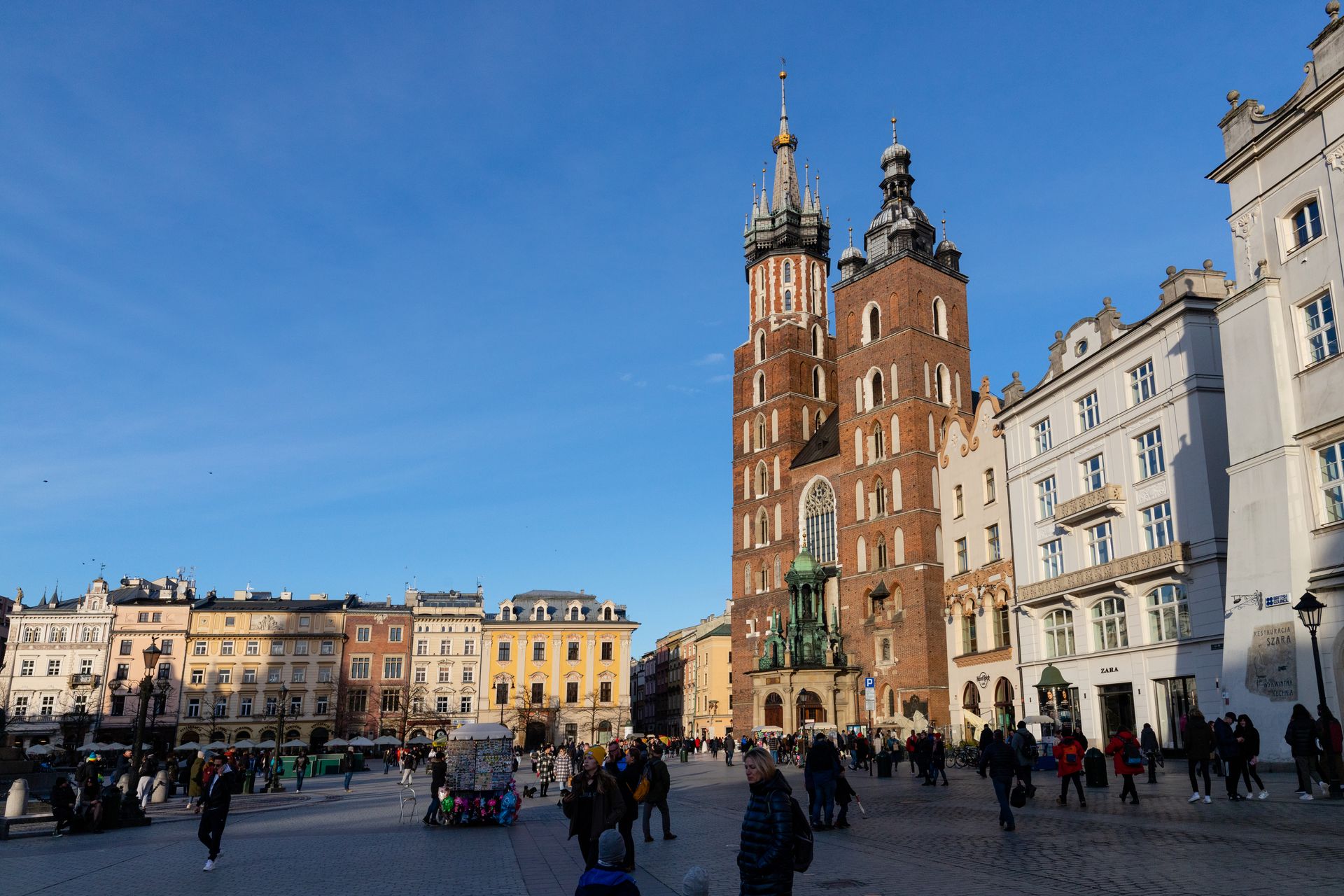
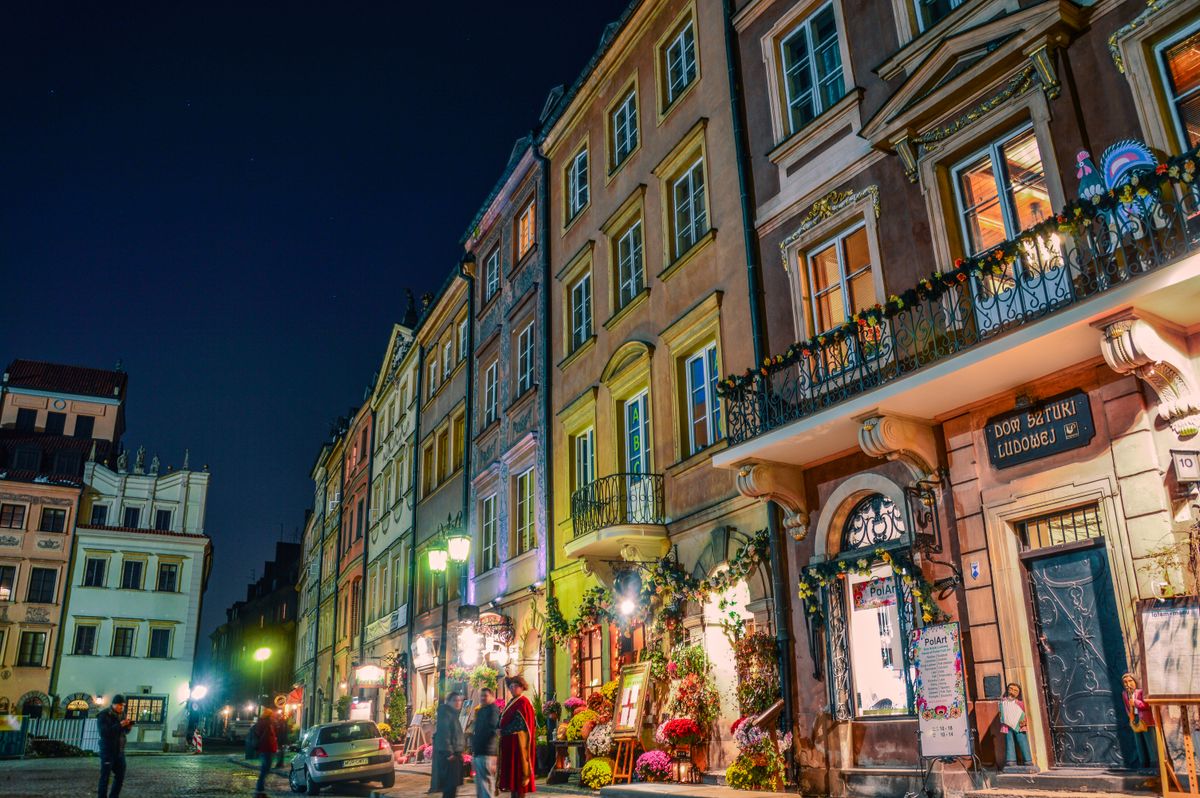
Poland sits in the category of countries whose extraordinary quality the traveler discovers not through glossy marketing but through a friend's recommendation they can't quite explain. Then you arrive — in Kraków's Rynek Główny, the largest medieval market square in Europe, alive at midnight in July, or in Warsaw's rebuilt Old Town, deliberately razed by Nazi occupation in 1944 and rebuilt stone by stone from historical records and 18th-century paintings — and you understand. Poland contains Europe's finest medieval city, its most significant single heritage site, a dramatically rebuilt capital, the continent's last primeval forest, and a food-and-vodka culture whose price-to-quality ratio is the finest in the EU.
The specific weight of standing in the Auschwitz gates and then, two days later, sitting in the Kraków Rynek at midnight — that juxtaposition of weight and joy is the Poland experience.
Kraków: The Royal Capital
Kraków's entire medieval core — the Rynek Główny, Wawel Hill, and the Kazimierz Jewish quarter — survived World War II intact, unlike Warsaw. The 200-by-200-meter Rynek holds the Renaissance Sukiennice (Cloth Hall) and St. Mary's Basilica, whose asymmetric towers and Veit Stoss altarpiece (13m high, the finest late-Gothic wood carving in Europe) anchor the square; every hour, a trumpeter plays the Hejnał from the tower, breaking off mid-note in memory of a 13th-century watchman shot by a Mongol arrow.
Wawel Hill's Cathedral holds the tombs of Polish kings and the Sigismund Chapel, "the finest Italian Renaissance architecture north of the Alps." Kazimierz, the former Jewish quarter whose 65,000-strong pre-war community was deported to Auschwitz-Birkenau, combines the Remuh Synagogue's melancholy with a thriving contemporary restaurant and bar scene, and the Oskar Schindler Factory Museum provides the most comprehensive account of the city's 1939–1945 history.
Fourteen kilometers from the center, the UNESCO-listed Wieliczka Salt Mine descends through chambers carved entirely from rock salt, including the extraordinary Chapel of St. Kinga — altar, chandeliers, and all cut from salt — the single most extraordinary underground space in Poland.
Auschwitz-Birkenau: The Essential Visit
Auschwitz-Birkenau, 70km from Kraków, is included here not as a tourism recommendation but as a moral necessity — the site where the Nazi regime murdered approximately 1.1 million people, 90% of them Jews, making it the largest single site of mass murder in human history. The guided Auschwitz I tour and the self-guided walk across Birkenau's 175-hectare site (300 surviving barracks) require a full day for the engagement the site asks of visitors. Book online at auschwitz.org 2–4 weeks ahead — peak-season walk-up visitors are frequently turned away.
Warsaw: The Phoenix City
Warsaw's Old Town is the only UNESCO World Heritage site recognized specifically for post-war reconstruction rather than historical fabric — 85% of the pre-war city was deliberately destroyed, and the entire Old Town was rebuilt between 1945 and 1984 using Canaletto's 18th-century paintings as a reference. The Warsaw Rising Museum, housed in a former tram power station, is the finest single museum in Poland, documenting the 63-day 1944 uprising with the emotional honesty the post-communist period has developed. The Palace of Culture and Science, Praga's intact pre-war architecture, and the Vistula riverbank's summer beach bars round out the contemporary city.
Gdańsk, the Tatra Mountains, and Wrocław
Gdańsk's Long Market showcases spectacularly restored Dutch Renaissance merchant houses, and the European Solidarity Centre, built on the shipyard gate where the Solidarity movement was born in 1980, is the most important museum of Cold War resistance in Europe. Sopot's pier and the shifting dunes of Słowiński National Park extend the Baltic coast experience.
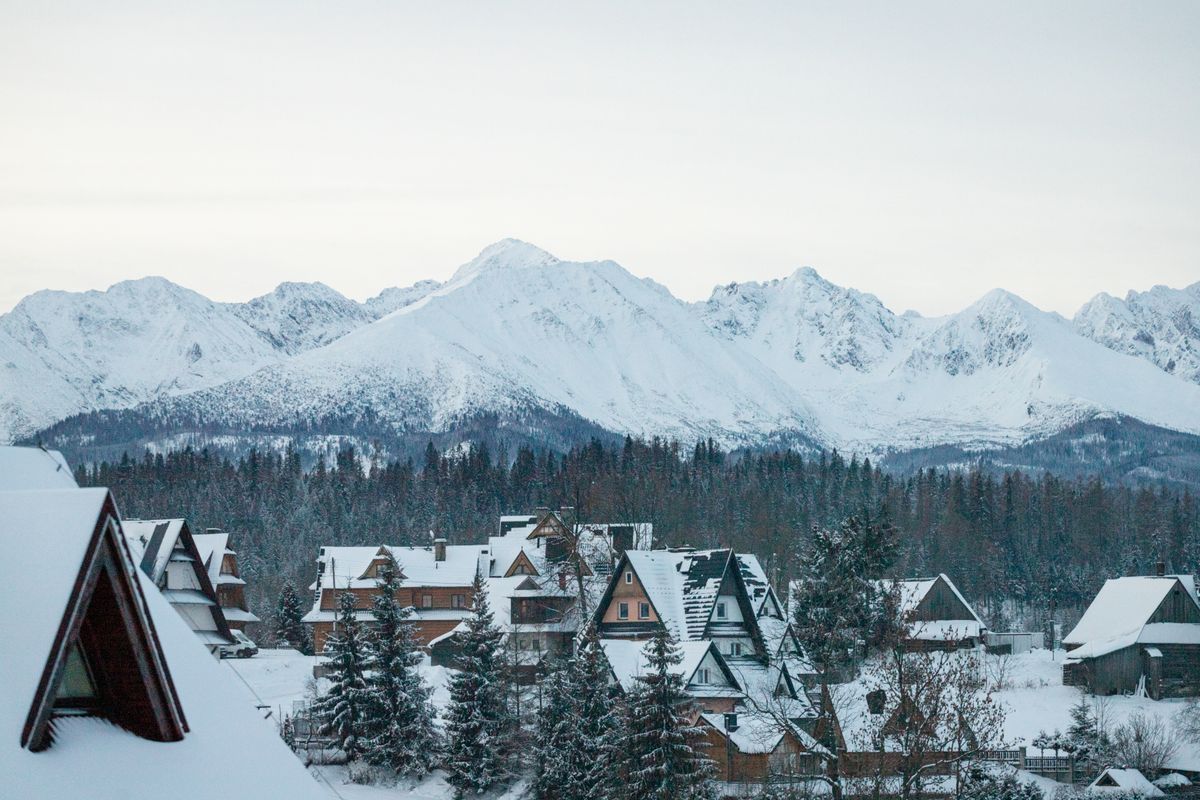
Zakopane and the Tatra Mountains surprise visitors who associate Poland with flat plains — real alpine terrain, with the Morskie Oko lake (accessible by a 9km walk) and the Kasprowy Wierch cable car reaching 1,987m. Wrocław, Poland's most architecturally layered city outside Kraków, hosts 600+ bronze dwarf statues scattered through its streets and the finest Christmas market in the country.
Polish Food, Vodka, and the Białowieża Forest
Żurek (sour rye soup), bigos (hunter's stew, improving over days of reheating), pierogi, and kotlet schabowy (breaded pork cutlet) anchor Polish cuisine, best sampled cheaply at a milk bar (bar mleczny) canteen. Poland's vodka culture spans rye, potato, żubrówka (bison grass), and śliwowica (plum brandy up to 70% ABV) — always served neat and at room temperature, never chilled.
The Białowieża Forest, the last primeval lowland forest in Europe and a UNESCO site, holds 500-year-old oaks and Europe's largest population of European bison (żubr), recovered from near-extinction through 1920s captive breeding. The strict reserve requires a licensed guide.
Poland Travel Tips for First Timers
Poland remains the EU's finest value destination and one of its safest.
Trail Notes
- Book the Auschwitz guided tour online 2–4 weeks in advance.
- Book Wawel Castle's timed interior tickets at opening — daily allocations sell out in peak season.
- Poland uses the Złoty (PLN), not the euro — exchange at city kantors rather than the airport.
- Book Kraków Christmas market accommodation 2–3 months ahead.
- Take the PKP Intercity Warsaw–Kraków express (2.5 hours) rather than driving.
- A visit to a vodka bar with a 50–100 bottle menu is the single most rewarding evening activity in Kraków or Warsaw.
Sample 10-Day Poland Itinerary
Kraków (3 nights, including the Auschwitz day trip) → Warsaw (3 nights) → Gdańsk (2 nights) → Wrocław (2 nights).
Final Thoughts: The Country That Earns Its Depth
Poland's greatest gifts are not the ones in the marketing but the ones that accumulate across the days of a visit — the understanding of a civilization that survived the 20th century's worst violence through cultural stubbornness and a specific refusal to be defined by suffering. Book the Auschwitz tour first. Eat the bigos. Stay for the Christmas market.