There is no city in the world quite like Fez. Fez el-Bali, the old medina, is the largest car-free urban area in the world — its 9,000-plus streets and alleyways form a labyrinthine network so complex that even long-term residents lose their bearings in its deeper quarters. The city contains the world's oldest university, still operating. Its souks are organized by trade as they have been for centuries, producing a sensory richness of smell, sound, and color that no curated tourist experience could replicate. This guide prepares you properly: the best time to visit, how to get there, where to stay, what to see and eat, how to navigate the medina honestly, and how to manage the guide situation.
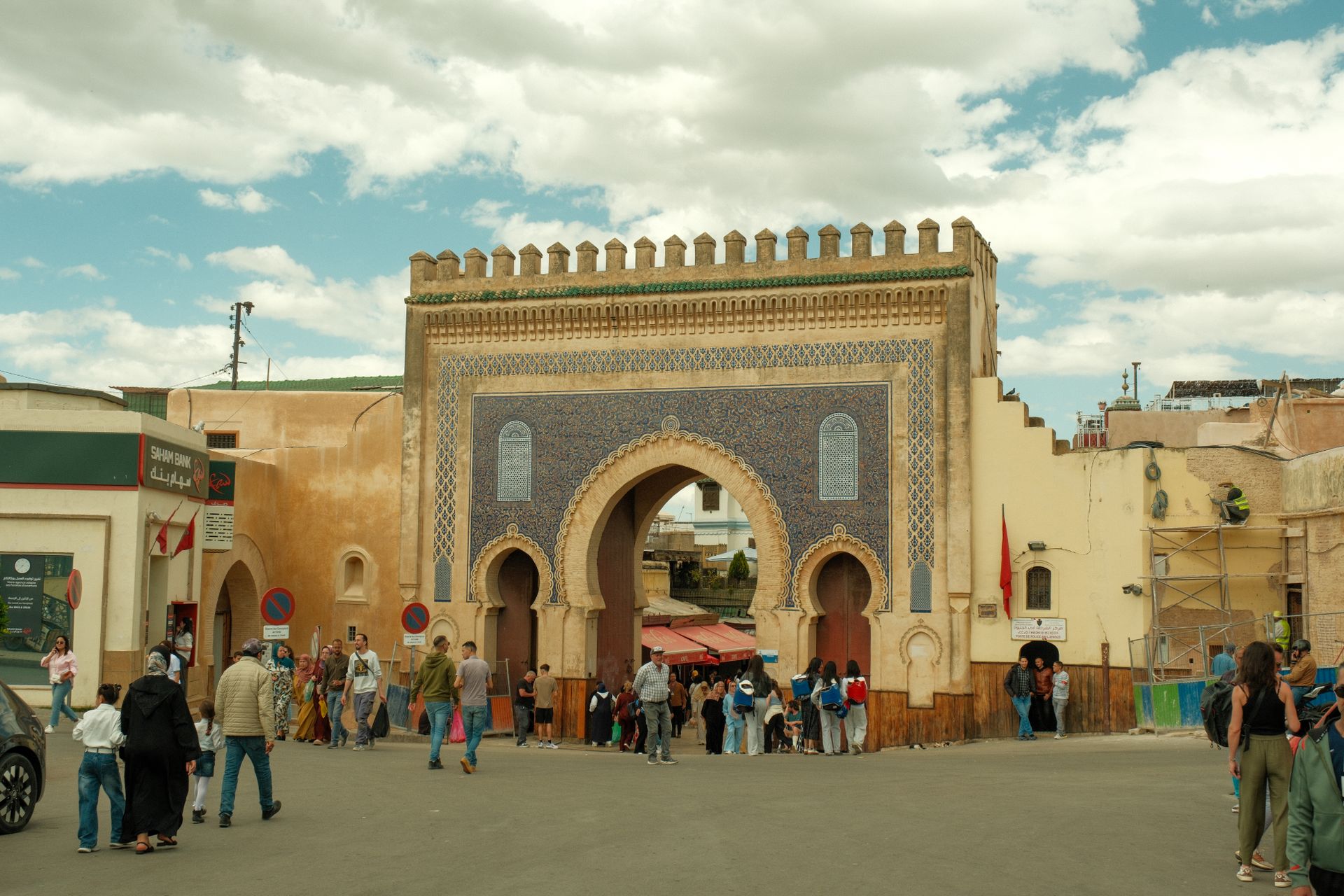
Walking into the medina of Fez through Bab Bou Jeloud is not merely entering a historic neighborhood — it is stepping into a different relationship with time.
Why Visit Fez
If you want a comfortable, predictable, easy-to-navigate city with polished tourist infrastructure, Fez is not your destination. If you want the most viscerally alive, historically dense, culturally intact city that the Mediterranean and Islamic worlds have to offer, then Fez is essential.
The UNESCO World Heritage medina of Fez el-Bali is the largest intact medieval city in the Arab world — approximately 300 mosques and mausoleums, 9,000 streets, hundreds of artisan workshops, two medieval university complexes, and a population of roughly 300,000 people living their daily lives in a built environment barely changed since the 13th century. This is not a living history museum. It is simply a living city that happens to be medieval.
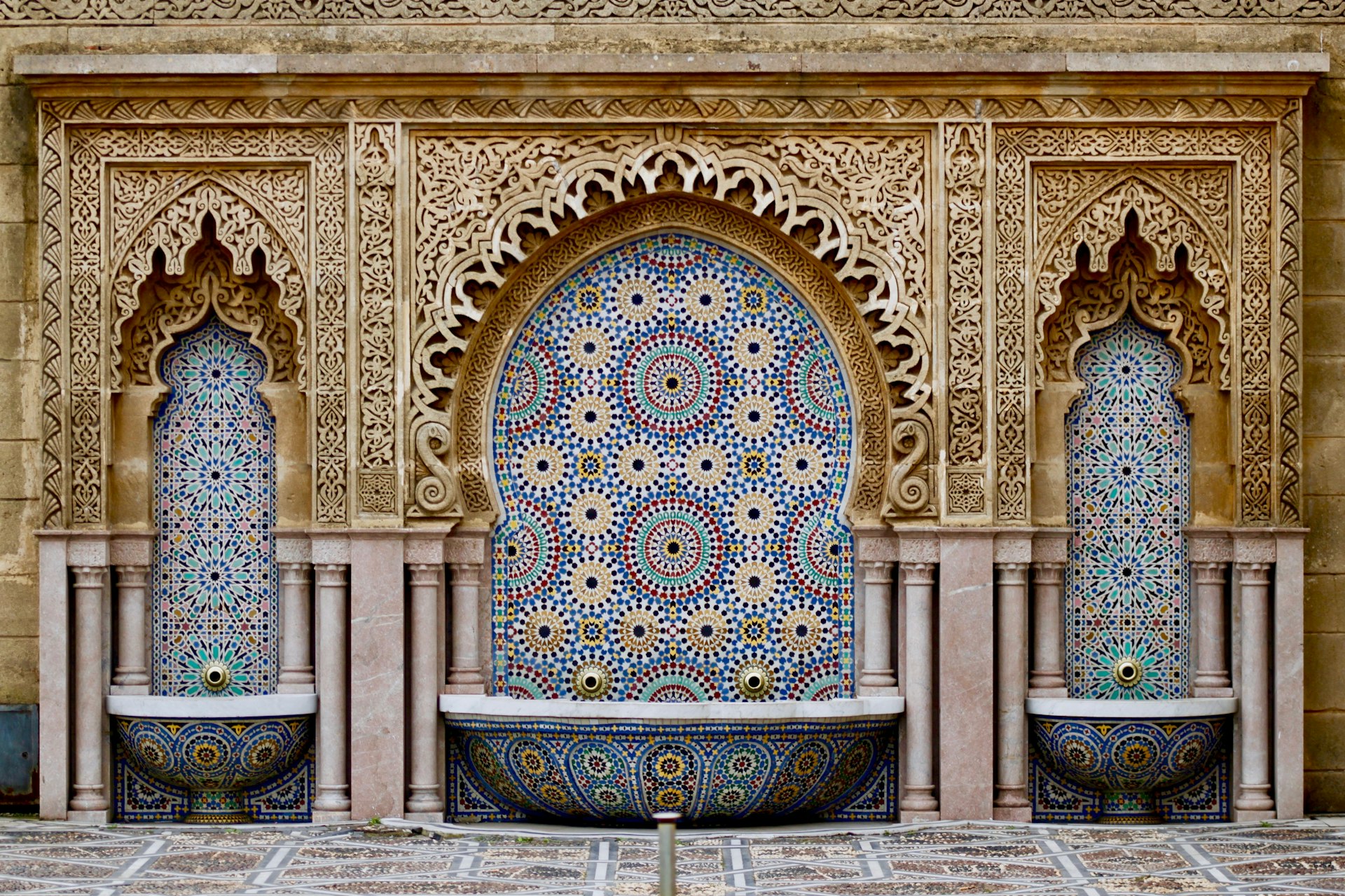
The crafts of Fez are world-class: the tanning pits of the Chouara Tannery, zellij tilework, carved plaster and cedarwood, hand-woven textiles, and hammered copper and brass. And the deeply flavored, spice-rich cuisine of Fez is, by many accounts, the finest in Morocco.
Understanding Fez: The Three Cities
Fez el-Bali (Old Fez) is the ancient medina, founded in 789 AD by Idris I and expanded by Idris II in 809 AD — the heart and soul of the city for almost every visitor, divided into the Andalusian quarter and the Kairouyine quarter either side of the Oued Fez.
Fez el-Jdid (New Fez) is the 13th-century royal city built by the Merinid dynasty, home to the Royal Palace and the Mellah (historic Jewish quarter) — quieter and more navigable.
Ville Nouvelle (New Town) is the modern city built by the French colonial administration, with wide boulevards, cafés, banks, and the main train and bus stations.
Best Time to Visit Fez
Spring (March–May): the ideal season — 18–26°C, green gardens, extraordinary light. The Festival of World Sacred Music in June is one of the finest music festivals in Africa and the Middle East.
Autumn (September–November): equally excellent — the summer heat has broken, and the medina operates at its most authentic everyday rhythm.
Winter (December–February): cooler and wetter than most expect (4–8°C at night), but the medina's least crowded, cheapest, and most atmospheric season.
Summer (June–August): hot at 35–40°C but typically more bearable than Marrakech due to Fez's altitude — early morning and evening are beautiful.
How to Get to Fez and Around
By Air: Fez-Saïss Airport (FEZ), 15km south, served by Ryanair, easyJet, and Royal Air Maroc from London, Paris, Brussels, and Amsterdam. Petits taxis charge 150–200 MAD to the medina. By Train: the ONCF network connects Fez with Casablanca (~3.5 hrs), Rabat (~2.5 hrs), and Tangier (~5 hrs); the overnight sleeper from Marrakech (~9 hrs) is atmospheric. By Bus: CTM and Supratours connect Fez with major Moroccan cities.
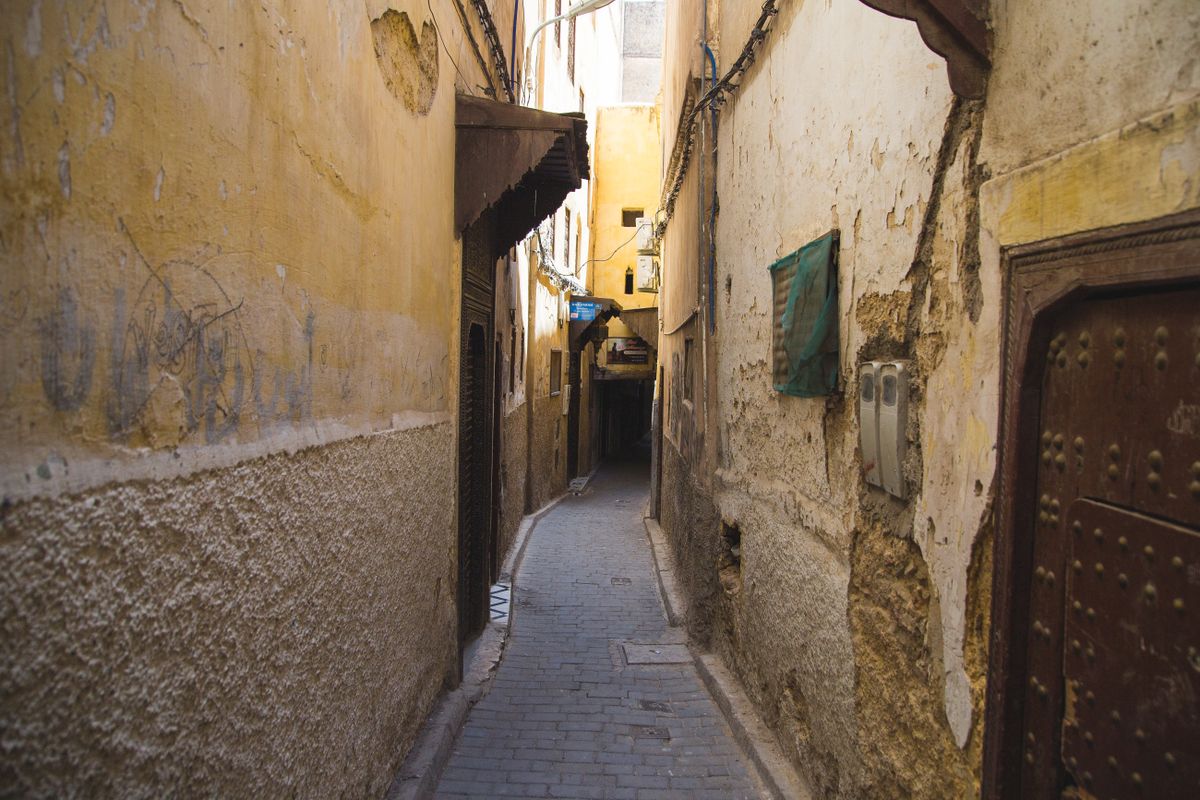
The only way to experience Fez el-Bali is on foot — there are no vehicles, and the streets are too narrow for anything but handcarts and donkeys. Talaa Kebira and Talaa Seghira, the two parallel main streets, lead generally downhill toward the Kairouyine Mosque and the heart of the souk district. Petits Taxis operate outside the medina between the gates, Fez el-Jdid, and the Ville Nouvelle (15–30 MAD). Grands Taxis run fixed inter-city routes, useful for day trips to Volubilis and Meknes.
Top Attractions in Fez
1. Fez el-Bali — Simply Walking the Ancient City: the most rewarding activity is also the least structured — walk the medina without a fixed itinerary. Talaa Kebira, descending from Bab Bou Jeloud, is the best orientation walk for a first morning.
2. Bou Inania Madrasa: built 1350–1357, the finest example of Merinid architecture in Morocco — a three-story courtyard combining geometric zellij tilework, carved plaster arabesques, and carved cedarwood screens. Allow 45 minutes; ~70 MAD.
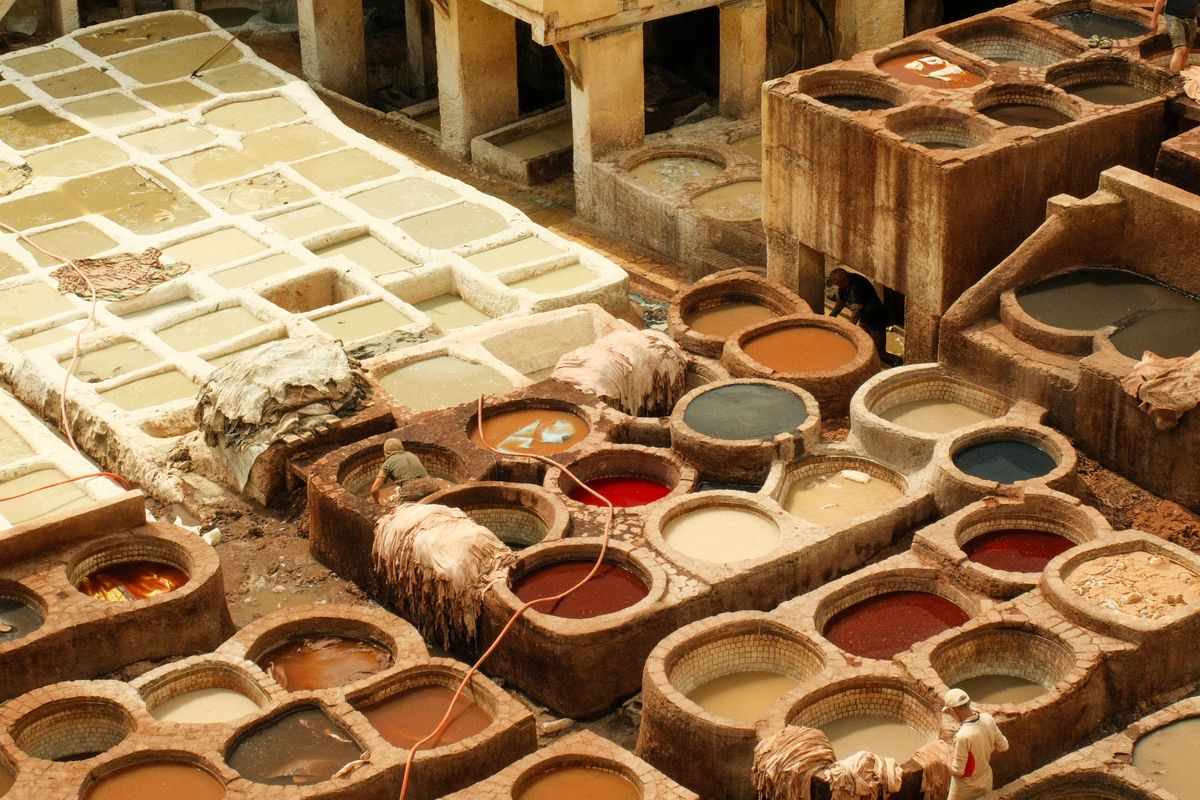
3. Chouara Tannery: the most iconic image in Moroccan travel — circular dyeing pits in saffron, poppy red, and indigo, treated using methods largely unchanged since medieval times. Leather shop terraces offer viewpoints above the pits (a small tip for the sprig of mint is customary); mornings show the freshest colors.
4. Al-Attarine Madrasa: built 1323–1325, adjacent to the Kairouyine Mosque in the heart of the spice souk, with particularly fine carved cedarwood.
5. University of al-Qarawiyyin: founded in 859 AD by Fatima al-Fihri, recognized as the oldest continuously operating university in the world — predating Oxford by over two centuries. Non-Muslims cannot enter, but the monumental carved wooden doors are deeply evocative.
6. Merenid Tombs: the ruined 14th-century tombs on the hillside above the medina offer the finest panoramic view over Fez el-Bali, especially at sunset.
7. The Mellah: Fez's ancient Jewish quarter, established in 1438, with distinctive balconied houses and the recently restored Ibn Danan Synagogue.
8. A Traditional Hammam: the public bathhouse ritual — a sequence of increasingly hot rooms, a vigorous kessa scrub, and a ghassoul clay mask — is deeply restorative and deeply Moroccan (15–25 MAD entry).
What to Eat and Drink in Fez
Pastilla (Bastilla): Fez's most celebrated dish — thin warqa pastry layered with spiced pigeon or chicken, almonds, and cinnamon-dusted sugar. Tagine: preserved lemon and olives with chicken, lamb with prunes and almonds, or kefta with egg. Harira: a thick soup of tomatoes, lentils, chickpeas, and lamb, eaten with khobz bread. Mechoui: whole lamb slow-roasted until the meat falls from the bone, sold by weight from northern medina stalls. Msemen and Baghrir: layered flatbread and thousand-hole semolina pancakes for breakfast. Couscous: the great Friday dish, steamed over lamb or chicken broth with seven vegetables. Mint Tea: the social lubricant of daily life, poured from height to create a froth.
Where to Stay in Fez
Riads in Fez el-Bali are the strongly recommended choice — traditional houses built around an interior courtyard, ranging from basic guesthouses to extraordinarily luxurious boutique hotels in restored 17th and 18th-century merchant houses. The area around Bab Bou Jeloud and the R'cif quarter near the Kairouyine are excellent bases.
Budget riad guesthouses run €25–€45 per night; mid-range boutique riads €60–€120; luxury restored palace riads €150–€400. Bring a backpack or soft bag, as most riad streets are too narrow for wheeled luggage.
The Guide Question: Navigating Honestly
The medina of Fez is genuinely difficult to navigate independently on the first day — this is simply the reality of a 1,200-year-old city with no signage and no landmarks visible above rooftop level. Official licensed guides cost approximately 300–400 MAD for a half day and are money well spent for a first morning. Unofficial guides at the gates are a mixed proposition — agree on the fee and whether the tour involves shop visits in advance; "no shops" said clearly is respected. Self-navigation is entirely possible with an offline map — accept that you will get lost, and treat it as part of the experience.
Fez Travel Tips for First Timers
Fez rewards patience more than almost any other city in this guide — a few habits will help you enjoy the disorientation rather than fight it.
Trail Notes
- Dress modestly — cover shoulders and knees in the medina, a cultural courtesy that is genuinely appreciated.
- Bargain respectfully — start at 40–50% of the asking price and work toward a middle ground with good humor.
- A small tip (10–20 MAD) is expected for the mint offered at tannery terraces.
- Carry small denomination dirhams — large notes are hard to change in the souks.
- Drink bottled water — variable plumbing quality makes it the safer choice.
- Ask your riad for restaurant recommendations — their guidance on which places locals actually eat is reliable.
- Allow more time than you think — three days is the minimum for a meaningful experience.
- Day trips to Volubilis (1 hour), Meknes (45 min), and the cedar forests of Azrou (1.5 hrs) are outstanding.
Suggested 3-Day Fez Itinerary
Day One: Bab Bou Jeloud and Talaa Kebira, the Bou Inania Madrasa, the Al-Saffarin square, lunch at a medina restaurant, the Chouara Tannery, sunset at the Merenid Tombs.
Day Two: an official licensed guide for the spice souk and workshops, traditional Friday couscous or mechoui, Fez el-Jdid's Royal Palace gates and the Mellah, a traditional hammam.
Day Three: a day trip to Meknes (Bab Mansour, the Heri es-Souani granaries) and Volubilis's Roman ruins, returning for a final long dinner with pastilla and Moroccan wine.
Fez Budget Guide
Fez is one of the most affordable significant travel destinations in the Mediterranean world. Harira and khobz at a neighborhood stall cost 15–20 MAD; mechoui by weight 60–100 MAD; a traditional restaurant lunch 120–200 MAD; a riad dinner 250–400 MAD. Bou Inania and Al-Attarine Madrasas cost ~70 MAD each; an official guide for a half day is 300–400 MAD.
A comfortable daily budget of €55–€80 per person covers a mid-range riad, excellent meals, the main monuments, and a half-day guide.
Final Thoughts: Fez Will Change Your Understanding of Cities
Most travelers who visit Fez leave with the same sensation — a feeling that they have encountered something with no category in their existing experience of cities. It is proof that a medieval city of 300,000 people can continue to function as a commercial center and a manufacturing hub for world-class crafts in the 21st century without becoming a theme park or a ruin. Go with patience, go with curiosity, and accept that some things in this world are simply beyond comparison with anything else.