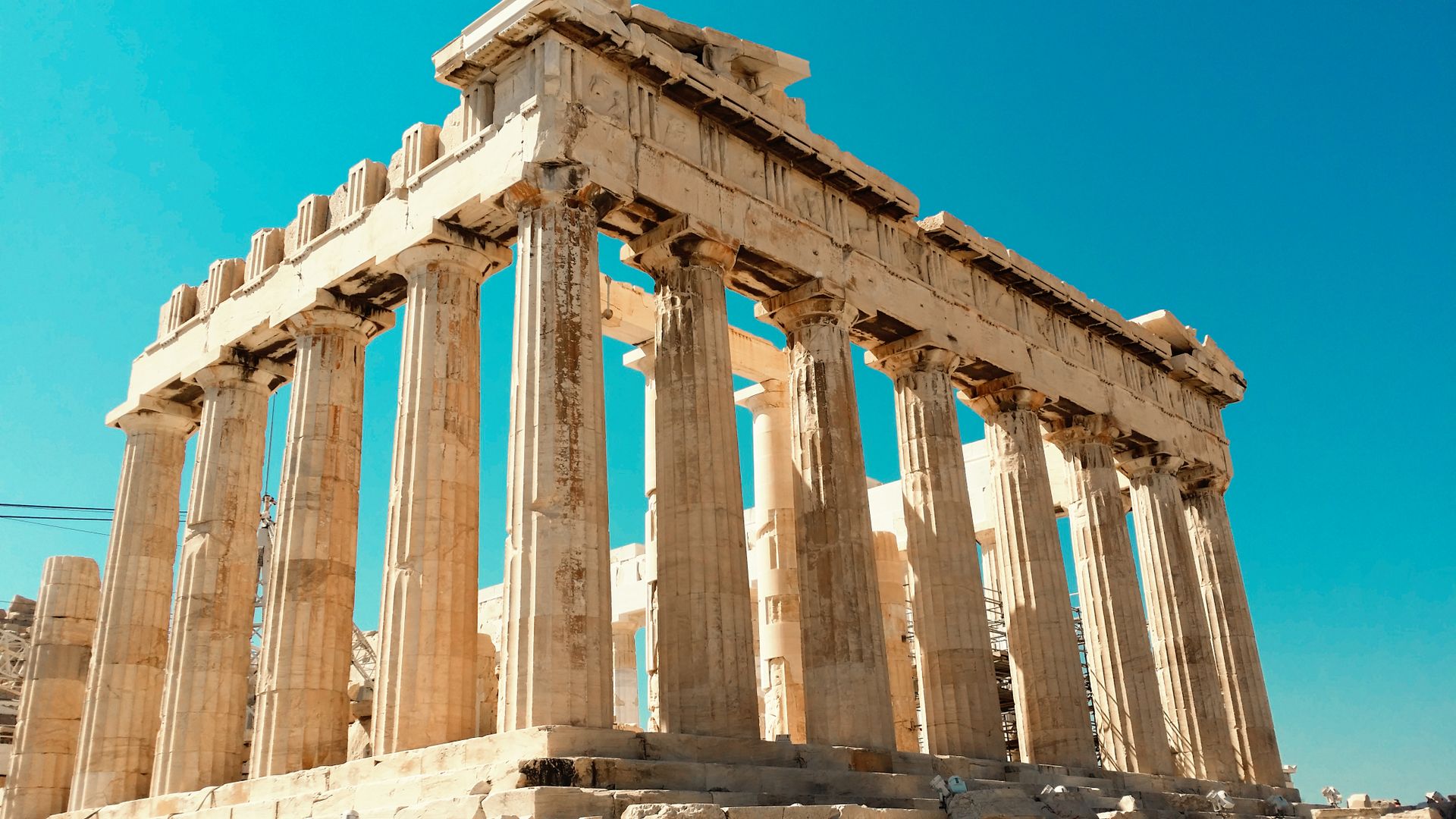
The traveler who arrives in Athens expecting a museum city finds instead a living Mediterranean capital of four million people. The Acropolis rises above the city's noise and traffic with the indifference of something that has seen empires come and go; the tavernas of Monastiraki serve grilled lamb in the shadow of Roman agoras; Athenians drink frappé on rooftop terraces overlooking the Parthenon with the specific nonchalance of people who grew up with it as their neighborhood backdrop. Three to four days is the minimum to experience Athens properly.
The specific weight of standing in the Acropolis at dawn and, two days later, eating grilled octopus at a Psyrri taverna at midnight — that is the Athens experience.
When to Go
May and June are the finest months — mild temperatures, long days, all sites fully operational, tourist volumes well below the July–August peak. September and October offer comparable conditions with lower crowds and clearer autumn light. November–March is the quiet season — the Acropolis in winter light on a clear day is extraordinarily beautiful.
The Acropolis
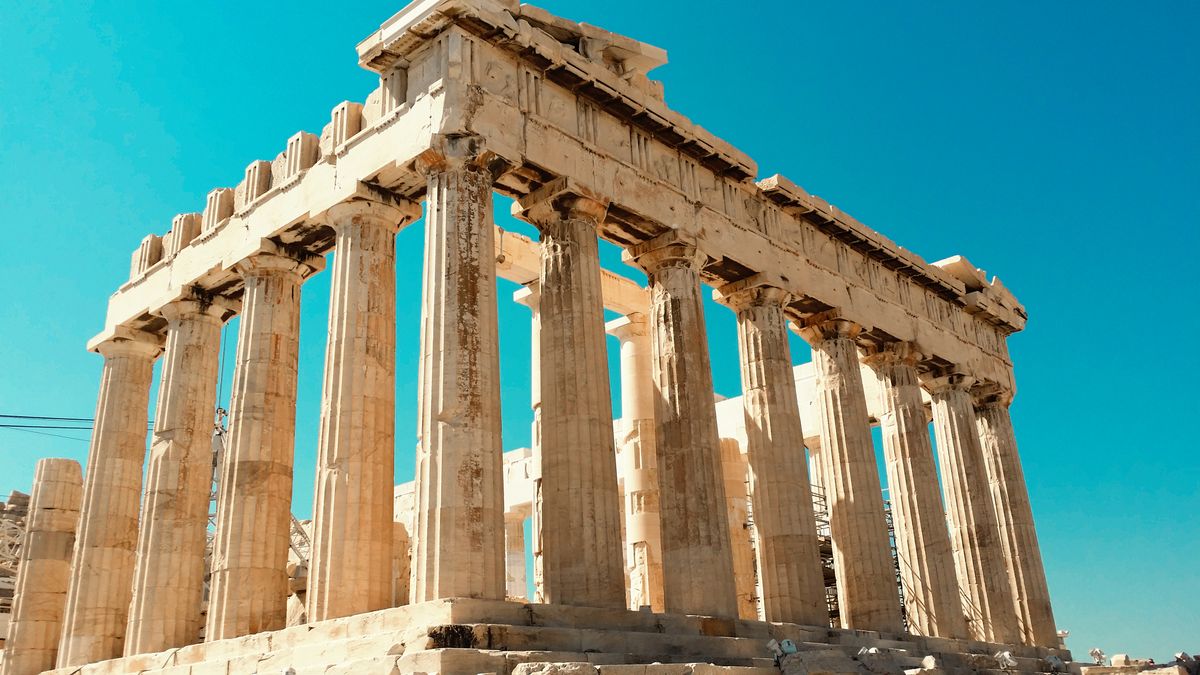
The Parthenon, Pheidias's 5th-century BC masterpiece under Pericles, is built with such precision that every horizontal surface is slightly convex to correct optical illusions at scale. Arrive at the 8am opening, before organized tours and cruise excursions, for morning light and near-empty monuments. The Acropolis Museum's Parthenon frieze gallery — alternating surviving originals with plaster casts of sections still in London — makes the case for repatriation more powerfully than any campaign.
Monastiraki, Plaka, and Exarchia
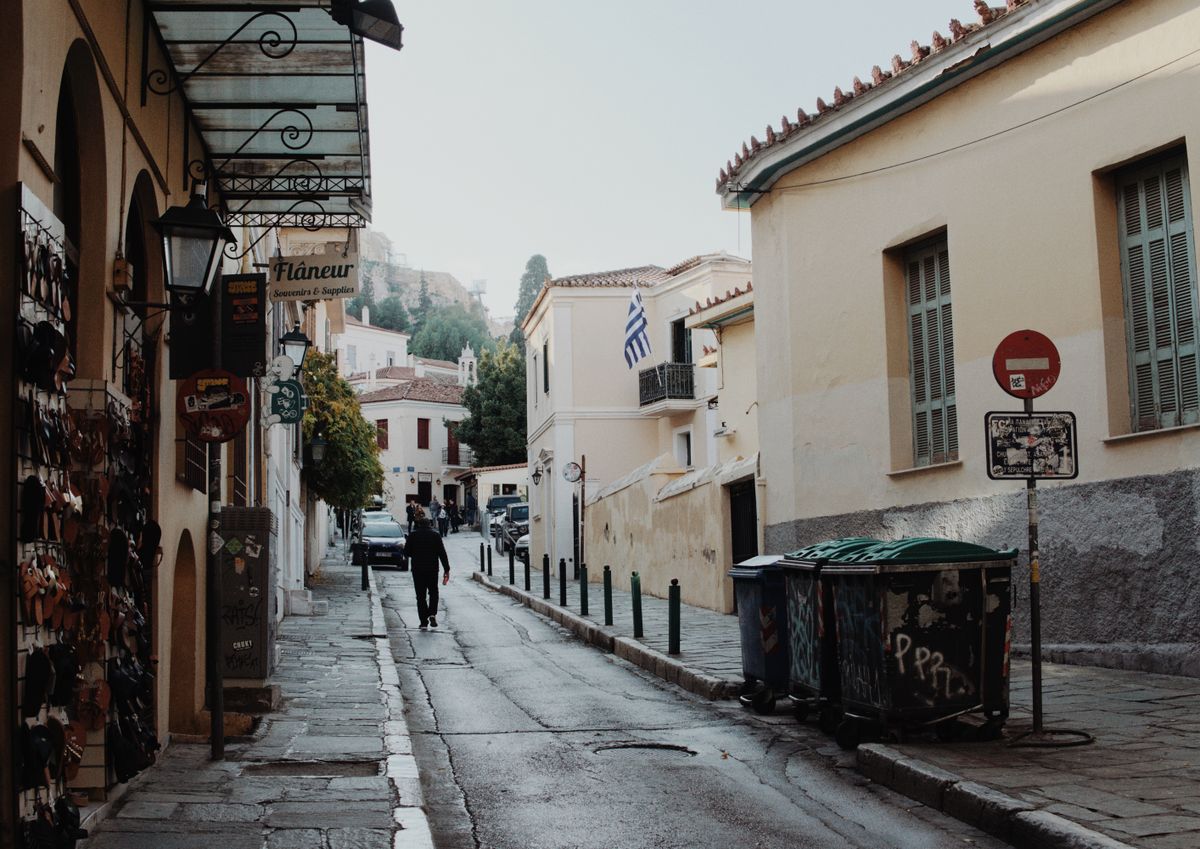
Monastiraki's flea market, fullest on Sunday mornings, is the finest single market experience in Athens. Plaka's 19th-century neoclassical houses are most beautiful at dawn, before the tourist restaurants open. Exarchia, the city's most politically intense and culturally creative neighborhood, holds some of Europe's finest open-air political street art and tavernas organized around the local community rather than the tourist economy.
The Acropolis Museum and the Ancient Agora
The Acropolis Museum, Bernard Tschumi's 2009 glass-and-concrete building at the foot of the hill, is the essential complement to the site visit — its top floor gallery faces the Acropolis directly, and its Caryatid gallery displays the five original figures from the Erechtheion porch alongside a frieze gallery that alternates surviving originals with plaster casts of the sections still in London. Below the hill, the Ancient Agora — the civic heart of ancient Athens, where Socrates taught and the Athenian courts sat in judgment — pairs the reconstructed Stoa of Attalos with the Temple of Hephaestus, the best-preserved ancient Greek temple in existence, its completeness owed to centuries of use as a Christian church.
Kolonaki and the National Archaeological Museum
Kolonaki, the upmarket hillside neighborhood east of Syntagma, has the finest café terraces in Athens and the cable car up Lycabettus Hill — the highest point in the city, its summit chapel and panorama over the Saronic Gulf the best urban view in Greece. The National Archaeological Museum deserves a half-day that most Acropolis-only itineraries skip: its Mycenaean collection of gold death masks and shaft-grave weapons rewrote European chronology when Schliemann uncovered it in the 1870s, and its Antikythera Mechanism room holds the fragments of a 1st-century BC mechanical computer capable of predicting eclipses — arguably the single most extraordinary object in the museum.
Athenian Food
The traditional taverna — paper-covered tables, a display case of the day's dishes, house wine carafes — is the foundation of Athens eating. Order horiatiki (village salad), grilled octopus, and paidakia (charcoal-grilled lamb chops eaten with the hands). The Varvakios Central Market on Athinas Street at 7am, before the tourist shops open, is the finest single urban market experience in the city.
Where to Stay in Athens
Koukaki, the residential neighborhood just south of the Acropolis, is the correct base for most visitors: a 10-minute walk to the hill, well served by the Metro, and priced well below Plaka and Monastiraki for comparable proximity. Monastiraki and Plaka hotels sit closer still, at a premium that's worth paying if an Acropolis view from the rooftop terrace matters to the trip.
Day Trips: Sounion, the Saronic Islands, and Delphi
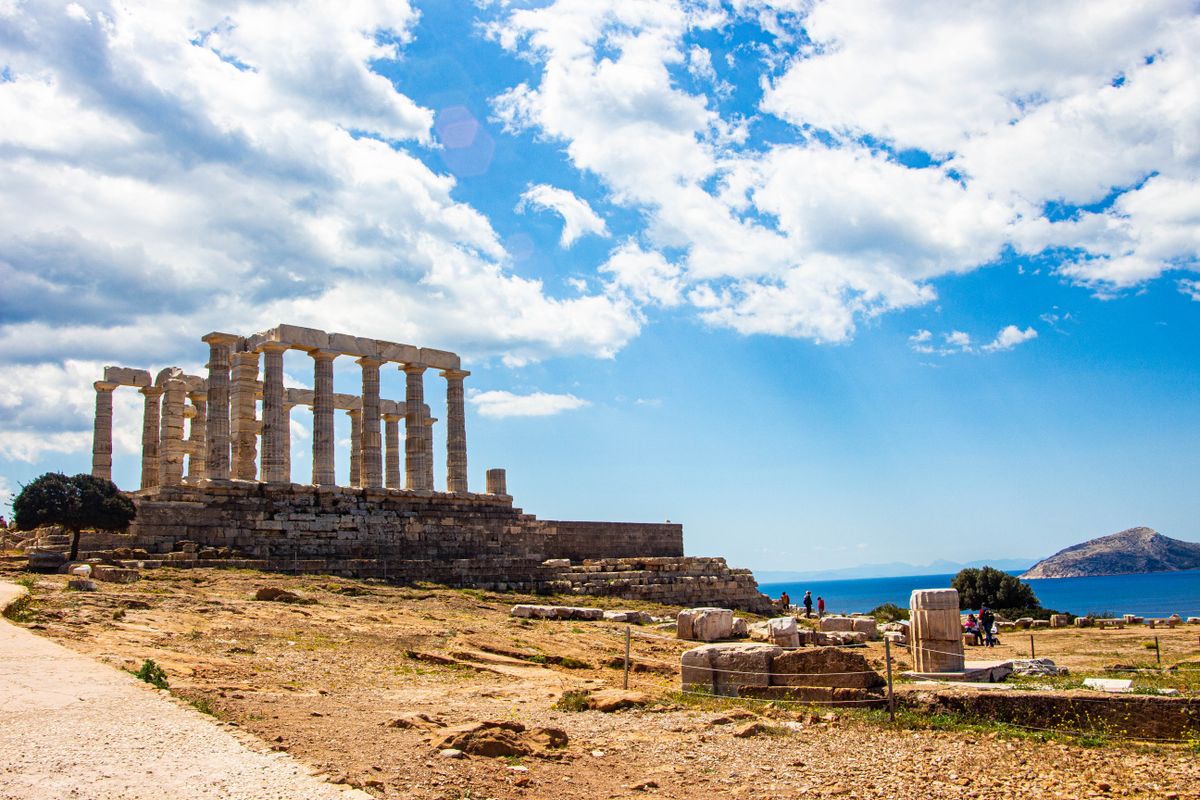
The Temple of Poseidon at Cape Sounion, its white Doric columns rising from a cliff 65 meters above the Aegean, is the finest half-day excursion — the temple at sunset, when the sea turns from blue to gold to pink, is unmatched. The Saronic Gulf islands (Aegina, Poros, Hydra, Spetses) are reachable by hydrofoil from Piraeus in 35 minutes to 2.5 hours, each distinct: Aegina for the Temple of Aphaia, car-free Hydra for its Venetian-influenced port, Spetses for its beaches. For a full day further afield, Delphi — the Pan-Hellenic sanctuary of Apollo, its Temple of Apollo and ancient theater set on the slopes of Mount Parnassus — is the destination that most expands an understanding of ancient Greece beyond Athens itself.
Athens Travel Tips for First Timers
Athens gives slowly and generously to travelers who move beyond the two-night, Acropolis-only itinerary.
Trail Notes
- Buy the combined Acropolis ticket (€30, five days) covering seven surrounding sites.
- Use the Metro — clean, cheap, and the correct choice for the historic center.
- Book the Acropolis timed entry online during peak season.
- Stay in Koukaki for the best value-to-location ratio near the Acropolis.
- Visit the National Archaeological Museum for the Antikythera Mechanism and Mycenaean gold.
- Catch an open-air summer cinema screening (May–October) for a distinctly Athenian evening.
Sample 3-Day Athens Itinerary
Day 1: Acropolis at 8am, Acropolis Museum, Ancient Agora, sunset from Philopappos Hill. Day 2: National Archaeological Museum, Exarchia lunch, Lycabettus Hill cable car. Day 3: Cape Sounion morning trip, Athens Riviera afternoon.
Final Thoughts: Athens Gives Slowly
Athens' depths are not immediately apparent to the traveler who arrives with only the ancient sites on the agenda. Come with time, come with appetite, come with the willingness to be surprised by a city whose most extraordinary qualities are not the ones most prominently advertised.