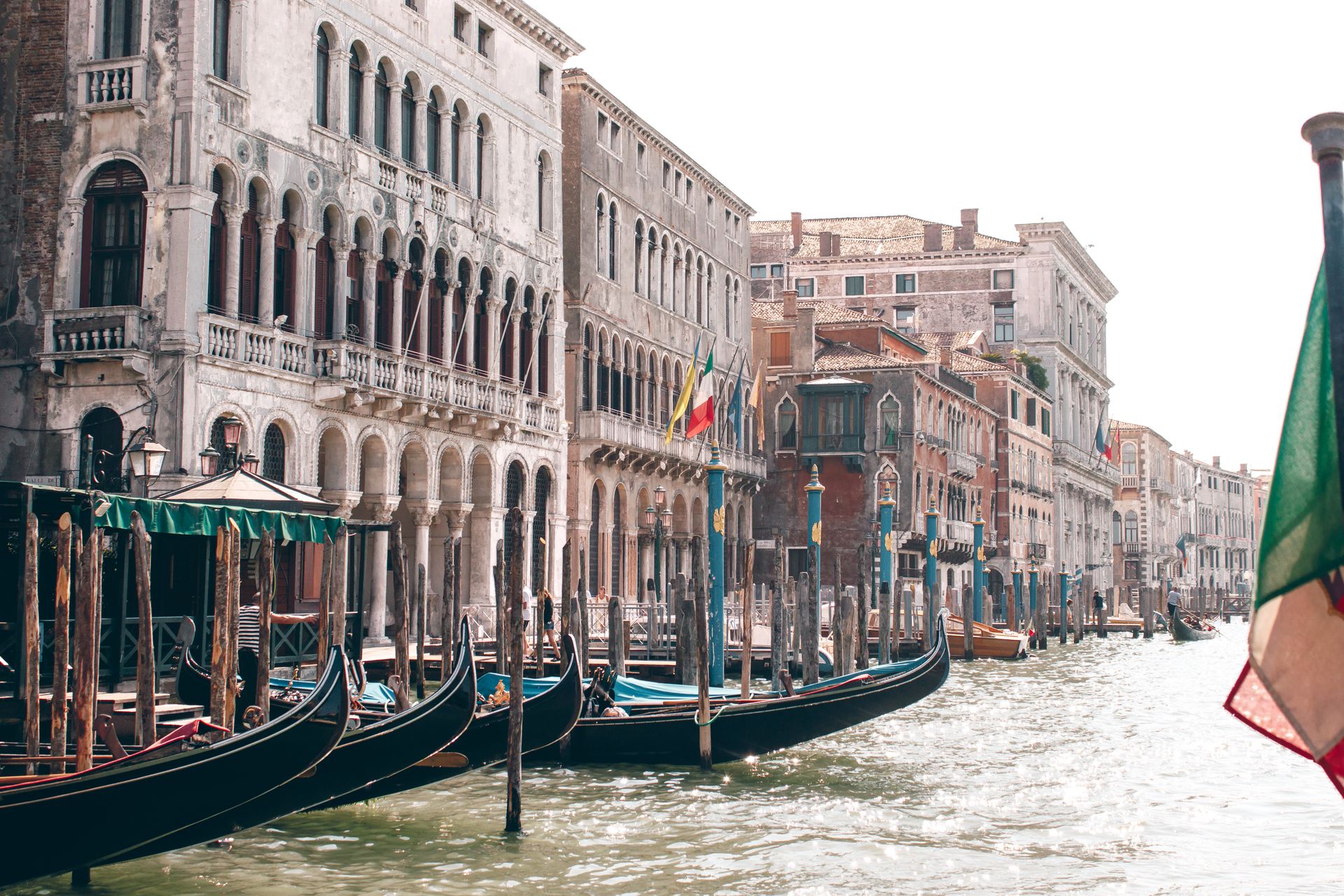
The question gets asked constantly: is two days in Venice actually worth it? It is a fair question — Venice is expensive, crowded, and geographically awkward. And yet. Ask anyone who has spent two real days there, with at least one night inside the city, and the answer is almost universally the same: not only is it worth it, it's one of the most memorable and quietly overwhelming experiences European travel has to offer.
Venice is the only city in the world that looks exactly like its photographs and still manages to exceed every expectation.
Understanding Venice Before You Arrive
Venice's historic center sits on 118 small islands connected by ~400 bridges over 177 canals, divided into six sestieri: San Marco, Castello, Cannaregio, San Polo, Santa Croce, and Dorsoduro. There are no cars and no roads — every journey is on foot or by water. What looks like a ten-minute walk on a map frequently becomes a twenty-five-minute maze of dead ends and unexpected canal crossings. This is not an inconvenience; once you stop trying to control it, it's the city's most distinctive pleasure. Getting lost in Venice is the point.
Roughly 30 million visitors pass through annually for a permanent population of ~50,000. The area around Piazza San Marco, the Rialto Bridge, and main vaporetto stops can feel overwhelming from 10 AM to 6 PM in high season — the solution is timing your visits strategically, not avoiding these places.
Getting there: by train, Venice Santa Lucia sits directly on the Grand Canal — you emerge from the station and it's immediately before you, a genuinely theatrical arrival. High-speed trains connect Florence (2 hours), Rome (3.5–4 hours), Milan (2.5 hours). By plane, Marco Polo Airport connects via ACTV bus (20–25 min, ~€8) or the more spectacular Alilaguna water bus directly into the canal network (75–90 min, ~€15).
Where to stay: stay inside the historic center — day-tripping diminishes the experience enormously, since the Venice that most justifies the journey is early morning before crowds arrive and late evening after they leave. Dorsoduro (authentic, near the Accademia and Guggenheim), Cannaregio (genuinely residential, best bacari), and San Polo/Santa Croce (central, good value) are all excellent; San Marco offers maximum proximity at maximum price. A mid-range double costs €120–€200/night; budget options in Cannaregio from €80–€120.
Day One: Arriving, Orienting, and Discovering the Real Venice
If you can arrive before 9 AM, do so — Venice in early morning is a fundamentally different, more beautiful experience. Drop bags at your accommodation and walk without a map, letting the city introduce itself. Make your way toward the Rialto Market (open ~7 AM–1 PM weekdays and Saturdays) — the pescheria's Gothic hall of clams, mussels, sea bass, and cuttlefish on ice, and the adjacent produce market's lagoon-grown Sant'Erasmo artichokes, is a profoundly Venetian scene best appreciated before tour groups arrive. Breakfast at a Rialto bar: a cornetto and macchiato standing at the counter, €2–€3.
Book the Gallerie dell'Accademia in advance (gallerie.accademia.it) and arrive at opening. The world's greatest collection of Venetian painting reads as a complete history of the tradition: Bellini's luminous altarpieces, Giorgione's mysterious The Tempest, Titian's Presentation of the Virgin painted directly for the room it still hangs in, Veronese's enormous Feast in the House of Levi, Tintoretto's overwhelming Miracle of the Slave. Allow two to three hours.
Walk the Zattere — the long, sun-facing Giudecca Canal promenade, one of the finest and least-crowded walks in Venice — east to the Punta della Dogana, the former customs warehouse now housing contemporary art, positioned at the confluence of the Grand and Giudecca canals beneath Santa Maria della Salute's dome. Immediately adjacent, the Peggy Guggenheim Collection houses Kandinsky, Pollock, Picasso, Dalí, and Brancusi in the heiress's unfinished Grand Canal palazzo; the sculpture garden and terrace are outstanding (book at guggenheim-venice.it).
From 4 to 7 PM, put the map away entirely and walk north through Dorsoduro into San Polo and Cannaregio — following canals in either direction, entering any campo that looks interesting, discovering the unexpected Gothic well-head, the inverted reflections in a still rio, a violinist practicing from a second-floor window.
Evening: the cicchetti hour in Cannaregio's bacari, especially around Fondamenta della Misericordia and Strada Nova. Order a spritz and four or five cicchetti (baccalà mantecato, sarde in saor, meatballs) for €10–€15 per person at Un Mondo di Vino or Anice Stellato — this is simply what Venetians do on a Wednesday, and you're welcome to join. Dinner: bigoli in salsa followed by branzino al forno with local Soave.
Day Two: The Icons, Properly
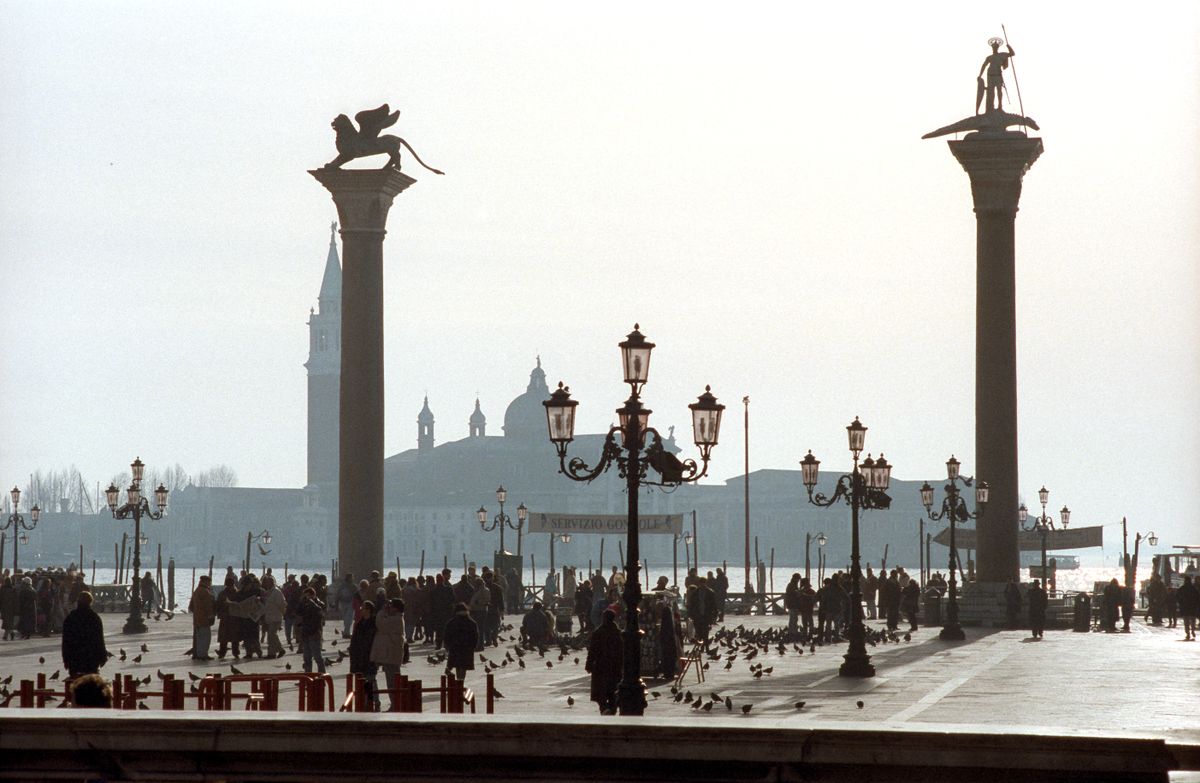
Set the alarm for Piazza San Marco before 8 AM — non-negotiable. At 7 AM in shoulder season, before cruise passengers and tour buses arrive, the square (175 by 82 meters, flanked by the Procuratie arcades and closed by the Basilica's five-domed facade) can feel almost private. Stand at the west end and look east toward the golden domes, the Byzantine mosaics, and the four bronze horses above the central portal.
Book the Basilica di San Marco (free but reserve at basilicasanmarco.it) — over 8,000 square meters of gold mosaic, the Pala d'Oro altarpiece encrusted with 2,000 precious stones. The adjacent Palazzo Ducale, the Venetian Republic's political heart for nearly 900 years, holds Tintoretto's Paradise — one of the largest oil paintings in the world — in the Sala del Maggior Consiglio; allow two to three hours (book at palazzoducale.visitmuve.it).
The gondola question: yes it's expensive (~€80–€100 for 30–40 minutes, per boat not per person) and yes it's touristy — and yes it's genuinely wonderful if you insist on the narrow side canals of Dorsoduro or San Polo rather than the Grand Canal. If two days is your only time in Venice, take it. For the Grand Canal itself, vaporetto Line 1 (~€9.50) provides the definitive slow procession past Ca' d'Oro, Ca' Rezzonico, and the Rialto Bridge.
If time permits, a vaporetto to San Giorgio Maggiore — the Palladian church on its own island directly across from the Piazzetta — offers the finest aerial view of Venice at a fraction of the Campanile di San Marco's queue and cost.
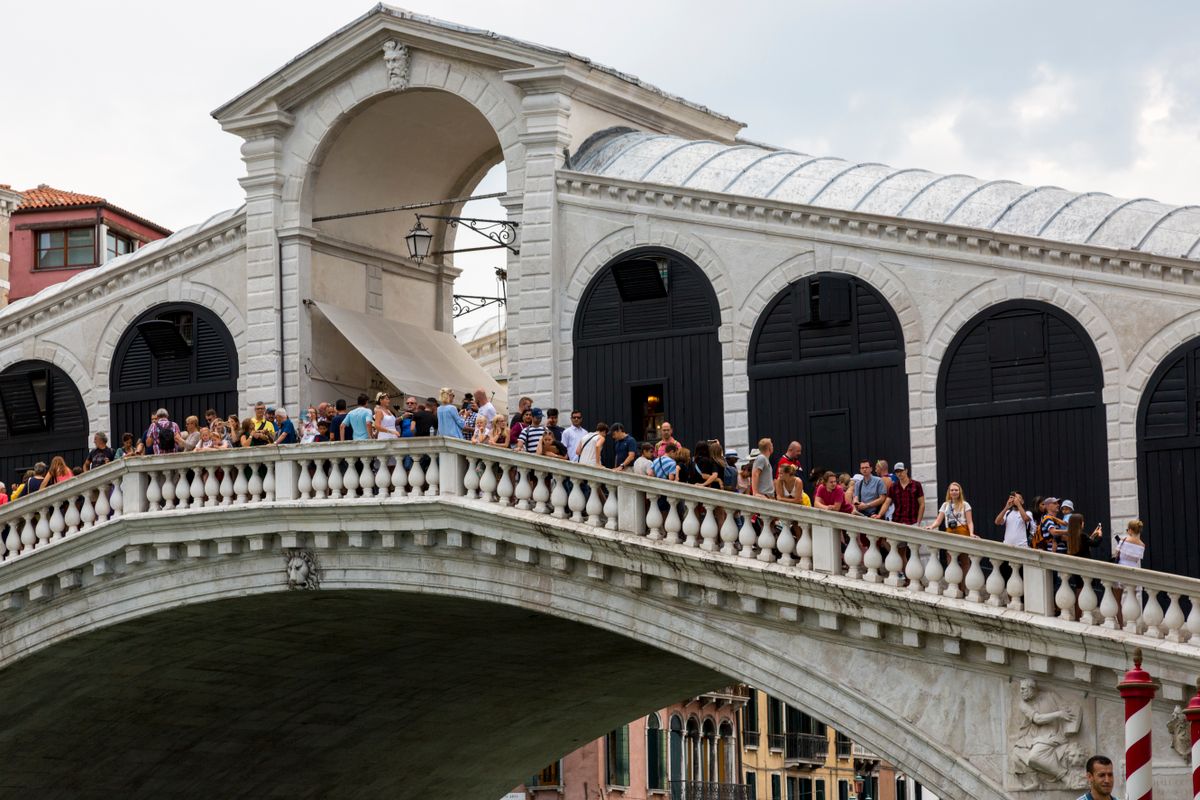
Return to the Rialto Bridge around 5 PM when the light turns gold on its white Istrian stone — built 1588–1591 after a competition that Michelangelo, Palladio, and Sansovino all entered and lost. Sit nearby and watch the Grand Canal's theatrical traffic of water taxis, delivery barges, and gondolas at golden hour.
Final dinner at a proper neighborhood osteria in Castello, San Polo, or Cannaregio — risi e bisi, seppie al nero with polenta, fegato alla veneziana, tiramisù (invented in the Veneto) with Amarone. After dinner, walk without a destination, crossing bridges at random, finding squares you didn't know existed — this final unplanned walk is what most Venice visitors remember most clearly.
The Honest Verdict and Practical Information
Two days in Venice is enough to fall in love with the city. It is not enough to understand it, or exhaust its art, history, or light. It is enough to see the Accademia and the Palazzo Ducale, get lost in Cannaregio, eat cicchetti at a bacaro, take the vaporetto down the Grand Canal and a gondola through the side canals, and watch the sun rise over San Marco and set over the Giudecca. Two days in Venice: worth it? Completely, absolutely, and without reservation. Yes.
Best time to visit: October to early December and late February to May. Avoid July–August for heat and crowds; early November to mid-January brings acqua alta (high-tide flooding) — pack waterproof boots, though the winter atmosphere has its own beauty.
Vaporetto passes: a 48-hour pass (~€35) covers unlimited ACTV waterbus travel — worth it for multiple island trips; single tickets are €9.50 each.
What to avoid: restaurants immediately adjacent to Piazza San Marco, the Rialto, and main vaporetto stops are almost universally overpriced and mediocre — walk one or two calli away. Glass shops on main tourist routes are mostly Chinese-made imports; genuine Murano pieces carry a certification label.
What to pack: comfortable shoes with good grip (bridge steps get slippery in rain), a water bottle (Venice's free fontanelle fountains are drinkable), and layers for canal wind in spring and autumn.