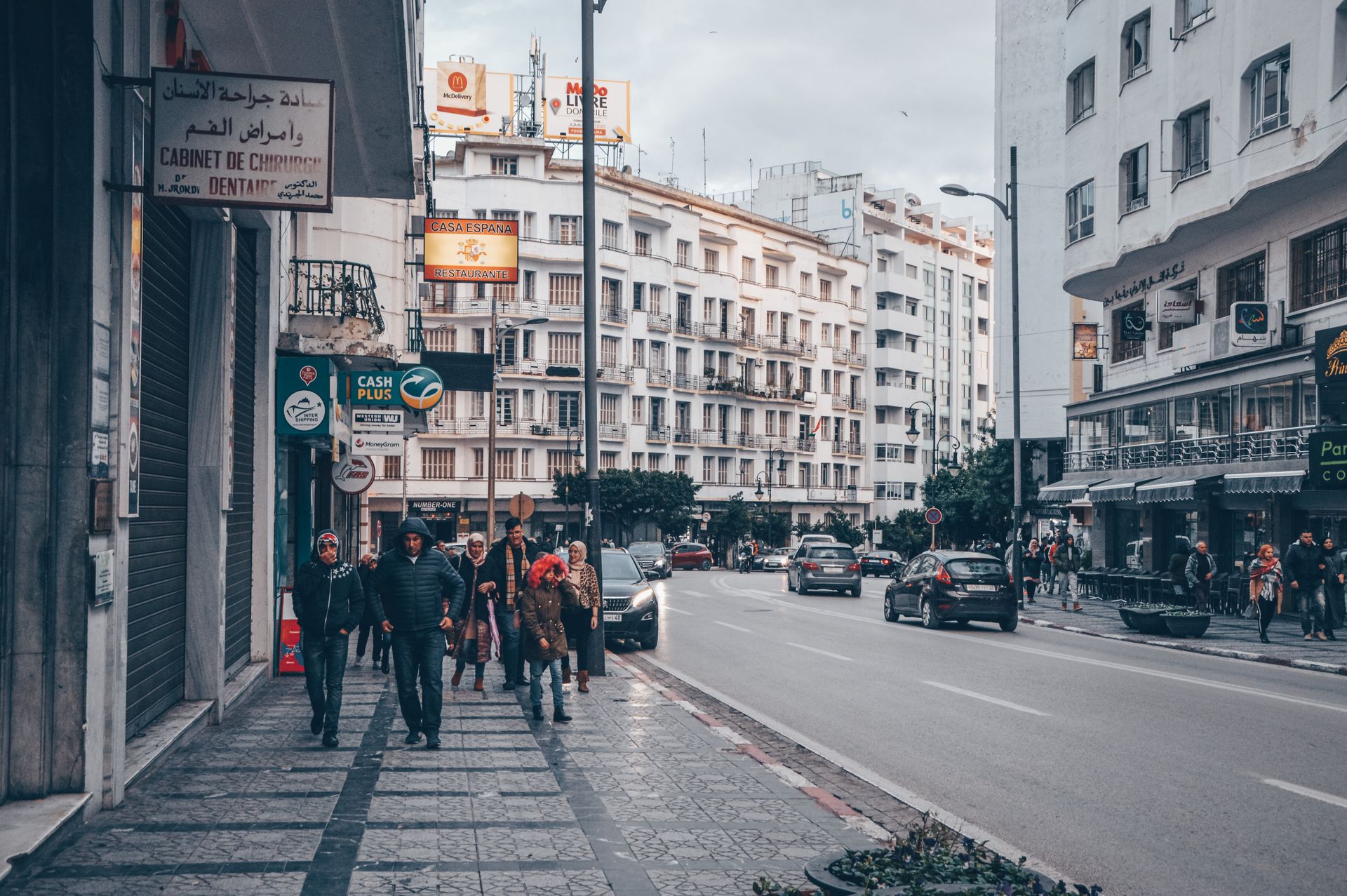
Tangier's reputation as a chaotic port town of hustlers and disorientation is almost entirely obsolete. Today it is one of North Africa's most dynamic cities — a restored medina meeting cutting-edge art galleries, legendary Beat Generation cafes beside sleek rooftop bars, and a collision of African, Arab, Berber, Andalusian, and European cultures that produces something unlike anywhere else on Earth. This is the city that seduced Paul Bowles, William S. Burroughs, Henri Matisse, and the Rolling Stones.
Tangier is not just a stop on the way to Marrakech. It is the destination.
When to Go
April–June is the finest season — warm, comfortable temperatures and extraordinary light on the Strait of Gibraltar. September–October rivals it, with warm sea and a golden, contemplative quality. Winter reveals a rawer, more authentic Tangier — the atmospheric grey light and stormy Atlantic weather that Paul Bowles wrote about still exists.
The Medina and the Kasbah
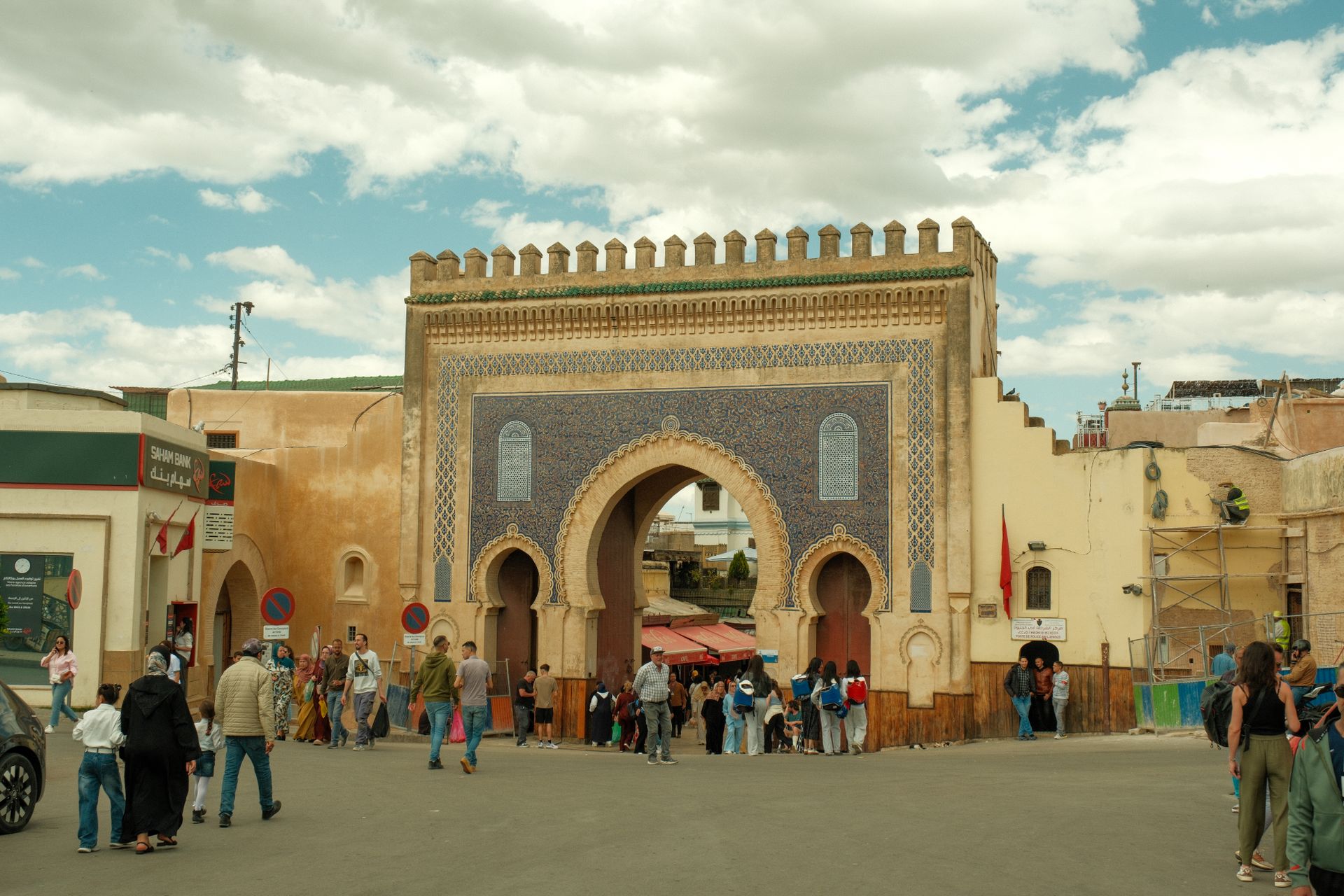
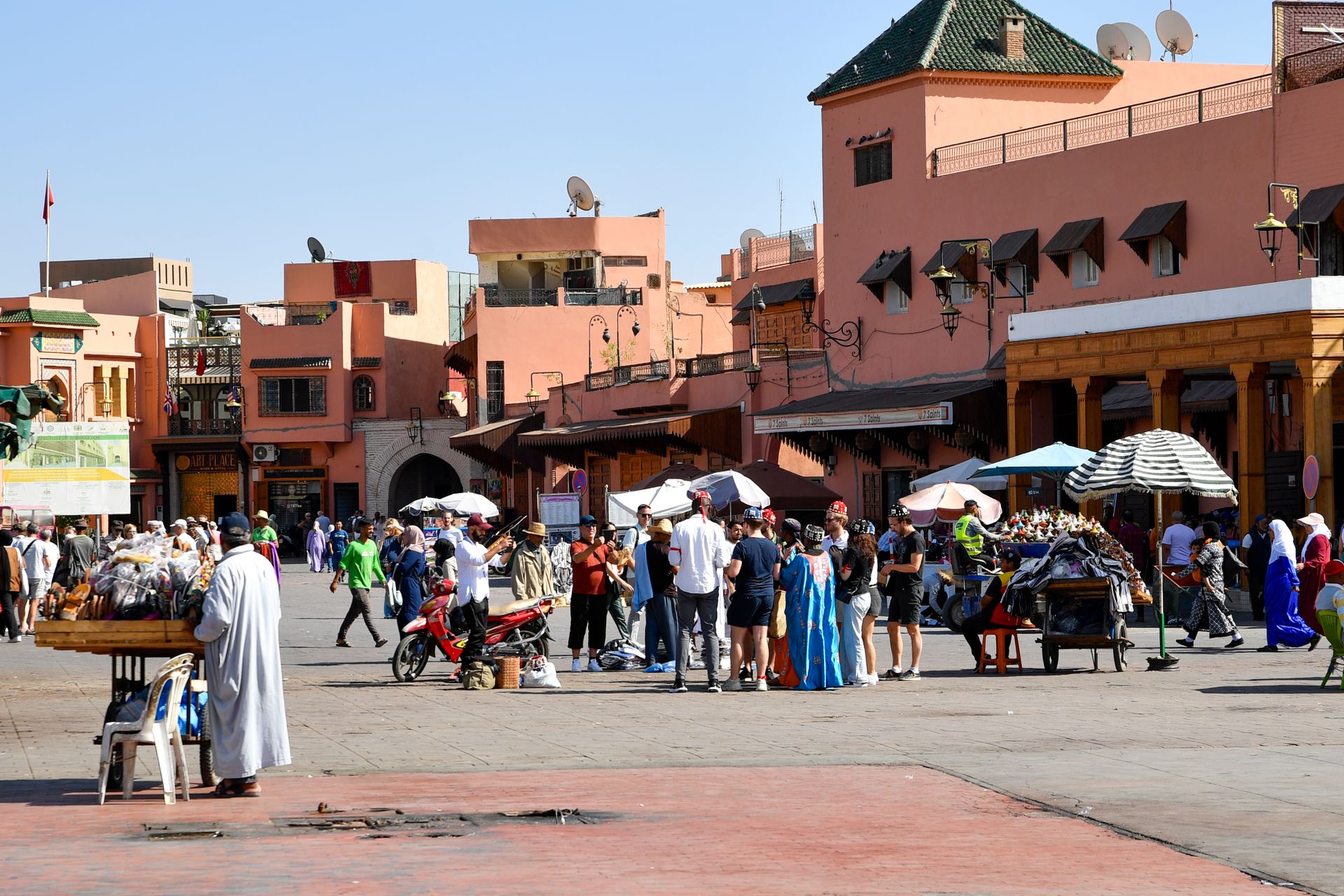
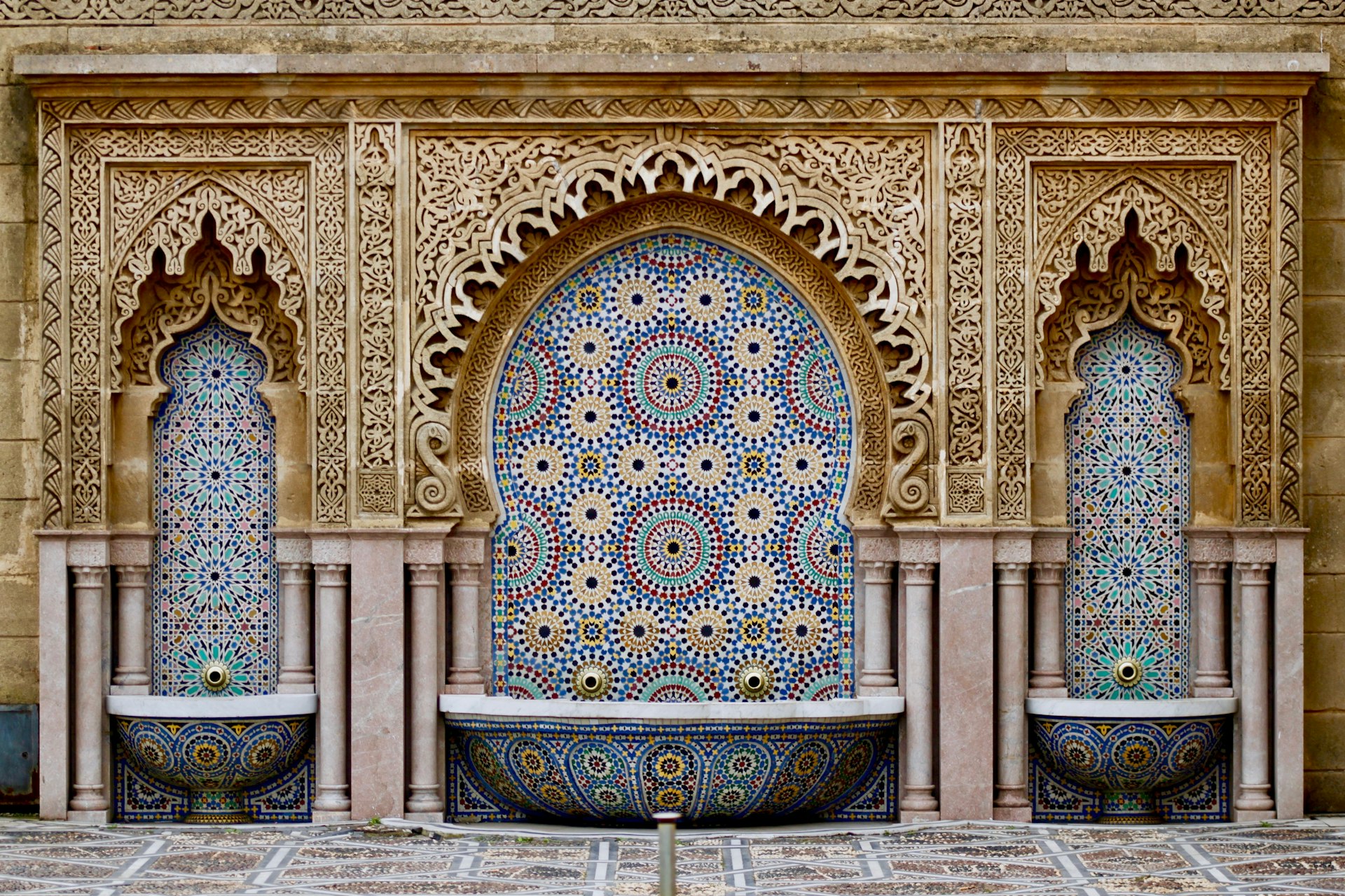
The Grand Socco, the medina's entrance square, is the city's beating heart — fruit sellers, herb vendors, and an ornate Moorish fountain flanked by the Sidi Bou Abid Mosque and the Mendoubia Gardens' 800-year-old dragon tree. From here the medina unfolds downhill toward the sea in a dense maze; getting lost is the point.
The kasbah at the medina's highest point holds the Dar el Makhzen, a 17th-century sultan's palace now housing the Museum of Moroccan Arts, and commands panoramic views across the Strait to Spain.
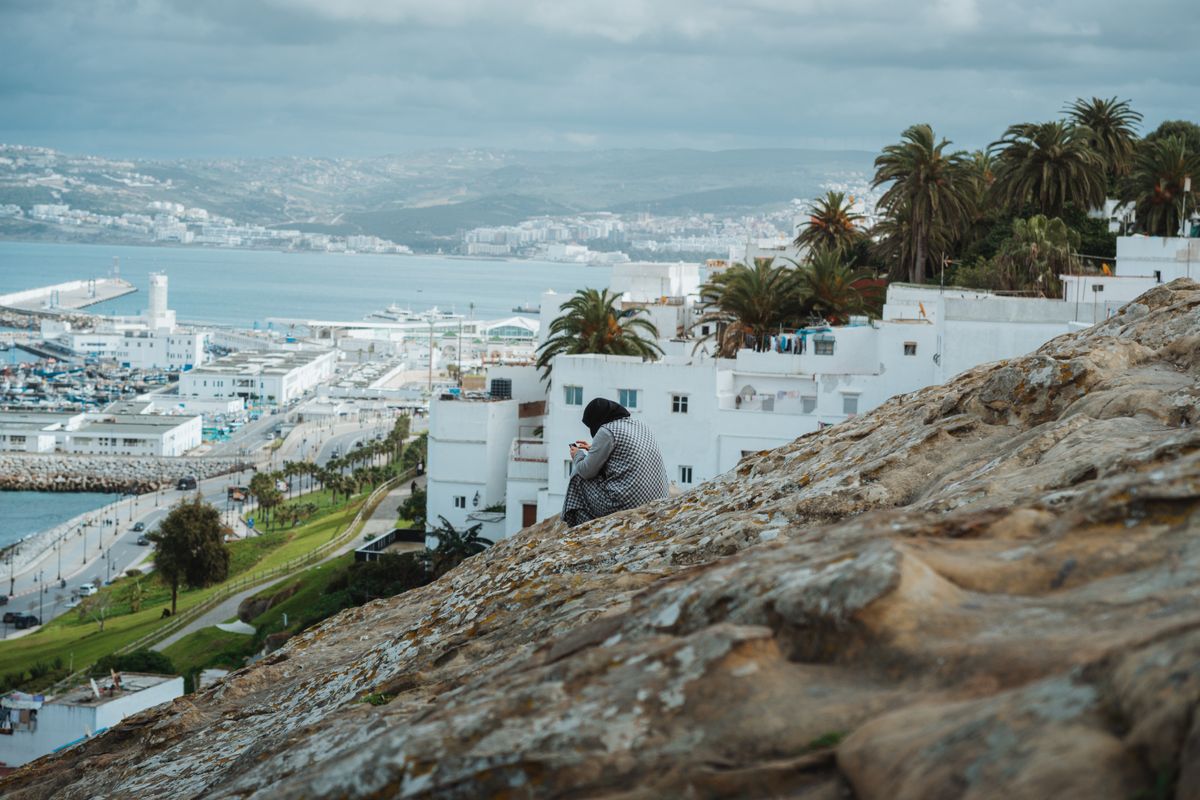
The Literary Legacy
Paul Bowles arrived in 1947 and stayed 52 years, writing The Sheltering Sky and hosting a literary salon that drew every significant American and European writer of the postwar era. William S. Burroughs wrote most of Naked Lunch here, calling the city "Interzone." Henri Matisse produced some of his career's most luminous paintings during two stays in 1912–13 — the specific quality of Tangier light permanently altered his palette.
Café Hafa and Cap Spartel
Café Hafa, a terraced teahouse cascading down cliffs above the Atlantic since 1921, is where the Rolling Stones and Paul Bowles drank tea for decades — there is no finer place in Tangier to watch the sunset. Cap Spartel, 14km west, is the most northwestern point of the African continent; below it, the Caves of Hercules have been carved by Atlantic waves into the shape of the African continent when viewed from inside.
Day Trips and Where to Stay
Chefchaouen, the famous "Blue City" in the Rif Mountains, is 3 hours by bus or grand taxi and makes an easy overnight trip. Asilah, 45 minutes south, is a beautifully preserved Portuguese-walled coastal town with an August arts festival that fills its medina walls with murals. Tetouan, a UNESCO medina 1 hour southeast, sees a fraction of Tangier's tourist traffic despite an even stronger Andalusian architectural influence.
Staying inside the medina, in a restored riad with a rooftop terrace, is the unambiguous recommendation for first-time visitors (€60–€150/night); the kasbah has a handful of exceptional boutique properties with the best views (€120–€250/night), while the Ville Nouvelle trades atmosphere for convenience and lower prices.
Tangier Travel Tips for First Timers
Tangier's tourism infrastructure has improved dramatically, but some awareness of the medina's rhythms remains useful.
Trail Notes
- Download offline maps for the medina before arrival — getting lost is safe, not dangerous.
- Decline unofficial "guides" politely with "La, shukran" while continuing to walk.
- Book your first night's accommodation before arriving by ferry.
- Bargain in the souks starting at 40–50% of the asking price.
- Try the grilled seafood at the port's informal fish restaurants.
- Accept mint tea when offered — refusing is a social error.
Sample 3-Day Tangier Itinerary
Day 1: Grand Socco, Petit Socco, kasbah museum, sunset at Café Hafa. Day 2: American Legation Museum, Ville Nouvelle cafes, port seafood dinner. Day 3: Cap Spartel and the Caves of Hercules, medina souk shopping.
Final Thoughts: Why Tangier Stays With You
Tangier divides people — some feel overwhelmed and leave relieved; others feel immediately, inexplicably at home. Come open, come willing to be confused, come ready to drink tea slowly and watch the world move past.