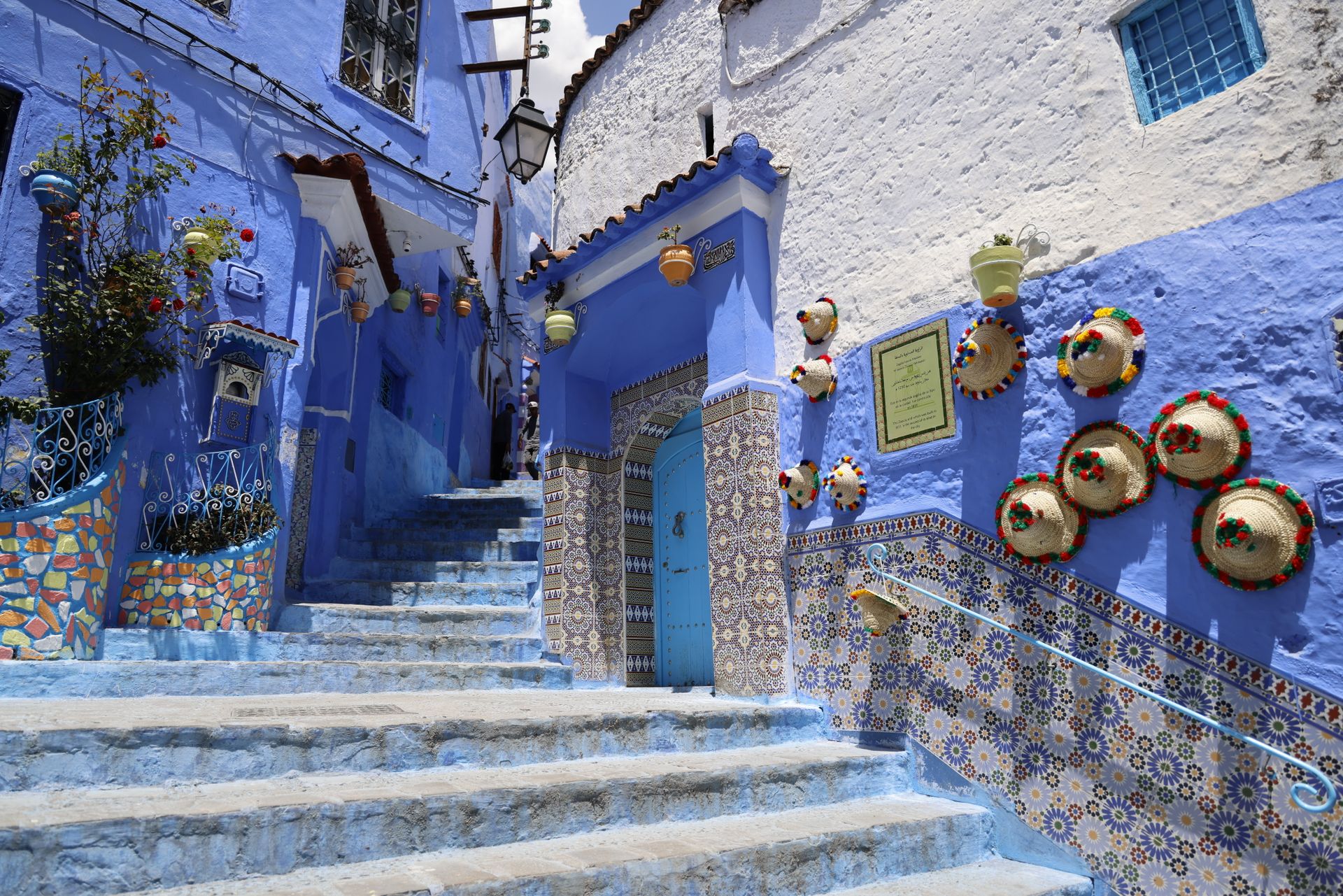
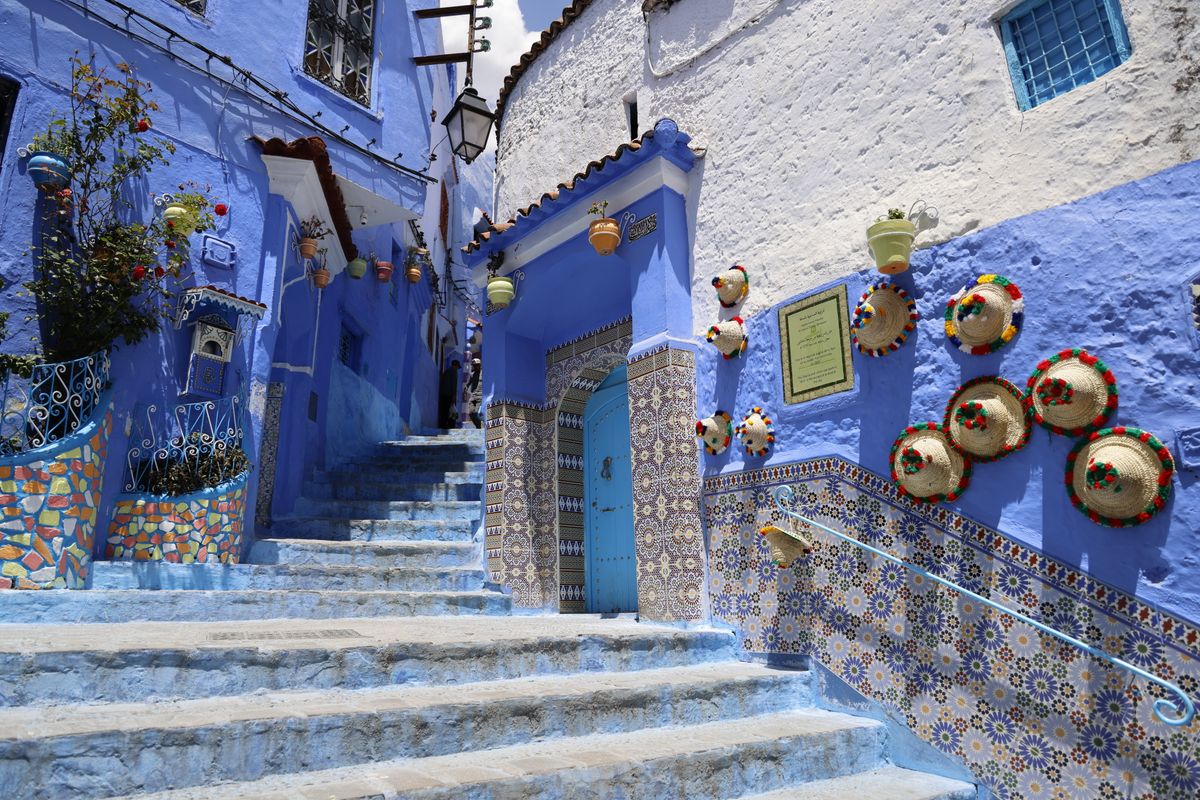
Chefchaouen delivers on its visual promise and then exceeds it — the photographs not lying but failing to communicate the quality of mountain light at different hours, the smell of cedar wood and mint in the narrow streets, the way the blue deepens and shifts from harsh midday sun to warm evening lamplight. The blue walls are real, and the beauty is real, but the medina is inhabited by actual people going about their lives in the most aesthetically extraordinary residential environment in North Africa.
The traveler who comes expecting a photographic set and finds instead a living Moroccan mountain city is the one who gets the most from it.
Why Is It Blue?
No single origin story fully accounts for the blue — theories range from Jewish refugees fleeing the 1492 Spanish Inquisition to indigo's mosquito-repelling properties to simple aesthetic momentum. What's certain is that the blue is actively maintained by residents and municipal authorities alike, ranging from pale sky blue to deep cobalt across walls, doorways, and steps.
Plaza Uta el-Hammam and the Blue Alleyways
The central square's 15th-century Grand Mosque and Kasbah fortress anchor the medina; dawn here — before the market stalls open — is the finest hour for quiet contemplation. The blue alleyways north toward Bab Onsar are Chefchaouen's most photographed streets, and the finest experience of them comes at the hours when the fewest other cameras are present: the woman carrying bread from the communal oven, the cat on a sun-warmed step.
Ras el-Maa and Akchour
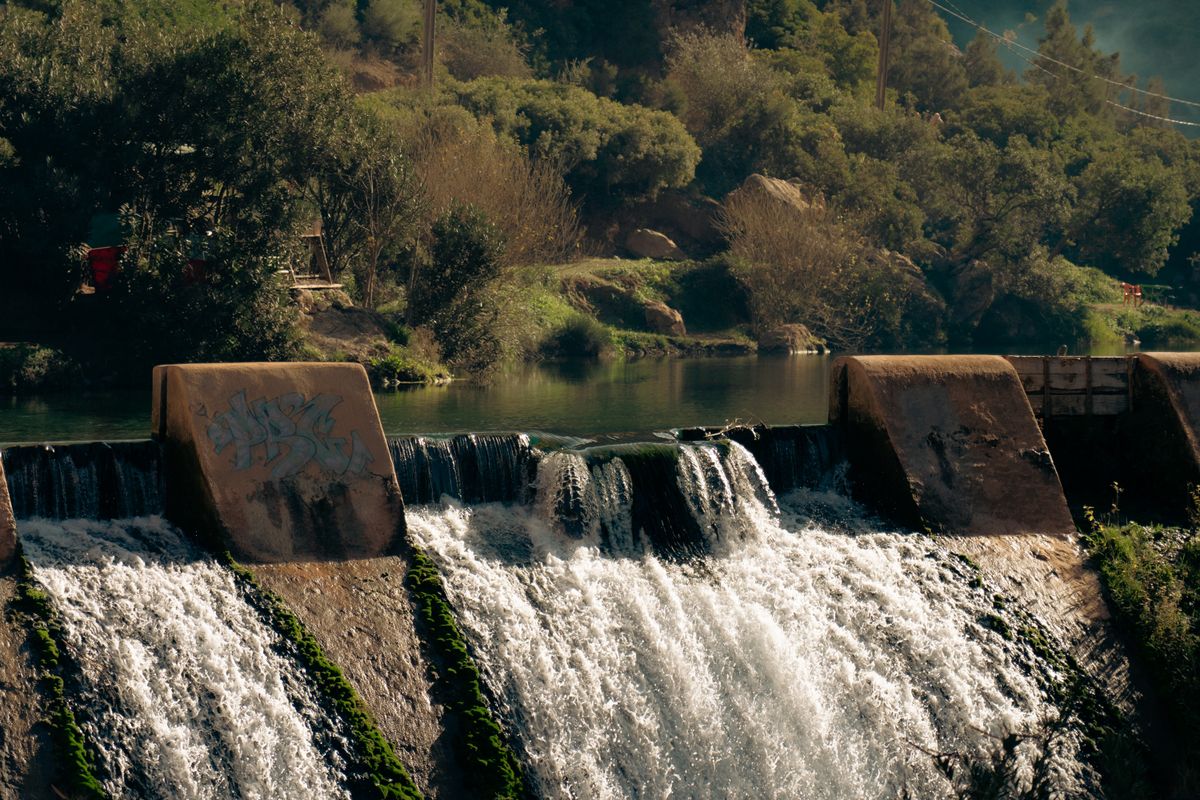
The Ras el-Maa waterfall, immediately above the medina's northeastern edge, is the natural spring that made the city's 1471 founding viable — local women wash laundry in the traditional manner in its pool, 20 minutes from the central square. The path continues into the Talassemtane National Park cedar forest.
The God's Bridge (Pont de Dieu), a natural limestone arch over the Farda River near Akchour village 30km away, is the finest day hike in the Rif Mountains — roughly 20 kilometers round trip through forest and gorge, with river pools for summer swimming.
Chefchaouen Food and the Souks
The local goat's cheese, fresh and lemony, is the finest single Chefchaouen food product; msemen (layered flatbread with honey and argan oil) is the essential breakfast from medina bakeries starting at 6am. The Wednesday and Saturday markets bring Riffian villagers in traditional red-and-white striped futa wraps selling mountain honey and fresh herbs.
Further Day Trips: Ouazzane and Tetouan
Ouazzane, a holy city 45 kilometers south, holds a Sufi brotherhood zawiya and a pilgrimage-economy medina oriented almost entirely toward Moroccan rather than international visitors — the finest corrective for travelers who want to see an unprocessed Moroccan medina town. Tetouan, a UNESCO medina an hour northeast, is the most Andalusian-influenced medina in Morocco, its architecture directly inherited from the Muslim exiles of 1492.
Chefchaouen Travel Tips for First Timers
Chefchaouen is one of the most relaxed and visitor-friendly cities in Morocco.
Trail Notes
- Stay in a medina riad — the only correct accommodation choice here.
- Visit the blue alleyways at dawn before the tour groups arrive.
- Always ask before photographing people, though the walls and cats need no permission.
- Decline any kif or hashish offers firmly — it remains illegal despite local normalcy.
- Withdraw cash in the Ville Nouvelle before entering the medina.
- Book April–May or September–October for the finest light and manageable crowds.
Sample 3-Day Chefchaouen Itinerary
Day 1: Plaza Uta el-Hammam, Kasbah museum, blue alleyways at golden hour. Day 2: Ras el-Maa waterfall and cedar forest hike. Day 3: Full-day Akchour and God's Bridge hike.
Final Thoughts: The Blue City Beyond the Blue
The most lasting impression is not the blue — absorbed into the background of perception after a few days — but the city's relationship to its own extraordinary beauty. Ask the riad owner about the history of their building. Get from Chefchaouen the city itself, rather than only its image.