Australia occupies a geographical and cultural position unlike any other country on Earth — simultaneously a continent and a nation, the sixth-largest country in the world, home to the oldest continuous culture on the planet (Aboriginal and Torres Strait Islander peoples have lived here for at least 65,000 years) and one of the world's youngest societies by the measure of European settlement. The Great Barrier Reef, the red desert of the Red Centre where Uluru rises with genuinely sacred authority, and global cities of exceptional quality combine to make this one of the most extraordinary and varied travel destinations on Earth.
The traveler who returns from Australia does not describe it as beautiful — the country is too large and too varied for one word. They describe it as several different countries that happen to share a passport stamp.
When to Go
September–November (spring) is the finest overall season — warm temperatures nationwide, peak whale watching on the east coast, and the Reef at excellent visibility before wet season. December–February is peak beach season on the east coast, but the tropical north is in wet season and the Red Centre is extremely hot (40°C+). June–August is winter everywhere but the ideal season for tropical Australia — Darwin, the Kimberley, and Cairns are dry and sunny, and the Reef has its finest water clarity.
Getting Around Australia
Domestic flights (Qantas, Jetstar, Virgin Australia) are the most practical way to cover Australia's enormous distances — Sydney to Melbourne is 90 minutes by air versus 10 hours by road, and fares under AUD $100 are common with advance booking. Self-driving suits the coastal routes (the Great Ocean Road, the Pacific Coast Highway) and campervan rental (Britz, Maui, Jucy; AUD $80–200/day) is the definitive road-trip format, though a 4WD is essential for the Outback and Kimberley's unsealed roads. The Indian Pacific (Sydney–Perth, 65 hours) and The Ghan (Adelaide–Darwin, 54 hours) are priced as leisure experiences rather than transport, from AUD $700–2,500+ per person. Greyhound buses cover the east coast backpacker corridor at a fraction of flight prices.
Sydney and Melbourne
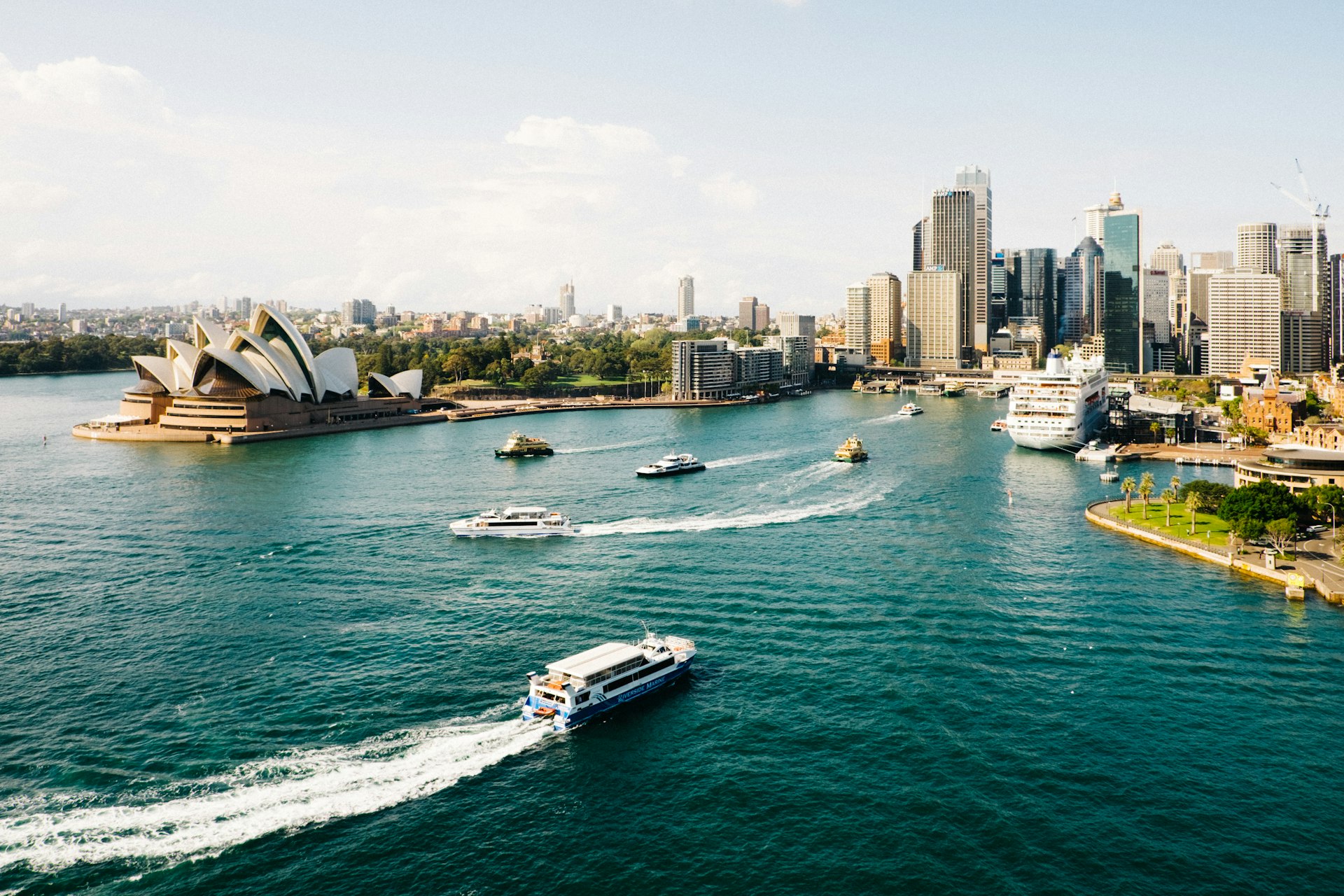
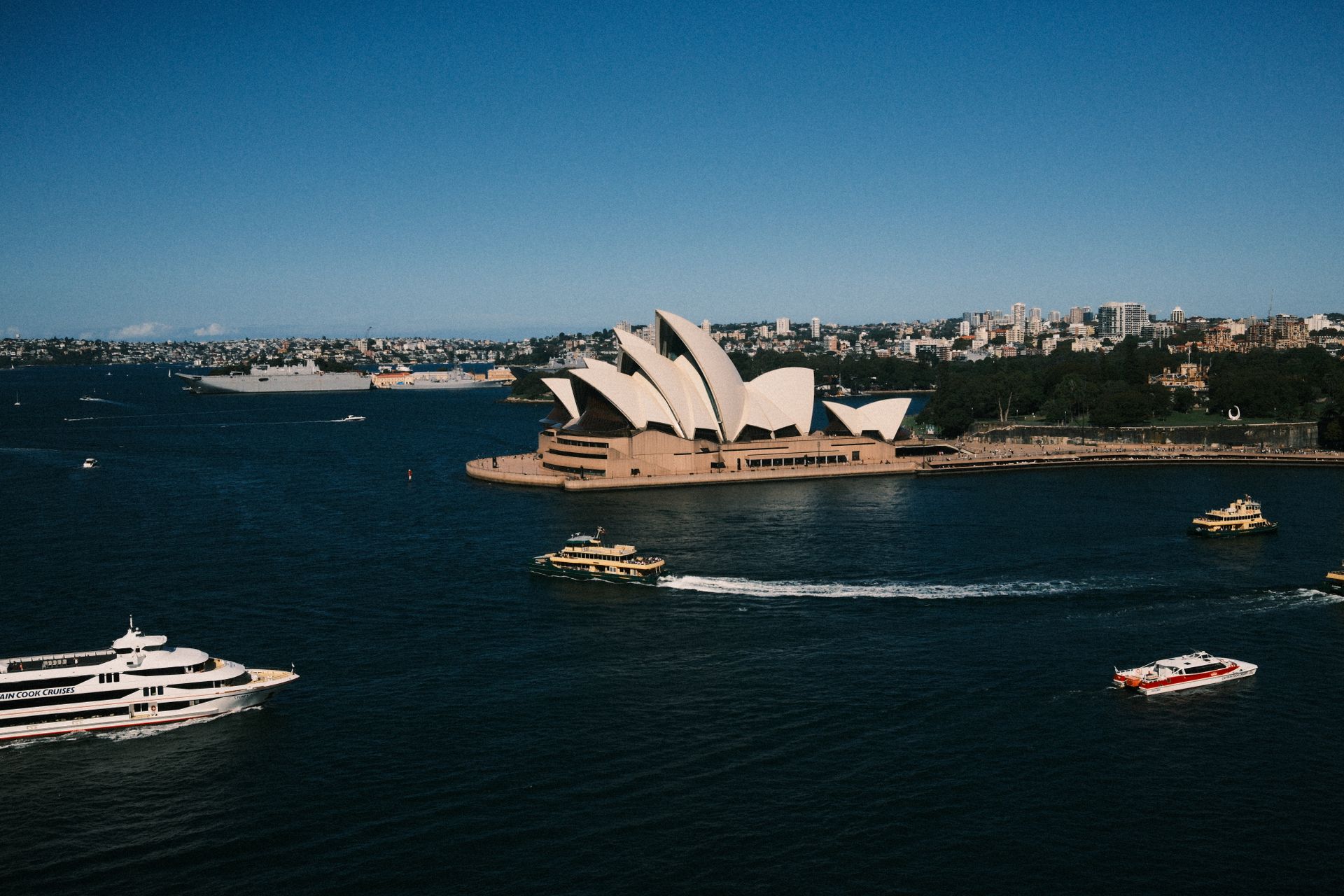
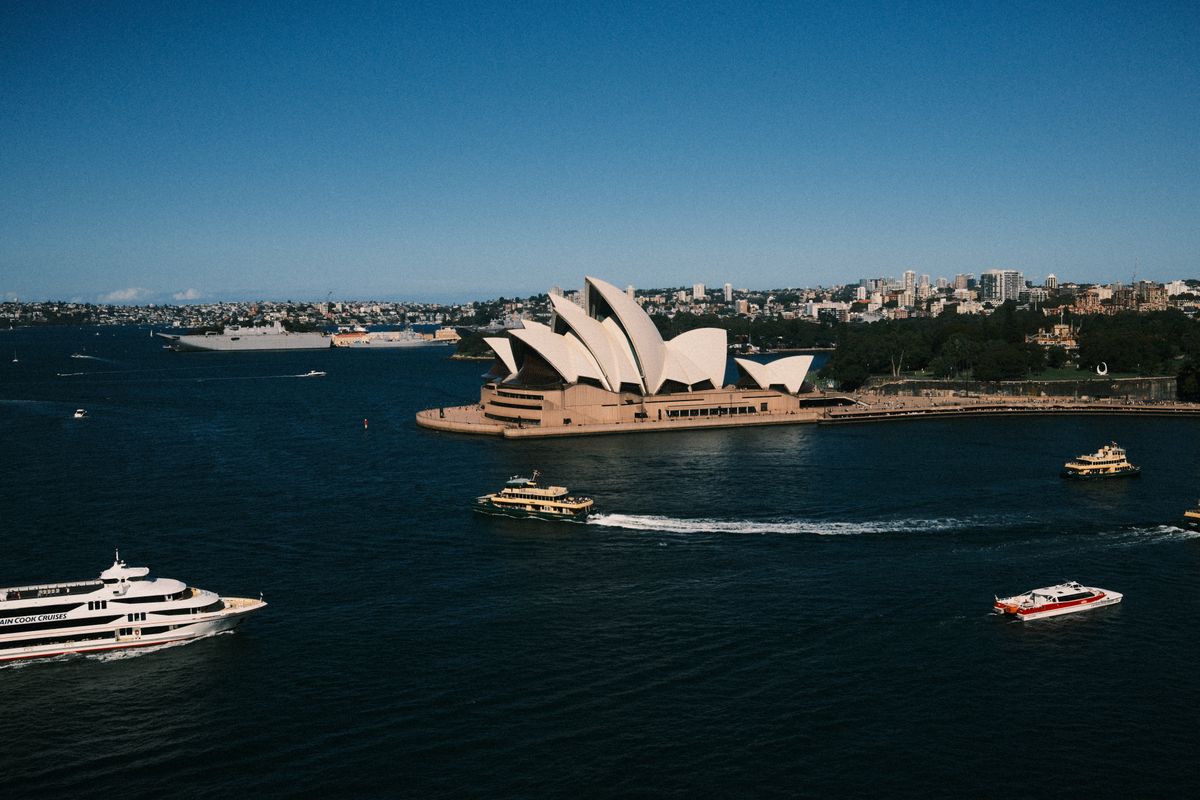
Sydney's harbor — 240 square kilometers scattered with bays and beaches, crossed by the Harbour Bridge and framed by the Opera House's sail-shaped shells — is the finest harbor in the world by wide consensus. The BridgeClimb to the summit arch (134m above sea level), the Royal Botanic Garden behind the Opera House, and Bondi Beach's clifftop Coastal Walk to Coogee are essential. The Sydney Fish Market, the second-largest in the world by variety, is the city's best food ritual.
Melbourne wins on culture, food, and daily urban life — the National Gallery of Victoria, a festival calendar including the world's third-largest comedy festival, and laneways (Hosier Lane's street art, Degraves Street's coffee) that reward hours of walking without agenda. Melbourne's coffee culture is considered the finest outside Japan and Italy. The Great Ocean Road, 243km from Torquay to Allansford, passes the Twelve Apostles limestone stacks — two days minimum for the full drive.
The Great Barrier Reef and Queensland
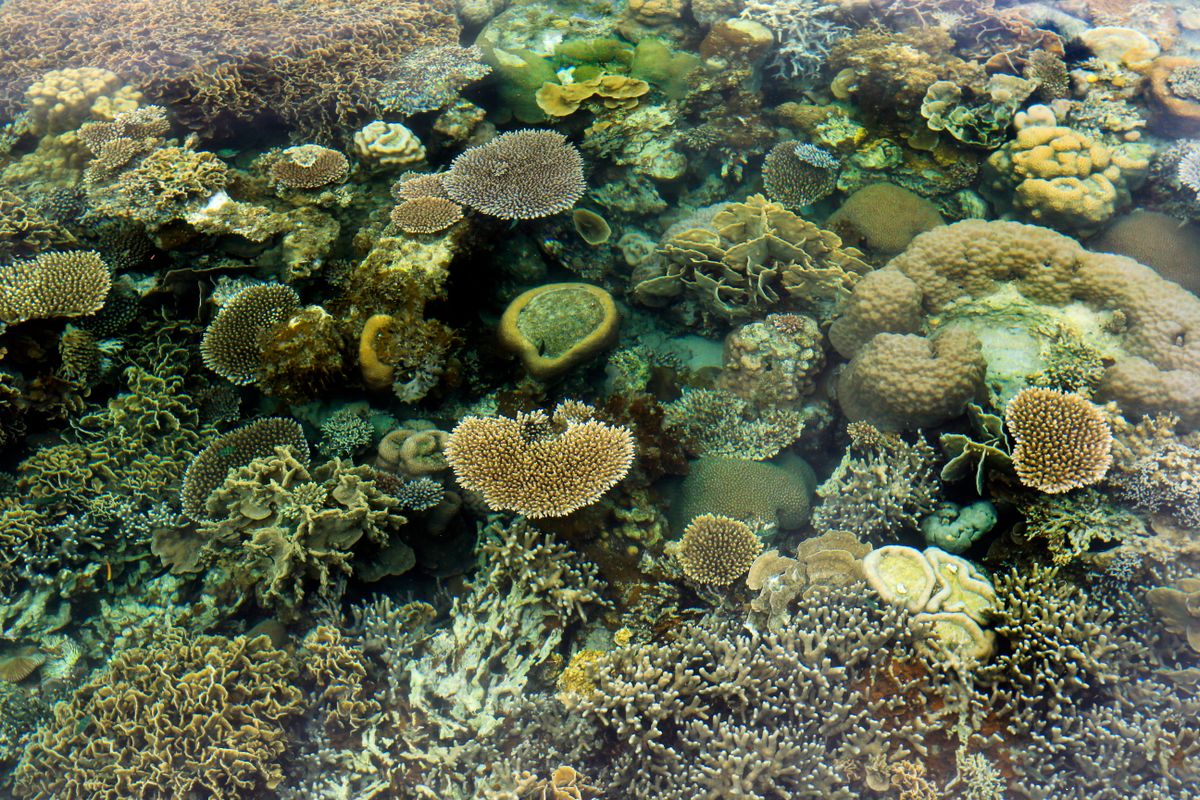
The Reef spans 2,300km, 3,000 reef systems, and 900 islands — the world's largest living structure and one of the Seven Natural Wonders. Cairns is the tourist infrastructure capital; Port Douglas is smaller and more elegant; the Whitsunday Islands (74 continental islands, sailed between on a chartered yacht) hold Whitehaven Beach's 7km of silica-white sand, consistently ranked among the world's finest beaches.
The Daintree Rainforest, 135 million years old and predating the Amazon by 65 million years, meets the Reef at Cape Tribulation — the only place on Earth where two World Heritage Areas touch. Mossman Gorge and dawn crocodile-spotting on the Daintree River round out the essential stops.
The Red Centre: Uluru and Kata Tjuta
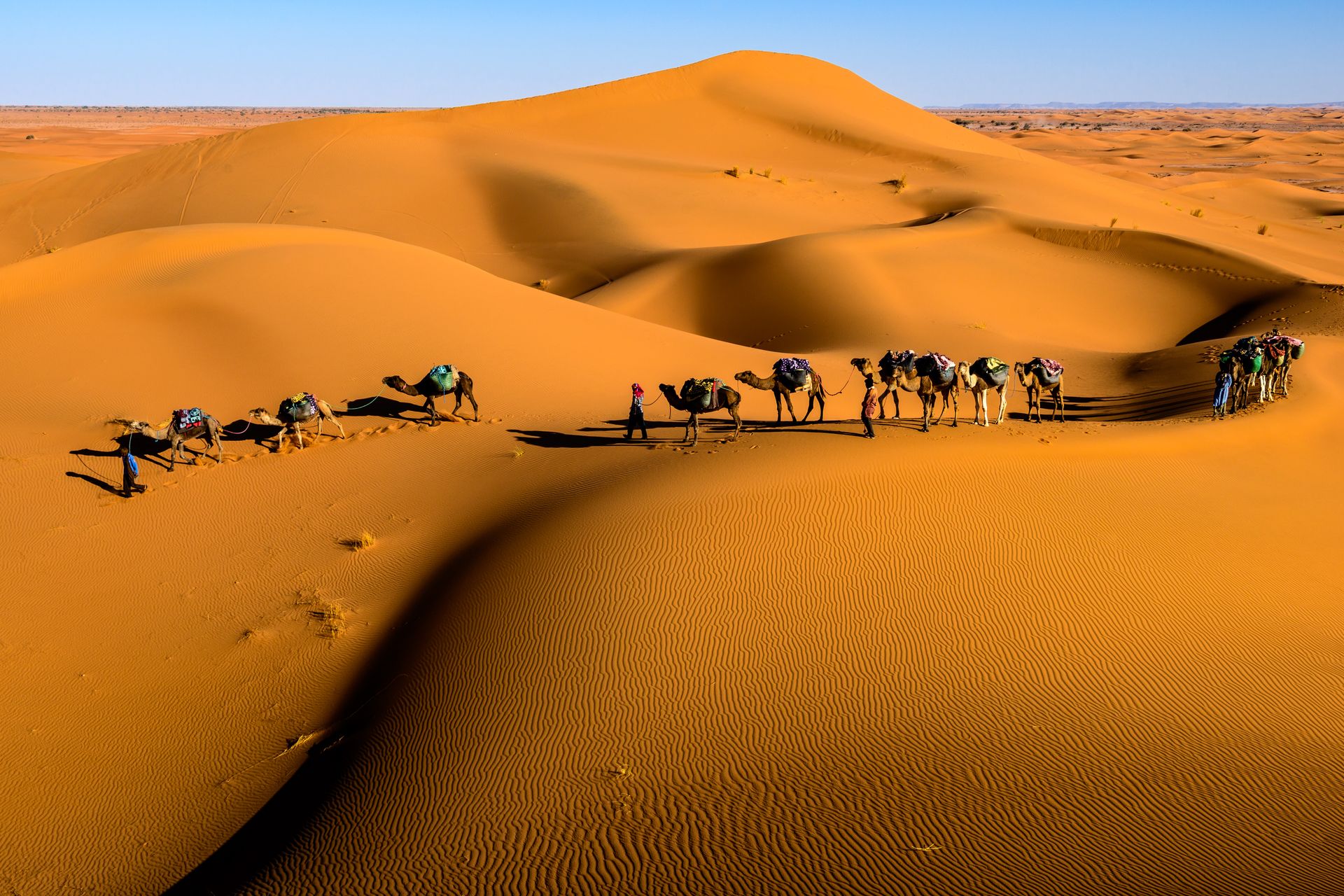
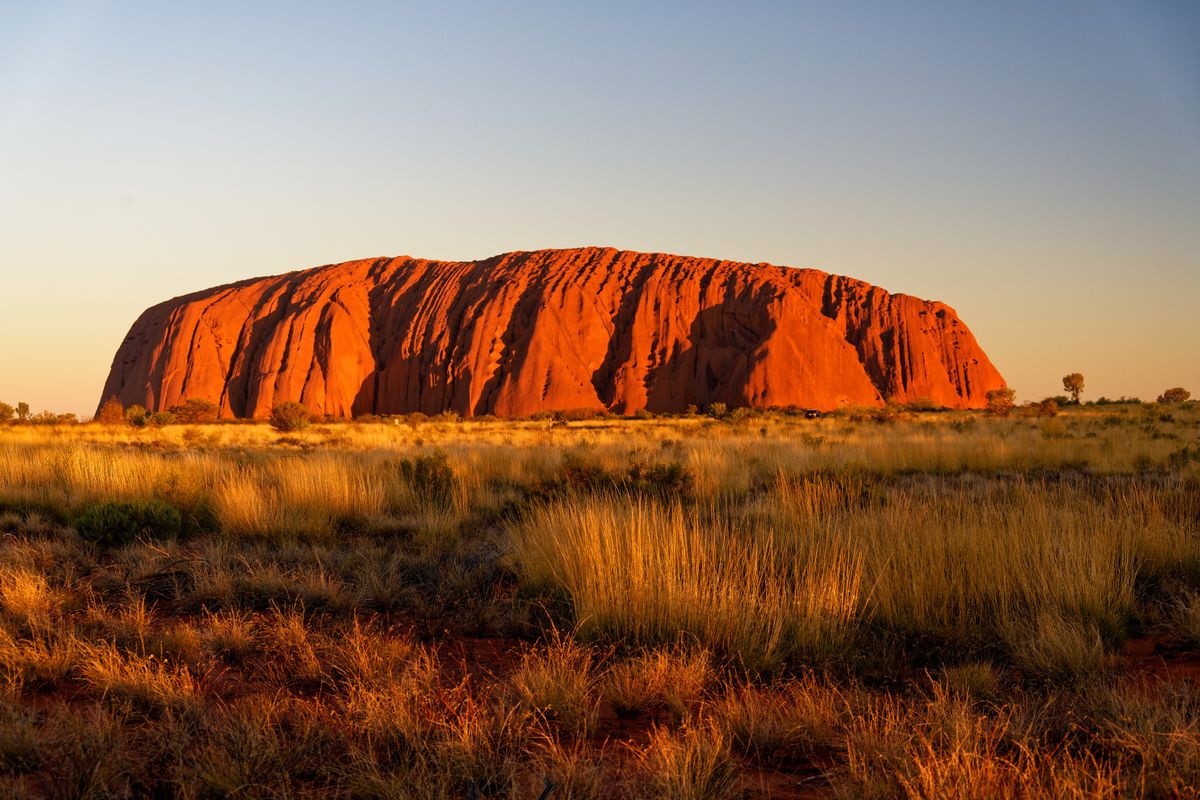
Uluru — a 348-meter sandstone monolith, 550 million years old, sacred to the Anangu traditional owners — changes color from orange to red to purple through the day. The climb has been permanently closed since October 2019 at Anangu request; the 10.6km base walk with Anangu guides explaining the dreamtime stories encoded in the rock's surface is the correct way to engage with this place. Kata Tjuta, 36 domed formations 50km west, is undervisited relative to its neighbor — the Valley of the Winds walk is one of the finest short hikes in Australia.
Western Australia and the Outback
Perth, the world's most isolated major city, offers Kings Park's panorama over the Swan River and Darling Range; Fremantle retains its Victorian streetscape and craft brewery culture. The Ningaloo Reef, accessible from Exmouth, allows snorkeling directly from the beach onto living coral and swimming with whale sharks (March–August). The Kimberley — Aboriginal rock art over 17,000 years old, the Bungle Bungle Range's beehive domes, and the 660km unsealed Gibb River Road — is Australia's last great wilderness.
South Australia and Kangaroo Island
Adelaide is Australia's most underrated capital — a manageable, gracious city with the Central Market and the Barossa Valley, the Clare Valley, McLaren Vale, and Adelaide Hills wine regions all within 90 minutes. The Barossa, settled by Silesian Lutheran immigrants in the 1840s, still farms the world's oldest continuously producing Shiraz vines and produces Penfolds Grange, one of the world's great wines. Kangaroo Island, a short ferry or flight from Adelaide, is Australia's finest wildlife destination outside the Outback — sea lions breeding on the walk-on Seal Bay beach, koalas, wallabies, and little penguins returning to their burrows at dusk.
What to Eat in Australia
The barbecue is Australia's central social institution — lamb chops and "snags" (sausages) around the grill, with the "democracy sausage" at election-day polling stations a specific national quirk. Seafood defines the coastal cuisine: Sydney rock oysters, Moreton Bay bugs, barramundi, and Western Australian crayfish rank among the world's finest shellfish. The flat white — a double-shot espresso with microfoam, invented simultaneously in Sydney and Melbourne in the 1980s — anchors a café culture considered the finest outside Japan and Italy. Multicultural food runs deep, from Melbourne's Vietnamese restaurants to Sydney's Chinatown yum cha, and bush tucker (kangaroo, wattleseed, quandong, lemon myrtle) is undergoing a genuine revival on contemporary menus.
Australia Travel Tips for First Timers
Australia's continental scale catches first-time visitors off guard — Sydney to Perth is 4,000 kilometers.
Trail Notes
- Book domestic flights and campervans well ahead for December–January school holidays.
- Apply for the ETA or eVisitor visa online before departure.
- Wear SPF 50+ every two hours — Australia has the world's highest skin cancer rate.
- Follow all crocodile and stinger warning signage in tropical Queensland and the Top End.
- Rent a 4WD for any Outback or Kimberley unsealed-road exploration.
- Tipping is optional everywhere — 10% at fine dining is appreciated but not expected.
Sample 14-Day Australia Itinerary
Sydney (3 nights) → Cairns and the Great Barrier Reef (3 nights) → Uluru/Red Centre (2 nights) → Melbourne (3 nights) → Great Ocean Road (2 nights).
Final Thoughts: The Country That Rewards Going Deep
Australia reveals itself slowly and rewards resisting the temptation to cover everything. The reef once you've learned to read its topography, Uluru once the dreamtime stories have been explained, Melbourne once you've found your own laneway coffee shop. Come with time and sun protection — Australia will do the rest.