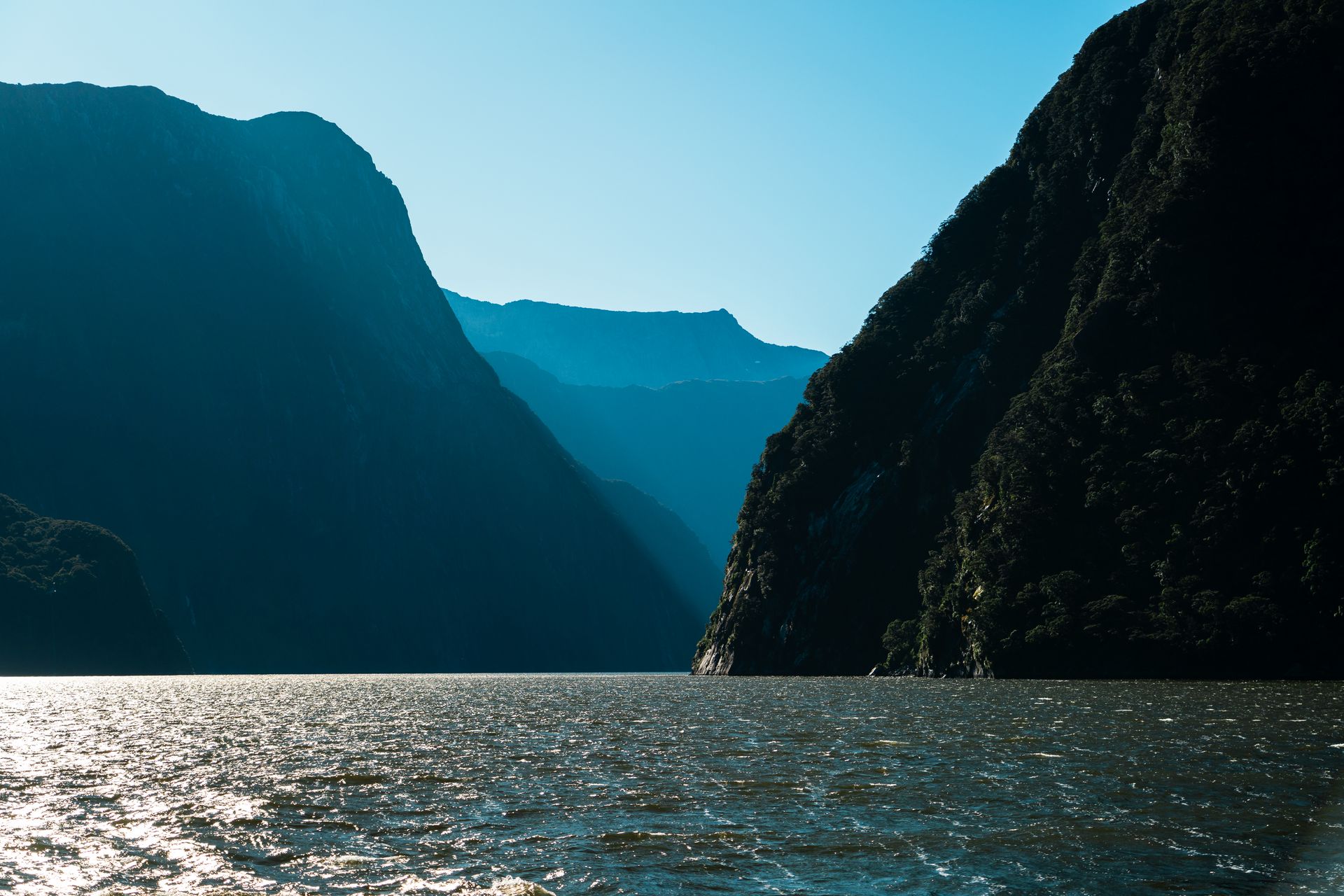
New Zealand is the country that makes other countries feel ordinary. It contains active volcanoes, ancient kauri forests, fiords carved deeper than Norway's, thermal landscapes of alien color, and beaches ranging from the Bay of Islands' sub-tropical shores to the wild West Coast surf — all reachable by a traveler with a vehicle, a good weather window, and the willingness to drive. The specific quality that experienced travelers identify most consistently is not the landscape's drama, but its accessibility: this is a country of 5 million people whose transport infrastructure is specifically designed to get the independent traveler to the wilderness without bureaucratic friction.
This country is not simply beautiful. It is geologically unhinged in the most magnificent way available on Earth.
The Two Islands and Campervan Culture
The North Island is warmer and more geologically active — the volcanic plateau, Rotorua's geothermal landscape, the Bay of Islands. The South Island is wilder and more alpine — the Southern Alps, the fiords, the glaciers, Queenstown's adventure culture. Travelers with fewer than 10 days should choose one island for depth; 2–3 weeks allows both via the Cook Strait ferry.
New Zealand's campervan culture is the specific format that most directly delivers the country's landscape variety and logistical freedom — the freedom camping network allows self-contained vehicles to park in landscape positions equalling national park huts at a fraction of the cost. Book rentals (Jucy, Britz, Mighty) 3–4 months ahead for December–February.
Auckland, Rotorua, and Tongariro
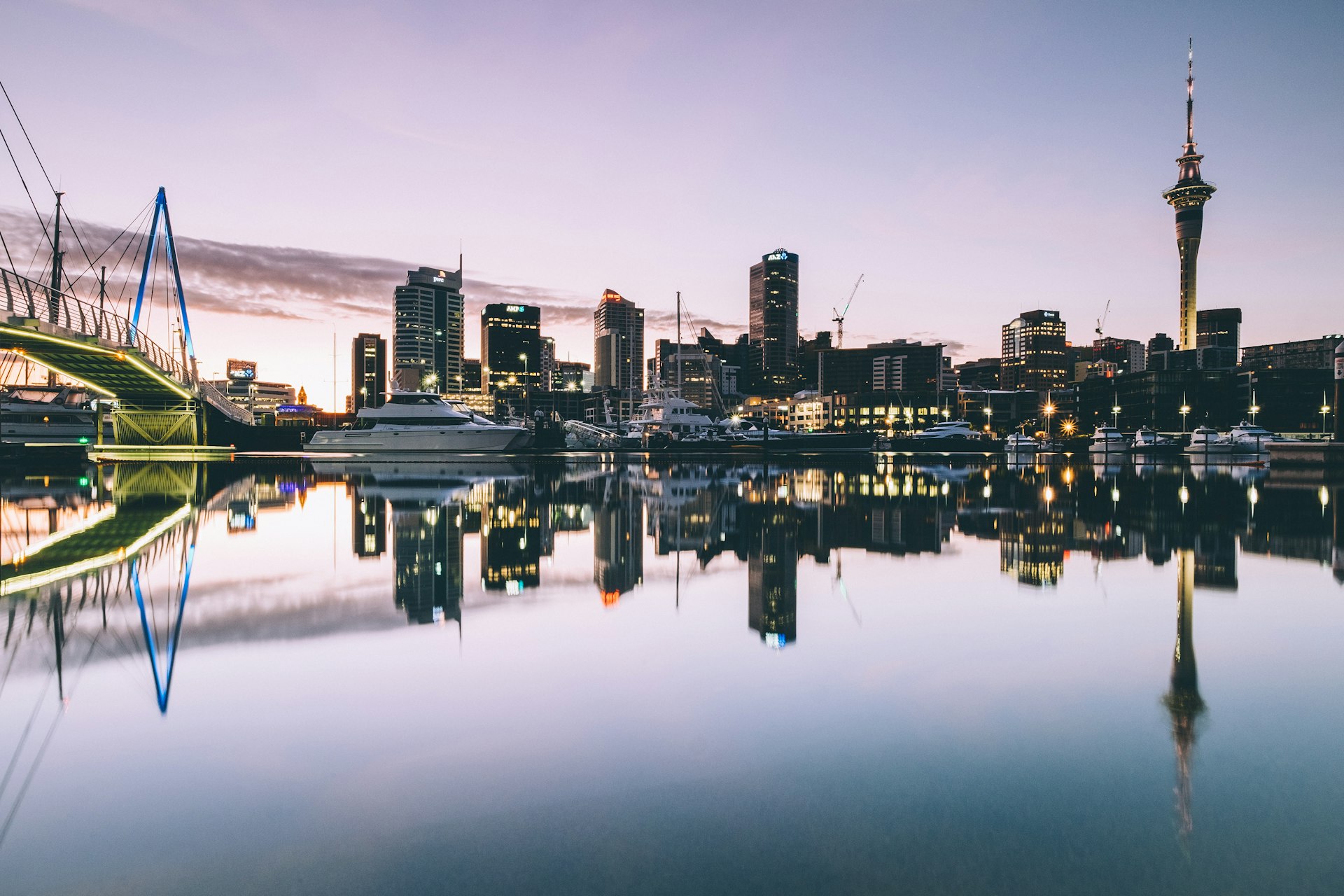
Auckland's Sky Tower orients visitors over the city's 53 volcanic cones (Rangitoto erupted just 600 years ago); Waiheke Island, 35 minutes by ferry, offers the North Island's finest Bordeaux-style wines. North of Auckland, the subtropical Bay of Islands combines the Waitangi Treaty Grounds with reliable dolphin encounters, while the Coromandel Peninsula's Cathedral Cove (a limestone arch framing the beach beyond) and the adjacent Hot Water Beach, where visitors dig their own hot pools in the sand at low tide, are the North Island's most photographed coastal stops. Rotorua's Wai-O-Tapu Thermal Wonderland has the most colorful geothermal landscape in the country, and Te Puia combines the geyser field with living Māori carving and weaving traditions.
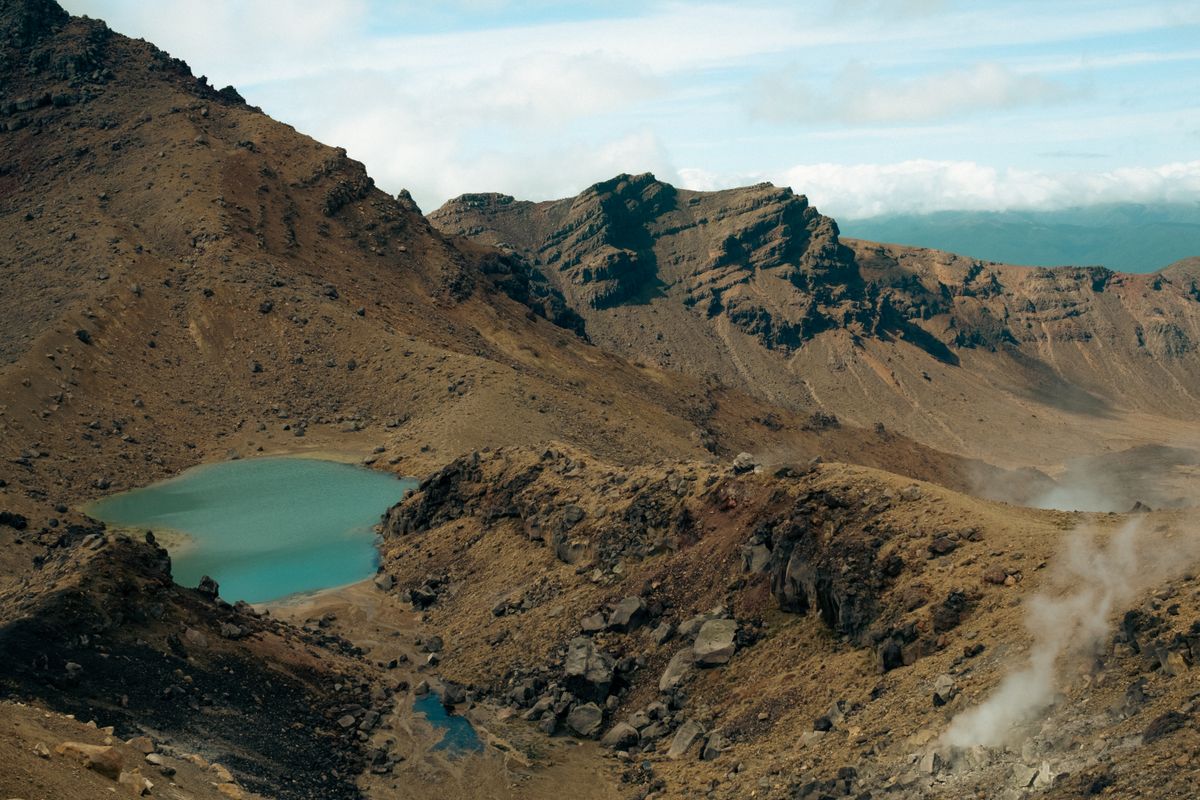
Tongariro National Park — the world's fourth national park and dually UNESCO-listed for nature and culture — holds the Tongariro Alpine Crossing, a 19.4km one-way walk past the Red Crater and Emerald Lakes consistently voted the finest day walk in the country. Book the mandatory shuttle ahead and check the Mountain Forecast before committing.
Wellington and the South Island
Wellington, the windiest city in the world, holds Te Papa Tongarewa (the finest museum in the Pacific) and Weta Workshop's Academy Award-winning effects studio. The South Island's Abel Tasman National Park offers golden beaches and a 60km coastal track combinable with water taxis; Kaikōura delivers year-round sperm whale watching and dawn swims with dusky dolphin pods numbering in the hundreds.
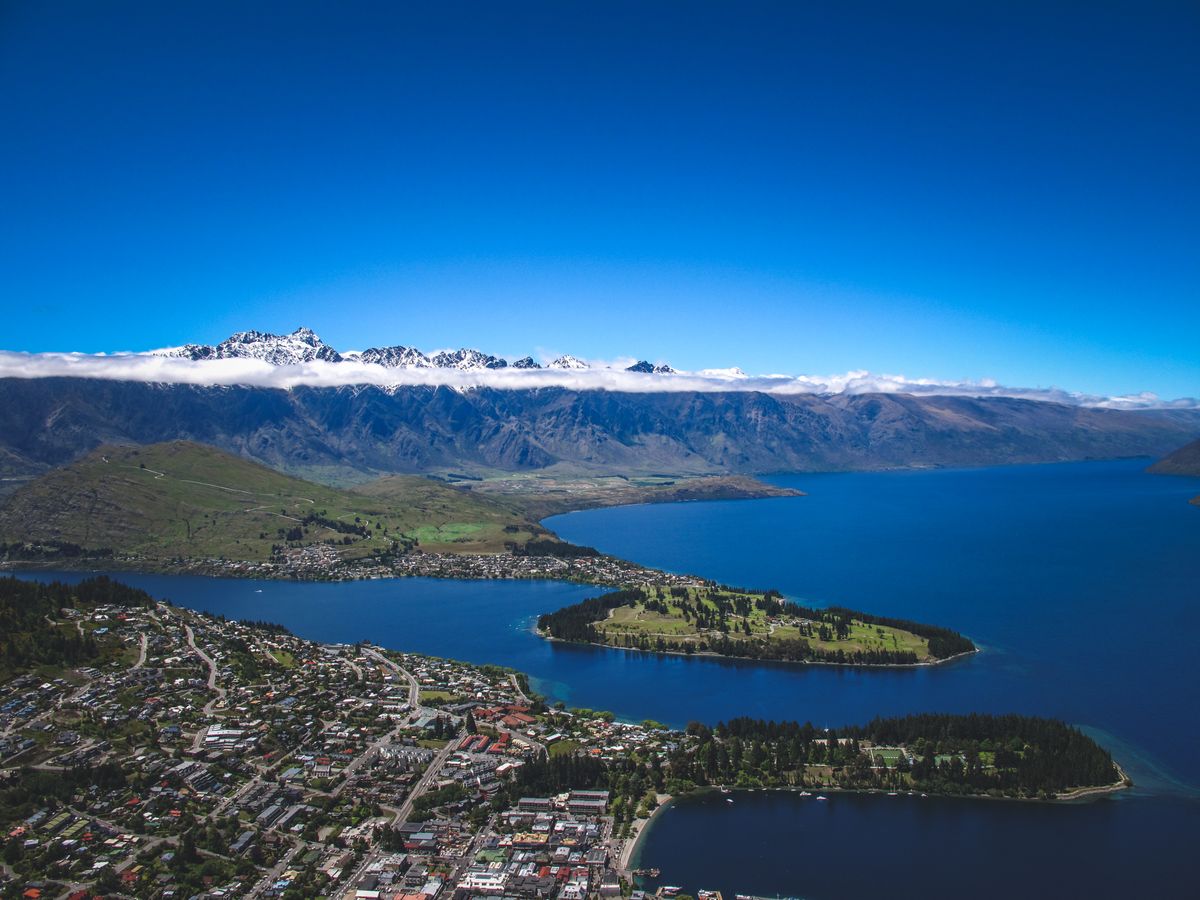
Aoraki/Mount Cook National Park's Hooker Valley Track is the finest easily accessible walk in the country, ending with a direct view of Aoraki's south face across a glacial lake. Queenstown, the adventure capital, anchors the Routeburn Track and Milford Sound day trips; Wanaka, an hour away over the Crown Range, offers the same access with a fraction of the commercial intensity. Christchurch, rebuilt after the devastating 2011 earthquakes, now has some of the country's most innovative architecture; further south, Dunedin's Otago Peninsula holds the world's only mainland royal albatross colony and a yellow-eyed penguin sanctuary, the finest urban wildlife day trip in New Zealand.
Fiordland and the Great Walks
Milford Sound — technically a fiord — combines Mitre Peak's 1,692m vertical rise from the water with hundreds of temporary waterfalls after rain; an overnight cruise, anchoring in Harrison Cove, is the single finest way to experience it. The Milford Track (4 days, 53km) crosses the MacKinnon Pass and passes New Zealand's highest waterfall — book through the DOC Great Walks system the moment it opens 3 months ahead, as peak-season huts fill within minutes.
New Zealand's 10 Great Walks are the finest maintained multi-day trekking infrastructure in the world: the Routeburn (3 days, the most scenically dramatic), the Heaphy (4–6 days, the longest and most ecologically diverse), alongside the day-length Tongariro Crossing. Doubtful Sound, deeper and three times longer than Milford but reached only via a lake crossing and a coach transfer over the Wilmot Pass, sees a fraction of Milford's visitors and rewards the extra effort with bottlenose dolphins, fur seal colonies, and fiordland crested penguins.
Māori Culture and Adventure Activities
Te Ao Māori's contemporary vitality — the revitalization of Te Reo Māori as an official language, the living carving and weaving traditions at Te Puia — offers a depth of indigenous cultural engagement unlike any other Pacific destination. The Waitangi Treaty Grounds, where the Treaty of Waitangi was signed in 1840, and Te Papa Tongarewa's taonga collection provide the essential historical foundation before experiencing a Rotorua cultural performance.
New Zealand invented commercial bungee jumping at the Kawarau Bridge in 1988; skydiving over Lake Wakatipu and the ski areas of Coronet Peak, The Remarkables, Cardrona, and Mount Hutt (June–October) round out the adventure calendar.
New Zealand Travel Tips for First Timers
New Zealand is among the safest countries in the world, with the outdoors itself the primary safety consideration.
Trail Notes
- Apply for an NZeTA online before flying (NZD 17–23, plus a NZD 35 conservation levy).
- Book Great Walks huts the moment the DOC booking window opens — peak season fills within days.
- Watch for single-lane bridges and sheep on rural roads, especially at dawn and dusk.
- Always register your intentions with DOC or your accommodation before alpine or backcountry activities.
- Check the Mountain and Marine forecasts at metservice.com before any alpine crossing or boat trip.
- Book campervans and Cook Strait ferry crossings 3–6 weeks ahead for December–February travel.
Sample 14-Day New Zealand Itinerary
Auckland (2 nights) → Rotorua (2 nights) → Wellington (2 nights) → Cook Strait ferry → Kaikōura (1 night) → Christchurch (1 night) → Mount Cook (1 night) → Queenstown (3 nights) with a Milford Sound day trip or overnight from Te Anau.
New Zealand on a Budget
New Zealand sits at the upper end of global travel costs, comparable to Australia. Budget travelers manage NZD 100–150/day; mid-range NZD 200–350/day. Campervan rental is the most cost-effective format since it bundles accommodation into the daily rate.
Final Thoughts: The Country That Earns Its Reputation
Milford Sound is more dramatically beautiful in person than in any photograph; the Tongariro Alpine Crossing is more demanding and more extraordinary than any description prepares you for. Book the Milford Track huts the morning they open, drive the Crown Range at dawn, and accept the invitation to the hāngī. New Zealand will exceed what you came for.