India does not permit you to remain a passive observer. The specific overwhelm that first-time solo travelers report in the first 24–48 hours is temporary — the nervous system acclimatizes, the chaos resolves into pattern, and the intensity that feels crushing on day one becomes the quality every India traveler misses most acutely after leaving. The country's safety considerations require honest assessment: not the anxiety that prevents worthwhile travel, and not naive reassurance that ignores genuine risk.
India asks more of the solo traveler than any other destination on earth — and offers more in return than any other destination can.
The Honest Safety Assessment
India's safety reality varies enormously by region — the established tourist circuits of Rajasthan, Kerala, and Himachal Pradesh carry a fundamentally different risk profile from less-touristed areas. The crimes that affect tourists with meaningful frequency are petty theft and scams rather than violent crime. Preparation changes everything: arrange transport in advance, book the first night's accommodation, carry a local SIM for Uber/Ola access, and read the specific documented scams operating at each destination before arrival.
Rajasthan: The Desert Kingdom
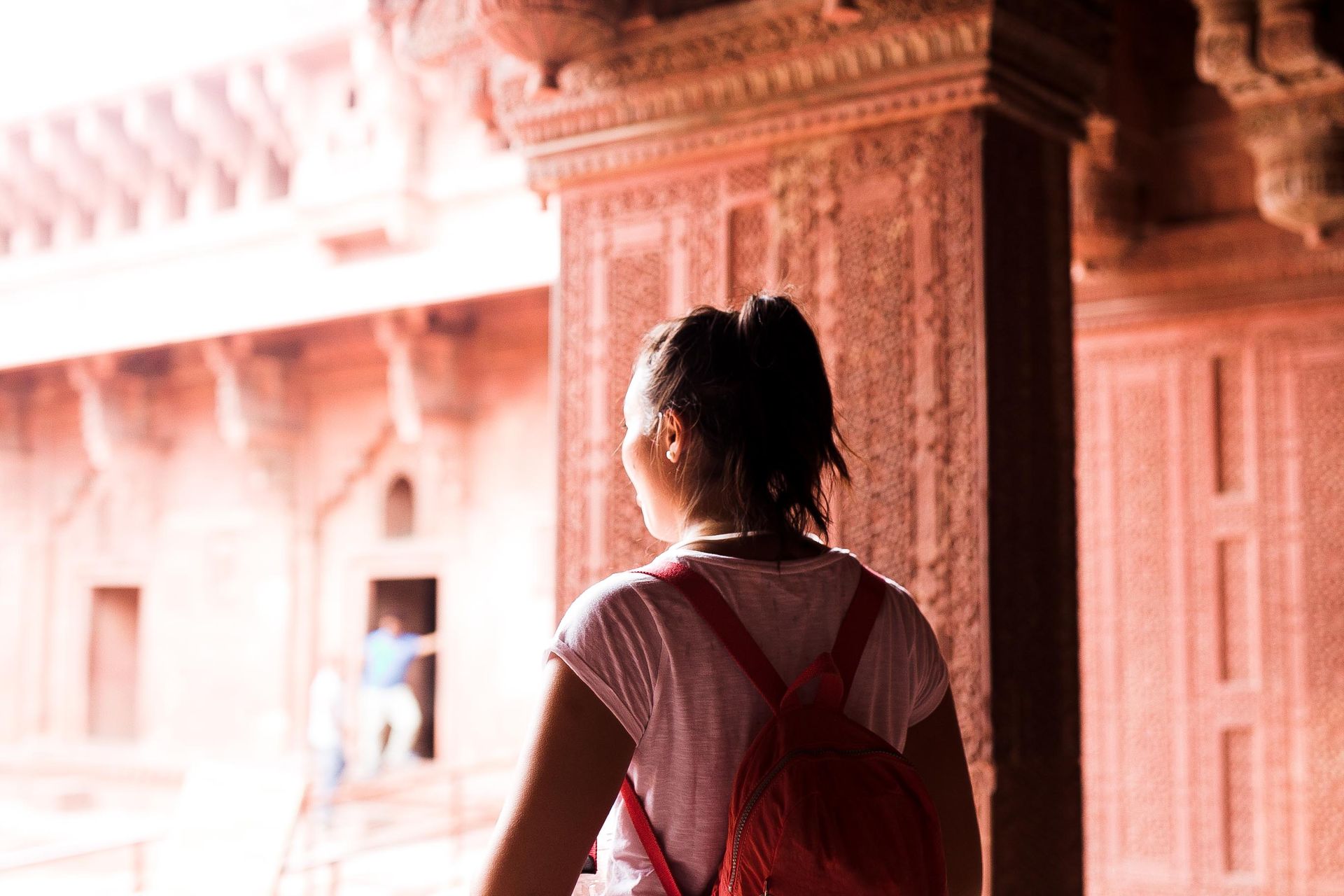
Jaipur is the ideal first destination — established infrastructure, a genuine hostel scene, and the Amber Fort's hilltop palace best visited at the 8am opening before tour groups arrive. Udaipur, built along Lake Pichola with the City Palace's white facade reflected in the water, is the city solo travelers most consistently cite as the one they'd return to first. Jodhpur's Mehrangarh Fort, rising 36 meters from the rock face above the blue city, is widely considered India's finest. Jaisalmer, the only living fort in India, adds an overnight camel safari into the Thar Desert under some of the country's darkest skies.
Kerala and the Himalayan North
Kerala offers the gentlest India introduction — 94% literacy, the greenest landscape, and the most developed tourist infrastructure in the south. Kochi's Fort Kochi district layers Portuguese, Dutch, and Jewish heritage; the backwaters near Alleppey are best experienced by shared public ferry or day kayak rather than a couples-priced houseboat for the solo traveler. Munnar's tea-estate hills, cooler and rarely above 20°C even in summer, pair naturally with a Kochi-and-backwaters circuit and hold the world's largest population of the Nilgiri tahr at the adjacent Eravikulam National Park.
McLeod Ganj, the Tibetan exile capital above Dharamsala, combines the Dalai Lama's residence with spectacular Dhauladhar mountain backdrops. Rishikesh, the yoga capital of the world, produces near-immediate social connection through shared yoga classes and the evening Ganga aarti fire ceremony. Varanasi's dawn boat along the ghats — pilgrims bathing, cremation smoke rising from Manikarnika — is India's most direct confrontation with 3,500 years of continuous civilization.
Spiti Valley: For Experienced Travelers
For solo travelers whose India experience is already established, the Spiti Valley — a high-altitude Buddhist desert in Himachal Pradesh, accessible only June–September via the Manali–Leh highway or the Shimla route — offers a monastery-and-mani-wall landscape unlike anywhere else in the country. The Key Monastery and the snow-leopard habitat of Pin Valley National Park are the highlights, but the valley's remoteness (the nearest serious hospital is 4–6 hours away) demands altitude acclimatization in Manali or Shimla first, evacuation-inclusive travel insurance, and a BSNL SIM, the only network with reliable coverage there.
Practical Safety and Logistics
Five non-negotiable practices: use Ola/Uber for all urban transport, buy an Indian SIM at the airport on arrival, book the first 2–3 nights at each destination, research documented scams (the fake tourist office, the gem export scheme) before arrival, and carry a dedicated cash wallet with only the day's spending money. Solo female travelers should dress conservatively outside resort contexts, use Indian Railways' women-only carriages, and identify a trusted local contact at each stop. Indian Railways' 3AC sleeper class provides the best balance of comfort, cost, and social connection for overnight journeys.
Budget Planning
Backpackers spend $25–40/day (hostel dorms, street food, 3AC trains); mid-range travelers $60–100/day; comfort travelers $120–250/day, which in India buys genuine heritage hotel stays in converted forts and havelis unmatched anywhere else in Asia at the price. A complete thali costs INR 150–300; a masala dosa INR 40–80.
Final Thoughts
Every experienced India traveler has the same conversation with first-timers: the struggle of the first days, the moment when the chaos resolves into pattern, and the specific ache of missing India that begins about 48 hours after departure. Get the SIM card. Take the overnight train. Sit at the ghat at dawn.