Vietnam is a country 1,650 kilometers long and in places only 50 kilometers wide — a narrow S-curve encompassing an extraordinary variety of landscapes, climates, and cuisines that would fill a continent elsewhere. French colonial architecture shares city blocks with ancient temples, the world's best bánh mì costs less than a dollar, and the traffic of Ho Chi Minh City operates according to laws visible only to its participants. Vietnam rewards every kind of traveler, from the budget backpacker living brilliantly on €25 a day to the food lover following the country's regional cuisines like a thread through a labyrinth.
The phở at 6am in Hanoi that costs €1.80 and is the finest bowl of soup you have ever eaten.
When to Go
November–April is the best overall window — central and southern Vietnam dry and warm, Hanoi and the north cooler but dry. March–May is the sweet spot for a full north-to-south itinerary, as Hanoi warms and the north's landscapes turn luminously green before summer crowds. There is no genuinely bad time to visit — the country is long enough that a dry, accessible region always exists.
Getting Around Vietnam
Domestic flights (VietJet, Bamboo Airways, Vietnam Airlines) are the fastest way to cover the country's length, with Hanoi–Ho Chi Minh City fares from €25–60 booked in advance. The Reunification Express train follows the coast the full 1,726km, with the Hải Vân Pass segment between Huế and Da Nang among Southeast Asia's most scenic rail journeys; sleeper buses and the classic "open bus" ticket undercut both on price for budget travelers. Renting a motorbike offers the most freedom for confident riders, while Grab handles city transport with fixed prices and no negotiation.
Hanoi
The Old Quarter's 36 medieval guild streets remain the city's most rewarding neighborhood for walking — phở from carts that have served the same spot for decades, bún chả (made famous when Obama ate it here with Anthony Bourdain), and cà phê trứng, Hanoi's whipped-egg-yolk coffee invention. Hoan Kiem Lake at dawn — mist, exercising elderly, street food carts setting up — is one of Hanoi's great experiences.
Ha Long Bay and Sapa
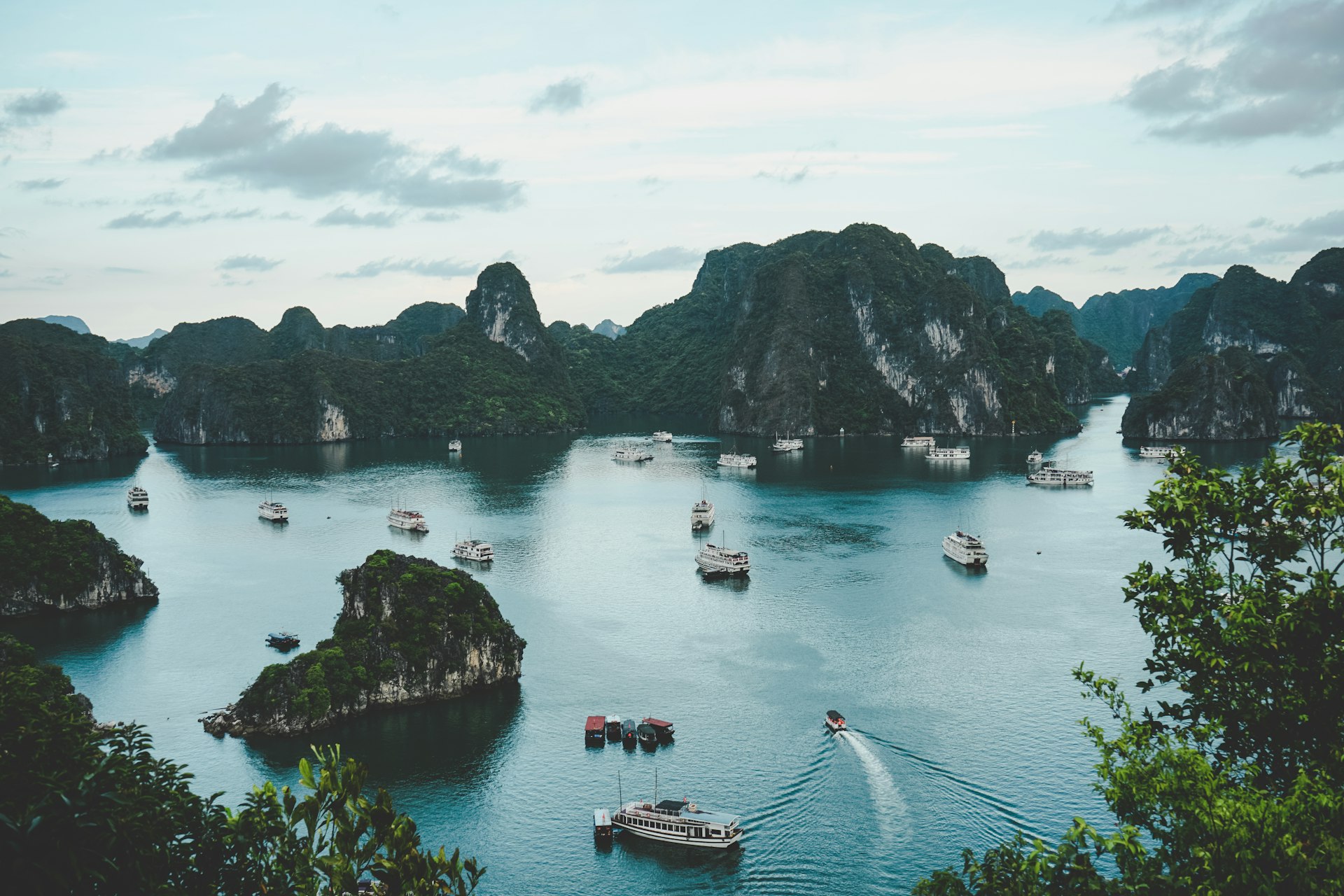
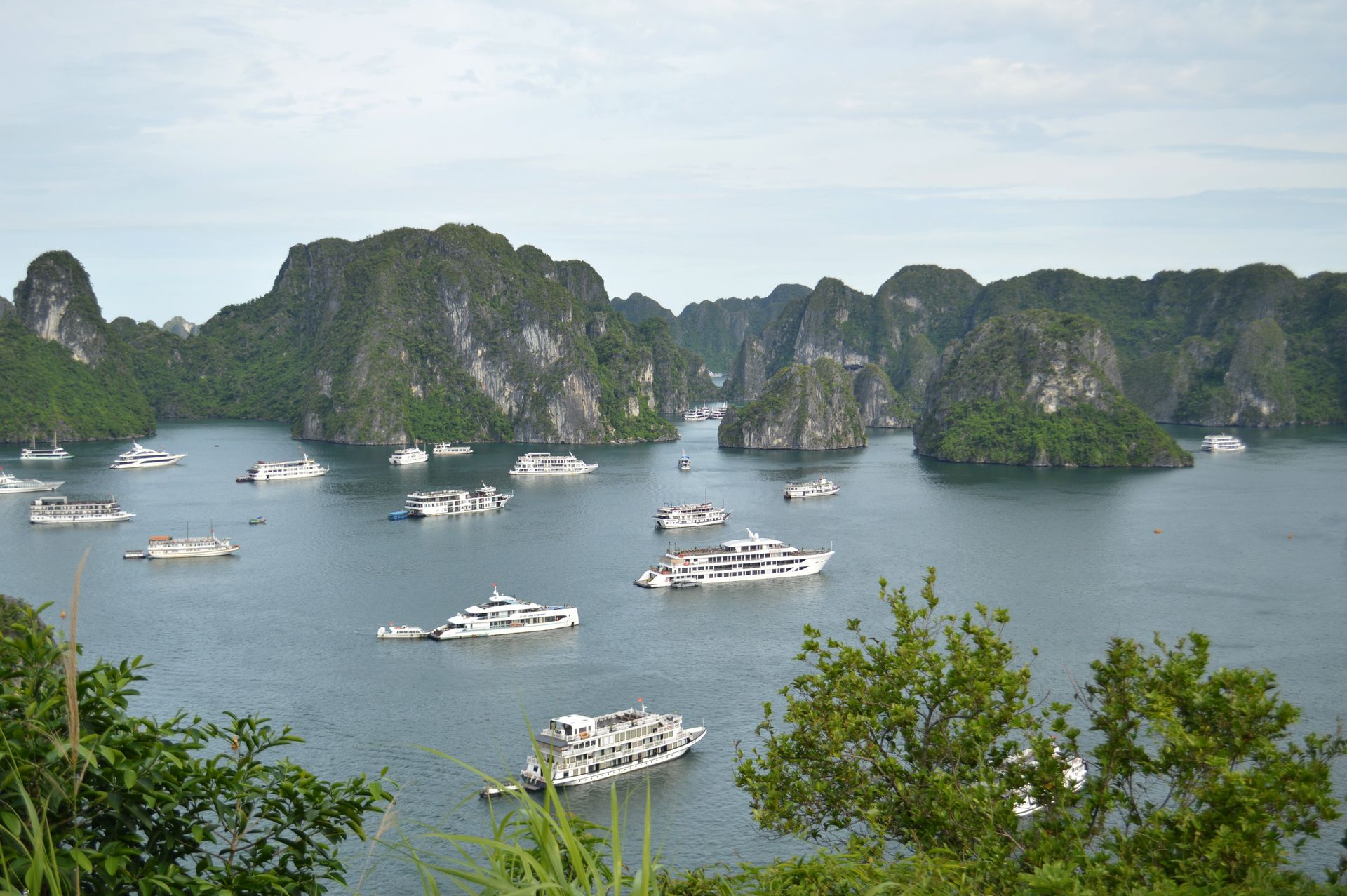
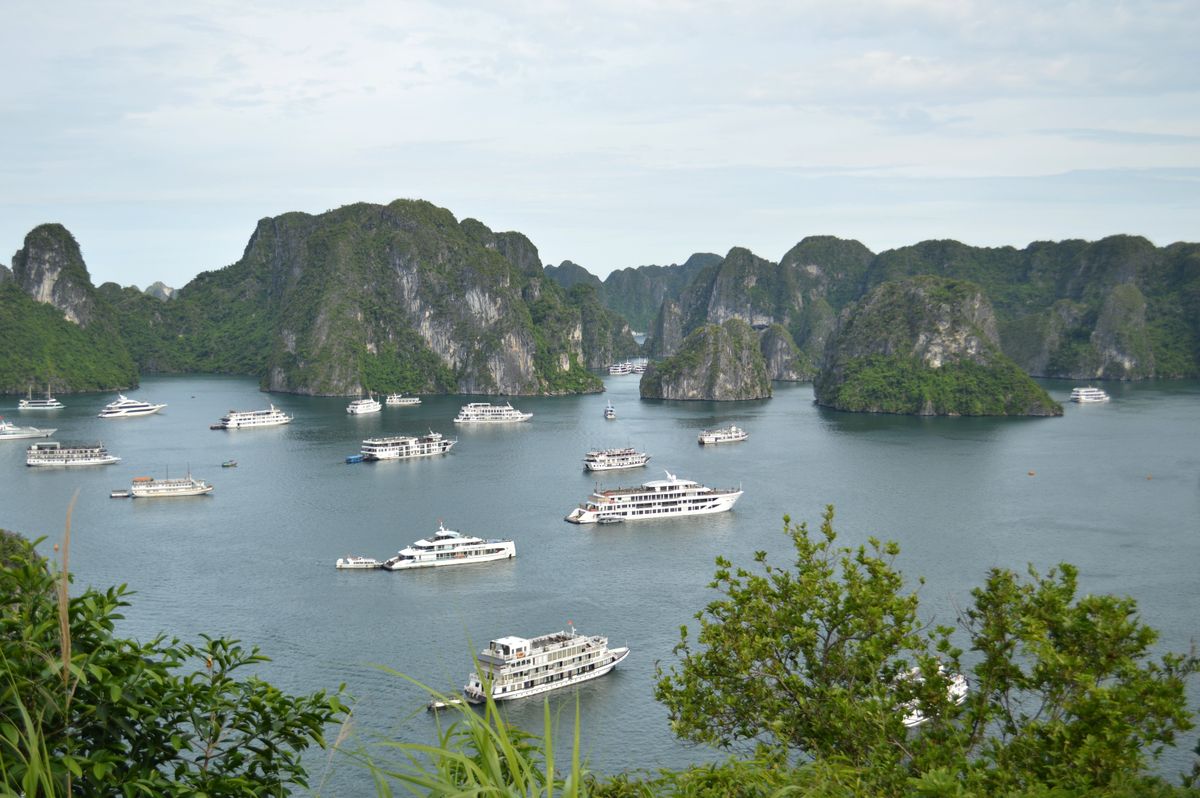
Ha Long Bay's 1,600 limestone islands rising from the emerald Gulf of Tonkin is Vietnam's most iconic landscape — an overnight junk boat cruise, navigating between karsts and swimming from anchor in deserted bays, is one of Southeast Asia's finest travel experiences. A 2-day/1-night minimum is worth considering; 3 days/2 nights reaches the more remote Lan Ha and Bai Tu Long bays.
Sapa's terraced rice fields cascade down mountain slopes toward Fansipan, Vietnam's highest peak at 3,143m — most spectacular during the May–June transplanting season or the September–October harvest, when the terraces turn gold. The overnight train from Hanoi to Lào Cai is the classic approach.
Hội An and Huế
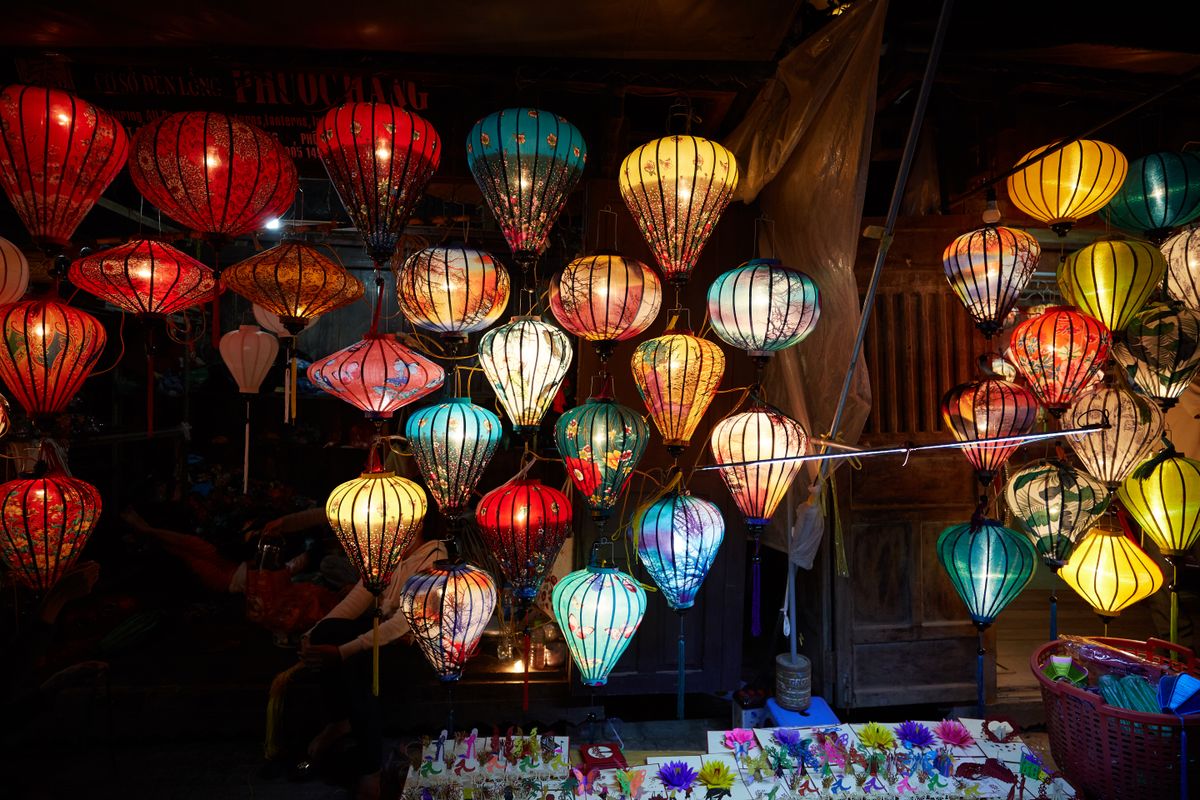
Hội An, the most beautiful town in Vietnam by wide consensus, is a UNESCO-listed ancient trading port of yellow-washed merchant houses and lanterns strung between buildings. The monthly lantern festival, when electric lights are switched off and streets are lit only by silk lanterns, is one of the most beautiful sights in the country. Cao lầu (made with water from a single local well) and bánh mì from Bánh Mì Phượng — widely considered the finest in the world — are essential.
Huế, the former imperial capital of the Nguyễn dynasty, holds the Imperial Citadel and elaborate royal tombs; its royal-tradition cuisine, developed to please emperors, is considered by many Vietnamese to be the country's finest.
Ho Chi Minh City and the Mekong Delta
Ho Chi Minh City — still called Saigon by virtually everyone — is Vietnam's most viscerally alive city, its French colonial landmarks (the Notre-Dame Cathedral, the Eiffel-designed Central Post Office) coexisting with glass towers and a motorbike traffic that becomes instinctive within a day. The War Remnants Museum is one of the most emotionally confronting and important visitor experiences in the country.
The Mekong Delta, producing 50% of Vietnam's rice, reveals a way of life that has changed remarkably little navigating its canals by boat between floating markets, best visited at dawn before the day-tour boats arrive.
Phú Quốc
Vietnam's largest island, in the Gulf of Thailand off the southwest coast, is the country's most developed beach destination — Long Beach and the powder-white Sao Beach rank among the finest in Southeast Asia, with excellent diving and snorkeling off the southern tip. The island produces Vietnam's finest fish sauce (nước mắm Phú Quốc, EU-protected) and pepper, and the Dương Đông night market serves outstanding fresh seafood at local prices.
What to Eat in Vietnam
Hanoi's phở, bún chả, and egg coffee (cà phê trứng) anchor the north; Huế's royal-tradition cuisine, developed to please emperors, includes the spicy bún bò Huế noodle soup and is considered by many Vietnamese to be the country's finest. Hội An's cao lầu (made with water from a single local well) and Ho Chi Minh City's cơm tấm and bánh xèo represent the south. Bánh mì and fresh spring rolls (gỏi cuốn) appear everywhere, and bia hơi — draft beer for as little as €0.20 a glass — is reputedly the world's cheapest beer.
Vietnam Travel Tips for First Timers
Vietnam asks for a little patience with its traffic and gives back extraordinary flavor and hospitality in return.
Trail Notes
- Apply for the e-visa online at least a week before travel.
- Download Grab before arrival for reliable, fixed-price city transport.
- Book Ha Long Bay cruises carefully — spend the extra €30-50 for genuine quality.
- Carry cash — street food, markets, and small guesthouses operate in cash.
- Cross the street with confidence and a steady pace — motorbikes flow around you.
- Cover shoulders and knees at temples and pagodas.
Sample 10-Day Vietnam Itinerary
Hanoi (2 nights) → Ha Long Bay (2 nights overnight cruise) → fly to Da Nang → Hội An (3 nights) → fly to Ho Chi Minh City (2 nights).
Final Thoughts: Vietnam Stays With You
The Ha Long Bay sunrise over limestone karsts in morning mist. The lanterns of Hội An at the full moon festival. Come hungry. Come curious. Come with time to slow down.