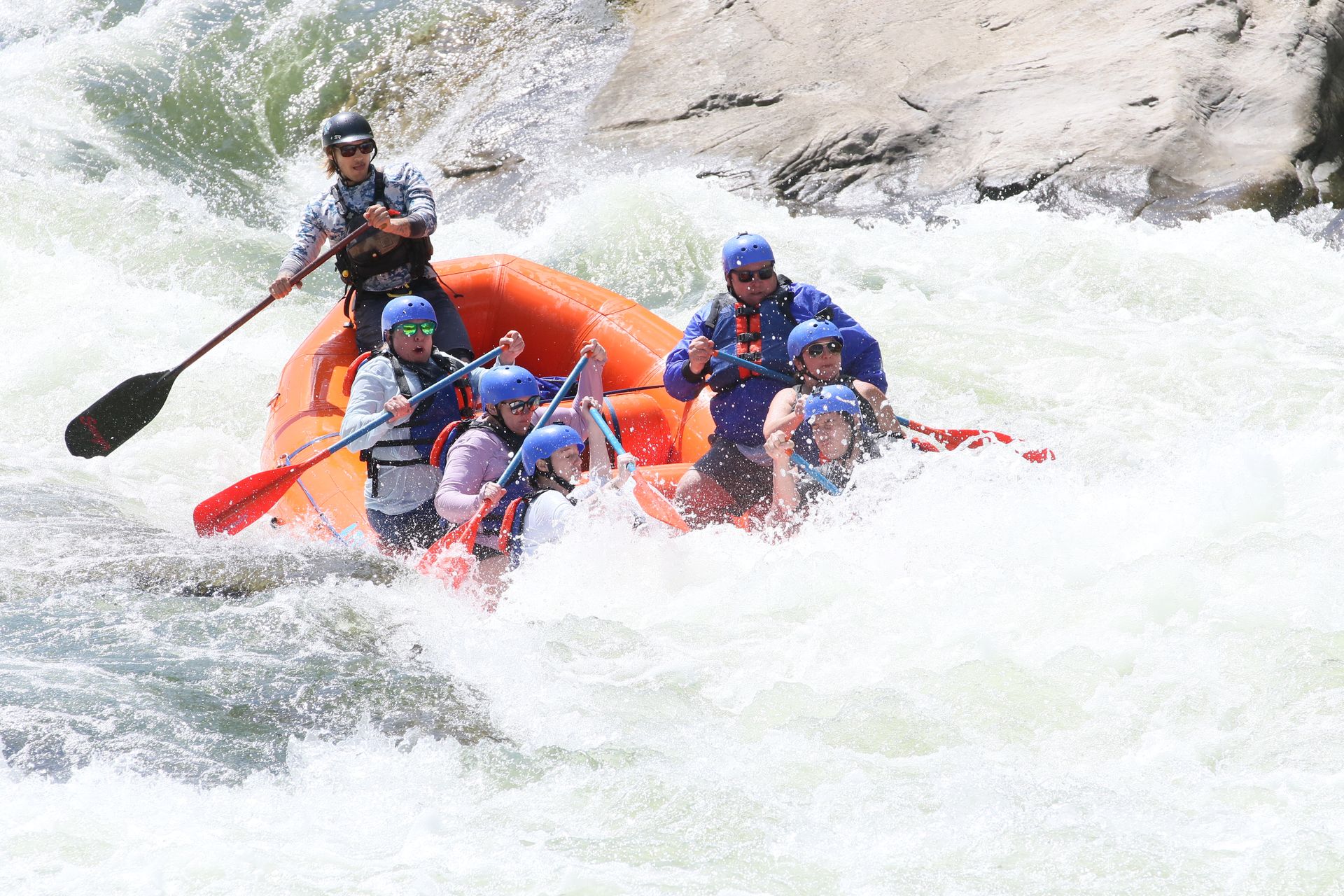
The International Scale of River Difficulty runs from Grade I (flat water) to Grade VI (essentially unraftable). Grade III is genuinely exciting without genuine hazard; Grade IV is powerful and predictable but demands precise maneuvering and confident swimming ability; Grade V is for experienced paddlers only. Being honest with an operator about your swimming ability in moving water — not a pool — is the single most important safety input you control.
The river will do what it does. Your job is to be ready for it.
Africa's Greatest
The Zambezi below Victoria Falls is the consensus pick among professional guides for the finest one-day commercial rafting on earth — 24 named rapids in the Batoka Gorge from Grade III to Grade V, including Commercial Suicide, Oblivion, and The Mother, best run August–December when low water exposes the technical hydraulics. Uganda's Upper White Nile at Jinja carries an extraordinary volume even at low flows, producing the massive, chaotic Nile Special rapid that defines the section. The Orange River along the South Africa–Namibia border offers Africa's finest multi-day wilderness rafting in the opposite register — gentle Grade II–III water through the Richtersveld's 3-billion-year-old desert canyon, with beach camping under some of the darkest skies on the continent.
The Americas
The Colorado River through the Grand Canyon is the multi-day expedition against which all others are measured — a 225-mile, 7-to-18-day journey exposing 2 billion years of geology, punctuated by the powerful Lava Falls rapid. Chile's Futaleufú ("The Fu") is the river professional kayakers worldwide call the finest pure white water on Earth, its glacially clear turquoise water running Grade IV–V through a dramatic Patagonian valley. Colorado's Arkansas River is North America's most commercially rafted river, its Royal Gorge section threading Grade IV–V rapids beneath 1,000 feet of sheer granite, while the gentler Browns Canyon National Monument nearby suits intermediate paddlers. Costa Rica's Pacuare threads primary rainforest with consistent Grade III–IV water and an overnight jungle-canyon lodge accessible only by raft.
Asia
Nepal's Karnali, reached only by small aircraft or a week of trekking, is a 12-to-18-day expedition through the country's most remote region, its Grade IV–V rapids fed by Himalayan snowmelt. The gentler Trisuli, three hours from Kathmandu, is Nepal's best beginner introduction. Ladakh's Indus is visually the most extraordinary rafting environment in Asia — Grade III–IV water threading a high-altitude desert landscape of cliff-perched Buddhist monasteries. Laos's Mekong River trades technical white water for a multi-day cultural journey past Buddhist temples, limestone karst, and fishing villages — Grade I–III water in a setting few adrenaline-focused rivers can rival for beauty.
Europe and Oceania
Italy's Noce River in Trentino hosts the Canoe/Kayak World Cup on controlled reservoir-release water, producing consistent Grade IV–V rapids in an alpine valley setting. Norway's Sjoa River in the Gudbrandsdalen valley delivers Scandinavia's finest white water, Grade III–V through Jotunheimen mountain scenery. New Zealand's Shotover River above Queenstown runs through the gold-rush-era Skippers Canyon, usually reached by helicopter to skip the notoriously difficult access road. Tasmania's Franklin River offers a 9-to-14-day wilderness expedition through World Heritage temperate rainforest that is Australia's most significant rafting journey.
Safety and Preparation
Pay full attention to every safety briefing regardless of prior experience — each river and guide has specific terminology and hazards. Secure river footwear, a water bottle, water-resistant sunscreen (UV reflects intensely off water), and leave valuables in the operator's storage unless in a submersion-rated case. Choose operators with recognized guide certification, current safety equipment, and a verifiable track record on that specific river.
Final Thoughts
Each river has its own personality that guides learn over years of reading the same hydraulics across different seasons and flows. Paddle when they say paddle. High-side when they call it. The Zambezi is ready when you are.