This guide covers every item worth packing — from universal essentials to destination-specific additions for tropical, wilderness, and family travel — plus the prescription medications worth a pre-trip conversation with a travel medicine physician.
The blister managed promptly does not become the infection that ends the trek. The ORS taken early does not become the dehydration that requires hospitalization.
Wound Care Essentials
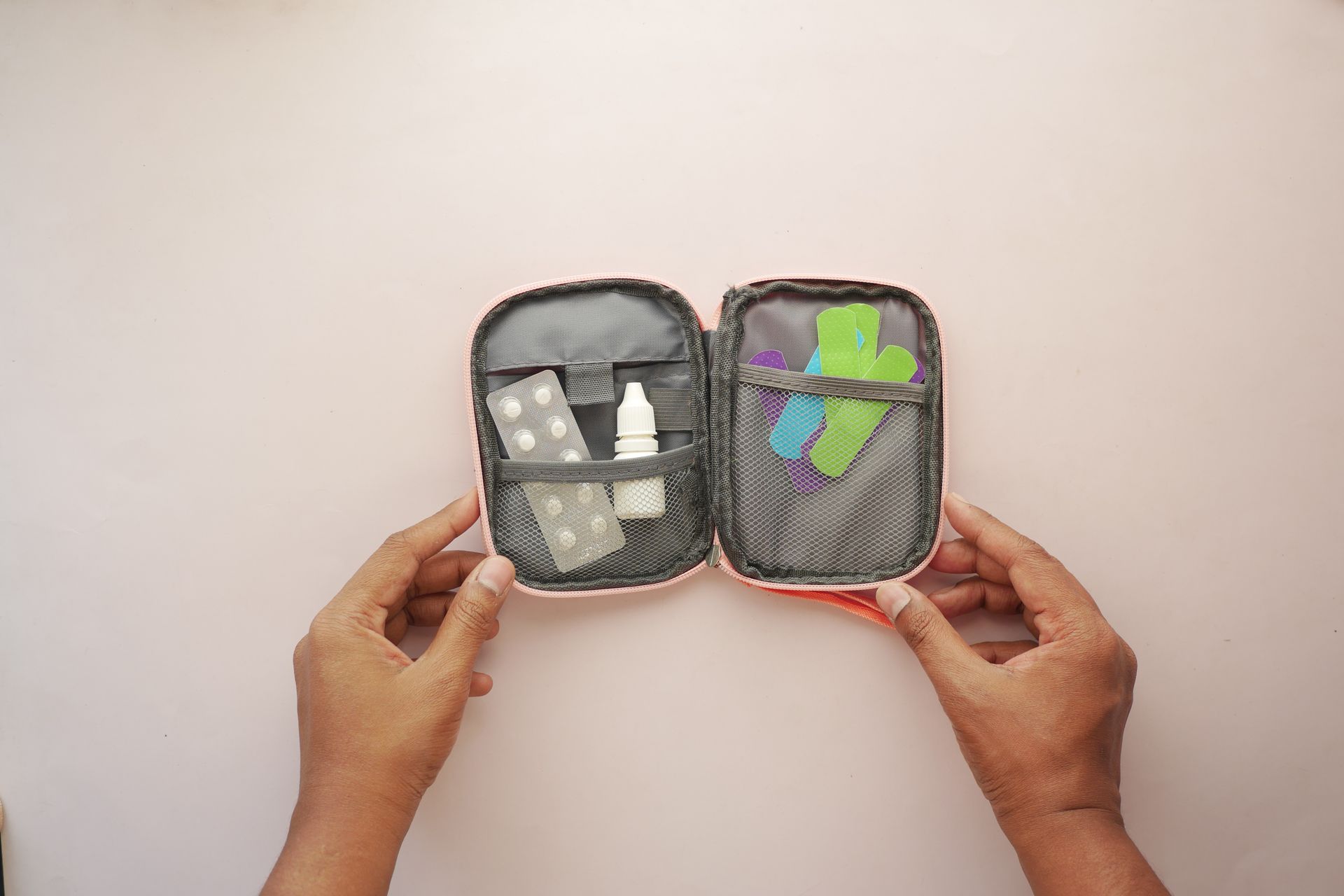
Pack 20-30 mixed-size adhesive bandages for a two-week trip, sterile gauze pads for wounds too large for bandages, and medical tape for securing dressings and improvised blister prevention. Chlorhexidine solution or antiseptic wipes clean wounds before covering — infection risk is meaningfully higher in tropical environments than at home. Compeed hydrocolloid blister plasters are the gold standard for continued walking comfort, while a SAM splint (folds flat, shapes to any limb) is the single most valuable addition for trekking, cycling, or skiing trips.
Medications for Pain, Fever, and Stomach Trouble
Pack both paracetamol and ibuprofen — alternating the two every 3-4 hours manages moderate pain more effectively than either alone. Oral rehydration salts are the single most important item for the most common serious travel health problem: traveler's diarrhea with significant dehydration, which can become clinically significant within hours in a hot climate. Loperamide controls symptoms for a long bus journey or flight but should never be used with blood in the stool or high fever, which suggest bacterial diarrhea requiring different treatment. Add a non-drowsy antihistamine for insect bites and mild allergic reactions plus a sedating one (diphenhydramine) for more significant reactions or as an occasional sleep aid across time zones, an antacid or PPI for the reflux that unfamiliar food and irregular schedules commonly produce, and an antinausea and motion sickness option (meclizine or a prescribed antiemetic) for boat crossings, winding mountain roads, and altitude.
Environmental Protection and Tools
SPF 50+ sunscreen and DEET 20-30% or Picaridin 20% insect repellent are arguably first aid items themselves, since they prevent the conditions reactive supplies would otherwise manage. Permethrin spray treats clothing rather than skin and adds residual, wash-resistant protection in high-mosquito or tick-endemic areas, while aloe vera gel is worth carrying specifically for sunburn relief. A digital thermometer distinguishes a mild viral fever from the dangerous fever of malaria or typhoid in travelers who've been in endemic areas. Fine-pointed tweezers for tick and splinter removal, medical scissors, safety pins, a couple of nitrile glove pairs, a compact CPR face shield, and a lightweight emergency space blanket for hypothermia prevention round out the essential tool kit.
Destination-Specific Additions
Tropical and developing-world travel warrants a physician conversation about antimalarial prophylaxis and a self-treatment antibiotic (azithromycin or ciprofloxacin) for severe traveler's diarrhea, alongside an expanded ORS supply. Wilderness and trekking trips add an irrigation syringe for effective field wound cleaning, a hemostatic gauze and tourniquet for significant bleeding, and — for altitudes above 2,500 meters — acetazolamide to reduce acute mountain sickness risk. Family travel needs liquid-formulation children's paracetamol and ibuprofen with a calibrated dosing syringe, since adult tablets cannot be safely divided for pediatric weight-based dosing.
Beyond the Kit
A travel medicine consultation 4-6 weeks before departure covers destination-specific vaccinations (Hepatitis A/B, Typhoid, Yellow Fever, Rabies pre-exposure for extended rural travel) that the kit cannot substitute for. Comprehensive travel insurance with medical evacuation coverage closes the gap the kit cannot address, and a laminated emergency card with blood type, allergies, and current medications ensures critical information reaches medical staff even when communication is impaired.
Final Thoughts
The kit costs $80-150 to build comprehensively. The incidents it prevents or manages cost multiples of that in money, time, and cut-short experiences. Pack it, carry it, know what's in it — the best journeys are the ones where the kit is never opened except to confirm everything is still there.