This guide covers where locals eat, when they eat, and the unwritten etiquette — from the ramen counter to the konbini onigiri — that separates authentic Japanese dining from the tourist circuit.
A queue outside a ramen shop is not tourist theater. It's a genuine quality signal, and locals queue for the specific bowls they consider the best.
The Daily Rhythm
Breakfast is either the elaborate washoku spread (rice, miso soup, grilled fish, tamagoyaki, pickles) or, far more commonly in daily urban life, a konbini onigiri eaten standing on the platform. Lunch is treated seriously across all social contexts — the teishoku set meal (a main dish, rice, miso soup, and pickles for ¥800-1,500) is the definitive lunch format, eaten in a brisk 20-30 minutes between noon and 1pm. Dinner starts later than tourists expect, typically 7-8pm, and extends over small dishes ordered progressively rather than all at once.
The Ramen Shop
Most authentic ramen shops seat eight to fifteen people at a counter facing the kitchen. You order from a ticket machine, hand the ticket to the chef, eat, and leave — the whole process takes 15-20 minutes, conversation is optional, and solo eating is the norm rather than an exception. Regional styles are as distinct as wine appellations: Sapporo's corn-topped miso, Fukuoka's cloudy tonkotsu, Tokyo's clean shoyu, Kyoto's creamy tori paitan.
The Izakaya
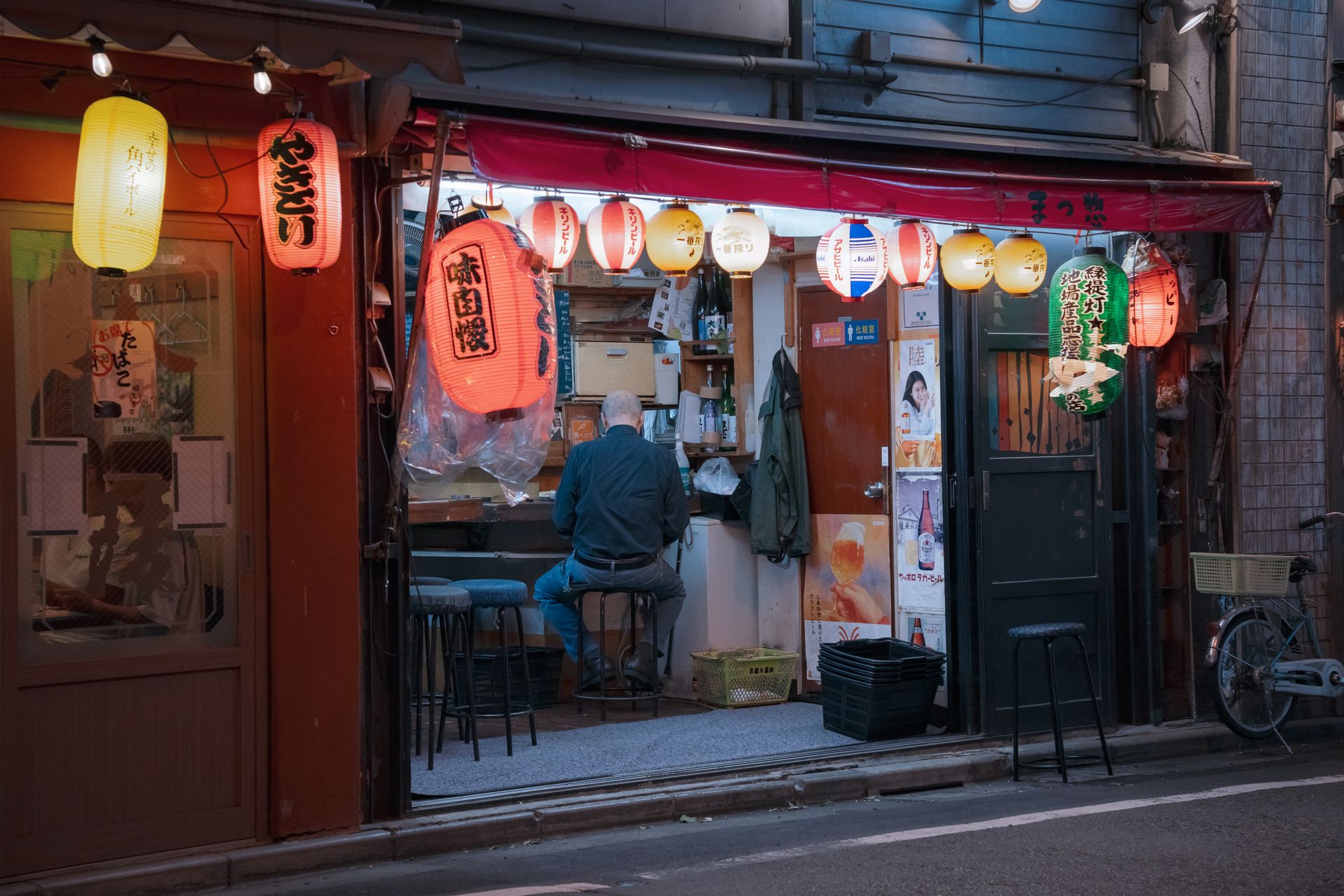
The izakaya is the Japanese pub and the primary social institution of adult eating life — drinks are ordered first, food arrives progressively rather than in courses, and the meal elongates over two or three hours into something between a meal and a gathering. Refill others' glasses before your own, say "kanpai" with genuine eye contact before the first drink, and start with edamame while the kitchen prepares more substantial dishes.
The Depachika and the Konbini
The depachika — department store basement food halls — is one of the world's great unsung food institutions, an immaculately presented hall of prepared foods and artisanal sweets that most tourists never think to descend for. The Japanese convenience store is genuinely different from its equivalent elsewhere: clean, beautifully organized, and stocked with onigiri, oden, and karaage of a quality that would be remarkable in a sit-down restaurant. There is no shame in eating konbini food in Japan — it's a legitimate meal choice, not a compromise.
The Rules That Matter
Never pass food chopstick-to-chopstick or stick chopsticks upright in rice — both mimic funeral rituals. Slurping noodles is a sign of genuine enjoyment, not poor manners. Finishing your rice and soup completely is considered respectful. At sushi counters, eating nigiri with your hands is preferred, and dipping the fish rather than the rice in soy sauce keeps the rice from disintegrating.
Soba, Udon, and Regional Differences
The standing soba shop, tachigui soba, is one of urban Japan's great overlooked institutions — a tiny station counter serving genuinely good buckwheat noodles in under five minutes for ¥400-700. Tokyo favors soba served hot or cold with a clean dipping broth, while Osaka's Kansai region favors thicker, softer udon in a lighter, sweeter broth. That regional pattern extends further: Kyoto's food is the country's most refined, built on soft-water tofu and kaiseki; Hokkaido eats the richest ramen and finest dairy and seafood; and Fukuoka's yatai — outdoor stalls set up nightly along the river — serve tonkotsu ramen under the open sky.
Eating With the Seasons, Paying the Bill
Japanese food follows a strict seasonal calendar, shun: sakura mochi and bamboo shoots in spring, cold hiyashi chuka noodles and grilled eel in summer, matsutake mushrooms and grilled sanma in autumn, and hot pot (nabe) and fugu in winter. When it's time to pay, take the check to the register near the exit rather than waiting for it at the table — tipping isn't practiced and can even read as mildly rude, while splitting the bill evenly (warikan) regardless of who ordered what is the standard approach among groups.
Final Thoughts
The tourist version of Japan has extraordinary food. The local version has something more — a connection to a culture of eating that is, in the fullest sense, a philosophy of life. Eat the way locals eat. The difference is everything.