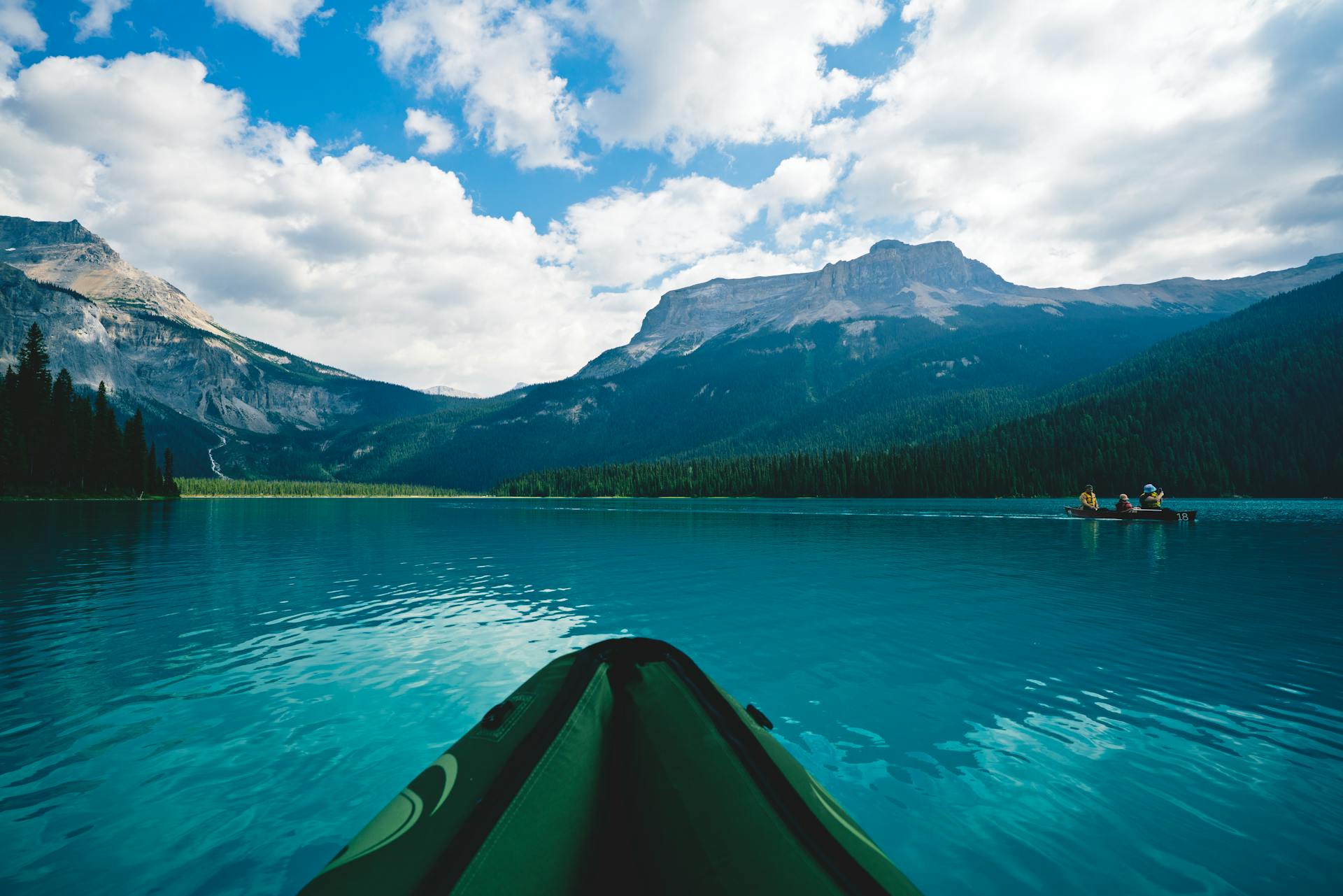
This guide covers the finest kayaking spots across every continent, organized by region and experience level, with the practical safety and logistics knowledge that turns a paddle into a genuinely world-class trip.
The sport puts you at water level, in intimate contact with coastlines, wildlife, and landscapes that boats and planes simply can't access.
North America's Wilderness Waters
The Apostle Islands on Lake Superior hide sandstone sea caves accessible only by water, best visited in calm summer conditions given the lake's genuinely dangerous cold-water unpredictability. The San Juan Islands offer protected wildlife paddling among resident orca pods, suitable for beginners through intermediate multi-day tourers. Minnesota's Boundary Waters offers over a million acres of quota-controlled, motor-free lake country where multi-day canoe-kayak routes deliver genuine solitude among moose and loons. Glacier Bay, Alaska delivers among the most awe-inspiring — and demanding — sea kayaking on earth, navigating among calving tidewater glaciers alongside humpback whales and brown bears. Florida's Everglades thread tidal estuaries and mangrove tunnels past manatees and alligators along the 99-mile Wilderness Waterway, with elevated chickee platforms for overnight stops. Haida Gwaii off British Columbia pairs remote expedition-grade sea kayaking with ancient Haida village sites and old-growth rainforest.
Europe's Fjords and Coastlines
Norway's Lofoten Islands pair granite peaks plunging into mirror-flat fjords with midnight sun paddling in June and July — dry suits are standard given cold year-round water. Croatia's Dalmatian Coast offers calm, warm, translucent turquoise water between hundreds of uninhabited islands, among the most accessible world-class sea kayaking anywhere. Slovenia's Lake Bled offers complete beginners a glacial lake framed by the Julian Alps and a cliff-top castle, while the nearby Soča River adds intermediate whitewater through limestone gorges. Sardinia's Gulf of Orosei hides 40 kilometers of limestone sea caves and grottos along Italy's east coast, reachable only by kayak or boat. Scotland's Outer Hebrides and Orkney reward experienced paddlers with grey seal colonies and landscapes of extraordinary bleakness, demanding respect for cold water and rapidly changing weather.
Asia, the Pacific, and Beyond
Ha Long Bay, Vietnam lets paddlers slip through narrow limestone karst passages into hidden lagoons — calm, protected, and genuinely suitable for beginners. New Zealand's Fiordland (Milford and Doubtful Sounds) is UNESCO-listed, with sheer granite walls rising 1,200 meters directly from calm water. The Philippines' Palawan pairs Bacuit Archipelago island-hopping with the UNESCO-listed Puerto Princesa Underground River, partially navigable by kayak. New Zealand's Abel Tasman National Park layers golden beaches and seal colonies onto a well-supported multi-day coastal route between Marahau and Totaranui. Puerto Rico's Mosquito Bay holds the world record for bioluminescent concentration — paddling after dark turns every stroke into a trail of electric blue-green light, a genuinely unique beginner-accessible experience.
Further Afield: South America, the Middle East, and Africa
The Galápagos Islands let paddlers approach marine iguanas, sea lions, and penguins with an intimacy that reflects the wildlife's total lack of predator instinct, typically launched from a liveaboard cruise. Chilean and Argentine Patagonia's glacially carved fjords and channels offer some of the world's most demanding wilderness expedition kayaking, while the calmer lakes of Torres del Paine provide flatwater paddling beneath the park's granite towers. Oman's Wadi Shab threads a golden desert canyon to a hidden waterfall chamber reachable only by swimming and paddling through a cave. Mozambique's Bazaruto Archipelago protects some of the Indian Ocean's last viable dugong and humpback whale populations along remote tropical paddling routes.
Choosing by Experience Level
Beginners should target Lake Bled in Slovenia, Ha Long Bay, Abel Tasman in New Zealand, or Croatia's inner island channels — calm water, reliable rental infrastructure, forgiving conditions. Intermediate paddlers comfortable in open water do well at the San Juan Islands, Milford Sound, or the Galápagos. Advanced and expert paddlers seeking genuine challenge should look to the Apostle Islands, Glacier Bay, Haida Gwaii, or the Patagonian fjords.
Practical Safety
Book local guides for unfamiliar waters — even strong paddlers benefit from tidal and hazard knowledge that can be the difference between a great trip and a dangerous one. Know water temperature, not just air temperature — cold-water shock is the primary risk in destinations like Lake Superior, Scotland, or Alaska, where dry suits are standard equipment. Specialist adventure travel insurance covering paddling activities is non-negotiable for remote destinations where a rescue can cost tens of thousands of dollars.
Final Thoughts
Whether it's a first guided tour in Croatia or an expedition route through Patagonian fjords, the water will take you somewhere nothing else can. Pick a destination that matches where you are as a paddler, go there, then plan the next one.