This guide covers the IC card system, the Japan Rail Pass decision, navigating Tokyo's famously complex network, and riding the Shinkansen — everything needed to travel Japan the way Japanese people actually travel.
Within two or three days, the tap-and-go rhythm becomes instinctive. Within a week, the Yamanote Line feels like an old friend.
The IC Card Comes First
Get a Suica or ICOCA card at any major station on arrival — all major IC cards are mutually compatible nationwide, working on metro, local trains, buses, and most convenience store purchases. Tap on entry, tap on exit, and the fare calculates automatically; travelers with a compatible iPhone or Android device can add Mobile Suica directly to their phone and skip the physical card entirely. This single card replaces the need to understand Japan's complex fare charts for anything except the Shinkansen.
The Japan Rail Pass Decision
The JR Pass (roughly ¥50,000 for 7 days) covers unlimited JR trains including most Shinkansen services, but not the fastest Nozomi and Mizuho trains. It justifies its cost specifically when your itinerary includes multiple long-distance Shinkansen journeys — a Tokyo-Kyoto round trip alone runs about ¥27,200, already more than half the 7-day pass price before adding any further travel. For itineraries confined mostly to one city, individual IC card fares are simply cheaper.
Riding the Shinkansen
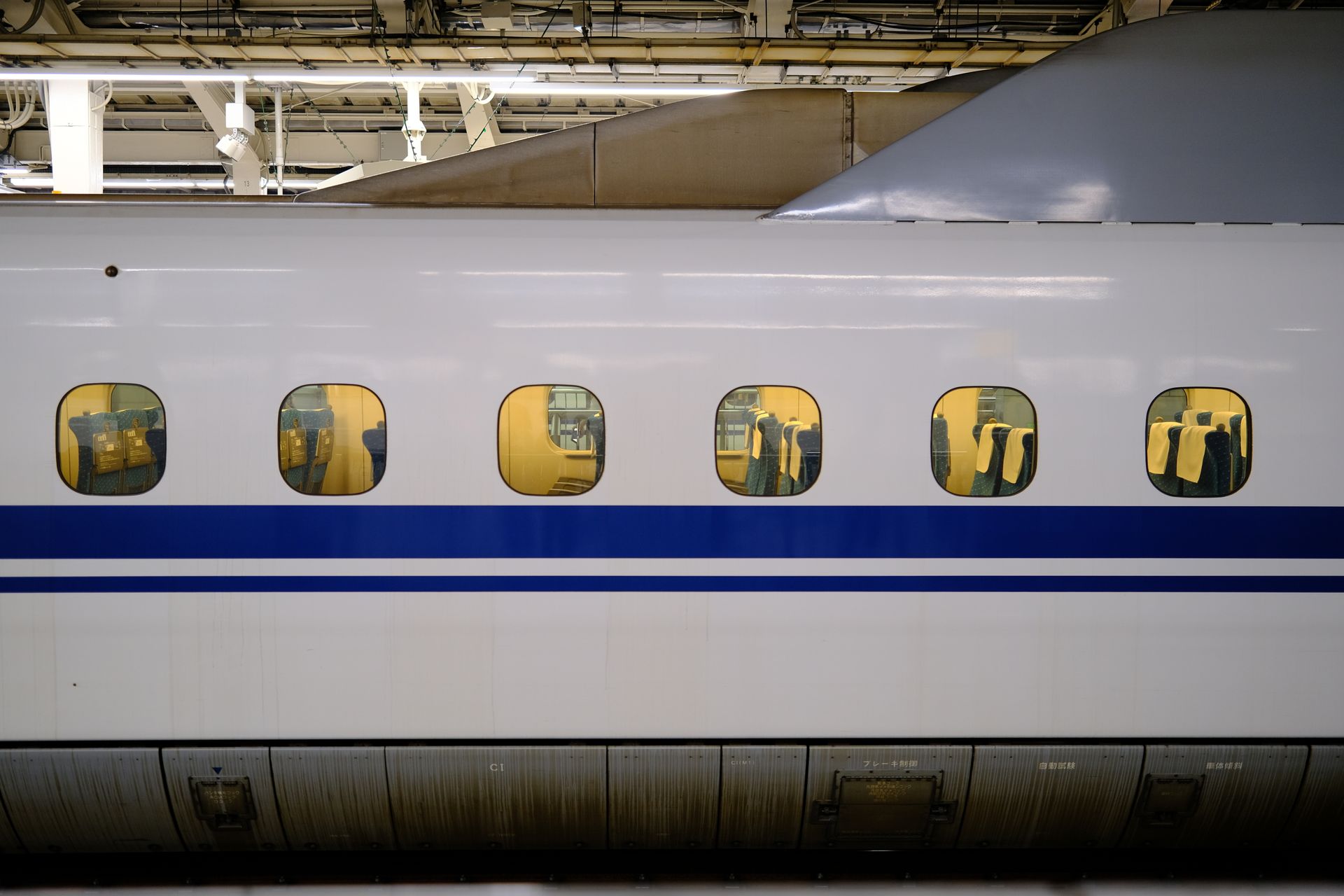
Japan's bullet train network has an average delay across decades of operation of approximately 54 seconds and zero passenger fatalities from accidents since 1964. Reserved seats cost a small premium over unreserved and are always worth it for journeys over an hour, guaranteeing a seat during peak travel periods when unreserved cars fill completely. Sit on the D/E side westbound (or A side eastbound) between Shin-Fuji and Mishima stations for the best views of Mount Fuji on clear days.
Navigating Tokyo's Complexity
Tokyo's rail network is the largest in the world by passenger volume, spanning JR, Tokyo Metro, Toei, and over a dozen private railways — but you don't need to understand the entire system, only how to get from where you are to where you're going. Google Maps' transit directions are accurate and reliable enough to eliminate the need to learn the network's topology; the JR Yamanote loop line alone connects most major tourist hubs and is worth learning first if you learn only one line.
The Unwritten Rules
Stand in the marked queue positions on the platform, board only after exiting passengers have cleared, and keep phones on silent — talking on the phone in the carriage is genuinely considered inconsiderate. These aren't tourist rules; they're how Japanese people travel every day, and following them makes you invisible in the best possible way.
Airports, Kyoto, and Osaka
From Narita, the Narita Express reaches Tokyo, Shinjuku, and Shibuya in 60-90 minutes and is JR Pass covered, while the private Keisei Skyliner is faster to Ueno for travelers based in eastern Tokyo. From Haneda, the JR Pass-covered Tokyo Monorail reaches the Yamanote Line at Hamamatsucho in about 20 minutes. Arriving at Kansai International Airport, the ICOCA & HARUKA package bundles a discounted airport express ticket with an IC card in one purchase. Within Kyoto, the city bus network (a flat ¥230 fare) reaches temple districts the train doesn't, while Osaka's eight-line metro and the Hankyu and Hanshin private railways connect the city to Kobe and Kyoto — the Kansai Thru Pass covers unlimited travel on most of these private lines for visitors spending several days across the region.
Final Thoughts
Japan's transport system is not just the means of getting to the next extraordinary place — it's an extraordinary place itself, an expression of precision and consideration for others that's as specifically Japanese as anything in a temple or a ramen shop. Use it fully. The country opens itself completely to those who do.