This guide compares Italy and Spain across history, art, food, cities, beaches, and cost — honestly, without pretending one is simply better, since the right choice depends entirely on what you want from a trip.
Italy gives you the past made physically present. Spain gives you the present lived with extraordinary intensity. Both are correct.
History and Art
Italy wins for the depth and physical completeness of ancient Roman heritage — the Colosseum and Pantheon stand intact in living cities, and nowhere else is the classical world so physically present. Spain wins for the unique legacy of 781 years of Moorish civilization — the Alhambra and the Mezquita of Córdoba have no equivalent in Italy or anywhere in Europe. On art, Italy's Renaissance (Michelangelo, Leonardo, Botticelli) is unmatched in concentration; Spain counters with Velázquez, Goya, Picasso, and Dalí — painters as great as anyone Italy produced, working in a distinctly different, more psychologically intense register.
Food Culture
Italian food wins for regional depth — fresh pasta in Emilia-Romagna, pizza Napoletana cooked at 485°C for 90 seconds, and a coffee culture that is simply the finest in the world. Spanish food wins for its social format — tapas and pintxos shared and replenished across a long evening — and for jamón ibérico de bellota, arguably the single greatest cured meat product in Europe. The Basque Country alone has the highest concentration of Michelin stars per capita anywhere on Earth.
Cities
Italy offers a universe of distinct urban worlds rather than one dominant capital — Venice's audacious 118-island experiment, Florence's walkable Renaissance density, Naples' raw operatic energy — each feeling like a small country unto itself. Spain is more dominated by Madrid and Barcelona as poles of national identity, with San Sebastián delivering, per capita, arguably the finest food city in the world in four square kilometers, and Bilbao's Guggenheim demonstrating architecture's power to transform an entire city's trajectory.
Beaches and Cost
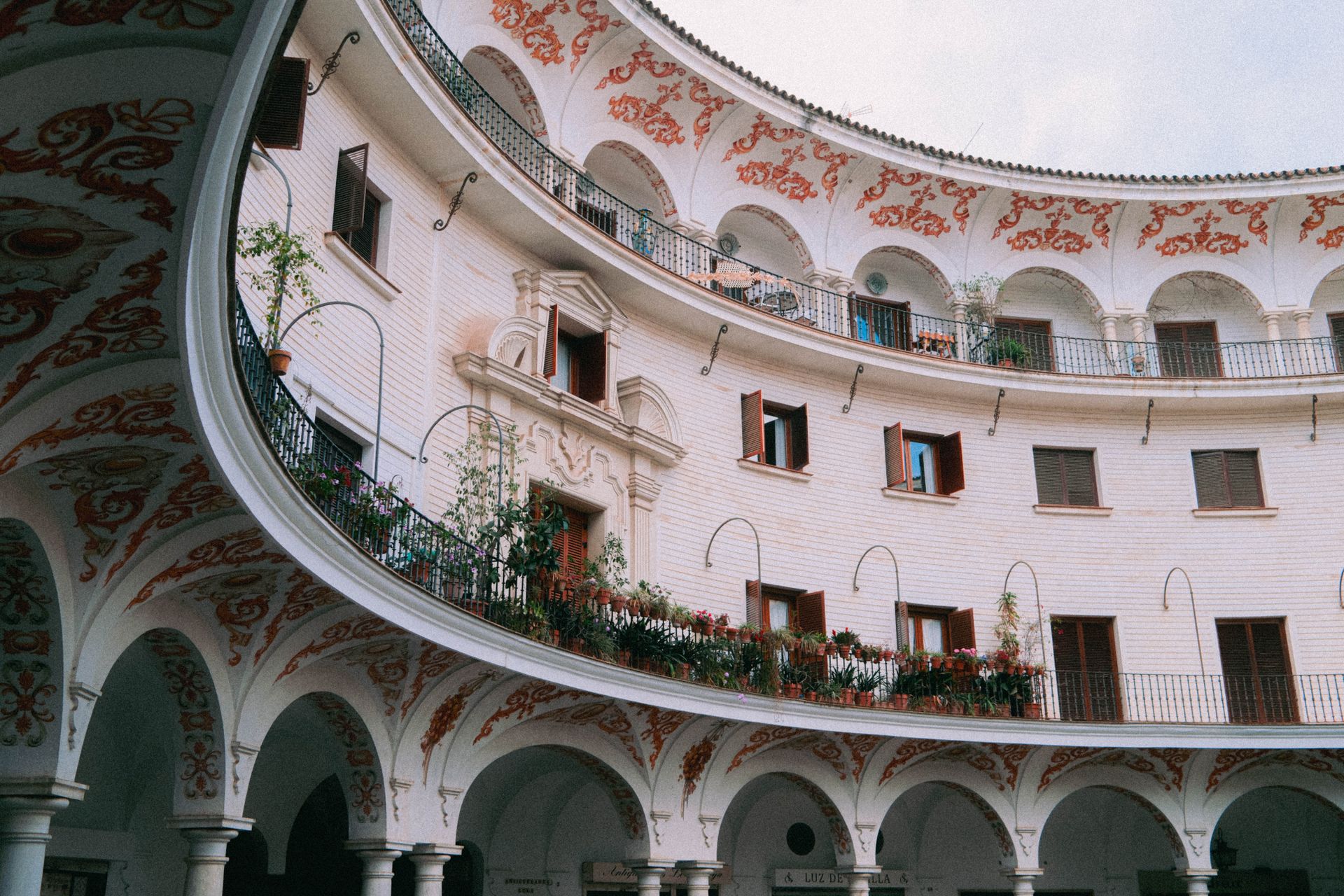
Italy wins for scenic drama — the Amalfi Coast, Cinque Terre, and Sardinia's Costa Smeralda rival the Caribbean for water clarity. Spain wins for variety and accessibility, with year-round warmth in the Canary Islands and a more democratic public beach culture than Italy's paid stabilimento system. Spain is meaningfully cheaper across nearly every category — a mid-range Madrid hotel runs €80-160 versus €110-220 in Rome, and Spain's free tapas-with-drinks tradition in cities like Seville and Granada adds real value that Italy's equivalent doesn't quite match.
Which Fits Your Trip
Choose Italy if ancient history, Renaissance art, and technically refined coffee and cuisine define what you want from a trip. Choose Spain if you're drawn to Moorish architecture, the social energy of tapas culture, better value for money, and cities with more contemporary urban energy. The honest answer, as with most great comparisons, is that combining both — Rome, the Amalfi Coast, Barcelona, and Seville in a single itinerary — produces one of the finest trips available anywhere in the world.
Final Thoughts
Both countries share a Mediterranean soul — a common orientation toward pleasure, beauty, and food that transcends their differences. Both are correct. Both are essential. The only genuine mistake is choosing neither.