Italy's famous circuit — Rome, Tuscany, Venice, the Amalfi Coast, the Cinque Terre — is extraordinary but increasingly crowded. This guide covers ten Italian destinations spanning twenty regions whose quality rivals the famous circuit while remaining relatively undiscovered.
Italy's hidden gems do not reveal themselves to travelers in a hurry. They reveal themselves to travelers who are paying attention.
Matera, Basilicata — The City That Climbed Out of Its Caves
The Sassi cave dwellings, continuously inhabited for roughly 9,000 years until a forced 1952 relocation, are now boutique hotels and restaurants lit warmly from within after dark — a vertical city whose streets double as rooftops, filmed by both Pasolini and Mel Gibson.
Lecce, Puglia — The Florence of the South
Nicknamed for its concentration of exuberant baroque architecture carved from golden pietra leccese limestone, Lecce's Basilica di Santa Croce facade is the finest baroque facade in southern Italy, best seen in late-afternoon light, with a Roman amphitheatre embedded casually in the historic core.
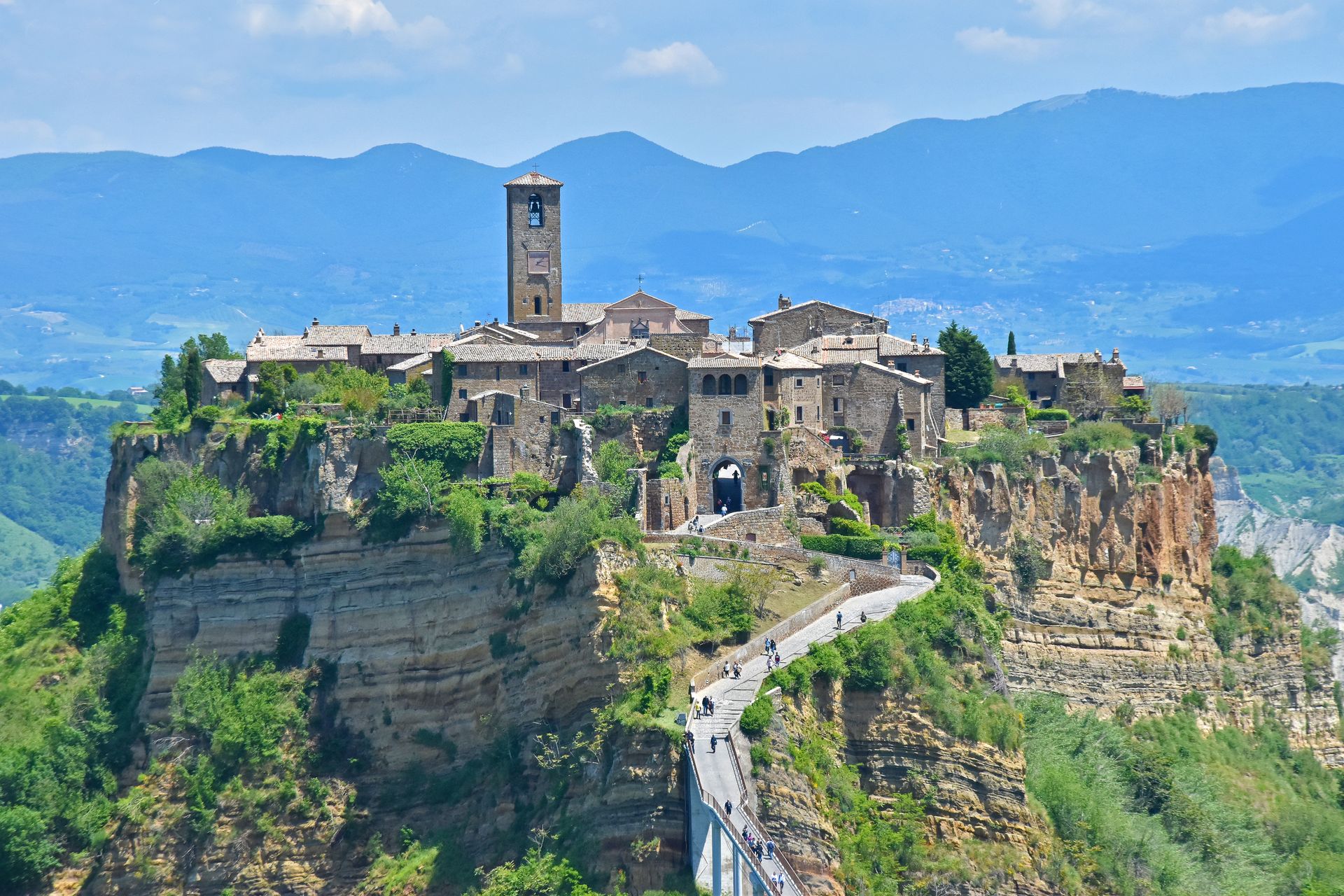
Civita di Bagnoregio, Lazio — The Dying City
Connected to the modern world by a single 300-meter pedestrian bridge, this eroding tufa hilltop village holds around 10 permanent residents, two restaurants, and a Romanesque church — the most concentrated, most fragile medieval village experience in central Italy.
Tropea, Calabria — The Cliff-Top Town
Perched on a tufa cliff above the Tyrrhenian with the Santa Maria dell'Isola church on an offshore sea stack, Tropea's beaches rival the Amalfi Coast's for water clarity at a fraction of the crowds, complemented by the region's famous sweet red Tropea onion.
Alberobello, Puglia — The Trullo City
This UNESCO-listed town's roughly 1,500 conical dry-stone trulli buildings — a vernacular construction unique to central Puglia — are finest at dawn and dusk in the less-processed Rione Aia Piccola district, with the surrounding Valle d'Itria's masseria farmhouses providing the best rural base.
Orvieto, Umbria — The Volcanic City Above the Valley
Sitting on a tufa butte 325 meters above the valley, Orvieto's cathedral facade is Italy's finest Gothic polychrome achievement, and its underground network of 1,200 Etruscan and medieval excavations reveals 2,500 years of subterranean human activity beneath.
Sabbioneta, Lombardy — The Ideal Renaissance City
Built entirely from scratch between 1556 and 1591 by Vespasiano Gonzaga as a single realized Renaissance urban vision, Sabbioneta's Teatro all'Antica is Italy's second-oldest purpose-built theater — a city designed, not accumulated.
Trieste, Friuli Venezia Giulia — The Mitteleuropean Port
This former Austro-Hungarian port, where James Joyce wrote most of Ulysses, combines Habsburg grandeur at the Piazza Unità d'Italia with Italy's most sophisticated coffee culture and the karst landscape of the Carso plateau above.
Spello, Umbria — The Flower Festival Town
Spello's intact Roman gates rank among the finest outside Rome, its Pinturicchio frescoes in the Cappella Baglioni are a Renaissance highlight, and its annual Infiorata flower carpet festival on Corpus Christi Sunday is Italy's most beautiful flower celebration.
Noto, Sicily — The Baroque City Rebuilt From Catastrophe
Rebuilt entirely after the 1693 earthquake destroyed the Val di Noto, Noto's Corso Vittorio Emanuele is Italy's finest baroque streetscape, and its 6:30am granita con brioche breakfast is, by food-writer consensus, the country's most purely pleasurable morning meal.
Final Thoughts
The southern cluster (Matera, Lecce, Alberobello, Tropea) forms the finest two-week deep-south itinerary in Italy, while Orvieto and Spello extend a standard Umbria trip. Go slower than the itinerary suggests, and eat where no English menu is displayed outside.