This guide compares Greece and Turkey across history, food, islands and coastline, cities, and cost, to help you choose between two of the Mediterranean's richest, most historically layered destinations.
Greece gives you the birthplace of Western philosophy on postcard-perfect islands. Turkey gives you an empire's crossroads between Europe and Asia. Both are staggering value.
History and Ruins
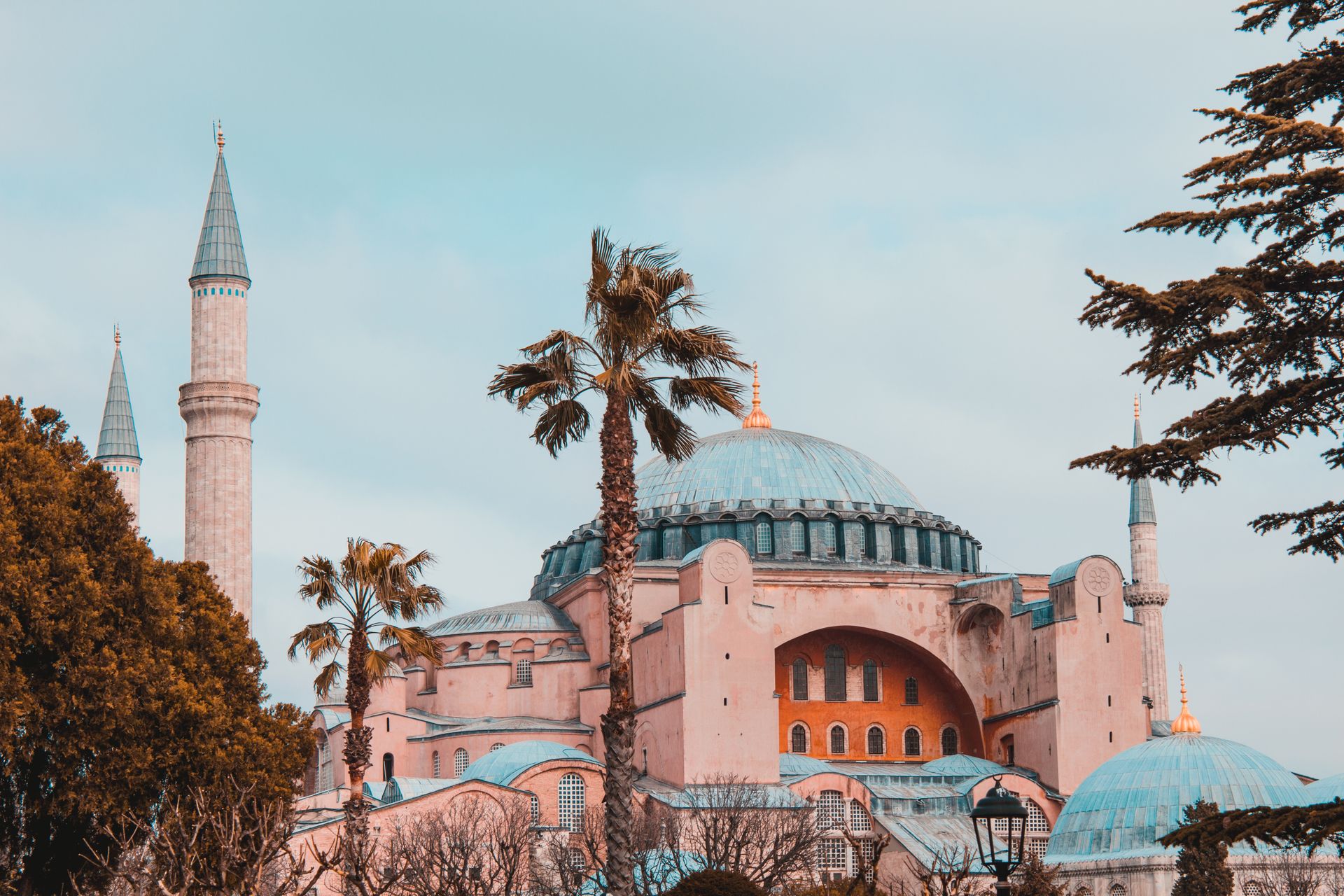
Greece offers the foundational sites of Western civilization — the Acropolis, Delphi, ancient Olympia — with a density of classical ruins unmatched anywhere. Turkey counters with an even longer, more layered history: Ephesus rivals any Greek site for scale and preservation, Istanbul's Hagia Sophia embodies 1,500 years of Byzantine and Ottoman transformation, and Cappadocia's underground cities and fairy chimneys have no Greek equivalent at all. Turkey's historical range — Hittite, Greek, Roman, Byzantine, Seljuk, Ottoman — is arguably the more layered of the two.
Food
Greek food centers on simplicity and quality of ingredient — fresh seafood, olive oil, tomatoes, and feta, eaten at tavernas with sea views. Turkish food is more complex and regionally varied — the kebab traditions of the southeast, Istanbul's meze culture, and a breakfast spread (kahvaltı) that rivals any in the world for sheer abundance. Turkish coffee and tea culture is also more central to daily social life than Greece's more café-oriented coffee habit.
Islands and Coastline
Greece wins decisively for islands — Santorini, Mykonos, Crete, and dozens of smaller Cycladic and Ionian islands offer an island-hopping culture with no real Turkish equivalent. Turkey's Turquoise Coast (Antalya, Fethiye, Bodrum) delivers comparable water clarity and dramatic coastline at meaningfully lower prices, but without the distinct island-to-island variety that defines a Greek island-hopping trip.
Cities and Cost
Athens is compact, walkable, and dominated by its ancient core, while Istanbul is a sprawling, genuinely bicontinental metropolis straddling Europe and Asia — one of the most electric cities in the world. Turkey is significantly cheaper across nearly every category: a comfortable mid-range daily budget runs €40-60 in Turkey versus €70-100 in Greece, particularly outside Istanbul and the main tourist coast.
Which Fits Your Trip
Choose Greece if island-hopping, classical ruins, and a Mediterranean beach holiday define your ideal trip. Choose Turkey if you want more historical range, better value for money, and a bicontinental city experience unlike anywhere else. Many travelers combine both — Athens and the islands, then a short flight to Istanbul — taking advantage of geographic proximity to experience the full arc of Mediterranean and Near Eastern history in one trip.
Final Thoughts
Greece and Turkey share the Aegean but diverge in temperament — Greece more postcard-idyllic, Turkey more sprawling and historically dense. Both reward the curious traveler enormously. The only mistake is assuming you have to pick just one.