We've evaluated the world's finest family beach destinations by water safety, child-friendly infrastructure, activity variety, and accessibility — every destination here genuinely works for the whole family, not just the adults with a children's club bolted on.
The best family beach trip is rarely the most exotic or expensive. It's the one where the youngest child felt safe in the water and something unexpected happened that no itinerary predicted.
What Makes a Great Family Beach
Water safety is non-negotiable — calm, shallow, clear water sheltered by bays, lagoons, or reefs, or monitored by lifeguard flag systems. Shade, sun-lounger rental, nearby cafés, and clean bathrooms determine whether a beach day is sustainable across multiple hours. Activity variety — snorkeling, kayaking, boat trips, wildlife — sustains a week-plus trip better than sand and swimming alone, and villa or apartment accommodation with genuine space and kitchen access matters more for families than couples-oriented hotel rooms.
Europe and the Mediterranean
The Algarve's sheltered east coast (Tavira, Manta Rota) produces the calmest water in Portugal, backed by affordable villa rentals and a warmly child-accepting food culture. Menorca's protected coves (Cala Macarella, Cala Turqueta) combine UNESCO Biosphere-protected nature with a compact 50km scale that puts no beach more than 40 minutes from any base. Sardinia's south and east coasts (Villasimius, Porto Giunco) pair Caribbean-quality turquoise water with 3,500-year-old Nuragic archaeological sites for families wanting cultural depth alongside the beach. Crete's Elafonisi lagoon — pink-tinged sand, wading-depth water extending 300 meters — functions as a giant natural paddling pool, paired with the Minoan world-class cultural depth of Knossos. Croatia's Dalmatian islands (Lopud, Korcula) offer calm coves and walkable medieval towns at the best value-for-quality ratio in the Mediterranean.
The Caribbean and North America
Turks and Caicos' Grace Bay, protected by barrier reef, delivers exceptional calm and clarity at a premium price point; Taylor Bay nearby is shin-to-waist-deep for 400 meters — a natural toddler pool. Barbados's Caribbean-side west coast (Mullins, Paynes Bay) pairs sheltered swimming with an extraordinary, English-accessible food culture. St Lucia's Rodney Bay area adds dramatic volcanic scenery — the Piton mountains, drive-in Sulphur Springs mud baths — to calm north-coast swimming, making non-beach days genuinely compelling. In North America, Hawaii's Kaanapali and Poipu beaches deliver calm water and reef snorkeling within the US domestic travel framework, while the wild, undeveloped Outer Banks offer wild horses and excellent-value beachfront rental houses.
Asia, the Pacific, and the Indian Ocean
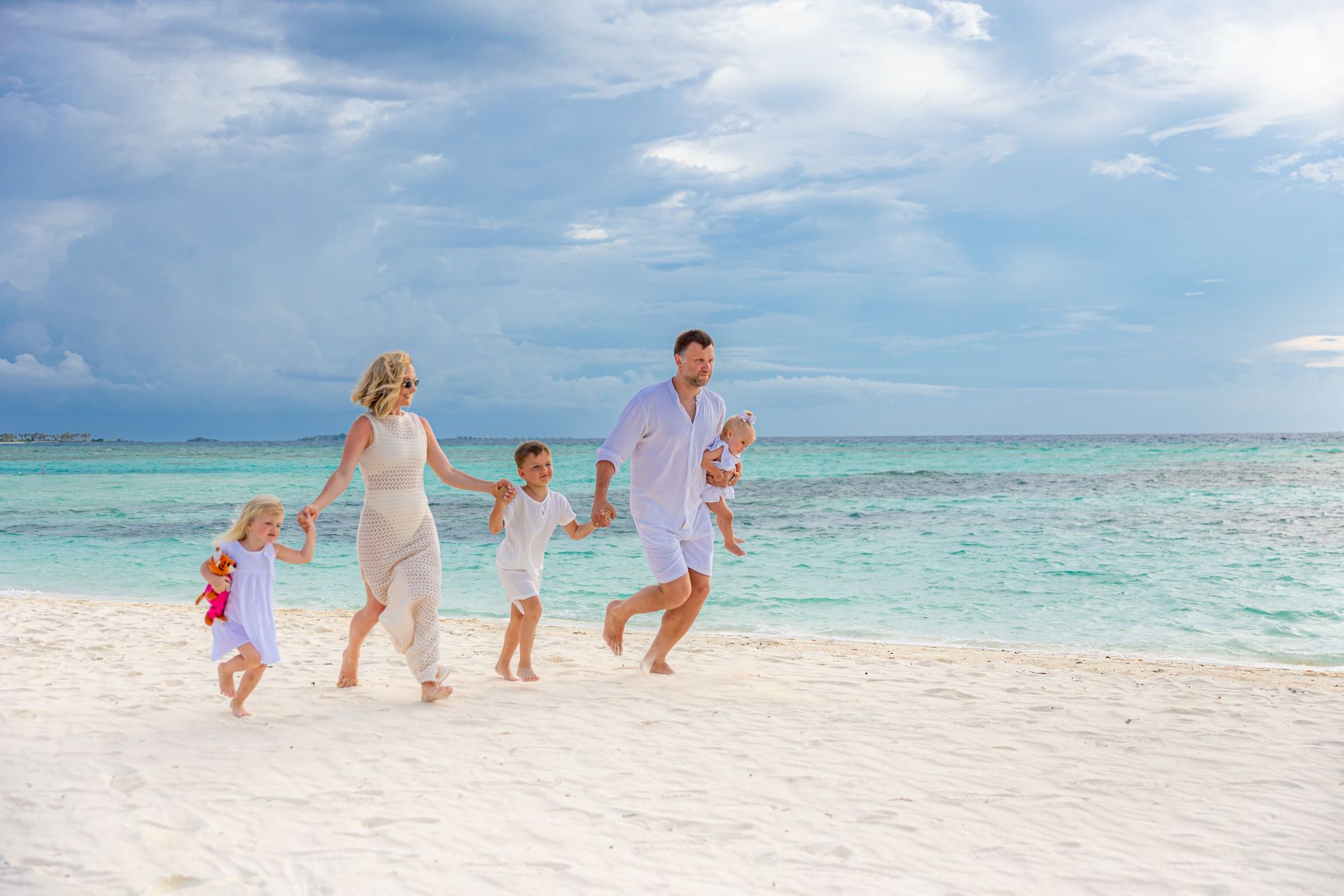
Phuket's Bang Tao and Nusa Dua in Bali both offer reef-protected, shallow, warm lagoons at a fraction of Caribbean or Mediterranean cost, with Bali adding extraordinary cultural and temple depth. Fiji's Natadola Beach and the Yasawa Islands combine reef-protected lagoons with genuinely child-cherishing Fijian hospitality. In the Indian Ocean, the Maldives' reef-protected lagoons offer swimming conditions of exceptional calm and clarity — basing on a local inhabited island rather than a resort island meaningfully reduces the cost for families. Mauritius's Flic en Flac delivers calm barrier-reef water with a remarkable multicultural food scene, while Zanzibar's Nungwi and Kendwa pair beach time naturally with an East African safari itinerary.
Central and South America
Costa Rica's Manuel Antonio pairs a calm national-park beach with jungle-edge wildlife — capuchin monkeys, sloths, and iguanas encountered within meters of the sand — that keeps children engaged well beyond swimming, and the country's English-friendly, stable infrastructure makes it one of the most accessible international family destinations. Brazil's Fernando de Noronha, a UNESCO marine reserve, delivers world-class snorkeling with sea turtles and spinner dolphins for families able to reach its controlled-access shores.
Choosing and Packing
Match the destination to your youngest child's needs — toddlers need warm shallow water, teenagers need genuine stimulation beyond the beach — and be honest about the total travel time your family can sustain. Pack high-SPF reef-safe sunscreen in bulk, water-confidence gear (swim vests, puddle jumpers) appropriate to each child's weight, and a beach shelter for destinations lacking natural shade.
Final Thoughts
Choose the destination that fits your family's ages, budget, and travel tolerance, book early to secure accommodation with genuine space, and resist the impulse to fill every day — the best beach days are the unscheduled ones.