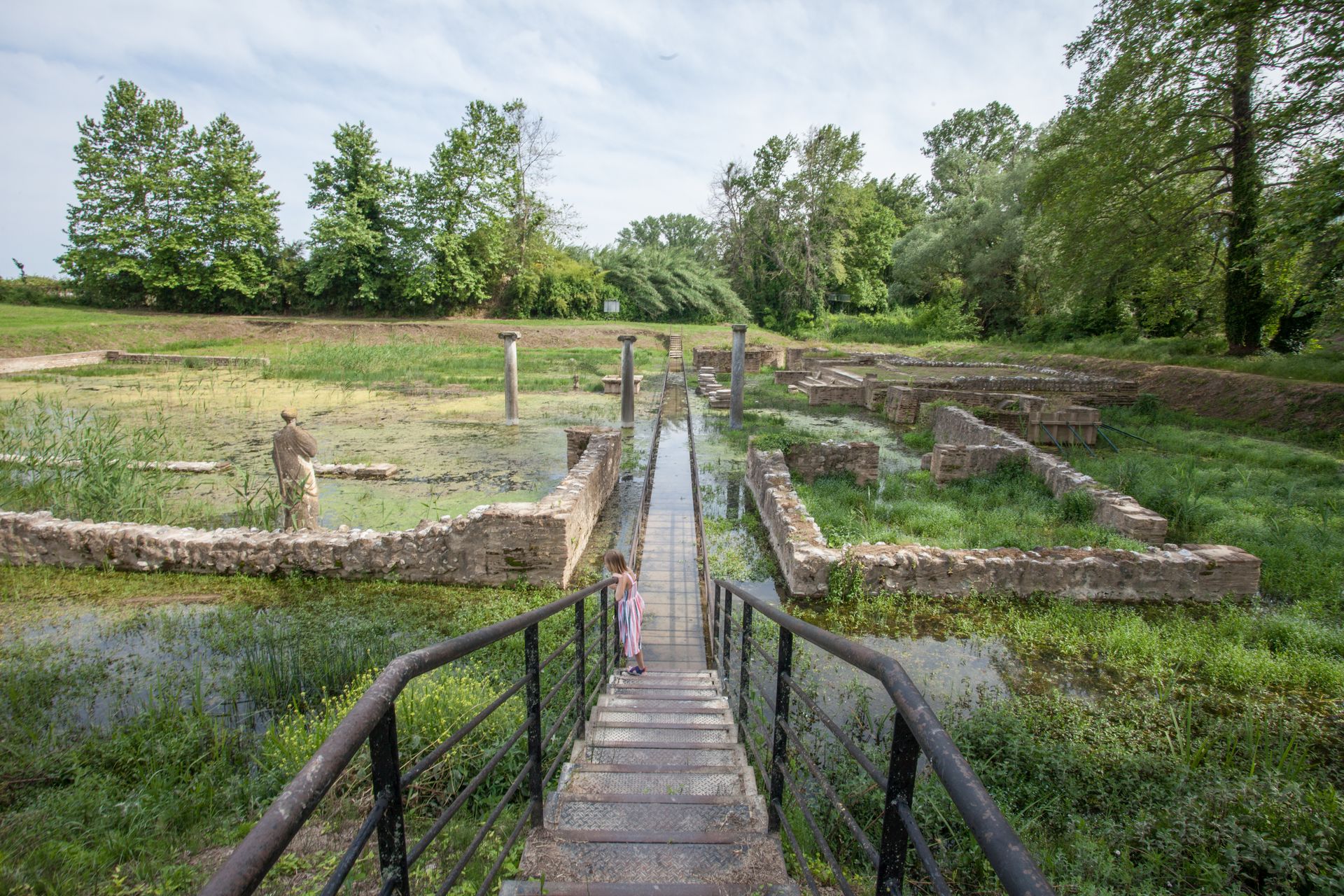
Information acquired in the physical presence of its subject matter is retained significantly longer than information from text or image alone — the mechanism is embodied cognition, where physical experience provides sensory anchoring for abstract historical knowledge. Children who wouldn't independently generate questions about Roman engineering in a classroom consistently ask highly specific questions when standing in the physical presence of the evidence.
The world is the greatest classroom. Pack the history journal. Learn the story before you arrive.
Rome and Athens: Ancient Civilization
Rome's Colosseum, best prepared for with a specific gladiatorial story told before arrival, provides the most immediately comprehensible window into Roman civilization for children without prior classical knowledge. Book the tour including underground hypogeum access for the arena-floor perspective standard visits miss. Athens's Acropolis depends almost entirely on preparation — a child who knows Athena's mythology arrives with a personal relationship to the building's purpose that transforms it from ruin into living story.
Pompeii and Normandy
Pompeii's plaster casts — three-dimensional forms of eruption victims in their final postures, an 1863 innovation by excavator Giuseppe Fiorelli — provide the most powerful single historical encounter available to children old enough to understand what they represent. Normandy's D-Day beaches, paired with the American Cemetery's 9,388 white marble crosses at Colleville-sur-Mer, create a physical encounter with the scale of sacrifice that no text reproduces; visit the Mémorial de Caen first for the contextual framework that makes the beaches comprehensible.
Scotland: Castles and Rebellion
Edinburgh Castle's Scottish Crown Jewels and the story of the Stone of Destiny's return give children the visible architecture of Scottish royal history, while Culloden Battlefield outside Inverness — where the Jacobite rising was crushed in 46 minutes in 1746 — delivers a quietly powerful lesson in loss through its immersive battle film and clan grave markers. The nearby Glenfinnan Monument and Viaduct, familiar to many children as the Hogwarts Express filming location, gives younger visitors an immediate personal hook into the Jacobite story.
The Americas: Democracy and the Maya
Washington D.C.'s free Smithsonian museums and National Mall monuments provide the most concentrated civic education curriculum in the hemisphere — reserve National Museum of African American History and Culture passes months ahead. Chichén Itzá's El Castillo pyramid, whose 91 steps on each of four sides plus the temple platform equal 365, offers the most directly comprehensible demonstration of ancient astronomical knowledge anywhere; the equinox serpent-shadow phenomenon is worth timing a visit around. Gettysburg, Pennsylvania, site of the Civil War's bloodiest battle, pairs the preserved battlefield terrain of Pickett's Charge with the Gettysburg Museum's 377-foot cyclorama painting and licensed battlefield guides who bring specific tactical decisions to life exactly where they were made.
Jerusalem: Three Faiths, Five Millennia
Jerusalem's Old City compresses five millennia of Jewish, Christian, and Islamic history into a single walkable space — the Western Wall, the Church of the Holy Sepulchre, and the Dome of the Rock sit within a few hundred meters of each other, each sacred to a different tradition. The Davidson Center Archaeological Park beside the Western Wall Plaza makes the layered history physically legible, with Herodian stones weighing hundreds of tonnes standing alongside visible evidence of Rome's destruction of the Second Temple and later Ottoman additions — best suited to teenagers old enough to engage with the site's genuine complexity.
Egypt and Asia
Egypt has the highest immediate visual impact of any ancient civilization destination — the Valley of the Kings' painted tombs and Cairo's Egyptian Museum housing Tutankhamun's complete burial treasure. Kyoto's Fushimi Inari torii-gate hike and Nijo Castle's assassination-detecting "nightingale floors" make Japanese imperial history tactile; Angkor Wat's jungle-reclaimed Ta Prohm and pre-dawn sunrise over the temple's moat reflection deliver Southeast Asia's most awe-inspiring single archaeological experience.
Age-Appropriate Engagement
Ages 5–7 respond best to specific human stories and physical scale — Pompeii's casts, Edinburgh Castle's Crown Jewels story. Ages 8–12 are the optimal window, as developing causal reasoning makes Rome, Athens, and Chichén Itzá's complexity rewarding. Ages 13–17 can engage with ethical complexity and multiple perspectives — Culloden's Scottish-and-English accounts, Normandy's German cemetery alongside the American one.
Making It Stick
Pre-trip preparation is the single strongest predictor of educational outcome — children who arrive with a narrative framework make 3–4 times more spontaneous observations than unprepared visitors. A dedicated history journal (sketches, ticket stubs, daily entries in the child's own words) produces the highest long-term retention. Limit to two significant historical activities per day; one deeply engaged experience beats five superficially visited.
Final Thoughts
The child who has stood on Omaha Beach understands D-Day in their body. These understandings don't replace textbook knowledge — they make it possible.