This guide covers the most common cultural mistakes tourists make in Morocco — dress, mosque etiquette, Ramadan customs, bargaining, and photography — and the awareness that transforms a defensive tourist into a genuinely welcomed traveler.
Morocco rewards the traveler who approaches it with curiosity and generosity of spirit. The greatest cultural mistake of all is failing to engage.
Dress and Sacred Spaces
Modesty in dress is a deeply held value, not a preference — shoulders, upper arms, and thighs covered in medinas, mosques, and rural areas produces noticeably fewer unwanted interactions and warmer receptions. The vast majority of Morocco's mosques are closed to non-Muslim visitors entirely; the Hassan II Mosque in Casablanca is the major exception, specifically designed for guided tours. Never attempt to enter an apparently quiet mosque "for a quick look" — it causes genuine offense to worshippers inside.
Ramadan Awareness
Eating, drinking, or smoking in public during daylight hours during Ramadan is both legally regulated and deeply disrespectful, applying to tourists as much as locals — do it discreetly indoors rather than on a visible street terrace. The month is also an extraordinary opportunity: the iftar hour has a particular warmth, and a spontaneous invitation from a Moroccan family to share the meal is one of the most genuine cultural experiences available in the country — if invited, accept.
Bargaining Correctly
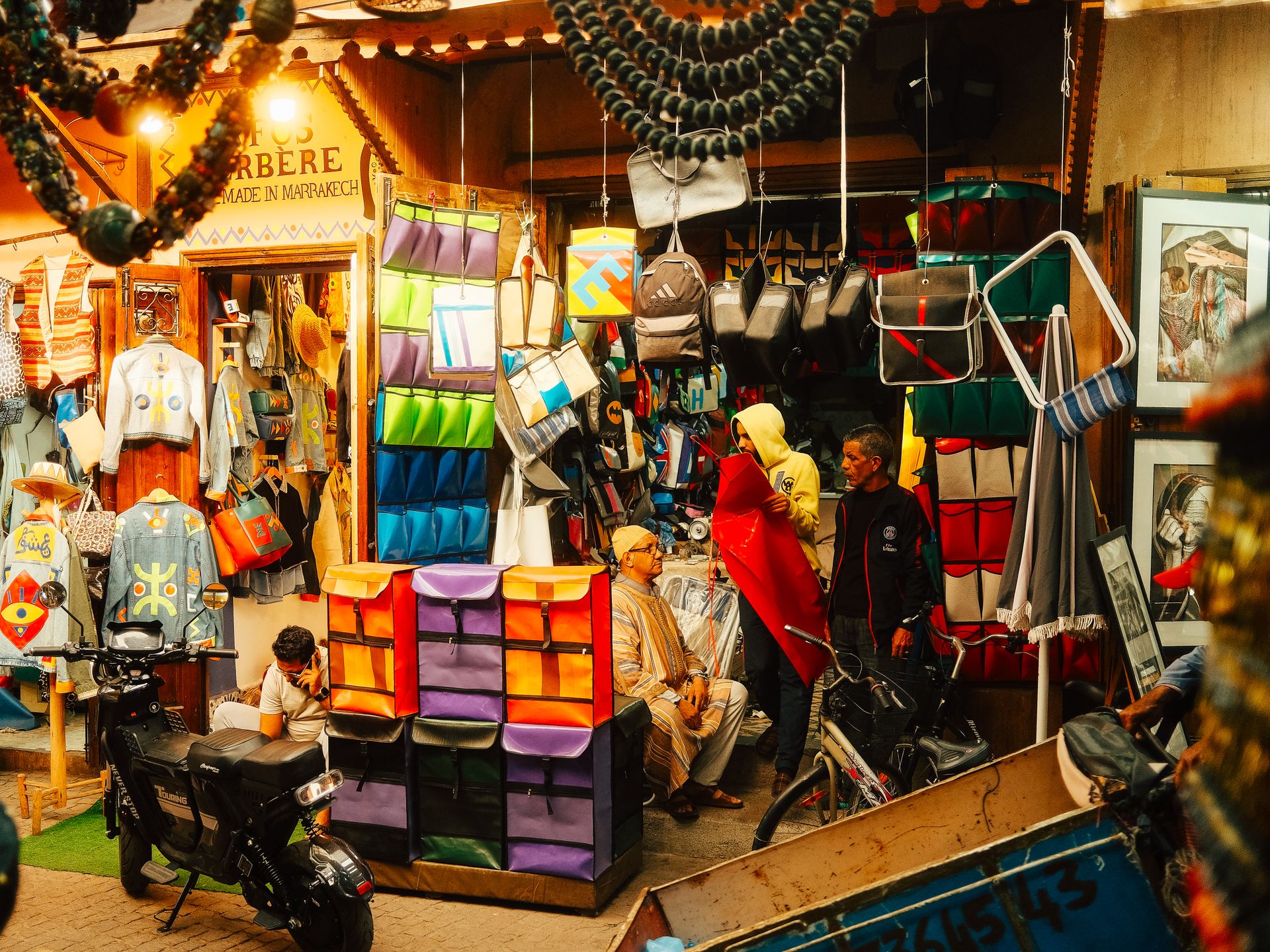
Not bargaining at all disrupts a social ritual vendors expect and enjoy; start at roughly 40-50% of the asking price and negotiate with good humor rather than contempt. Once you've verbally agreed a price, walking away is considered genuinely dishonorable — though walking away during negotiation, before agreement, is entirely acceptable and often prompts a better final offer.
Hospitality and Unofficial Guides
Genuine Moroccan hospitality — an invitation for tea in a shop with no purchase obligation — is often sincere and culturally significant rather than a sales tactic; accepting it without buying is entirely appropriate. The unofficial guide pattern in Fez and Marrakech is different: a friendly approach offering to "help" navigate the medina, followed by an unexpected payment demand after 30-60 minutes. Say "La, shukran" (no, thank you) clearly and immediately at the first approach if you don't want the service — engaging with the offer at all is interpreted as acceptance.
Photography and Respect
Always ask permission before photographing a person — many vendors and especially older women may object, sometimes for religious reasons, and a refusal should be respected immediately. Learning "mumkin tsawwarni?" (can I photograph you?) in Arabic, even imperfectly, generates a warmer response than a camera raised without warning. A small payment (10-20 MAD) is appropriate if someone has explicitly posed for you.
Prayer, the Left Hand, and Public Conduct
The call to prayer sounds five times daily from minarets nationwide — pausing conversation and lowering your voice while it plays costs nothing and is genuinely appreciated, rather than talking over it as background noise. Use your right hand for eating, giving, and receiving; the left is associated with hygiene functions and considered unclean for social exchanges, though a brief, polite explanation is entirely accepted if you're left-handed. Public displays of affection beyond hand-holding are inappropriate for any couple, and LGBTQ+ travelers should know that homosexuality remains illegal under Moroccan law, which makes public discretion a matter of real legal consequence, not just cultural sensitivity.
Alcohol, Diversity, and a Few Words of Arabic
Alcohol is legal but socially complex — available in licensed hotels and tourist restaurants, often entirely absent from medina establishments, and inappropriate to drink visibly in the street or near anyone fasting during Ramadan. Avoid treating "Moroccan culture" as a single monolith: the Amazigh (Berber) population predates the Arab conquest and maintains its own languages and traditions distinct from Arab Morocco, and Fassis, Marrakchis, and the young, cosmopolitan cities of Casablanca and Rabat are all meaningfully different from each other. A handful of Arabic phrases — "salam alaikum," "shukran," "inshallah" — signal respect far out of proportion to the effort required, and French unlocks even deeper conversation in the cities.
Final Thoughts
Moroccans are, in the experience of visitors who engage thoughtfully, among the most hospitable people on Earth. The preparation in this guide is not about constraint — it's about access, to a Morocco that opens itself fully to the curious and the respectful. Come prepared. Come curious. Morocco will do the rest.