Choosing a resort by reputation rather than suitability is the most common ski travel mistake — the intermediate skier overwhelmed by a resort famous for its black runs, the expert bored after two days on gentle terrain. Match your honest skill level to the resort's actual terrain distribution, not its marketing.
Choose the mountain that matches your level. Hire the guide who knows the terrain better than any map describes.
The Alps
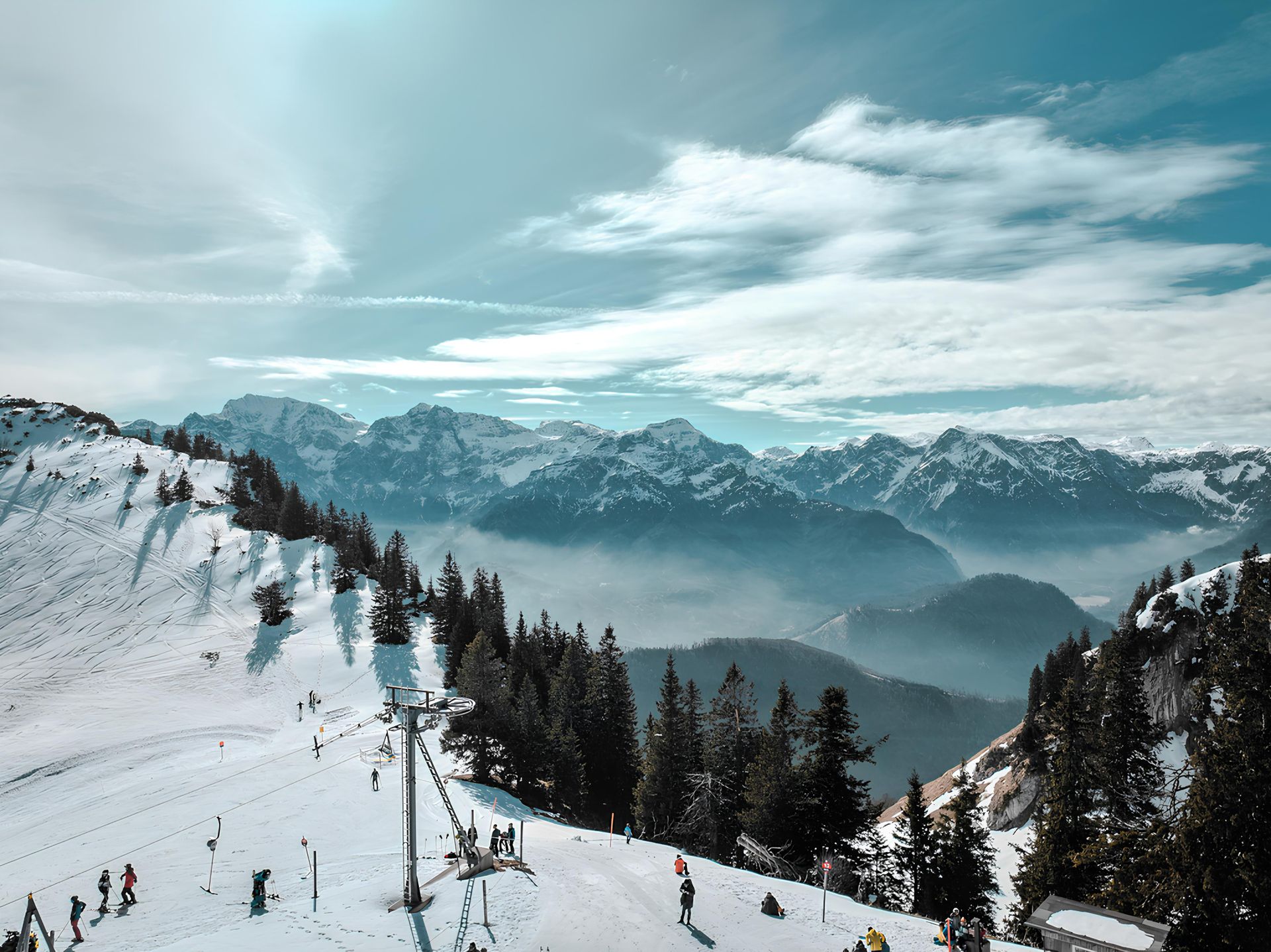
Val d'Isère and Tignes' linked Espace Killy (300km) is the benchmark for advanced and expert skiers, with glacier skiing from October and off-piste depth that sustains multiple weeks without repetition. Verbier is the Alps' freeride capital, home to the Freeride World Tour's Bec des Rosses face. Zermatt pairs 360km of terrain and year-round glacier skiing with the single most iconic mountain backdrop in skiing — the Matterhorn visible from most of the ski area. St. Anton am Arlberg in Austria is the historical birthplace of Alpine skiing — where Hannes Schneider developed the Arlberg technique — and remains one of the most serious advanced and expert mountains in the Alps, famous equally for its off-piste terrain and its raucous on-mountain après-ski culture.
North America and Japan
Whistler Blackcomb is North America's largest ski area at 8,171 acres, linked by the record-breaking 4.4km PEAK 2 PEAK Gondola. Jackson Hole's Corbet's Couloir — a cliff-entry chute requiring a mandatory air off the entry — is American resort skiing's most famous single feature. Vail's Back Bowls add more than 3,000 acres of largely expert, above-treeline terrain to Colorado's most complete resort village, while Montana's Big Sky offers a rare combination of 5,800 skiable acres and comparatively light crowds. Niseko in Hokkaido receives 15+ meters of annual snowfall so light and dry it behaves differently underfoot than anywhere else on Earth, a combination of Siberian cold air and Sea of Japan moisture no other destination replicates. Japan's Hakuba Valley, host of the 1998 Nagano Olympic Alpine events, links ten resorts into the country's most varied single-valley terrain, complementing Niseko's famous powder with longer, steeper runs.
Beyond the Big Three
Cortina d'Ampezzo trades ultimate snow reliability for the Dolomites' reddish-yellow limestone drama and genuine Italian village culture — 2026 Winter Olympics investment makes this the best time in a generation to ski it. Las Leñas in Argentina and Queenstown in New Zealand deliver Southern Hemisphere skiing (June–September) when the north is in summer, at Andean altitude and Kiwi adventure-culture density respectively. Bulgaria's Bansko delivers a genuinely good intermediate ski experience — 75km of well-groomed pistes below Pirin National Park — at 30–50% below comparable Western European prices, making it Europe's standout value resort.
Booking and Passes
Peak Christmas and February half-term weeks require 6–9 months advance booking; early December and late March–April shoulder weeks offer comparable skiing (often better spring snow) at significantly lower cost. Multi-resort passes (Ikon, Epic) undercut individual resort passes for anyone skiing more than once a year — the Ikon Pass alone includes Zermatt, Niseko, and roughly 50 other resorts.
Safety Basics
The FIS rule that matters most: the downhill skier has priority, so the skier above must avoid the skier below. Any off-piste skiing requires a beacon, probe, shovel, and formal avalanche training (AIARE Level 1 or equivalent) — equipment without training has limited value. High-altitude resorts can produce genuine altitude effects in visitors ascending quickly from sea level.
Final Thoughts
Verbier's Bec des Rosses on a clear morning with fresh snow. Zermatt's final run as Alpenglow turns the Matterhorn red. Niseko on the third consecutive day of snowfall, powder chest-deep in the trees. The mountain is waiting.