The idea began in 1872 when the US Congress set aside Yellowstone as "a public park or pleasuring-ground for the benefit and enjoyment of the people." That insight — that wilderness has value beyond extraction, and some landscapes require active protection rather than passive appreciation — has since been replicated by over 100 countries. The world's finest parks combine ecological integrity, geological drama, and visitor infrastructure sophisticated enough to preserve wilderness quality even under heavy visitation.
The awe is not incidental. It is the purpose. The best parks in the world produce it with extraordinary consistency for visitors who come prepared to receive it.
North and South America
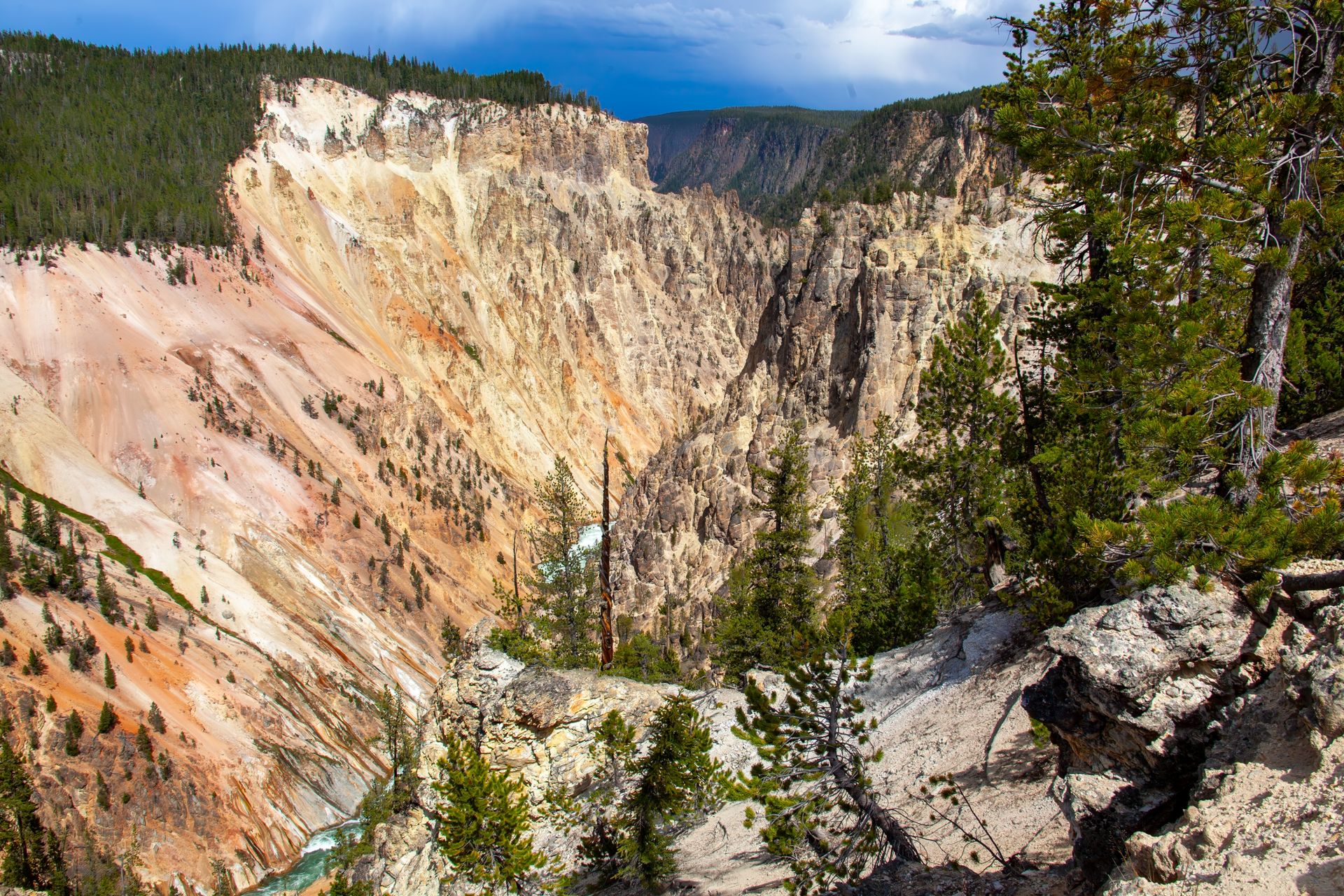
Yellowstone holds over 10,000 geothermal features and the finest wolf-watching in the world in its Lamar Valley — visit in May for new-season wildlife activity and thin crowds. The Grand Canyon exposes 2 billion years of geological history across its 1,857-meter depth; the Bright Angel Trail descends through roughly 50 million years of history per hour of hiking. Yosemite's El Capitan and Half Dome anchor the world's most photographed granite valley. Banff in Alberta pairs the turquoise glacial lakes of Lake Louise and Moraine Lake with the 232-kilometer Icefields Parkway, one of the most scenic drives on earth. Denali in Alaska is North America's wildest park, its single unpaved road providing bus-based access to all six of the continent's major land mammal species beneath a peak whose base-to-summit relief exceeds Everest's.
Torres del Paine's three granite towers rise 2,500 meters from the Patagonian steppe, produced by magma intrusion followed by glacial erosion. The Galápagos delivers wildlife with no evolutionary reason to fear humans — sea lions napping on the visitor path, giant tortoises walking routes unchanged for millions of years. Manú National Park in Peru holds roughly 1,000 bird species, more than the entire United States.
Africa
The Serengeti's Great Migration — 1.5 million wildebeest moving in a continuous clockwise circuit — is the largest terrestrial mammal migration on earth and supports Africa's highest predator density. Kruger's self-drive infrastructure makes it the most economically accessible Big Five experience anywhere, with rest camp accommodation from R300/night. Virunga in the DRC, Africa's oldest park, pairs mountain gorilla habitat with the Nyiragongo volcano's summit lava lake — the world's largest.
Asia and Oceania
Sagarmatha National Park contains Everest and seven other 7,000m+ peaks alongside living Sherpa Buddhist culture. Komodo National Park protects the world's largest living lizard — dragons up to 3 meters and 70kg — alongside Indonesia's finest marine biodiversity outside Raja Ampat. Jiuzhaigou Valley's 100+ turquoise lakes, colored by calcium carbonate-rich water and specific algae, look digitally enhanced even in person.
Fiordland's Milford Track (53km, four days, 90 walkers per day) is New Zealand's most celebrated multi-day walk. Vatnajökull National Park covers 14% of Iceland and conceals four active volcanic systems beneath Europe's largest glacier, producing seasonal blue ice caves of extraordinary visual quality.
Permits and Timing
The world's most famous parks now require advance booking for their headline experiences: Yosemite's Half Dome cable permit (lottery, apply March), Torres del Paine's hut reservations (6–12 months ahead for November–March), and the Milford Track's independent walk permits. The general rule: the more famous the specific experience within a park, the more aggressively it needs booking relative to less-famous alternatives in the same system.
The Shoulder Season Advantage
Yellowstone in May pairs lower visitor density with post-hibernation bear cubs and open-terrain wolf visibility. Torres del Paine in late October or late February reduces hut booking competition. Banff in September brings the larches turning gold on the Larch Valley trail with a fraction of the July–August crowds.
Final Thoughts
The wolves of Yellowstone returned the willows to the riverbanks. The Galápagos' managed access preserved the wildlife fearlessness that makes it unmatched. These are not merely ecological outcomes — they are the conditions that produce the confrontation with scale, time, and wildness that genuinely changes the people who experience it.