Asia · Destination Guide
Uzbekistan
Silk Road turquoise — Samarkand, Bukhara & Khiva's living museums
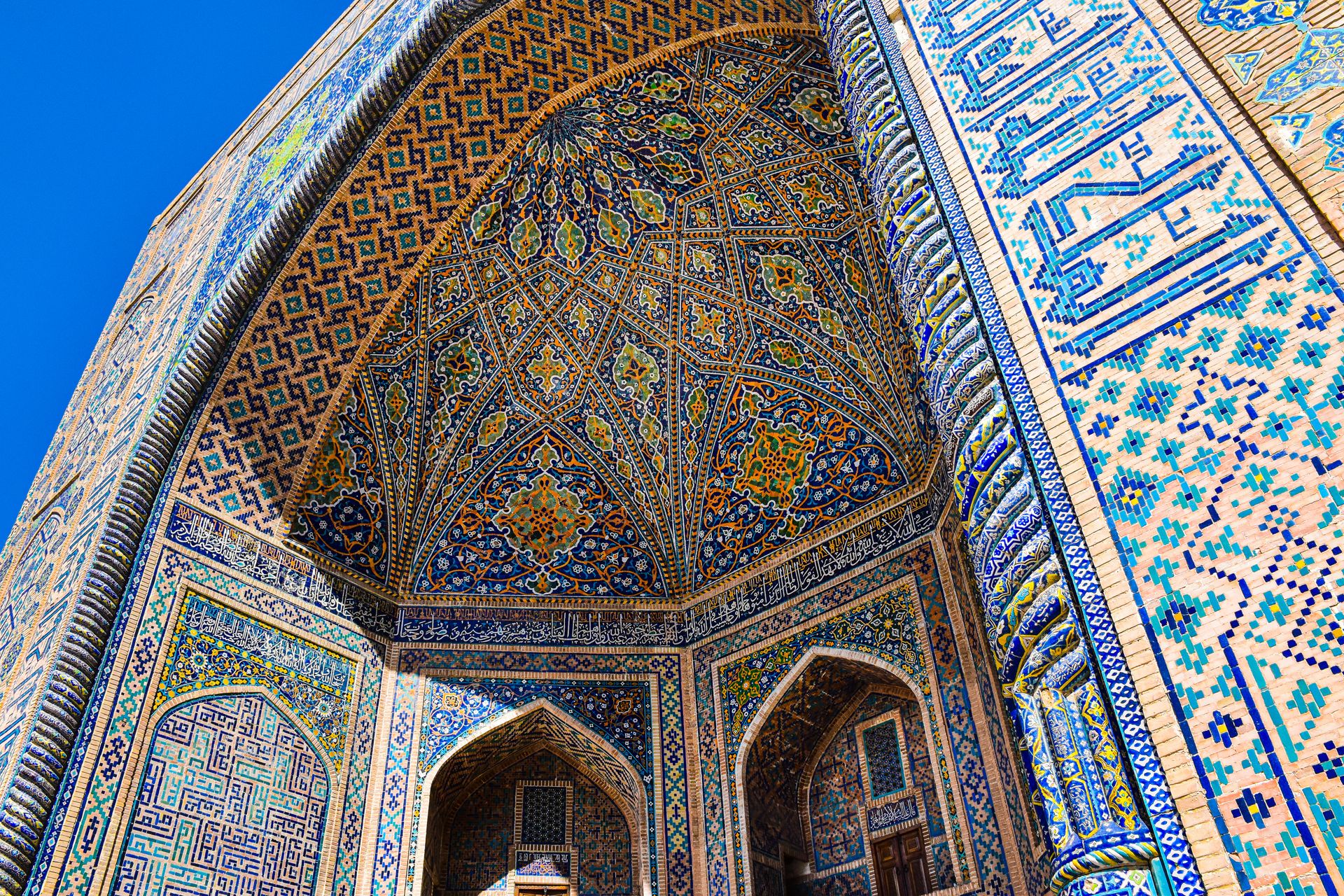
Uzbekistan is the Silk Road made solid: the majolica-tiled madrasas of Samarkand, the mud-walled trading city of Bukhara, the open-air museum of Khiva — turquoise domes and honeycomb portals in colours that seem to hum. For centuries this was the crossroads of the known world, and the architecture Tamerlane and his heirs left behind still stops travelers mid-sentence.
Long a bureaucratic maze, it has thrown its doors open: visa-free for most, a high-speed train linking the great cities, and a warmth of welcome (and a groaning table of plov, samsa and endless green tea) that turns the history lesson into a genuine embrace.
Turquoise domes and honeycomb portals in colours that seem to hum.
Don't Miss
The Unmissables
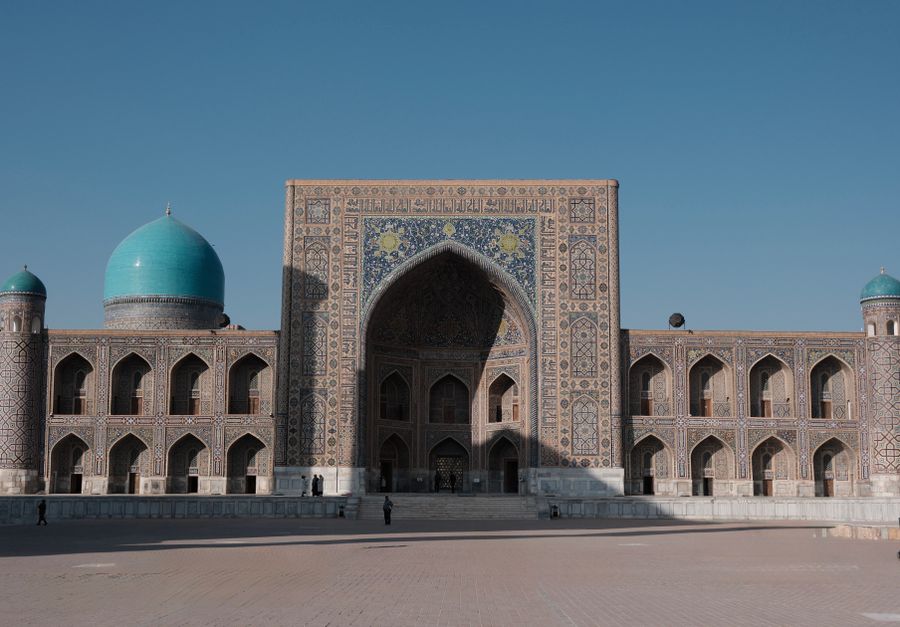
Samarkand's Registan
Three madrasas facing one square, their portals a riot of blue majolica and gold — the single greatest sight in Central Asia, and even better lit at night. Add Tamerlane's ribbed-dome mausoleum and the Shah-i-Zinda's corridor of tiled tombs for a day that recalibrates your sense of beauty.
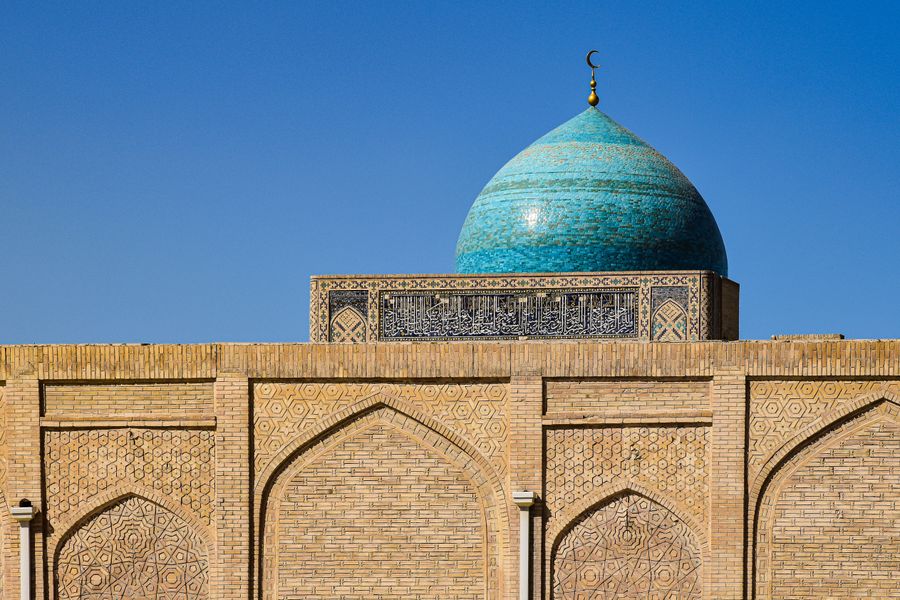
Bukhara's living old town
A UNESCO city where you sleep inside the history: 2,000 years of mosques, minarets and trading domes around the Lyabi-Hauz pool, still functioning as a warren of workshops and tea houses. Climb the Kalyan minaret's square, so magnificent Genghis Khan reportedly spared it.
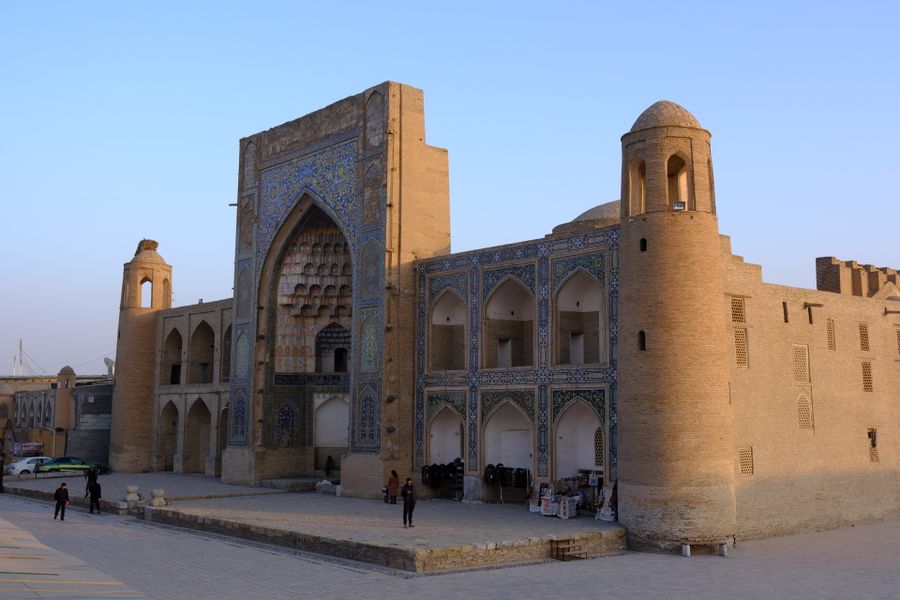
Khiva's walled Ichan Kala
The most complete Silk Road city on Earth — an entire walled town of madrasas, minarets and palaces preserved whole, glowing at sunset from the city walls. Compact enough to know in a day, atmospheric enough to want two.
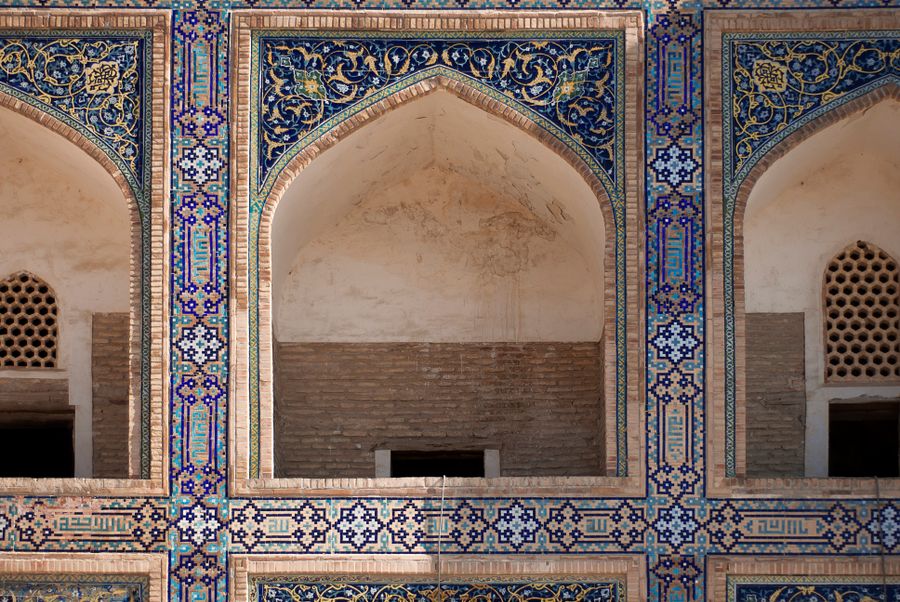
Tilework & the tea-house welcome
Beyond the monuments, the pleasure is in the details: mosaic patterns dizzying up every portal, ceramic workshops in Rishtan, silk-paper makers near Samarkand, and the chaikhana ritual where a pot of green tea and a plate of plov is the universal handshake.
Timing Is Everything
When to Go
Spring
Warm days, blossom, the tiles at their most vivid before the summer haze. The prime window.
Autumn
Harvest, melon season, comfortable sightseeing temperatures. Equally ideal.
Winter
Cold and clear; the cities emptier and atmospheric, occasional snow on the domes.
Summer
Fierce 40°C+ heat across the desert cities — sightseeing becomes an endurance sport.
The Route
The Perfect Uzbekistan Itinerary
Tashkent
Chorsu bazaar, the metro's palatial stations, Khast Imam complex, then the fast train south.
Samarkand
Registan by day and night, Gur-e-Amir, Shah-i-Zinda, Ulugh Beg's observatory.
Bukhara
Old-town immersion, Kalyan minaret, Ark fortress, trading-dome shopping, tea by Lyabi-Hauz.
Khiva
The whole walled Ichan Kala on foot, city-wall sunset, the desert-caravan atmosphere.
Plan Your Spend
What Uzbekistan Costs
Backpacker
Family guesthouses in the old towns, plov and samsa for a dollar or two, high-speed and sleeper trains.
Mid-range
Boutique madrasa-conversion hotels, private drivers between cities, guided old-town walks, craft workshops.
Luxury
Design hotels inside the walls, private Egyptologist-grade guides, chartered Aral Sea expeditions.
Estimates per person, excluding international flights. Book stays via our partners to support free guides like this one.
Get the Uzbekistan Insider Brief
New guides, hidden spots and trip deals — weekly, free, unsubscribe anytime.