Asia · Destination Guide
Bhutan
The last Himalayan kingdom — cliff monasteries & Gross National Happiness
Bhutan is the world's most deliberate country — a Buddhist Himalayan kingdom that measures Gross National Happiness over GDP, mandates traditional dress and architecture, remained carbon-negative and closed to mass tourism entirely. Visitors pay a daily Sustainable Development Fee that keeps numbers low and the experience pristine: fortress-monasteries in cloud-wrapped valleys, prayer flags on every pass, and a way of life that feels genuinely, deliberately preserved.
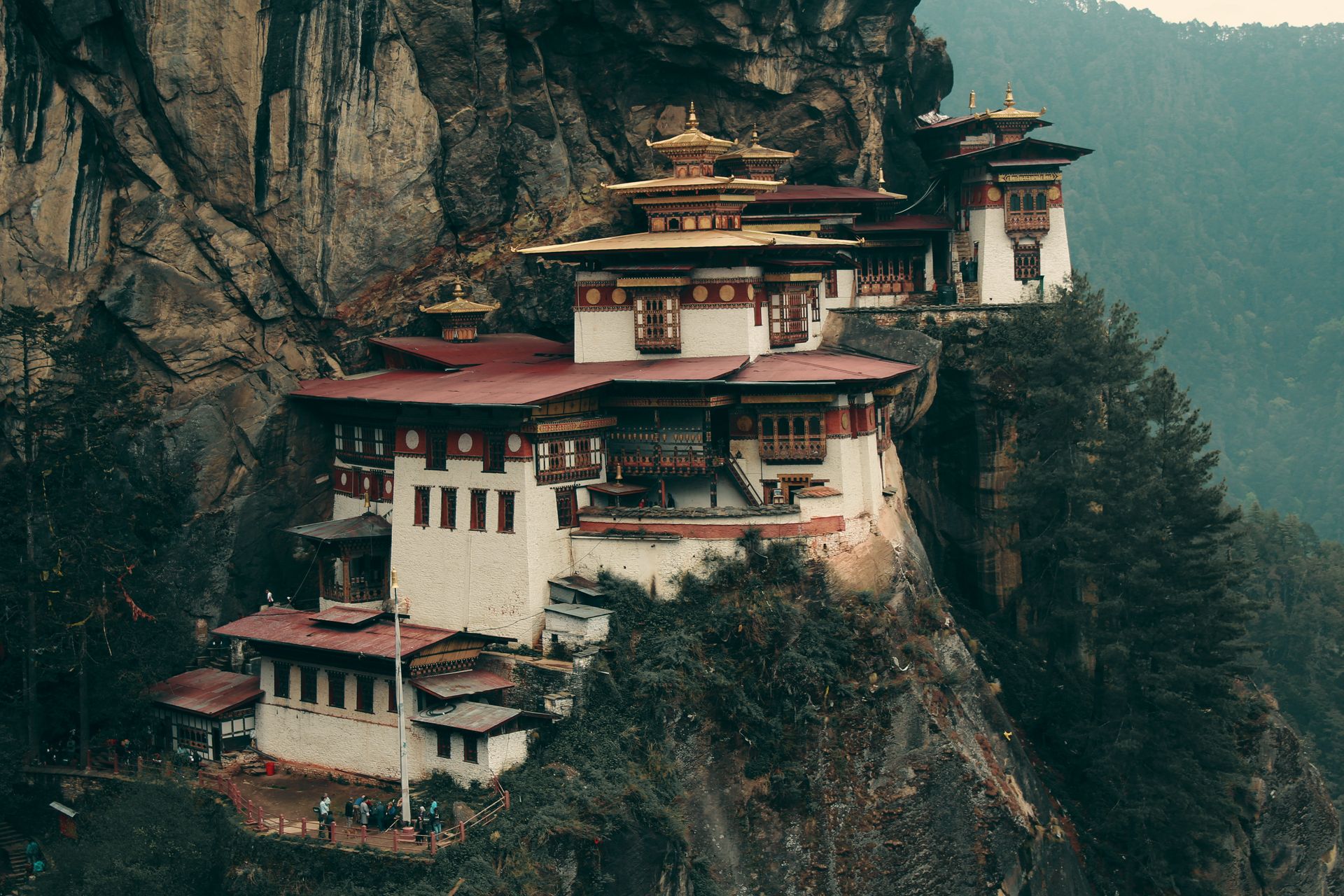
It is not a budget destination — the daily fee ensures that — but what you get is unlike anywhere else on Earth: the vertiginous Tiger's Nest clinging to a cliff, dzongs guarding river confluences, and a serenity and cultural intactness that money, for once, can't buy elsewhere. The Himalayas' most magical, most protected corner.
The world's most deliberate country — measuring happiness over GDP.
Don't Miss
The Unmissables
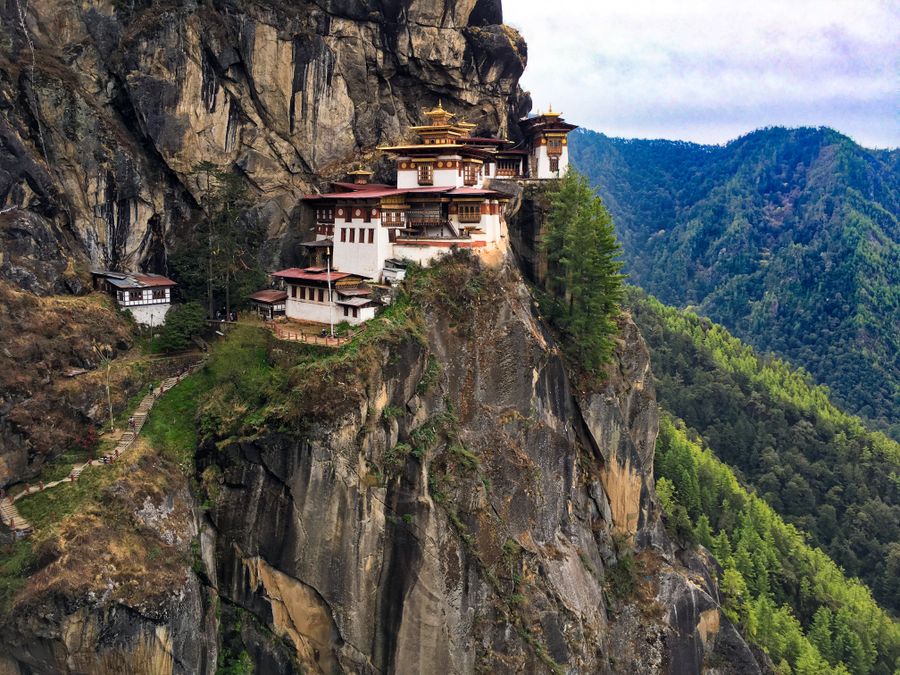
Tiger's Nest (Paro Taktsang)
Bhutan's soul-stirring icon: a monastery clinging to a sheer cliff 900 metres above the Paro valley, where Guru Rinpoche is said to have meditated. The two-to-three-hour uphill hike through pine forest and prayer flags to reach it is the pilgrimage every visitor makes, and never forgets.
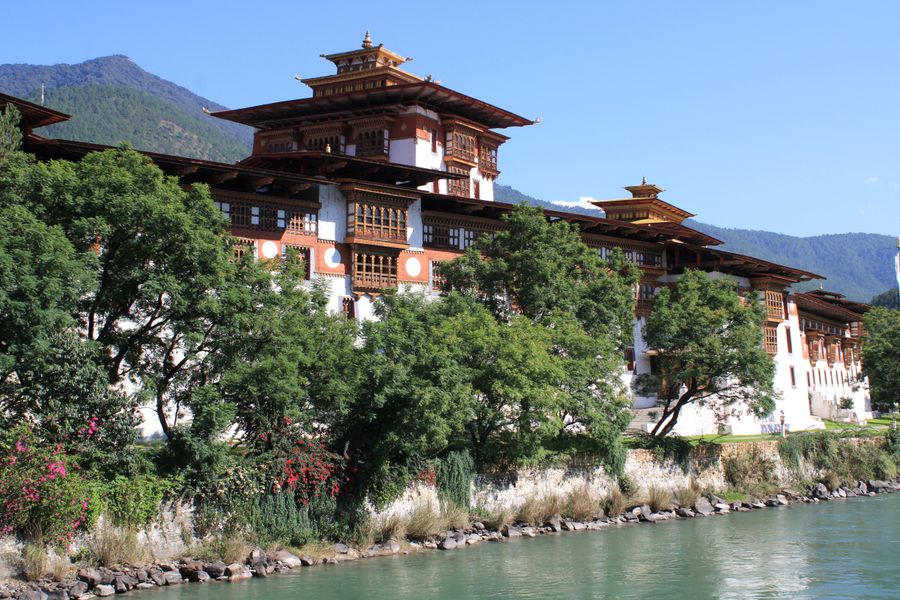
The dzongs
Bhutan's fortress-monasteries are architectural masterpieces — whitewashed walls, golden roofs and intricate woodwork guarding valleys and river confluences. Punakha Dzong, between two rivers beneath jacaranda blooms, is the most beautiful; Thimphu's and Paro's anchor the towns. Administrative and spiritual hearts both.
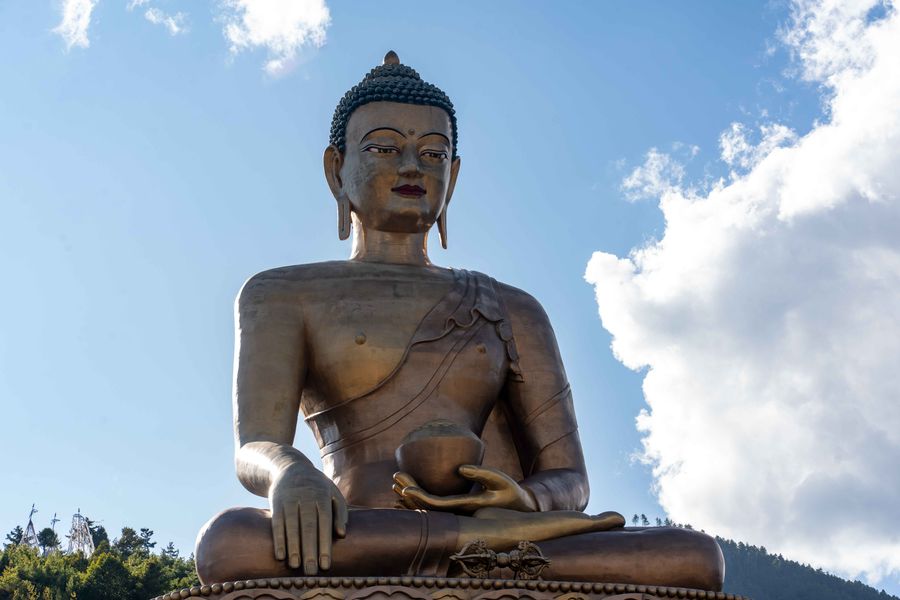
Thimphu & living Buddhism
The only capital with no traffic lights: giant golden Buddha Dordenma overlooking the valley, the weekend market, monks debating in courtyards, archery (the national sport) in the parks, and a way of life where Buddhism and tradition genuinely still order the day.
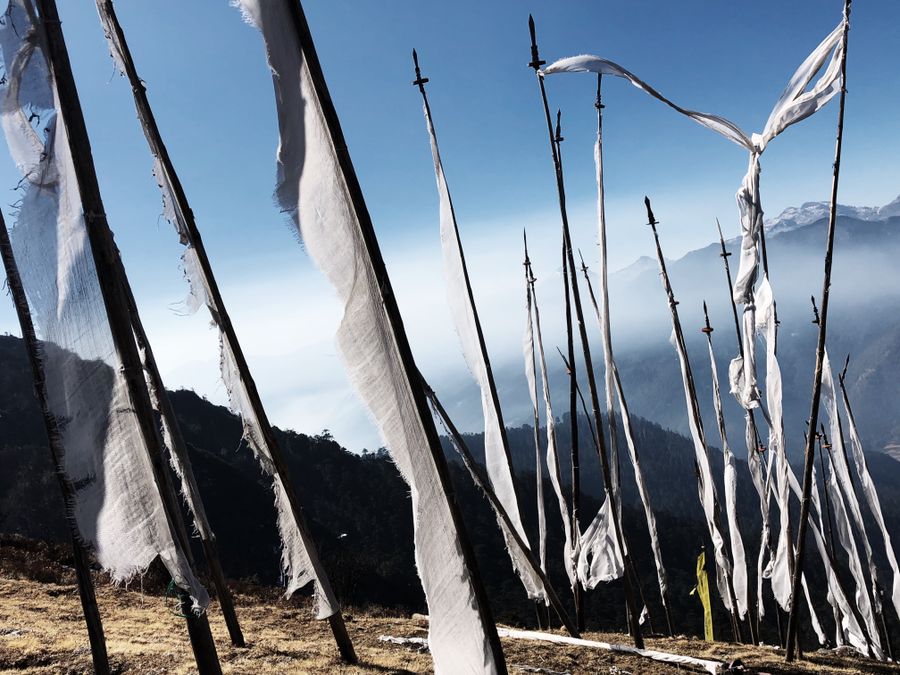
The valleys & prayer-flag passes
Drive over high passes strung with thousands of fluttering prayer flags between the Paro, Thimphu, Punakha and Phobjikha valleys — the last the winter home of the rare black-necked cranes. Hike, cycle or simply absorb a landscape of terraced fields, forest and fortress under the Himalayan sky.
Timing Is Everything
When to Go
Spring
Rhododendrons and jacaranda in bloom, clear mountain views, warm days — the prime window (and festival season).
Autumn
Crisp clear skies, the best Himalayan views, the great tsechu festivals in Thimphu and Paro.
Winter
Cold and clear at altitude; black-necked cranes in Phobjikha, fewer visitors, some passes snowy.
Monsoon
Rain, leeches and cloud-hidden peaks — lush but the least rewarding for views and trekking.
The Route
The Perfect Bhutan Itinerary
Paro
The valley, Rinpung Dzong and National Museum, acclimatise before the big hike.
Thimphu
Buddha Dordenma, the weekend market, textile museum, archery and monk-debate courtyards.
Punakha
Over the Dochula Pass' 108 chortens, the exquisite riverside dzong, suspension-bridge and valley walks.
Tiger's Nest
The pilgrimage hike to Paro Taktsang — Bhutan's unforgettable finale.
Plan Your Spend
What Bhutan Costs
Standard
The daily Sustainable Development Fee ($100) plus 3-star hotels, guide, driver and meals — the baseline for all visitors.
Comfort
Boutique lodges and better hotels, private cultural touring, longer treks with full support.
Luxury
Amankora and Six Senses lodge circuits, helicopter transfers, the Himalayas' most refined experience.
Estimates per person, excluding international flights. Book stays via our partners to support free guides like this one.
Get the Bhutan Insider Brief
New guides, hidden spots and trip deals — weekly, free, unsubscribe anytime.