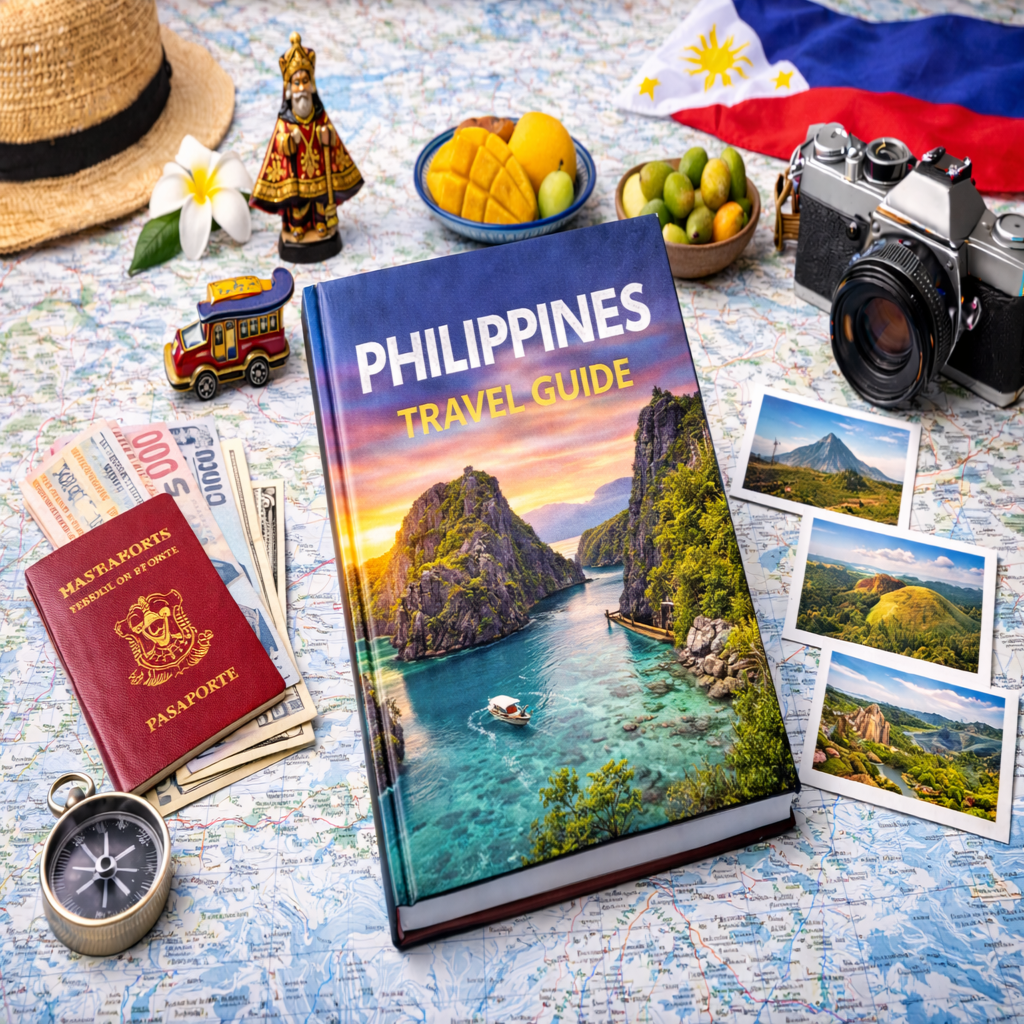
The Philippines is one of those destinations that redefines what travel can feel like. An archipelago of 7,641 islands scattered across the western Pacific like a handful of emeralds tossed into a turquoise sea, it is a country of staggering natural beauty, extraordinary cultural warmth, and a diversity of experience that few destinations anywhere in the world can match. Powder-white beaches fringed with coconut palms. Chocolate Hills rising from emerald plains. Rice terraces carved into mountain slopes two thousand years ago. Whale sharks gliding through shallow coastal waters. Underground rivers threading through cathedral-sized cave systems. And everywhere, the Filipino people — widely regarded as among the warmest, most genuinely welcoming on Earth — making you feel not like a tourist, but like a guest.
For first-time visitors, the Philippines presents a delicious problem: there is almost too much to choose from. Do you head to Palawan, consistently ranked among the world’s best islands? The Visayas, with their perfect diving and island-hopping routes? The mountainous Cordillera of northern Luzon? The wild, largely undiscovered islands of Mindanao? The answer, for most travelers, is to pick one region and go deep — and then start planning a return trip before you have even left.
This Ultimate Philippines Travel Guide covers everything you need to plan a confident, well-organized, and deeply rewarding trip: when to go, how to get around, where to go, what to eat, where to stay, island by island highlights, and the practical knowledge that will help you make the most of one of Asia’s most spectacular and least fully understood destinations.
Why the Philippines Should Be on Every Traveler’s Bucket List
The Philippines is one of the last great frontiers of Southeast Asian travel — well known enough to have excellent infrastructure in its key destinations, but still raw, underdeveloped, and genuinely adventurous in many of its more remote corners. It offers the beach perfection of the Maldives, the diving of Indonesia, the cultural depth of Vietnam, and a natural landscape variety that rivals almost any country in the world — all wrapped in a culture that is uniquely and warmly Filipino.
The country’s biodiversity is extraordinary. It is one of the world’s seventeen megadiverse countries, home to thousands of plant and animal species found nowhere else on Earth. Its coral reefs, centered on the Coral Triangle — the global epicenter of marine biodiversity — are among the richest in the world. Tubbataha Reef Natural Park, a UNESCO World Heritage Site in the Sulu Sea, is considered one of the top ten diving destinations on the planet.
Culturally, the Philippines is equally fascinating. As the only predominantly Christian country in Southeast Asia — a legacy of over 300 years of Spanish colonial rule — it blends indigenous, Malay, Spanish, American, and Chinese influences into a culture that is entirely its own. From the Spanish colonial churches of Vigan to the indigenous traditions of the Ifugao people in the Cordillera, the country’s heritage is multilayered and deeply compelling.
And then there is the food — a criminally underrated culinary tradition that is finally receiving the international recognition it deserves. Filipino cuisine is bold, sour, savory, and deeply comforting, built around a pantry of vinegar, fermented shrimp paste and coconut that produces dishes of extraordinary character and complexity.
Understanding the Philippines: Geography and Regions
Before planning any Philippines trip, it helps to understand the country’s basic geography. The 7,641 islands are grouped into three main island groups:
Luzon is the largest island and home to the capital Manila, the mountain city of Baguio, the UNESCO-listed rice terraces of the Cordillera, the Ilocos region with its Spanish colonial heritage, and the natural wonders of the Bicol region including Mayon Volcano and the whale shark encounters of Donsol.
Visayas is the central island group and the heart of the Philippines’ tourism industry. It encompasses Cebu (the country’s second city and a major diving hub), Bohol (the Chocolate Hills, tarsiers, and the Loboc River), Boracay (the famous white beach party island), Siargao (surfing capital and emerging eco-destination), Negros (sugar heritage and diving), and Leyte (World War II history and whale shark encounters at Sogod Bay).
Mindanao is the large southern island, home to Lake Sebu and the T’boli indigenous culture, the highlands of Bukidnon, the diving at Davao Gulf, the Camiguin island volcano paradise, and the surfing of Surigao del Sur. Parts of Mindanao have had security concerns historically — always check current travel advisories before planning travel to this region.
Palawan is technically part of Luzon administratively but functions as its own distinct travel destination. Its elongated, forested island chain stretches southwest toward Borneo and contains some of the most spectacular scenery and marine environments in the world, centered on El Nido and Coron in the north and Puerto Princesa in the south.
Best Time to Visit the Philippines
The Philippines has a tropical climate, and understanding its seasonal patterns is one of the most important parts of trip planning — more so than for almost any other destination in this guide.
The Dry Season (November to May) — Peak Travel Time
The dry season, particularly from December through April, is the best time to visit most of the Philippines. Skies are clear, seas are calm, and the beaches and islands are at their most accessible and inviting. January through March are particularly excellent — cool enough to be comfortable, reliably dry, and with the best visibility for diving and snorkeling. This is peak tourist season, so book accommodation and inter-island flights well in advance, particularly for Palawan, Boracay, and Siargao.
The Wet Season (June to October) — Typhoon Season
The Philippines sits in one of the world’s most active typhoon belts, and the wet season brings significant rainfall and the risk of typhoons, particularly from July through October. The northern and central Philippines (Luzon and Visayas) bear the brunt of most typhoons. However, the wet season is not uniformly bad — Palawan and parts of Mindanao are in a rain shadow and remain relatively dry even during the national wet season. Travel during the wet season is possible but requires flexibility and close monitoring of weather forecasts.
Shoulder Season (May to June and October to November)
The transition periods between dry and wet seasons offer an interesting middle ground — prices drop, crowds thin, and the weather is often still very acceptable, particularly in May–June before the main typhoon season begins and in October–November as it winds down. Experienced Philippines travelers often target these shoulder months for the best combination of value, reduced crowds, and reasonable weather.
A Critical Note on Regional Variation
The Philippines’ weather patterns vary significantly by region. While the west coast (including Palawan, Manila, and the western Visayas) has a pronounced wet season from June to October and a dry season from November to May, the east coast (including Siargao, Eastern Samar, and much of eastern Mindanao) has an inverted or less pronounced pattern — it can rain year-round but peaks differently. Always research the specific weather pattern for your destination, not just the national average.
How to Get to the Philippines
By Air: The Philippines is served by several international airports, but most visitors arrive at Ninoy Aquino International Airport (NAIA) in Manila (MNL) or Mactan-Cebu International Airport (CEB) in Cebu. Both have extensive international connections from across Asia, the Middle East, Australia, and increasingly from Europe and North America. Clark International Airport (CRK) north of Manila handles some budget carrier routes. Direct flights from London take approximately 13–14 hours; from the US West Coast approximately 14–16 hours; from Australia approximately 8–9 hours.
Key Airlines: Philippine Airlines and Cebu Pacific are the main carriers. Singapore Airlines, Cathay Pacific, Qatar Airways, and Emirates all offer excellent connections via their respective hubs. Budget travelers often route through Kuala Lumpur (AirAsia) or Bangkok for competitive fares.
By Sea: International ferry connections from Hong Kong and several Indonesian ports exist but are rarely the most practical option for first-time visitors. The exception is the scenic RORO (roll-on roll-off) ferry network that connects the major Philippine islands — an excellent and affordable way to travel between islands once you are in the country.
Getting Around the Philippines
Navigating the Philippines requires a combination of transport modes, and mastering the basics makes an enormous difference to the quality of your trip.
Inter-Island Flights: The most practical way to cover the Philippines’ vast distances. Budget carriers Cebu Pacific and AirAsia Philippines offer affordable routes between Manila, Cebu, Puerto Princesa (Palawan), Siargao, Boracay (via Caticlan), Davao, Cagayan de Oro, and many other destinations. Book as far in advance as possible for the lowest fares — domestic flights in the Philippines are significantly cheaper when booked weeks or months ahead.
Inter-Island Ferries: A slower but scenic and affordable alternative to flying. 2GO Travel and Oceanjet operate regular routes between major islands. For island-hopping within a specific region — the Visayas, Palawan, or Siargao’s surf breaks — local bangka (outrigger canoe) boats are the standard and most enjoyable mode of transport.
Jeepneys: Converted from American military jeeps left over from World War II and decorated with extraordinary flamboyance — chrome horses, saints’ images, LED lights, and hand-painted murals — the jeepney is the most iconic vehicle in the Philippines and the backbone of public transport in cities and provincial towns. They are cheap, colorful, and an experience in themselves, though their routes can be confusing for first-timers.
Tricycles: Three-wheeled motorbike-with-sidecar combinations that operate as local taxis in smaller towns and island communities. Agree on a fare before departure — short trips typically cost 20–50 PHP.
Habal-Habal: Motorcycle taxis that operate in areas too narrow or rough for other vehicles. Commonly used for accessing waterfalls, hidden beaches, and mountain communities. Helmets are increasingly available but not always offered — ask.
Grab: Southeast Asia’s equivalent of Uber operates in Manila, Cebu, and several other major cities and is by far the most convenient and transparent way to get around urban areas. Book through the app for fixed prices and no negotiation.
Bus: Long-distance buses connect major cities and towns on Luzon and Mindanao. Genesis, Victory Liner, and Florida Bus are among the main operators. Air-conditioned buses on popular routes are comfortable and affordable.
Top Destinations in the Philippines for First-Time Visitors
The Philippines’ sheer scale means that choosing where to go is the single most important planning decision. Here is a destination-by-destination guide to the country’s finest regions.
1. Palawan — The Crown Jewel
Palawan is consistently voted the world’s best island by Condé Nast Traveler and Travel + Leisure readers, and the superlatives are justified. The province’s elongated island chain offers some of the most dramatically beautiful scenery in Asia — towering karst limestone cliffs plunging into impossibly clear turquoise lagoons, hidden beaches accessible only through narrow rock passages, and coral reefs of extraordinary richness.
El Nido in northern Palawan is the epicenter of island-hopping culture — four standard tour routes (A, B, C, and D) take visitors through the best of the Bacuit Archipelago’s lagoons, beaches, and snorkeling spots. The Small Lagoon and Big Lagoon of Tour A, and the Cathedral Caves of Tour C, are particular highlights. Book tours through licensed operators and go early to beat the increasing crowds.
Coron, to the north, is a world-class wreck diving destination — the sunken Japanese fleet destroyed here in 1944 now sits in clear, warm water accessible to recreational divers, with the Irako, Okikawa Maru, and Kogyo Maru among the finest wreck dives in the world. Coron also offers the extraordinary Kayangan Lake — often called the cleanest lake in Asia — and the emerald waters of Barracuda Lake.
Puerto Princesa, Palawan’s capital, is the gateway to the Puerto Princesa Subterranean River — a UNESCO World Heritage Site and one of the New Seven Wonders of Nature, where a navigable river flows 8.2 km through a vast cave system before emerging into the sea.
2. Boracay — White Beach and Beyond
Boracay’s White Beach is one of the most famous stretches of sand in the world — four kilometers of fine, powder-soft white sand bordered by clear, calm water and a vibrant strip of restaurants, bars, and hotels. The island was temporarily closed by the Philippine government in 2018 for environmental rehabilitation and reopened dramatically improved. It remains the country’s most developed beach destination and one of Southeast Asia’s finest.
Beyond White Beach, Boracay offers excellent kitesurfing at Bulabog Beach (on the island’s windward side), a spectacular cliff-edge sunset at Diniwid Beach, and a range of water sports from parasailing to helmet diving. It is not a destination for solitude or undiscovered wilderness — it is a destination for a brilliant beach holiday with outstanding infrastructure.
3. Siargao — Surf, Soul, and Unspoiled Beauty
Siargao has transformed from a surfer’s secret into one of Southeast Asia’s most talked-about destinations over the past decade, yet it retains a raw, unhurried character that sets it apart from more developed Philippine beach resorts. Cloud 9, its famous reef break, is consistently rated among the top surfing waves in Asia and hosts the annual Siargao Surfing Cup. But Siargao is much more than surfing.
The island’s interior is a landscape of coconut groves, mangrove forests, and rice paddies. The Sohoton Cove — accessible by boat tour — offers stingless jellyfish lakes, hidden lagoons, and dramatic cave swimming. The islands of Naked, Daku, and Guyam, reachable by island-hopping tour, are postcard-perfect. The main town of General Luna has developed a genuinely excellent food and café scene that feels fresh and creative without sacrificing the island’s laid-back soul.
4. Bohol — Nature, History, and Wildlife
Bohol is one of the Philippines’ most rewarding islands for travelers seeking natural diversity alongside cultural depth. The Chocolate Hills — 1,268 perfectly conical limestone hills that turn brown in the dry season, giving them their evocative name — are one of the country’s most iconic and surreal landscapes, best seen from the viewpoint at Carmen at sunrise or sunset.
The Philippine tarsier, one of the world’s smallest primates, is endemic to Bohol and can be seen at the Tarsier Conservation Area near Corella. The Loboc River offers scenic boat cruises through lush jungle. The centuries-old Baclayon Church, built in 1595, is one of the oldest stone churches in the Philippines. And the dive sites around Balicasag Island — particularly the famous Black Forest coral wall — are world-class.
5. Cebu — Culture, Diving, and Whale Sharks
Cebu City, the Philippines’ second city, is a dynamic urban hub with a fascinating Spanish colonial heritage centered on Magellan’s Cross (planted by Ferdinand Magellan in 1521) and the Basilica Minore del Santo Niño, the country’s oldest Roman Catholic church. The city’s food scene is outstanding — Cebu lechon (roasted suckling pig) is widely considered the finest in the Philippines, a claim fiercely and justifiably defended by Cebuanos.
Oslob, in southern Cebu, offers the extraordinary and controversial experience of swimming with whale sharks — the world’s largest fish — in a feeding program that draws visitors from around the world. More ethical whale shark encounters are also available in Donsol (Sorsogon, Luzon) where the animals are not fed. The diving around Moalboal, particularly the famous sardine run — a tornado of millions of sardines swirling in shallow water — is one of the Philippines’ most spectacular underwater experiences.
6. The Cordillera — Rice Terraces and Indigenous Culture
The Banaue Rice Terraces in the Cordillera mountains of northern Luzon are one of the Philippines’ most extraordinary sights — carved into mountain slopes by the Ifugao people over 2,000 years ago and maintained to this day through an intricate system of hand-dug irrigation channels. Often called the Eighth Wonder of the World, they cover an estimated 10,360 square kilometers of mountainside and are a UNESCO World Heritage Site.
The surrounding villages of Batad (accessible via a steep mountain hike) and Sagada (famous for its hanging coffins, a burial tradition of the local Igorot people, and its cave systems) offer some of the most culturally immersive experiences in the Philippines. The mountain city of Baguio serves as the most practical gateway to the region.
7. Manila — Gateway and Hidden Depths
Manila is a city that divides visitors sharply, and many first-timers make the mistake of spending too little or too much time here. It is chaotic, traffic-choked, and overwhelming in parts — but it also contains genuine treasures for the patient and curious traveler.
Intramuros, the walled Spanish colonial city built in 1571 and largely destroyed during World War II, has been partially restored and is a fascinating and sobering place to explore on foot or by bamboo bicycle. The National Museum complex in Rizal Park houses outstanding collections of Filipino art, natural history, and anthropology. Binondo, established in 1594 and considered the world’s oldest Chinatown, is outstanding for food. The BGC (Bonifacio Global City) and Makati neighborhoods represent the Philippines’ modern urban face — polished, sophisticated, and with an excellent restaurant scene.
What to Eat in the Philippines: A First-Timer’s Food Guide
Filipino cuisine has long been the overlooked treasure of Southeast Asian food culture — overshadowed by the more internationally prominent cuisines of Thailand, Vietnam, and Japan. That is changing rapidly, driven by a new generation of Filipino chefs and food writers celebrating their culinary heritage with justified pride.
Adobo: The unofficial national dish of the Philippines — meat (usually chicken or pork, sometimes both) braised in vinegar, soy sauce, garlic, bay leaves, and black pepper until tender and deeply savory. Every family has its own version, and every version inspires passionate loyalty. It is one of the great dishes of Asia.
Sinigang: A sour tamarind-based soup with pork, beef, shrimp, or fish and an array of vegetables — kangkong (water spinach), eggplant, radish, okra — that is simultaneously light and deeply satisfying. The sourness is bracingly refreshing in the heat. Sinigang is the dish most Filipinos say they miss most when abroad.
Lechon: Whole pig slow-roasted over charcoal for hours until the skin crisps to an extraordinary crackle and the meat within becomes impossibly tender and fragrant with herbs. Cebu lechon is the gold standard, seasoned with lemongrass, green onions, and garlic. It is the centerpiece of every Filipino celebration and absolutely worth seeking out.
Kare-Kare: A rich, peanut-based oxtail and tripe stew served with a fermented shrimp paste (bagoong) on the side — the combination of sweet, nutty stew and pungent, salty paste is a revelation. It is one of the most distinctively Filipino dishes in the national repertoire.
Pancit: Filipino noodle dishes with Chinese roots — pancit canton (thick egg noodles stir-fried with meat and vegetables), pancit palabok (rice noodles in an orange shrimp sauce with various toppings), and pancit bihon (thin rice noodles with vegetables and meat) are all excellent. Noodles symbolize long life in Filipino culture and are eaten at every birthday celebration.
Crispy Pata: Deep-fried pork knuckle — crisp, shatteringly crackly on the outside and tender within — served with a vinegar-soy dipping sauce. An extraordinary piece of pork cookery and a staple of Filipino celebrations and restaurant menus.
Halo-Halo: The Philippines’ most beloved dessert — a magnificent chaos of shaved ice, evaporated milk, sweetened beans, coconut, jackfruit, ube (purple yam) ice cream, leche flan, and various other sweet ingredients piled into a tall glass. Its name means “mix-mix” in Filipino. Eat it immediately before the ice melts.
Balut: The Philippines’ most famous — and most challenging — street food: a fertilized duck egg with a partially developed embryo, boiled and eaten from the shell with salt and vinegar. It is a beloved midnight snack and a rite of passage for adventurous visitors. Approach it with an open mind and genuine curiosity — many who try it are surprised to find it delicious.
Fresh Seafood: The Philippines’ 36,000 km of coastline ensures extraordinary seafood everywhere. Freshly grilled tuna, squid, tanigue (Spanish mackerel), and lapu-lapu (grouper) at a beachfront grill, eaten with garlic rice and vinegar dipping sauce, is one of the purest and most satisfying meals the country offers.
Where to Stay in the Philippines
Accommodation options in the Philippines range from ultra-luxury island resorts to rustic bamboo beach huts, with a wide and improving range of boutique hotels, eco-lodges, and guesthouses in between.
Manila: International business hotels (Makati Shangri-La, Peninsula Manila, Conrad) for luxury; well-reviewed boutique options in BGC and Intramuros for character. Avoid staying in areas of the city with poor security reputations — research the specific neighborhood before booking.
Palawan (El Nido and Coron): El Nido has everything from budget cottages to mid-range guesthouses in the town center and luxury eco-resorts on private islands (El Nido Resorts’ properties at Miniloc and Lagen Islands are benchmarks for sustainable luxury). Coron town offers excellent mid-range guesthouses close to dive operators.
Boracay: All categories are represented along White Beach, from backpacker hostels at the less-developed Station 3 to luxury resorts at Station 1’s calmer northern end. The beachfront is pedestrianized — a genuine pleasure.
Siargao: General Luna’s accommodation ranges from excellent boutique hostels to well-designed mid-range guesthouses and a small number of quality resorts. Book well in advance for December through March.
Bohol: Panglao Island, connected to Bohol by bridge, has a wide range of beach resorts. Alona Beach on Panglao is the main hub for divers and budget travelers. Mid-range and boutique resorts have improved significantly in quality in recent years.
Cebu: Cebu City for urban stays; Moalboal and Malapascua Island (the latter famous for thresher shark diving at Monad Shoal) for marine-focused visits.
Philippines Travel Tips for First Timers
- Plan around the weather. The Philippines’ typhoon season is real and disruptive. Travel insurance covering weather-related cancellations is not optional — it is essential. Build flexibility into inter-island travel plans, as flight and ferry cancellations during bad weather are common.
- Book inter-island flights early. Domestic flights sell out and prices rise sharply as departure dates approach. Book as far in advance as possible, particularly for routes to Palawan, Siargao, and Boracay.
- Carry cash in pesos. While major hotels and restaurants in urban areas accept cards, smaller guesthouses, island resorts, tour operators, and virtually all rural establishments operate on cash. ATMs are unreliable outside major cities — withdraw sufficient pesos before leaving urban centers or major hubs.
- Get travel insurance that covers diving. If you plan to dive — and you should — ensure your policy includes diving cover and medical evacuation. The nearest decompression chamber may be a significant distance from your dive site.
- Respect local customs. Filipinos are generally very relaxed and welcoming, but conservative dress is appreciated in churches, rural communities, and indigenous areas. Remove shoes before entering homes. The Filipino concept of hiya (a sense of propriety and social harmony) means direct confrontation or public displays of anger are deeply uncomfortable — maintain patience and good humor in all situations.
- Learn a few Filipino phrases. Salamat (thank you), magkano (how much?), and po/opo (respectful affirmatives used when speaking to elders) are warmly received. The po/opo addition to sentences is a mark of respect that Filipinos notice and appreciate greatly.
- Island hop strategically. The Philippines rewards travelers who go deep into one region rather than skimming across many. Two weeks in Palawan or the Visayas will be more rewarding than trying to cover Manila, Palawan, Siargao, and Bohol in ten days.
- Hire local guides. Local guides for reef tours, mountain treks, Cordillera village visits, and jungle hikes are affordable, knowledgeable, and support local livelihoods directly. Many of the Philippines’ most extraordinary experiences are only accessible with a guide.
- Protect the reefs. Use reef-safe sunscreen (standard chemical sunscreens damage coral). Do not touch or stand on coral. Do not buy shells, coral, or marine life products. The Philippines’ reefs are among the most biodiverse in the world and face serious pressure — every responsible traveler’s choices matter.
- The Filipino time concept is relaxed. Schedules, departure times, and service can operate on a more elastic timeline than visitors from time-strict cultures may be accustomed to. Build buffer into every plan, embrace the relaxed pace, and your stress levels will thank you.
Suggested 10-Day Philippines Itinerary for First Timers
Days 1–2: Manila
Arrive in Manila. Day 1: recover from the flight and explore Intramuros and Rizal Park. Day 2: Binondo Chinatown for a food-focused morning, afternoon at the National Museum complex, evening dinner in BGC or Makati.
Days 3–5: El Nido, Palawan
Fly Manila to El Nido (via Puerto Princesa or direct). Day 3: arrive and settle in. Days 4–5: island-hopping Tours A and C — Big Lagoon, Small Lagoon, Cathedral Cave, Helicopter Island, and the finest snorkeling in the archipelago.
Days 6–7: Coron, Palawan
Ferry or fly from El Nido to Coron. Day 6: Kayangan Lake, Twin Lagoon, and the town center. Day 7: wreck diving (certified divers) or snorkeling tour over the Japanese wrecks, Barracuda Lake.
Days 8–9: Cebu and Moalboal
Fly Coron to Cebu. Day 8: Cebu City — Magellan’s Cross, Basilica del Santo Niño, and lechon lunch. Day 9: bus to Moalboal for sardine run snorkeling and a dive at Pescador Island wall.
Day 10: Departure
Return to Cebu City and fly home, or extend to Bohol, Siargao, or Boracay for additional days.
The Philippines on a Budget: Is It Possible?
The Philippines is one of Southeast Asia’s best-value destinations. Local food is extraordinarily affordable — a meal of rice, fish, and vegetables at a turo-turo (point-point) canteen costs 80–150 PHP. A San Miguel beer at a local bar is 50–70 PHP. A bangka island-hopping tour shared among a group costs 500–800 PHP per person.
Budget guesthouses and dormitory accommodation in tourist areas start from around 500–800 PHP per night. Mid-range guesthouses and small hotels with private bathrooms and air conditioning cost 1,200–2,500 PHP. The main costs in a Philippines budget are inter-island flights (book early for the best fares) and, in premium destinations like El Nido, accommodation prices that have risen considerably with the destination’s global fame.
A comfortable daily budget of €50–€70 per person covers mid-range guesthouse accommodation, all meals from local restaurants and fresh seafood grills, island-hopping tours, and most activities. Budget travelers willing to stay in shared accommodation and eat from local canteens can experience the Philippines meaningfully for €30–€40 per day outside of luxury flight costs.
Final Thoughts: The Philippines Will Rearrange Your Definition of Beautiful
There is a moment that happens to almost every first-time visitor to the Philippines — usually somewhere in Palawan, or floating above a Visayas reef, or standing at the edge of a Cordillera rice terrace at golden hour — when the sheer, almost implausible beauty of the country stops you completely. When you find yourself unable to move or speak, just present in a landscape that seems to exist outside the normal parameters of what the world is supposed to look like.
The Philippines gives that moment to almost everyone who comes. And then it gives another one, and another one after that, until you have run out of days and are already researching flights back before you have cleared immigration at the departing airport.
The country is not without its challenges — the travel logistics require patience, the infrastructure outside key destinations can be rough, and the gap between the Philippines’ extraordinary natural wealth and the economic realities of many of its people is something every thoughtful traveler will notice and sit with. But the Filipino spirit — generous, joyful, resilient, and genuinely warm in a way that no amount of tourism industry training can manufacture — makes every complexity worthwhile.
Come with curiosity, come with flexibility, come with a genuine appetite for beauty in all its forms. The Pearl of the Orient is waiting for you, and it will not disappoint.
We hope this Ultimate Philippines Travel Guide has given you the inspiration and practical knowledge to plan the trip of a lifetime. For more destination guides, island-by-island breakdowns, and travel inspiration, keep exploring GlobeTrailGuide — your trusted companion for smarter, deeper travel.
GlobeTrailGuide.com | Travel Smarter. Explore Deeper.