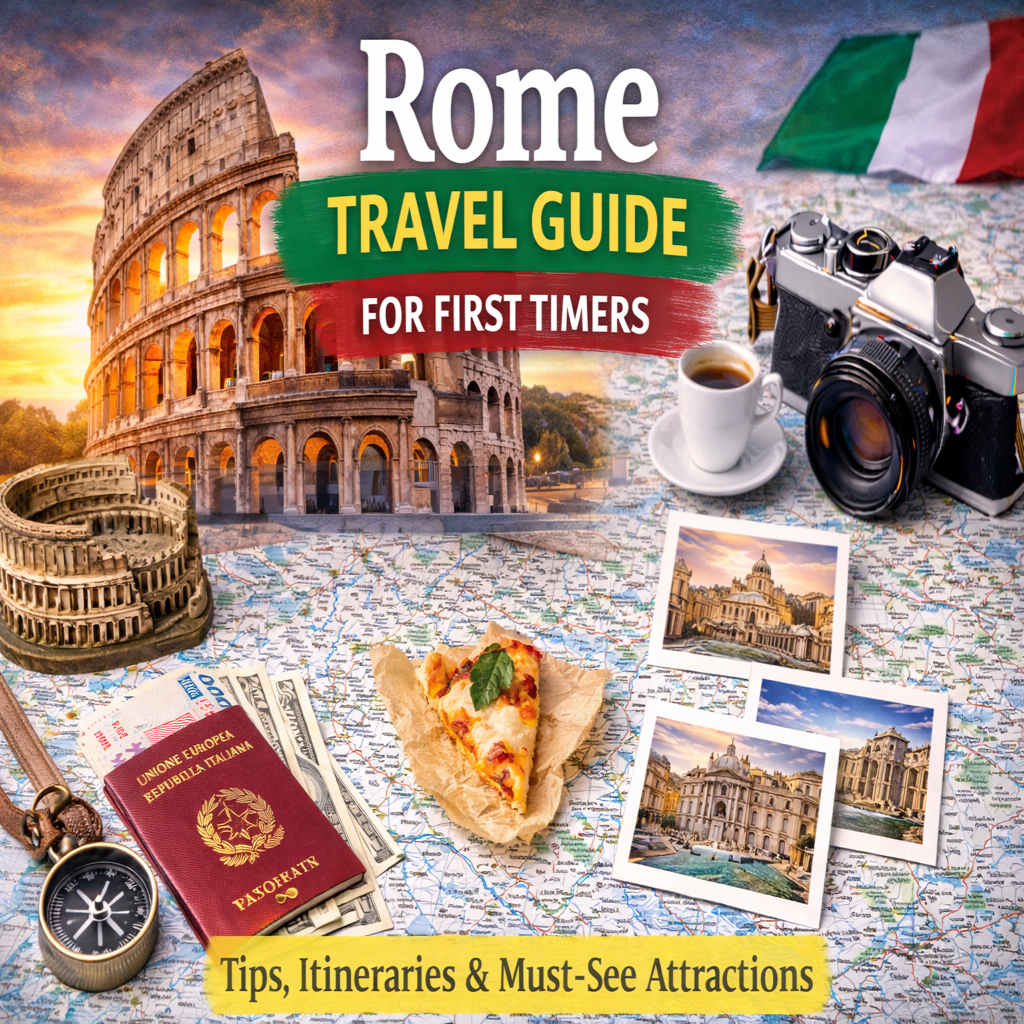
Rome is one of those rare cities that manages to feel both timeless and alive at the same time. Every cobblestone street whispers history, every piazza buzzes with life, and around every corner, a masterpiece waits. If you are planning your first visit to the Eternal City, congratulations — you are in for one of the most unforgettable travel experiences of your life.
This Rome travel guide for first timers is designed to give you everything you need: when to go, how to get around, what to see, where to eat, and how to avoid the most common tourist mistakes. Whether you have three days or a week, this guide will help you make the most of every moment in Rome.
Why Rome Should Be on Every First-Time Traveler’s Bucket List
Rome is not just a city — it is a living museum. With over 2,700 years of history, it is home to an extraordinary concentration of art, architecture, and culture that few places on Earth can rival. The Colosseum, the Vatican, the Pantheon, the Trevi Fountain — these are not just tourist attractions, they are icons of human civilization.
But Rome is also a deeply modern city. Its restaurants, bars, and fashion scene rival any European capital. Romans are passionate about food, football, and la dolce vita — the sweet life — and that energy is infectious for anyone visiting for the first time.
Ranked consistently among the top destinations in Europe, Rome attracts over 30 million visitors annually, and for good reason. This Rome first-timer guide will ensure you experience the best of it without the overwhelm.
Best Time to Visit Rome
Understanding when to visit Rome is one of the most important parts of planning your trip. Rome has a Mediterranean climate — warm, dry summers and mild winters — but each season offers a very different experience.
Spring (April to June) — The Sweet Spot
Spring is widely considered the best time to visit Rome. Temperatures hover between 15°C and 25°C (59°F–77°F), the city blooms with flowers, and outdoor dining becomes a daily pleasure. Easter brings beautiful processions, though the city gets extremely crowded during Holy Week. Book accommodations well in advance if traveling in April.
Summer (July to August) — Hot but Iconic
Summer in Rome is hot, with temperatures regularly exceeding 35°C (95°F). Lines at major attractions are long, and the city is packed with tourists. However, summer also brings festivals, outdoor cinema screenings, and extended daylight hours. If you visit in summer, start your sightseeing early in the morning and take a long midday break. Many Romans leave the city in August, making it quieter in local neighborhoods but more intense at tourist hotspots.
Autumn (September to November) — A Hidden Gem Season
September and October are arguably even better than spring. The summer crowds begin to thin, temperatures cool to a pleasant 18°C–28°C range, and the city takes on a golden hue. Wine harvest season adds a festive atmosphere to the surrounding countryside, and you will find shorter lines at major sites.
Winter (December to February) — Quiet and Charming
Winter is the least crowded time to visit Rome. Prices drop significantly, queues are manageable, and the city looks magical during the Christmas season. Temperatures rarely fall below 5°C (41°F), though rain is more common. The Vatican Museums and indoor attractions are particularly enjoyable this time of year.
How to Get to Rome
Rome is served by two main airports: Leonardo da Vinci International Airport (Fiumicino), about 30 km from the city center, and Ciampino Airport, which handles most low-cost carrier flights and is around 15 km away.
Leonardo Express Train: The fastest and most popular way from Fiumicino to Roma Termini (central train station). The journey takes about 32 minutes and runs every 15–30 minutes. Tickets cost around €14.
Regional FL1 Train: A cheaper option from Fiumicino that stops at multiple stations across the city. Takes slightly longer but is great if your accommodation is not near Termini.
Taxi: Official taxis charge a flat rate of €48 from Fiumicino to the city center. Always use official white taxis from licensed ranks to avoid scams.
Bus: Terravision and Flixbus offer budget coach services from both airports to Roma Termini.
Rome is also well connected by high-speed rail to Florence (1.5 hours), Naples (1 hour), and Milan (3 hours), making it an ideal base for day trips.
Getting Around Rome
Central Rome is a surprisingly walkable city — many of its major attractions are within easy walking distance of each other. However, the city is also hilly and cobblestoned in parts, so comfortable footwear is essential.
Walking: The best way to explore the historic center. The Colosseum, Roman Forum, Palatine Hill, Capitoline Hill, the Pantheon, and Piazza Navona are all within walking distance of each other.
Metro: Rome’s metro has two main lines: Line A (which passes near the Vatican, Spanish Steps, and Trevi Fountain) and Line B (near the Colosseum and Termini). The network is limited compared to other European capitals, but it is useful for longer journeys.
Tram and Bus: The surface network of buses and trams covers areas not served by the metro. Google Maps and the Moovit app are both excellent for navigating Rome’s public transport.
Taxi and Ride-Hailing: Free Now and Uber are available in Rome. Official taxis are metered; always insist the driver starts the meter.
Electric Scooters: Docked and dockless e-scooters (Lime, Bird, Helbiz) are widely available and can be a fun way to cover medium distances, though traffic can be chaotic.
A single transport ticket (BIT) costs €1.50 and is valid for 100 minutes on buses and one metro ride. Day and 48-hour passes are also available and worthwhile if you plan to use public transit heavily.
Top Attractions in Rome for First-Time Visitors
With so much to see, prioritizing is key. Here are the essential attractions that every first-time visitor to Rome should experience.
1. The Colosseum and Roman Forum
No visit to Rome is complete without the Colosseum. Built in 70–80 AD, it is the largest ancient amphitheater ever constructed and could hold up to 80,000 spectators. Gladiatorial combat, animal hunts, and public spectacles were held here for centuries.
Adjacent to the Colosseum, the Roman Forum was the beating heart of ancient Roman public life — a complex of temples, government buildings, and triumphal arches. Nearby Palatine Hill offers panoramic views over both sites.
Pro tip: Book skip-the-line tickets online well in advance, especially in summer. A combined ticket covers the Colosseum, Forum, and Palatine Hill.
2. Vatican City
The world’s smallest sovereign state packs a staggering amount of culture into its 44 hectares. St. Peter’s Basilica, with Michelangelo’s Pietà and the awe-inspiring dome, is free to enter. The Vatican Museums house one of the world’s greatest art collections — culminating in the Sistine Chapel, where Michelangelo’s ceiling fresco remains among the most breathtaking achievements in human history.
Pro tip: The Vatican Museums are best visited early morning or with a pre-booked skip-the-line ticket. Lines without reservations can exceed three hours in peak season.
3. The Pantheon
Built around 125 AD, the Pantheon is the best-preserved ancient building in Rome — and possibly the world. Its unreinforced concrete dome, with a central oculus open to the sky, remains an engineering marvel 2,000 years later. Entrance now requires a small fee (around €5), which has helped reduce overcrowding.
4. Trevi Fountain
The world’s most famous fountain is absolutely worth seeing, even amid the inevitable crowds. Visit after 10 PM for a magical, quieter experience when it is beautifully lit. The tradition of tossing a coin into the fountain — said to ensure your return to Rome — results in an estimated €1.5 million collected annually, which is donated to charity.
5. Piazza Navona
One of Rome’s most elegant baroque squares, Piazza Navona is built on the site of an ancient stadium. Its centerpiece is Bernini’s Fountain of the Four Rivers. Surrounded by cafes, street artists, and gelato shops, it is the perfect place to sit, sip a coffee, and watch the world go by.
6. Borghese Gallery
Often overlooked by first-timers, the Borghese Gallery is arguably the finest small museum in Rome. It houses a stunning collection of Bernini sculptures and Caravaggio paintings in a lavish 17th-century villa within the beautiful Villa Borghese park.
Important: Entry is strictly limited to 360 visitors per two-hour time slot. Reservations must be made weeks or even months in advance, especially in summer.
7. Trastevere Neighborhood
For a taste of Rome away from the tourist crowds, head to Trastevere — a charming, atmospheric neighborhood of narrow medieval streets, ivy-draped buildings, local trattorias, and vibrant nightlife. It feels like the real Rome, and it is beloved by both locals and in-the-know travelers.
What to Eat in Rome: A First-Timer’s Food Guide
Roman cuisine is hearty, simple, and deeply satisfying. It relies on a handful of quality ingredients to create dishes that have remained unchanged for generations. Eating well in Rome is not just possible on a budget — it is practically unavoidable.
Cacio e Pepe: Arguably Rome’s most iconic pasta dish — spaghetti or tonnarelli tossed with Pecorino Romano cheese and black pepper. Sounds simple; tastes extraordinary.
Carbonara: A true Roman carbonara uses guanciale (cured pork cheek), egg yolk, Pecorino Romano, and black pepper — no cream. Ask any Roman and they will confirm this emphatically.
Amatriciana: Rigatoni or bucatini tossed in a tomato sauce with guanciale and Pecorino. Rich, slightly spicy, and deeply comforting.
Supplì: Deep-fried rice balls filled with mozzarella and tomato sauce — the Roman answer to arancini and the perfect street food snack.
Gelato: Look for gelaterias that display their product in covered metal containers, not piled high in colorful mounds (a sign of artificial additives). Some great artisan options include Fatamorgana, Gelateria dei Gracchi, and Giolitti.
Pizza al Taglio: Sold by the slice and by weight, Roman-style pizza is rectangular, thin-crusted, and endlessly varied. A perfect and affordable lunch option.
Avoid tourist trap restaurants near major landmarks. Look for a handwritten or seasonal menu, Italian-speaking diners, and a location at least one or two streets away from the main sights. The best meals in Rome are often found in neighborhood trattorias with no English sign out front.
Where to Stay in Rome
Choosing the right neighborhood can make or break your Rome experience. Here is a breakdown of the best areas for first-timers.
Historic Center (Centro Storico): The heart of Rome, walkable to almost everything. Premium prices but unbeatable location. Perfect if budget is not a concern.
Trastevere: Charming, atmospheric, and lively at night. Slightly further from some sights but full of character. Great for those who want an authentic neighborhood feel.
Prati (near the Vatican): Quieter, residential, and great for Vatican visits. Well connected by Metro and bus. Good mid-range hotel options.
Termini Area: Rome’s main transport hub. Budget-friendly with excellent transport links, though less atmospheric. Good for early morning train connections.
Monti: Rome’s hippest neighborhood, close to the Colosseum. Boutique hotels, independent cafes, and vintage shops. A favorite among independent travelers.
Book accommodations at least 3–4 months in advance for spring or summer visits. Rome has a wide range of options from boutique hotels and guesthouses to Airbnb apartments and well-designed hostels.
Rome Travel Tips for First Timers
A few insider tips can make a significant difference to your Rome experience.
- Book major attractions in advance. The Colosseum, Vatican Museums, and Borghese Gallery all benefit enormously from pre-booked, skip-the-line tickets. Do not leave this to chance.
- Dress appropriately for churches. Shoulders and knees must be covered to enter St. Peter’s Basilica and other churches. Carry a light scarf or shawl as a quick fix.
- Beware of tourist traps. Restaurants that aggressively tout outside, menus with photos, and locations immediately beside major landmarks are usually overpriced and mediocre. Walk one or two blocks away for dramatically better food at lower prices.
- Drink from the nasoni. Rome’s free public drinking fountains (over 2,500 of them) provide clean, cold drinking water. Bring a refillable water bottle and save money while staying hydrated.
- Validate your transport ticket. Always validate bus and tram tickets before boarding or face an on-the-spot fine of up to €100. Metro tickets are validated at the turnstile.
- Visit sites at opening time or just before closing. Lines are shortest in the first hour after opening and the last hour before closing.
- Learn a few words of Italian. Romans appreciate the effort. Buongiorno, grazie, and per favore go a long way.
- Watch out for pickpockets. Rome’s main tourist sites, buses, and the Metro (especially Line A) attract pickpockets. Keep valuables secure and use a front-facing bag.
- Take the right number of days. Three full days covers the major highlights at a comfortable pace. Five to seven days allows for day trips and deeper neighborhood exploration.
- Use Google Maps offline. Download the Rome map before your trip in case you lose signal in narrow streets or underground.
Suggested 3-Day Rome Itinerary for First Timers
Day 1 — Ancient Rome
Start early at the Colosseum (pre-booked ticket is essential). Spend the morning exploring the Roman Forum and Palatine Hill. In the afternoon, visit Circus Maximus and take a gelato break before heading to the Capitoline Museums. In the evening, stroll to Trastevere for dinner at a local trattoria.
Day 2 — Vatican and Prati
Dedicate the morning to the Vatican Museums and Sistine Chapel (early entry is highly recommended). Spend the afternoon at St. Peter’s Basilica and climb the dome for panoramic city views. Explore the Castel Sant’Angelo on your way back and enjoy dinner in the Prati neighborhood.
Day 3 — Baroque Rome and the Historic Center
Begin at the Pantheon, then explore Piazza Navona. Visit Campo de’ Fiori for a mid-morning market experience. After lunch, head to the Spanish Steps and the Trevi Fountain. Wrap up your final evening with aperitivo in Monti and dinner at one of its many excellent restaurants.
Rome on a Budget: Is It Possible?
Rome can be surprisingly affordable if you know where to look. Many of the city’s greatest pleasures are completely free: the Pantheon’s exterior, all the piazzas, the Trevi Fountain, the Spanish Steps, Trastevere’s streets, and the views from the Pincio Hill Terrace all cost nothing.
Set lunches (menu del giorno) at local trattorias typically cost €10–15 for a two-course meal with water. Street food like supplì and pizza al taglio is filling and inexpensive. Booking Vatican Museums and Colosseum tickets directly through official websites (rather than resellers) also saves money.
A daily budget of €80–100 per person is very comfortable in Rome, covering accommodation in a mid-range guesthouse, meals, a few attractions, and transport.
Final Thoughts: Your First Trip to Rome Will Not Be Your Last
Rome is a city that gets under your skin. It overwhelms the senses, humbles the mind, and fills the heart. First-timers often find themselves making plans to return before they have even left.
The key to a great first visit is simple: slow down. Allow time to get lost in side streets. Sit at a cafe and watch the world pass. Let Rome’s beauty wash over you rather than racing from sight to sight. The city rewards those who linger.
We hope this Rome travel guide for first timers has given you the confidence and inspiration to plan your trip. For more in-depth guides, itineraries, and travel tips, keep exploring GlobeTrailGuide — your trusted companion for smarter, deeper travel.
GlobeTrailGuide.com | Travel Smarter. Explore Deeper.