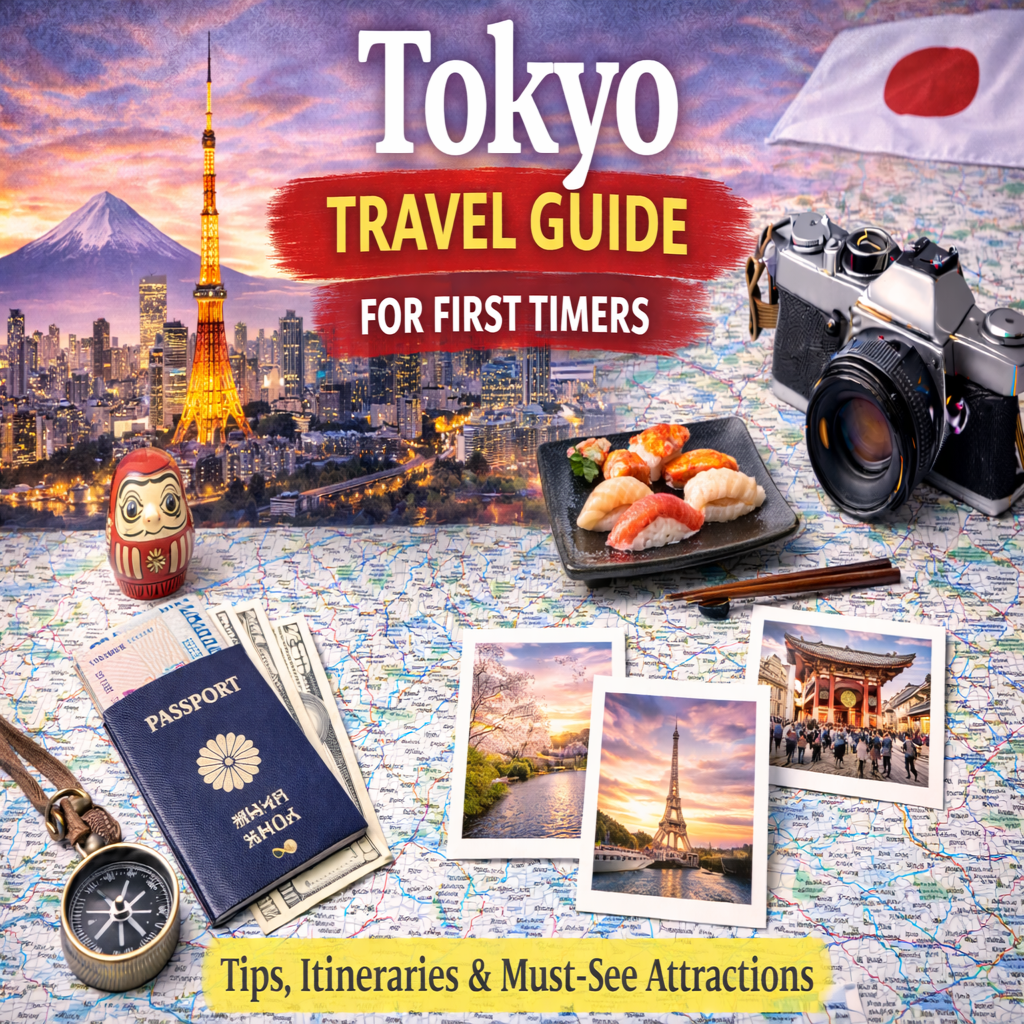
Tokyo is a city that defies expectations at every turn. It is simultaneously the world’s largest metropolis and one of its most orderly, a place where ancient temples sit in the shadow of neon-lit skyscrapers, where Michelin-starred restaurants outnumber those of any other city on Earth, and where a subway system of breathtaking complexity runs with clockwork precision. For first-time visitors, Tokyo is not just a destination — it is an experience that resets your understanding of what a city can be.
This Tokyo travel guide for first timers covers everything you need to plan a confident, well-organized trip: the best time to visit, how to get around, which neighborhoods to explore, what to eat, where to stay, and how to avoid the mistakes that catch most newcomers off guard. Whether you have five days or two weeks, Tokyo will leave a mark on you that no other city quite matches.
Why Tokyo Should Be Every First-Time Traveler’s Dream Destination
Tokyo is one of the safest, cleanest, most efficient, and most culturally rich cities on the planet. It tops global rankings for food, safety, and livability year after year, and for good reason. With 37 million people in its greater metropolitan area, it is the largest city in the world — yet it feels remarkably calm, navigable, and welcoming to visitors.
The city is a place of beautiful contradictions. Ultra-modern technology sits beside centuries-old Shinto shrines. Serene zen gardens are tucked between bustling commercial districts. You can eat a flawless bowl of ramen at 2 AM, attend a sumo tournament in the morning, and browse a seven-story electronics store in the afternoon — all within the same city.
Tokyo is also a deeply respectful city. Crime rates are extraordinarily low, locals go out of their way to help lost tourists, and the culture of omotenashi — wholehearted hospitality — means you will feel genuinely welcomed at almost every turn. For first-time visitors to Japan, Tokyo is the perfect entry point.
Best Time to Visit Tokyo
Tokyo is a year-round destination, but choosing the right season can significantly enhance your experience.
Spring (Late March to Early May) — Cherry Blossom Season
Spring is the most popular and celebrated time to visit Tokyo. Cherry blossom (sakura) season typically peaks between late March and early April, transforming the city’s parks, riverbanks, and temple grounds into breathtaking pink canopies. Ueno Park, Shinjuku Gyoen, Chidorigafuchi, and the Meguro River are among the best spots to witness the bloom. Temperatures are mild (10°C–20°C / 50°F–68°F) and the city buzzes with hanami (flower-viewing) picnics and festivals. Book flights and hotels months in advance — this is Tokyo’s peak tourist season.
Summer (June to August) — Hot, Humid, and Festival-Packed
Summer in Tokyo is hot and very humid, with temperatures regularly reaching 35°C (95°F) and higher. June brings the rainy season (tsuyu), with frequent showers lasting through mid-July. Despite the heat, summer is rich in cultural events: the Sumida River Fireworks Festival, Obon festivals, and countless neighborhood matsuri (street festivals) make it a vibrant time to visit. Start outdoor sightseeing early, stay hydrated, and embrace the city’s extraordinary air-conditioned indoor culture.
Autumn (September to November) — The Best Kept Secret
Autumn rivals spring as the finest time to visit Tokyo. The summer heat breaks in September, and by October and November the city is blessed with cool, clear days and spectacular foliage. Koyo (autumn leaf viewing) in Shinjuku Gyoen, Meiji Jingu Gaien, and Hamarikyu Gardens is as beautiful as cherry blossom season but draws significantly fewer international tourists. Crowds are lighter, prices are more reasonable, and the weather is simply perfect.
Winter (December to February) — Cold, Clear, and Magical
Winter in Tokyo is cold but rarely harsh, with temperatures between 2°C and 12°C (36°F–54°F) and very little rain. The city is beautifully illuminated with Christmas and New Year light displays, and New Year (Oshogatsu) is one of Japan’s most important cultural periods — temples and shrines fill with visitors for hatsumode (the first shrine visit of the year). Winter also offers the clearest views of Mount Fuji from the city. Crowds at major attractions are at their lowest, and accommodation prices are more competitive.
How to Get to Tokyo
Tokyo is served by two main international airports: Narita International Airport, around 60–80 km from the city center, and Haneda Airport, just 15–20 km from central Tokyo and far more convenient for most travelers.
Narita Express (N’EX): The direct train from Narita Airport to Shinjuku, Shibuya, and other major stations. Journey time is around 60–90 minutes. A round-trip ticket costs approximately ¥4,070 and is excellent value. The JR Pass covers this route if you have one.
Narita Limousine Bus: A comfortable and affordable coach service from Narita to major hotels and stations across Tokyo. Takes 60–120 minutes depending on traffic and costs around ¥3,200.
Haneda Airport Access: Haneda is connected to central Tokyo by the Tokyo Monorail (to Hamamatsucho Station, 15 minutes) and the Keikyu Line (to Shinagawa, 13 minutes). Both cost around ¥300–¥600 and are fast and convenient.
Taxi from Haneda: A taxi from Haneda to central Tokyo costs approximately ¥5,000–¥7,000 depending on destination. From Narita, expect ¥20,000–¥30,000 — this is rarely a practical option.
Tokyo is also connected to Japan’s Shinkansen (bullet train) network at Tokyo Station and Shinagawa Station, making day trips to Kyoto (2.5 hours), Osaka (2.5 hours), Hiroshima (4 hours), and Hakone (under 1 hour) entirely feasible.
Getting Around Tokyo
Tokyo’s public transport network is one of the greatest in the world — comprehensive, punctual, clean, and surprisingly easy to navigate once you understand the basics.
IC Cards (Suica or Pasmo): The single most important thing you can do before exploring Tokyo is obtain a Suica or Pasmo IC card. These rechargeable smart cards work on virtually every train, subway, bus, and monorail in the city, and can also be used to pay at convenience stores, vending machines, and many restaurants. They eliminate the need to buy individual tickets and make navigating the network effortless. Pick one up at any major station or via the Suica app on a compatible iPhone.
Tokyo Metro and Toei Subway: Tokyo has 13 subway lines operated by two companies (Tokyo Metro and Toei). Together, they cover the city comprehensively. Tourist day passes for unlimited metro travel are available and worthwhile if you plan to make many journeys in a single day.
JR Lines: Japan Railways operates several lines within Tokyo, including the famous Yamanote Line — a loop that connects almost every major district in the city (Shinjuku, Shibuya, Harajuku, Akihabara, Ueno, Ikebukuro, and more). The JR Pass, available to foreign tourists, offers unlimited travel on JR lines nationally and is excellent value if you plan to travel between cities.
Buses: Less intuitive for tourists than the train network but useful for reaching areas between train stations. IC cards work seamlessly on all Tokyo buses.
Taxis: Taxis in Tokyo are metered, safe, and spotlessly clean — but expensive. The base fare starts at around ¥500, and longer journeys add up quickly. Use taxis for late-night trips or when carrying heavy luggage, but public transport is almost always faster and cheaper.
Walking and Cycling: Many of Tokyo’s neighborhoods are excellent for walking, and rental bicycles are available in several districts. Cycling is a wonderful way to explore flat areas like Yanaka, Asakusa, and along the Sumida River.
Top Attractions in Tokyo for First-Time Visitors
Tokyo’s scale can feel overwhelming at first, but its attractions are spread across distinct neighborhoods, each with its own personality. Here are the must-see experiences for any first-timer.
1. Senso-ji Temple, Asakusa
Tokyo’s oldest and most visited temple, Senso-ji is the spiritual heart of the city. Founded in 628 AD, it draws over 30 million visitors annually. The approach through the iconic Kaminarimon (Thunder Gate) and along Nakamise shopping street — lined with stalls selling traditional snacks and crafts — is one of the most memorable walks in Japan. Visit early in the morning for a quieter, more atmospheric experience before the crowds arrive.
2. Shibuya Crossing and Shibuya District
Shibuya Scramble Crossing is arguably the most famous intersection in the world. When the lights change, up to 3,000 people cross simultaneously from all directions — an organized chaos that perfectly encapsulates Tokyo’s energy. Climb to the Shibuya Sky observation deck or grab a window seat at the Starbucks overlooking the crossing for a bird’s-eye view. The surrounding Shibuya district is a hub of youth fashion, entertainment, and some of the city’s best nightlife.
3. Shinjuku — Tokyo’s Entertainment Capital
Shinjuku is a city within a city. By day it is home to the Tokyo Metropolitan Government Building (free observation decks with panoramic views), Shinjuku Gyoen National Garden (one of Japan’s finest parks), and endless shopping. By night, it transforms into one of Asia’s most extraordinary entertainment districts. Kabukicho is Tokyo’s famous red-light and entertainment district; the narrow, lantern-lit alleys of Golden Gai — packed with tiny bars seating just 6–10 people — are one of Tokyo’s most unique and atmospheric experiences.
4. Harajuku and Meiji Jingu Shrine
Harajuku is famous worldwide for its unique street fashion and youth culture, centered on Takeshita Street — a narrow pedestrian alley of crepe stands, vintage clothing shops, and eccentric boutiques. A five-minute walk away, Meiji Jingu Shrine offers a complete contrast: a tranquil Shinto shrine set within a dense, forested park in the middle of the city. The combination of these two worlds within walking distance of each other is quintessential Tokyo.
5. Akihabara — Electric Town
Akihabara is the global capital of anime, manga, gaming, and consumer electronics. Multi-story stores sell everything from the latest gadgets to vintage video games, anime figurines, and maid café experiences. Even if you are not a devoted fan of anime or gaming culture, the sheer spectacle of Akihabara — its flashing signs, costumed street promoters, and towers of electronic goods — makes it a fascinating and uniquely Tokyo experience.
6. Tsukiji Outer Market and Toyosu Market
Japan’s relationship with food is unlike anywhere else in the world, and nowhere is this more evident than at its fish markets. The famous Tsukiji inner market has moved to Toyosu, where tuna auctions take place in the early hours of the morning (advance reservations required). The Tsukiji outer market remains open and is an outstanding destination for a market breakfast — fresh sushi, tamagoyaki (sweet rolled omelette), grilled scallops, and more.
7. teamLab Borderless or Planets
Tokyo’s immersive digital art museums, created by the art collective teamLab, are unlike anything else in the world. teamLab Planets in Toyosu and the newly relocated teamLab Borderless in Azabudai Hills offer breathtaking, walk-through environments of light, color, and motion. Pre-booking is absolutely essential, and tickets sell out weeks in advance.
8. Tokyo Skytree
At 634 meters, Tokyo Skytree is the tallest tower in Japan and the second tallest structure in the world. Its observation decks at 350 m and 450 m offer staggering views of the city and, on clear days, Mount Fuji. The base of the tower in Asakusa connects to a large shopping and dining complex. Book tickets online to avoid long queues.
9. Yanaka — Old Tokyo Preserved
For a glimpse of Tokyo before the modern era, Yanaka is extraordinary. This old shitamachi (low city) neighborhood survived both the 1923 Great Kanto Earthquake and World War II largely intact. Its narrow streets, independent shops, traditional crafts stores, and Yanaka Cemetery — a peaceful, tree-lined resting place for many historical figures — feel like a different world from the Tokyo of Shibuya and Shinjuku.
10. Day Trip to Nikko or Hakone
Tokyo’s location makes it an exceptional base for day trips. Nikko (2 hours by train) is home to the lavishly ornate Toshogu Shrine complex and beautiful mountain scenery. Hakone (under 1 hour by Shinkansen to Odawara) offers outstanding views of Mount Fuji, hot spring resorts (onsen), and the scenic Hakone Open Air Museum.
What to Eat in Tokyo: A First-Timer’s Food Guide
Tokyo has more Michelin-starred restaurants than any other city in the world — over 200 at last count. But the city’s greatest food experiences are not necessarily found in fine dining. From ¥600 ramen shops to standing sushi bars, the everyday food culture of Tokyo is simply extraordinary.
Sushi and Sashimi: Tokyo’s style of sushi is Edomae — a tradition of hand-pressed nigiri using lightly seasoned rice and the freshest possible fish. A standing sushi bar (tachinomi sushi) around Tsukiji or in department store basement food halls (depachika) offers world-class quality at accessible prices.
Ramen: Each region of Japan has its own ramen style, and Tokyo’s version is a clear, soy-based shoyu broth with wavy noodles. But the city also serves Hokkaido-style miso ramen, Hakata-style tonkotsu, and everything in between. Join the queue at a renowned shop — it is almost always worth the wait.
Tempura: Light, impossibly crisp battered and fried seafood and vegetables. At its best, tempura in Tokyo is a refined culinary art form, particularly at specialist restaurants in Asakusa and Ginza.
Yakitori: Skewers of grilled chicken — every part of the bird, seasoned simply with salt or tare sauce — cooked over charcoal and served in smoky izakaya (Japanese gastropubs). The alleyways of Yurakucho under the train tracks are among Tokyo’s best spots for this experience.
Tonkatsu: Breaded and deep-fried pork cutlet, served with shredded cabbage, rice, and a rich, slightly sweet sauce. A beloved everyday comfort food that Tokyo does exceptionally well.
Conveyor Belt Sushi (Kaiten-zushi): A fun and affordable way for first-timers to sample a wide variety of sushi. Plates circle on a conveyor belt; you pick what appeals and pay by the plate. Chains like Sushiro and Kura Sushi are excellent and wildly popular.
Convenience Store Food: Tokyo’s convenience stores — 7-Eleven, FamilyMart, and Lawson — are in a category of their own. Onigiri (rice balls), hot nikuman (steamed pork buns), sandwiches, and a rotating selection of prepared meals are all genuinely delicious and startlingly affordable. Do not leave Tokyo without a convenience store breakfast.
Where to Stay in Tokyo
Tokyo is a vast city, so choosing the right base matters enormously.
Shinjuku: The most central and well-connected neighborhood in the city. Excellent transport links, world-class dining, and hotels at every price point. Ideal for first-timers who want to be at the heart of everything.
Shibuya: Energetic, fashionable, and extremely well connected. Great for travelers who want to be close to the city’s youth culture, nightlife, and the Yamanote Line loop.
Asakusa: The most traditionally Japanese of Tokyo’s tourist neighborhoods. Great for travelers who want old-Tokyo atmosphere, proximity to Senso-ji, and a slightly quieter pace. Also excellent value for accommodation.
Ginza: Tokyo’s most upscale district, comparable to Paris’s Champs-Élysées. Luxury hotels, high-end dining, and proximity to Tsukiji and teamLab. Best for travelers with larger budgets.
Akihabara / Ueno Area: Central, affordable, and convenient for the JR network. Close to Ueno Park and its cluster of excellent museums. Good mid-range hotel options.
Roppongi: Tokyo’s international nightlife hub, home to the Mori Art Museum and several excellent mid-range to luxury hotels. Convenient for travelers interested in art and evening entertainment.
Book accommodation 3–6 months ahead for cherry blossom season (late March–early April) as Tokyo fills up extremely quickly. Capsule hotels, business hotels, and traditional ryokan guesthouses all offer interesting and affordable alternatives to standard accommodation.
Tokyo Travel Tips for First Timers
- Get a Suica or Pasmo card immediately. It is the single most practical thing you can do upon arrival. Recharge at any station machine.
- Carry cash. Japan remains a heavily cash-based society despite recent changes. Many smaller restaurants, shrines, and shops do not accept cards. Withdraw yen at 7-Eleven or Japan Post ATMs, which reliably accept foreign cards.
- Pocket Wi-Fi or SIM card. Rent a pocket Wi-Fi device at the airport or purchase a data SIM. Google Maps, translation apps, and Google Translate’s camera mode (which translates Japanese text in real time) are essential tools for navigating the city.
- Learn basic etiquette. Do not eat or drink while walking. Do not speak loudly on trains. Queue patiently. Remove shoes when entering homes and many traditional establishments. These are small things that show respect for Japanese culture and will be greatly appreciated.
- Tipping is not customary. Tipping in Japan can actually cause embarrassment or confusion. Excellent service is simply the standard — no tip required or expected.
- Book popular experiences in advance. teamLab, the Ghibli Museum (Mitaka), the Robot Restaurant (though it has permanently closed), and certain high-end restaurants require reservations weeks or months ahead.
- The Ghibli Museum requires advance booking. Tickets are released monthly on the 10th of the previous month through Lawson convenience stores (domestic) or the official overseas booking site. They sell out within minutes.
- Shoes matter. You will walk enormous distances in Tokyo — 15,000–25,000 steps per day is normal. Wear comfortable, easy-to-remove footwear for shrine and temple visits.
- Vending machines are everywhere. Tokyo has approximately one vending machine per 23 people. They dispense hot and cold drinks, snacks, and a remarkable variety of other items. They are cheap, convenient, and a novelty in themselves.
- The city is extremely safe. Tokyo consistently ranks among the safest cities in the world. Petty crime is extraordinarily rare. Relax, explore freely, and trust your surroundings.
Suggested 5-Day Tokyo Itinerary for First Timers
Day 1 — Arrival and East Tokyo
Check in and get oriented. Head to Asakusa in the afternoon for Senso-ji Temple and a stroll through Nakamise. Walk along the Sumida River and enjoy views of Tokyo Skytree. Dinner in Asakusa at a traditional izakaya.
Day 2 — Shibuya, Harajuku, and Shinjuku
Start the morning at Meiji Jingu Shrine, then explore Harajuku’s Takeshita Street. Lunch in Omotesando. Afternoon at Shibuya — visit the Scramble Crossing and Shibuya Sky. Evening in Shinjuku: Golden Gai for drinks, Omoide Yokocho (Memory Lane) for yakitori.
Day 3 — Tsukiji, Ginza, Akihabara
Early morning breakfast at Tsukiji Outer Market. Browse Ginza’s galleries and department stores. Afternoon in Akihabara exploring electronics and anime culture. Evening ramen in a local shop near your hotel.
Day 4 — Day Trip to Hakone
Take the Romancecar from Shinjuku to Hakone. Visit Hakone Open Air Museum, take a ropeway over volcanic Owakudani, cruise on Lake Ashi with Mount Fuji views (weather permitting). Return to Tokyo in the evening.
Day 5 — Yanaka, Ueno, teamLab
Morning walk through Yanaka’s old-town streets. Visit Ueno Park and one of its world-class museums (Tokyo National Museum is the finest). Afternoon at teamLab Planets or Borderless (pre-booked). Farewell dinner in a neighborhood of your choice.
Tokyo on a Budget: Is It Possible?
Tokyo has a reputation for being expensive, but this is largely a myth. The city is highly manageable on a modest budget, particularly when it comes to food and transport.
A bowl of ramen costs ¥800–¥1,200. A convenience store meal is ¥400–¥600. Set lunches (teishoku) at mid-range restaurants typically cost ¥900–¥1,500 for a full meal with soup, rice, and sides — extraordinary value by any international standard. Many of Tokyo’s finest experiences are also free: Meiji Jingu, Senso-ji, Shinjuku Gyoen (¥500 entry), the Shibuya Crossing, and countless neighborhood walks cost next to nothing.
Budget travelers can live well in Tokyo on ¥7,000–¥10,000 (approximately €45–€65) per person per day, covering a capsule hotel or budget guesthouse, all meals from local restaurants and convenience stores, and transport. A mid-range daily budget of ¥15,000–¥20,000 per person is very comfortable and opens up excellent dining, museums, and activities.
Final Thoughts: Tokyo Will Ruin Every Other City for You
There is a well-known phenomenon among travelers to Tokyo: the city sets a standard that almost nowhere else can meet. The food is better. The public transport is more reliable. The streets are cleaner. The people are kinder. First-timers frequently arrive with a week planned and start scheming ways to stay longer within the first 48 hours.
Tokyo rewards curiosity above all else. Wander without a plan. Disappear into a department store basement. Follow the smell of yakitori down a narrow alley. Accept confusion as part of the joy. The city is too large and too layered to fully understand in one trip — and that is precisely the point.
We hope this Tokyo travel guide for first timers has given you the foundation to plan a trip you will never forget. For more travel guides, itineraries, and destination deep-dives, keep exploring GlobeTrailGuide — your trusted companion for smarter, deeper travel.
GlobeTrailGuide.com | Travel Smarter. Explore Deeper.