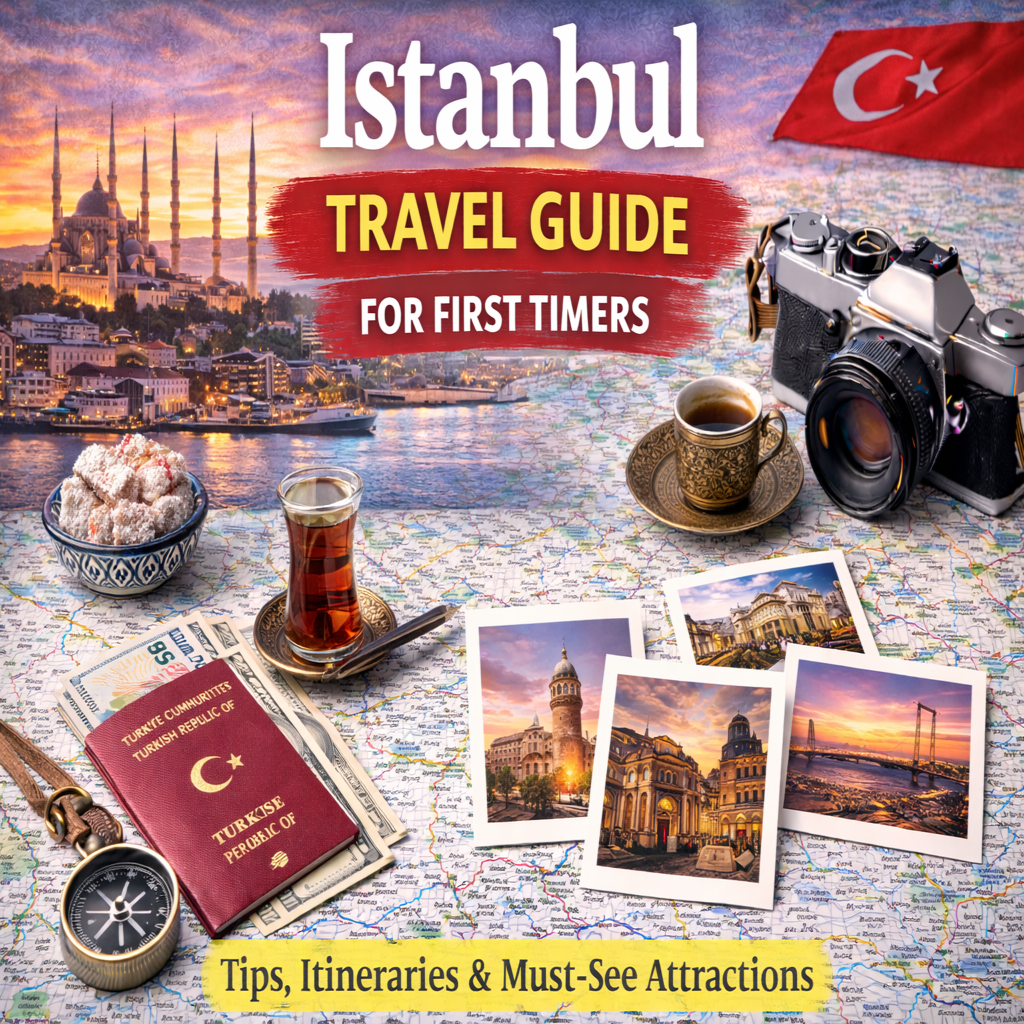
There is no city on Earth quite like Istanbul. It is the only metropolis in the world that straddles two continents — Europe and Asia — separated by the shimmering Bosphorus Strait, and that geographical reality is more than just a geographical curiosity. It is the defining fact of a city that has spent three thousand years absorbing, blending, and transcending the civilizations that have passed through it. Byzantine, Ottoman, Greek, Armenian, Jewish, and modern Turkish cultures have all left their mark here, layered one upon the other in a palimpsest of extraordinary depth and beauty.
For first-time visitors, Istanbul is an overwhelming and intoxicating experience. The call to prayer echoing across domed rooftops at dawn, the smell of simit (sesame-crusted bread rings) from street vendors, the Grand Bazaar’s labyrinthine alleys, the Bosphorus ferries slicing through grey-blue water between minarets — Istanbul announces itself to the senses immediately and completely. This city does not ease you in gently. It pulls you under, and most travelers are grateful for it.
This Istanbul travel guide for first timers covers everything you need to know: the best time to visit, how to get around, what to see, where to eat, which neighborhoods to explore, and the practical knowledge that will help you make the most of one of the world’s great cities.
Why Istanbul Should Be on Every First-Time Traveler’s List
Istanbul is, without exaggeration, one of the most historically significant cities in human history. It served as the capital of three successive empires — the Roman, Byzantine, and Ottoman — for over 1,600 years. At its peak under Suleiman the Magnificent in the 16th century, Constantinople was the largest and most powerful city in the world. The monuments left behind by these civilizations — the Hagia Sophia, the Blue Mosque, Topkapi Palace, the Grand Bazaar, the Basilica Cistern — are not merely impressive. They are world-altering.
But Istanbul is not a city frozen in its past. It is a pulsating, chaotic, modern megalopolis of 15 million people, with a creative energy that rivals any city in Europe or the Middle East. Its food scene is extraordinary, its music and arts culture is vibrant, and its people are famously warm and hospitable. The concept of misafirperverlik — heartfelt hospitality toward guests — is deeply embedded in Turkish culture, and visitors feel it everywhere.
Istanbul is also remarkable value for international visitors. Despite its world-class attractions, food, and hospitality, costs remain significantly lower than comparable European capitals. For the quality of experience on offer, it is one of the best-value major destinations in the world.
Best Time to Visit Istanbul
Istanbul’s climate is transitional — influenced by both Mediterranean and continental weather patterns — and the city is visitable year-round, with each season offering something distinct.
Spring (April to May) — The Finest Season
Spring is widely considered the best time to visit Istanbul. Temperatures are pleasantly mild, ranging from 12°C to 22°C (54°F–72°F), the city’s parks and hillsides bloom with tulips (a flower with deep historical roots in Ottoman culture), and outdoor terraces along the Bosphorus come alive. The Istanbul Tulip Festival in April transforms parks across the city into spectacular floral displays. Crowds are present but manageable, and the light on the Bosphorus in spring is simply beautiful.
Summer (June to August) — Hot, Vibrant, and Crowded
Summer in Istanbul is warm and increasingly humid, with temperatures averaging 28°C–32°C (82°F–90°F) and occasional spikes higher. The city is at its most crowded with tourists, particularly around the major historical sites in Sultanahmet. That said, summer brings long evenings ideal for Bosphorus dining, rooftop bars, and open-air cultural events. The Istanbul Music Festival in June is one of the finest classical music events in the region. Start sightseeing early to beat the heat and the queues.
Autumn (September to November) — A Brilliant Alternative
Autumn rivals spring as an ideal time to visit. September retains much of summer’s warmth without its peak-season intensity. October and November bring cooler, crisper days perfect for walking, and the city’s parks turn golden with autumn color. Crowds thin noticeably after mid-September, hotel prices drop, and Istanbul settles into a quieter, more local rhythm that many travelers find more rewarding than the high-season rush.
Winter (December to February) — Atmospheric and Affordable
Istanbul in winter has an undeniable romance. Light snowfall occasionally dusts the domes of the Blue Mosque and Hagia Sophia, creating scenes of extraordinary beauty. The city is at its least crowded, museum queues are minimal, and accommodation prices fall significantly. Temperatures average 5°C–10°C (41°F–50°F), occasionally dipping below freezing. The covered Grand Bazaar, the warm tea houses, and the Bosphorus ferry rides take on a particularly cozy character in winter. January and February are among the most atmospheric months to experience the city’s deeper rhythms.
How to Get to Istanbul
Istanbul is served by two airports: Istanbul Airport (IST), one of the largest in the world, located on the European side about 35–45 km from the city center; and Sabiha Gökçen Airport (SAW) on the Asian side, about 45 km from the European historic center.
Havaist Bus (from Istanbul Airport): The most popular and affordable way into the city. Havaist (HAVAİST) buses run frequent services to key hubs including Taksim Square, Beşiktaş, Kadıköy, and the Old City (Sultanahmet). Journey time varies from 45 minutes to over an hour depending on Istanbul’s notorious traffic. Tickets cost around ₺100–₺130.
Metro M11 (from Istanbul Airport): A new metro line connects Istanbul Airport to Gayrettepe station on the M2 line, giving access to Taksim and Kabataş. The journey takes around 35–40 minutes and costs approximately ₺50. The most reliable option in heavy traffic.
Taxi from Istanbul Airport: Metered taxis are available outside arrivals. Expect to pay approximately ₺500–₺800 to central Istanbul depending on destination and traffic. Always use the official taxi rank and ensure the meter is running. Uber also operates from the airport.
From Sabiha Gökçen: Havabus coaches connect SAW to Taksim (around 90 minutes, traffic-dependent). Ferry services from Pendik (near SAW) to Kabataş on the European side offer a scenic and often faster alternative in good weather.
Istanbul is also a major hub for international ferry and cruise arrivals, and is connected by bus to most major Turkish cities through its large intercity bus terminals (otogar) at Esenler (European side) and Harem (Asian side).
Getting Around Istanbul
Istanbul is a large, hilly, and geographically complex city spread across two continents and bisected by major waterways. Navigating it confidently requires understanding a few key systems.
Istanbulkart: The single most important thing to obtain upon arrival. This rechargeable smart card works on all metro lines, trams, buses, ferries, funiculars, and the historic tram on İstiklal Avenue. It offers significantly discounted fares compared to single tickets and eliminates the need to carry change. Available at machines in any metro station or ferry terminal.
Tram (T1 Line): The most useful single line for tourists. The T1 tram runs from Kabataş (near the Bosphorus) through Karaköy, across the Galata Bridge, through Eminönü, and along the entire length of Sultanahmet to Beyazıt (Grand Bazaar) and Topkapı. It connects virtually every major historical attraction in the Old City and is the quickest way to move between them.
Metro: Istanbul’s metro network is expanding rapidly. The M2 line connects Taksim to the airport via Şişli and Levent. The M1 serves Aksaray and the main bus terminal. New lines are opening regularly, making the metro increasingly useful for cross-city travel.
Bosphorus Ferries (Vapur): One of Istanbul’s great pleasures and an essential experience. Şehir Hatları (city ferries) operate regular services between the European and Asian sides — Eminönü/Karaköy to Kadıköy and Üsküdar are the most useful for tourists. Accept the Istanbulkart. A Bosphorus ferry ride for ₺20–₺30 is one of the best-value experiences in any world city.
Funiculars: Two funiculars are useful for navigating Istanbul’s steep hills. The F1 connects Kabataş (tram terminus) to Taksim Square (2 minutes). The historic Tünel, built in 1875 and one of the world’s oldest underground railways, connects Karaköy to the bottom of İstiklal Avenue.
Taxis and Rideshares: Taxis are plentiful but require caution — insist the meter is running and be aware that some drivers take unnecessarily long routes with tourists. BiTaksi is a reputable app-based taxi service. Uber operates in Istanbul under the name Uber Taxi (using licensed taxi drivers).
Walking: Many of Istanbul’s most rewarding experiences happen on foot. The Old City (Sultanahmet, Eminönü, the Grand Bazaar area) is very walkable, as is the Beyoğlu district around İstiklal Avenue and Galata. Be prepared for hills — Istanbul is built on seven hills and the terrain can be demanding.
Top Attractions in Istanbul for First-Time Visitors
Istanbul’s historical concentration is extraordinary. The Sultanahmet district alone contains more UNESCO World Heritage monuments within walking distance of each other than most entire countries.
1. Hagia Sophia (Ayasofya)
The Hagia Sophia is one of the greatest buildings in human history. Commissioned by Emperor Justinian I and completed in 537 AD, it served as the largest cathedral in the world for nearly a thousand years, then as an Ottoman mosque for almost 500 years after the conquest of Constantinople in 1453, and then as a museum from 1934. In 2020 it was reconverted to an active mosque. It remains open to non-Muslim visitors outside of prayer times, and entering its vast, light-filled interior — with its 56-meter dome floating impossibly above — is among the most awe-inspiring architectural experiences on Earth.
Pro tip: Entry is free but crowds are significant. Arrive at opening time (9 AM) or in the late afternoon to minimize waiting. Women should bring a headscarf; scarves are available at the entrance.
2. Blue Mosque (Sultanahmet Camii)
Built between 1609 and 1616 and named for the 20,000 hand-painted İznik tiles adorning its interior, the Blue Mosque is one of the most recognizable landmarks in the world. Its six minarets — a controversial number at the time of construction, as only the mosque in Mecca had six — dominate the skyline of the Old City. It remains an active mosque, closed to visitors during the five daily prayer times. Entry is free.
Pro tip: The Blue Mosque and Hagia Sophia face each other across the Sultanahmet square — visit both on the same morning for maximum efficiency.
3. Topkapi Palace
For nearly 400 years, Topkapi Palace was the administrative and residential center of the Ottoman Empire. Set on a promontory overlooking the confluence of the Bosphorus and the Golden Horn, its pavilions, courtyards, the Imperial Harem, and the Treasury (containing the Topkapi Dagger, the Spoonmaker’s Diamond, and holy relics) paint an extraordinary picture of imperial life at its most lavish. The views from the palace terraces across the Bosphorus toward Asia are among the finest in Istanbul.
Pro tip: Purchase a Museum Pass Istanbul (valid for 5 days, covering Topkapi, Hagia Sophia Museum sections, the Basilica Cistern, and more) for the best value. The Harem requires a separate ticket.
4. Grand Bazaar (Kapalıçarşı)
One of the world’s oldest and largest covered markets, the Grand Bazaar has operated continuously since 1461. Its 61 covered streets contain over 4,000 shops selling carpets, jewelry, ceramics, spices, leather goods, textiles, and antiques. It is at once a functioning commercial hub and a living piece of Ottoman urban history. Navigating its labyrinthine interior is genuinely disorienting — and genuinely wonderful.
Pro tip: Bargaining is expected and part of the experience, but be respectful and have a genuine price in mind. Start at around 50–60% of the asking price. Never feel obligated to buy after accepting a glass of tea — it is simply hospitality.
5. Basilica Cistern (Yerebatan Sarnıcı)
Built in the 6th century to supply water to the palaces of Constantinople, the Basilica Cistern is one of Istanbul’s most atmospheric and mysterious spaces. Its forest of 336 marble columns — many salvaged from earlier Roman structures, including two with Medusa head bases — stands in dim, echoing water beneath the streets of Sultanahmet. Recently renovated and expanded, it now includes immersive light art installations that make it even more dramatic.
6. Spice Bazaar (Mısır Çarşısı) and Eminönü
The Spice Bazaar, also known as the Egyptian Bazaar, has been selling spices, dried fruits, teas, and Turkish delights since 1664. It is smaller and more focused than the Grand Bazaar, and arguably more enjoyable for casual browsing. The surrounding Eminönü neighborhood — where the Golden Horn meets the Bosphorus — is one of Istanbul’s most vibrant and photogenic areas, with ferries, fishermen grilling balık ekmek (fish sandwiches) on boats, and the beautiful Yeni Camii (New Mosque) as a backdrop.
7. Galata Tower and Beyoğlu
The medieval Galata Tower, built in 1348 by Genoese merchants, offers 360-degree panoramic views over Istanbul from its observation gallery. The surrounding Galata neighborhood, with its steep streets, independent galleries, and specialty coffee shops, is one of the city’s most charming areas. From here, a short funicular or steep walk leads to İstiklal Avenue — Istanbul’s main pedestrian boulevard, lined with 19th-century buildings, bookshops, cinemas, restaurants, and side streets packed with bars and live music venues.
8. Dolmabahçe Palace
Built in 1856 as the Ottoman sultans’ move away from Topkapi toward a more European-style residence, Dolmabahçe is an extraordinary expression of 19th-century imperial ambition. Its 285 rooms, 44 halls, and 68 bathrooms are adorned with Baccarat crystal chandeliers, Bohemian glasswork, and European and Ottoman artwork. It also holds deep historic significance as the place where Mustafa Kemal Atatürk — founder of the Turkish Republic — died in 1938. Entry by guided tour only.
9. Bosphorus Cruise
Seeing Istanbul from the water is essential. The Bosphorus Strait — 30 km long, connecting the Black Sea to the Sea of Marmara — is lined with Ottoman waterfront mansions (yalı), fortress ruins, fishing villages, and the dramatic hillside skyline of the city itself. Short cruises (Eminönü to the first Bosphorus Bridge and back) take around 2 hours and are available through Şehir Hatları. Full-day cruises to the Black Sea and back are also available. Watching the sun set over the European shore from a Bosphorus ferry is one of Istanbul’s defining experiences.
10. Kadıköy — The Asian Side
Most first-time visitors never cross to the Asian side of Istanbul, and they are missing something special. Kadıköy is a vibrant, young, progressive neighborhood with outstanding street food, a brilliant daily market, excellent coffee shops, bookstores, and bars. The 25-minute ferry from Eminönü or Karaköy is itself a pleasure — and arriving in Kadıköy feels like discovering a completely different city. The Moda neighborhood, a short walk from the ferry terminal, is particularly charming for an afternoon wander.
What to Eat in Istanbul: A First-Timer’s Food Guide
Turkish cuisine is one of the great culinary traditions of the world, and Istanbul is its finest expression. From street food eaten standing up to elaborate mezes spread across a dozen small plates, eating in Istanbul is one of the central pleasures of any visit.
Simit: The quintessential Istanbul street food — a circular bread ring coated in sesame seeds, sold from carts throughout the city for a few lira. Eat it plain or with a slice of white cheese and a glass of çay (tea) for the definitive Istanbul breakfast.
Balık Ekmek: Grilled fish (usually mackerel) stuffed into a crusty bread roll with onion, lettuce, and lemon, sold from brightly painted boats moored at Eminönü and Karaköy. It is simple, cheap, and absolutely delicious — one of the great street food experiences in any world city.
Meze: Turkish meze culture is extraordinary. A spread of small dishes — hummus, baba ghanoush, stuffed vine leaves (dolma), white bean salad (piyaz), cacık (yogurt with cucumber), fried aubergine, and many more — served with warm bread and cold rakı (anise-flavored spirit) is one of the great communal eating rituals. Meyhanes (traditional taverns) in Beyoğlu and Kadıköy are the best places to experience this properly.
Kebabs: Istanbul’s kebab culture goes far beyond the döner. Adana kebab (spiced minced lamb on a flat skewer), İskender kebab (thinly sliced lamb over pide bread with tomato sauce and browned butter), and şiş kebab (cubed lamb or chicken on a skewer) are all exceptional. Beyti and Develi are among the city’s most celebrated kebab restaurants.
Lahmacun: Often called Turkish pizza, lahmacun is a thin, crispy flatbread topped with spiced minced meat, parsley, and tomatoes. Roll it up with fresh herbs and a squeeze of lemon, eat it with ayran (yogurt drink), and pay almost nothing. It is one of the best-value meals in the city.
Turkish Breakfast (Kahvaltı): The full Turkish breakfast is a serious affair — a spread of cheeses, olives, tomatoes, cucumbers, eggs, honey, clotted cream, pastries, and multiple types of bread accompanied by endless glasses of tea. Weekend brunch spots in Kadıköy, Bebek, and Cihangir are packed with locals doing it properly. It is worth planning at least one morning around this ritual.
Baklava and Turkish Sweets: Istanbul’s pâtisserie culture is built around syrup-soaked pastries, milk puddings (muhallebi), and stuffed dates. Güllüoğlu in Karaköy is widely considered the finest baklava shop in the city. Turkish delight (lokum) from Hacı Bekir — a confectioner operating since 1777 — is a world away from the tourist-grade versions sold in souvenir shops.
Turkish Tea and Coffee: Tea (çay) is served in small tulip-shaped glasses and drunk constantly throughout the day. Refusing a glass of tea offered in a shop or guesthouse is considered mildly impolite. Turkish coffee is thick, unfiltered, served in small cups with grounds in the bottom, and prepared in a cezve (small copper pot). The coffee houses (kıraathane) of Beyoğlu and Fatih are deeply atmospheric places to experience both.
Where to Stay in Istanbul
Istanbul’s geography means that neighborhood choice has a significant impact on your experience.
Sultanahmet (Old City): The most historically rich area, with the Hagia Sophia, Blue Mosque, Grand Bazaar, and Topkapi Palace all within walking distance. Ideal for first-timers who want maximum proximity to the major sights. Boutique hotels in converted Ottoman buildings are a highlight of this area. Slightly quieter at night than other districts.
Beyoğlu (Taksim, Galata, Cihangir): The modern, cosmopolitan heart of Istanbul. Excellent restaurants, bars, galleries, and nightlife. Great transport connections. İstiklal Avenue is a five-minute walk. Best for travelers who want a mix of culture, nightlife, and local energy alongside the historical sights.
Karaköy and Galata: One of Istanbul’s most rapidly evolving neighborhoods, with outstanding specialty coffee, design hotels, and a creative, independent spirit. Extremely well located — on the tram line, close to the ferry terminals, and at the foot of İstiklal. A favorite among design-conscious travelers.
Beşiktaş and Ortaköy: Lively, local, and set along the Bosphorus waterfront between the two bridges. Less touristy than Sultanahmet or Taksim, with excellent fish restaurants, weekend markets, and the Dolmabahçe Palace nearby. A great choice for travelers on a return visit or those who want a more local experience.
Kadıköy (Asian Side): Staying on the Asian side offers a completely different perspective on the city — quieter, more residential, excellent food scene, and great value accommodation. A 25-minute ferry from the main sights. Recommended for adventurous first-timers and a favorite for those on repeat visits.
Book accommodation 3–4 months in advance for spring travel. Istanbul has a wide range of options from five-star Bosphorus-view hotels to atmospheric boutique guesthouses in Ottoman-era buildings and well-run budget hostels.
Istanbul Travel Tips for First Timers
- Get an Istanbulkart immediately. Available at machines in any major transport hub. Load it with ₺150–₺200 for a few days of transport and it will simplify every journey.
- Dress modestly at religious sites. Both men and women should have knees and shoulders covered when entering mosques. Women should bring or be prepared to borrow a headscarf. Shoes must be removed at mosque entrances — slip-on footwear is practical.
- Haggle respectfully in the bazaars. Bargaining is normal and expected in the Grand Bazaar and smaller market areas. It is not expected in restaurants, regular shops, or transport.
- Learn a few words of Turkish. Merhaba (hello), teşekkür ederim (thank you), lütfen (please), and ne kadar? (how much?) are warmly received. Turkish people are very appreciative of any attempt to engage in their language.
- Be wary of carpet shop invitations. The classic Istanbul scam involves a friendly local striking up a conversation and eventually steering you toward a relative’s carpet shop with extreme psychological pressure to buy. Being friendly in return is fine — just be clear about your intentions from the start.
- The Museum Pass Istanbul is excellent value. Covering 5 days and multiple major sites, it pays for itself within two attractions and eliminates most ticket queues.
- Carry cash in lira. While card payments are increasingly accepted, many smaller restaurants, market stalls, and local shops still operate on cash. ATMs are widely available throughout the city.
- Take the ferry, not just the metro. The Bosphorus ferries are one of Istanbul’s great pleasures. Use them as transport and as an experience simultaneously.
- Traffic is genuinely terrible. Istanbul has some of the worst traffic congestion in the world. For cross-city journeys, metro and tram will almost always be faster than a taxi, especially during morning and evening rush hours.
- Istanbul is large — plan your days geographically. Group sights that are close together on the same day. Do not try to combine Sultanahmet and the Asian side on the same afternoon — it is frustrating and exhausting. Plan instead: Old City day, Beyoğlu day, Bosphorus and Asian side day.
Suggested 4-Day Istanbul Itinerary for First Timers
Day 1 — The Old City: Byzantine and Ottoman Glories
Begin at Hagia Sophia at opening time. Walk across the square to the Blue Mosque. Visit the Basilica Cistern nearby. Lunch in Sultanahmet at a traditional lokanta (canteen-style restaurant). Afternoon at Topkapi Palace and its gardens overlooking the Bosphorus. Evening stroll around Eminönü waterfront and dinner in the neighborhood.
Day 2 — Bazaars, Galata, and Beyoğlu
Morning at the Spice Bazaar and Eminönü, followed by the Grand Bazaar (allow 2 hours minimum). Lunch on simit and balık ekmek from the Eminönü waterfront vendors. Cross the Galata Bridge on foot and climb to the Galata Tower for panoramic views. Afternoon wander through Karaköy’s galleries and coffee shops. Evening on İstiklal Avenue — dinner in Beyoğlu, drinks in the side streets.
Day 3 — Bosphorus and Dolmabahçe
Morning tour of Dolmabahçe Palace. Walk or take the tram along the Bosphorus waterfront to Beşiktaş. Afternoon Bosphorus cruise (Şehir Hatları short cruise from Eminönü recommended). Late afternoon in Ortaköy — famous for its kumpir (stuffed baked potatoes) and the iconic Ortaköy Mosque. Dinner at a Bosphorus fish restaurant.
Day 4 — The Asian Side and Farewell
Morning ferry from Karaköy to Kadıköy. Explore the Kadıköy market and Moda neighborhood. Lunch at one of Kadıköy’s excellent meyhane restaurants. Afternoon back on the European side for any remaining sights or shopping. Final evening rooftop dinner with Bosphorus views — there are several excellent options in Sultanahmet and Beyoğlu.
Istanbul on a Budget: Is It Possible?
Istanbul is one of the most rewarding budget destinations among major world cities. Thanks to the significant difference in value between the Turkish lira and major international currencies, international visitors find their money stretches considerably further here than in comparable European destinations.
Street food — simit, balık ekmek, lahmacun, döner, roasted chestnuts — is extraordinarily cheap and genuinely excellent. A full, satisfying lunch at a local lokanta costs ₺100–₺200. Even mid-range meyhane dinners with meze, grilled fish, and rakı rarely exceed ₺400–₺600 per person. Transport on the Istanbulkart costs ₺20–₺30 per journey, and a Bosphorus ferry — one of the great travel experiences in the world — costs the same as a bus ride.
Many of Istanbul’s finest pleasures are free or nearly so: the Blue Mosque, the Spice Bazaar, the Eminönü waterfront, İstiklal Avenue, the neighborhoods of Balat, Fener, and Kadıköy, and simply sitting at a tea house watching the Bosphorus traffic are all costless experiences of the highest order.
A comfortable daily budget of €50–€70 per person covers a good mid-range guesthouse, all meals from local restaurants, transport, and one or two paid attractions. With the Museum Pass Istanbul (around €25–€30 depending on the exchange rate) covering multiple major sites, even a week of serious sightseeing remains very affordable by international standards.
Final Thoughts: Istanbul Will Expand Your Understanding of the World
Istanbul is the kind of city that changes how you see things. To stand in Hagia Sophia and understand that this single building has been a cathedral, a mosque, a museum, and a mosque again across 1,500 years of contested history is to feel the full weight of what civilization means. To take a ferry from Europe to Asia in 25 minutes, eating a simit with seagulls circling overhead and minarets receding behind you, is to understand geography as something lived rather than merely mapped.
The city is imperfect, complex, sometimes overwhelming, and endlessly fascinating. It asks more of the visitor than a tidier, more manageable destination might. But what it gives in return — the depth of its history, the warmth of its people, the beauty of its setting, the extraordinary quality of its food and culture — is matched by very few places in the world.
Go with curiosity, go with patience, and go with an appetite — for food, for history, for the beautiful, disorienting experience of being in a place that belongs simultaneously to two continents, three empires, and one irreplaceable present.
We hope this Istanbul travel guide for first timers has given you everything you need to plan the trip of a lifetime. For more destination guides, itineraries, and travel inspiration, keep exploring GlobeTrailGuide — your trusted companion for smarter, deeper travel.
GlobeTrailGuide.com | Travel Smarter. Explore Deeper.