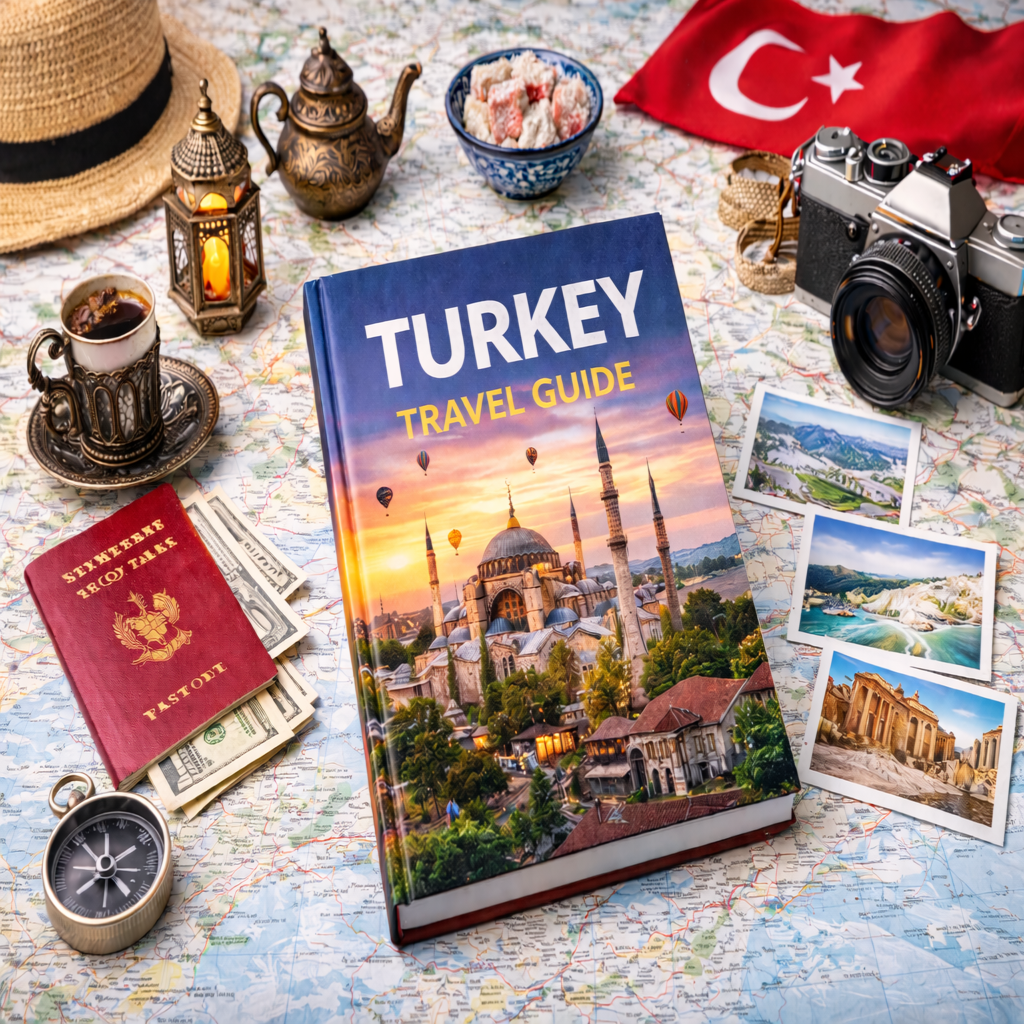
The first time I stood in Istanbul’s Blue Mosque at dawn, listening to the call to prayer echo across the Bosphorus while the first rays of light illuminated thousands of Iznik tiles, I understood why Turkey has captivated travelers for millennia. This is a country where Asia meets Europe, where ancient empires left layers of civilization stacked like a historical lasagna, and where hospitality isn’t just a custom—it’s a point of national pride.
Over five extended trips spanning more than nine months in Turkey, I’ve discovered a country far more diverse than kebabs and bazaars. From the otherworldly fairy chimneys of Cappadocia to the turquoise waters of the Mediterranean, from Ephesus’s marble streets to Pamukkale’s white terraces, from bustling Istanbul to remote Kurdish villages in the east, Turkey delivers extraordinary experiences at prices that make extended travel genuinely affordable.
This comprehensive guide distills years of Turkish exploration into practical advice for planning your perfect journey—whether you’re a first-timer navigating the highlights or a return visitor seeking authentic experiences beyond the well-worn tourist trail.
When to Visit Turkey: Seasonal Strategies
Spring (April-May): Peak Perfection
Spring offers ideal conditions—mild temperatures (15-25°C/59-77°F), wildflowers blooming across Anatolia, comfortable weather for Cappadocia balloon rides, beaches not yet crowded, and reasonable prices before summer peak.
Pros: Excellent weather nationwide, beautiful landscapes, comfortable hiking and sightseeing, fewer crowds than summer, shoulder-season prices, Easter brings some European tourists but manageable.
Cons: Spring rains possible especially coastal areas, some mountain areas still snowy early April, accommodation in popular spots fills quickly, prices rising toward summer.
Fall (September-October): The Sweet Spot
Fall combines summer’s warmth with diminishing crowds and harvest season. Temperatures remain pleasant (18-28°C/64-82°F), Mediterranean swimmable through October, and cultural sites breathe easier after summer’s tourist onslaught.
Pros: Excellent weather, fewer crowds post-summer, lower prices, comfortable sightseeing temperatures, swimming still pleasant, authentic atmosphere returns.
Cons: September still busy at major sites, November brings rain and cooler temperatures, some coastal businesses closing, days shortening.
Summer (June-August): Heat and Crowds
Summer means long days and beach season, but also extreme heat in central Anatolia and southeast (35-45°C/95-113°F), overwhelming crowds at major attractions, premium prices, and exhausting midday sightseeing.
Pros: Best beach weather, longest days, all attractions open, vibrant atmosphere, festival season, warm Mediterranean waters, perfect for coastal areas.
Cons: Oppressive inland heat (Cappadocia, Istanbul can be brutal), extreme crowds at Ephesus and major sites, highest prices, midday exploration miserable in interior regions.
Winter (November-March): Budget Season
Winter offers lowest prices, smallest crowds, mild coastal weather (10-16°C/50-61°F south), ski season in mountains, but cold in Istanbul and central regions, some Cappadocia balloon flights cancelled due to weather.
Pros: Lowest prices and crowds, Christmas/New Year atmosphere, skiing available, authentic experiences, mild southern coast perfect, easier accommodation booking.
Cons: Cold and rainy in Istanbul and north, Cappadocia extremely cold with cancelled balloons, some hotels/restaurants closed in resort areas, shorter daylight, eastern Turkey inaccessible due to snow.
Regional variations: Istanbul and Marmara region have four distinct seasons. Mediterranean and Aegean coasts mild year-round. Central Anatolia (Cappadocia) extreme—hot summers, freezing winters. Southeast extremely hot summer. Eastern Turkey harsh winters with heavy snow.
Essential Destinations Decoded
Istanbul: Where Continents Collide (4-7 Days)
Istanbul straddles Europe and Asia, blending Ottoman grandeur, Byzantine heritage, modern Turkish energy, and 15 million people into one overwhelming, magnificent city.
Sultanahmet (Historic Peninsula):
Hagia Sophia: Byzantine architectural marvel, converted to mosque (now mosque again, free entry, shoes off, women cover hair). Massive dome seems to float, stunning mosaics, layers of Christian and Islamic history. Early morning visits less crowded.
Blue Mosque (Sultan Ahmed Mosque): Six minarets, blue Iznik tiles interior, active mosque (free entry between prayer times, cover appropriately). Arrive early—queues form quickly.
Topkapi Palace: Ottoman sultans’ residence for 400 years—Imperial Treasury, Harem (separate ticket, worthwhile), sacred relics, Bosphorus views. Allow 3-4 hours minimum.
Basilica Cistern: Underground Byzantine water reservoir, atmospheric with Medusa head columns, mystical lighting. Quick visit but memorable.
Grand Bazaar: 4,000+ shops in labyrinthine covered market. Overwhelming, touristy, aggressive selling, but historic and essential experience. Carpets, ceramics, jewelry, leather. Bargain hard—start at 40% of asking price.
Beyond Sultanahmet:
Galata and Beyoğlu: Galata Tower (360° views, queues), İstiklal Street (pedestrian shopping boulevard), Taksim Square, trendy cafés and restaurants, contemporary art galleries, rooftop bars.
Bosphorus: Boat tours essential—full-day tours to second bridge, short tours cheaper. Asian side (Kadıköy, Üsküdar) offers different perspective, excellent food markets, less touristy atmosphere.
Spice Bazaar (Egyptian Bazaar): Smaller than Grand Bazaar, focused on spices, dried fruits, sweets, Turkish delight. Better for food shopping than souvenirs.
Princes’ Islands: Ferry escape from city chaos—car-free islands, horse carriages, Ottoman mansions, beaches, excellent seafood. Büyükada most popular. Full-day trip.
Practical Istanbul: Metro and tram efficient—buy İstanbul Kart for all transport. Taxis use meter (insist) or negotiate price. Sultanahmet accommodation convenient but premium-priced and touristy. Galata/Beyoğlu more authentic, Kadıköy (Asian side) excellent value. Restaurant touts near Sultanahmet are aggressive—walk away for better value. Turkish breakfast (kahvaltı) is feast—make it your big meal.
Cappadocia: Fairy Tale Landscape (2-4 Days)
Cappadocia’s lunar landscape of rock formations, underground cities, cave churches, and hot air balloons creates Turkey’s most otherworldly destination.
Hot air balloons: Sunrise balloon rides over fairy chimneys are iconic (€150-250). Weather-dependent—flights cancelled frequently in winter. Book with reputable companies (Butterfly, Royal, Kapadokya). Expensive but genuinely once-in-lifetime experience.
Underground cities: Derinkuyu and Kaymaklı—massive multi-level cities where early Christians hid from persecution. Claustrophobic but fascinating. Extensive tunnel systems, multiple floors, ventilation shafts.
Open-air museums: Göreme Open Air Museum (UNESCO site with rock-cut churches and Byzantine frescoes), Zelve Valley, Paşabağ (Monks Valley with fairy chimneys).
Valley hikes: Red Valley and Rose Valley offer stunning sunset hikes through rock formations. Ihlara Valley provides riverside canyon hiking (14km). Love Valley famous for phallic rock formations.
Cave hotels: Staying in carved cave rooms is essential Cappadocia experience. Range from budget cave hostels to luxury cave suites. Book with heating/cooling—caves regulate temperature naturally but not always comfortable.
Base towns: Göreme (tourist hub, central, most accommodation), Ürgüp (quieter, more upscale), Avanos (pottery town, authentic), Uçhisar (views from castle rock).
Practical advice: Minimum three nights for proper experience. Rent scooters or join tours—sites spread out. Sunset viewpoints get crowded. Summer extremely hot; winter freezing and balloon flights less reliable.
Ephesus and Aegean Coast (2-4 Days)
Turkey’s Aegean coast combines ancient ruins, beach towns, and accessible Mediterranean culture.
Ephesus: Best-preserved Roman city in Eastern Mediterranean—Library of Celsus, Great Theater, Terrace Houses (extra ticket, worth it for wealthy Roman home mosaics and frescoes), Temple of Artemis site, Virgin Mary’s House nearby.
Practical Ephesus: Arrive at opening (8am) or late afternoon to avoid cruise ship crowds and midday heat. Selçuk town is base—cheap accommodation, Ephesus Museum, İsa Bey Mosque, Basilica of St. John. Allow 3-4 hours for thorough visit.
Pamukkale: “Cotton Castle” white calcium terraces with thermal waters, ruins of Hierapolis (ancient spa city), UNESCO site. Stunning photos but touristy. Sunrise or sunset best. Stay in Pamukkale village (basic) or Denizli (larger town, 30 minutes away).
Coastal towns: Bodrum (party town, castle, marina, nightlife), Kuşadası (cruise port, beach resort, base for Ephesus), Çeşme (beaches, windsurfing, upscale), Fethiye (harbor town, gateway to ruins and beaches), Kaş (charming small town, diving, Greek island proximity).
Ölüdeniz and Blue Lagoon: Famous turquoise water beach, paragliding from Babadağ Mountain, tourist development but genuinely beautiful, crowded summer.
Antalya and Turquoise Coast (3-5 Days)
Mediterranean coastline combines beaches, ancient ruins, mountain scenery, and excellent resort infrastructure.
Antalya city: Old town (Kaleiçi) with Ottoman houses and harbor, beaches, waterfalls, gateway to region. Increasingly developed but pleasant base.
Ancient sites: Aspendos (best-preserved Roman theater, still hosts performances), Perge (extensive ruins), Termessos (mountain setting, views), Side (beach town with ruins).
Lycian Way: 500km coastal hiking trail, considered one of world’s best. Full trek takes weeks; day hikes accessible from coastal towns. Ruins along route including Olympos and Phaselis.
Beach towns: Kaş (diving, sea kayaking to sunken city), Kalkan (upscale hillside town), Olimpos (backpacker beach with treehouse accommodation, ruins), Çıralı (quiet beach, eternal flames of Chimera).
Practical advice: Rent a car for exploring coast and ruins. Summer extremely hot and crowded. Spring/fall ideal. All-inclusive resorts dominate some areas—choose towns carefully for authentic experience.
Cappadocia to Coast Route: Turkish Riviera (3-5 Days)
The drive from Cappadocia to Mediterranean coast reveals authentic central Anatolia.
Konya: Whirling dervishes’ spiritual home, Mevlana Museum (Rumi’s mausoleum), conservative city, beautiful Seljuk architecture, famous etli ekmek (flatbread with meat).
Göreme to Konya: Ihlara Valley, Selime Monastery (cave cathedral), underground cities along route.
Konya to coast: Several route options through Taurus Mountains, scenic drives, remote villages, authentic Turkey away from tourist trail.
Black Sea Coast: Undiscovered Turkey (4-7 Days)
Northern coast offers lush green mountains, tea plantations, unique culture, and relative tourism absence.
Trabzon: Medieval city, Sumela Monastery (spectacular cliffside Byzantine monastery in forest), gateway to region.
Uzungöl: Mountain lake surrounded by tea plantations and forests, increasing tourism development but still peaceful, hiking opportunities.
Ayder Plateau: High altitude village, hot springs, starting point for Kaçkar Mountains trekking, distinctly different from rest of Turkey—green, rainy, mountainous.
Practical considerations: Black Sea is rainy year-round, especially winter. Roads are winding and slow. Turkish is essential—English rare. Infrastructure less developed. Best May-September. This is real adventure Turkey, not tourist Turkey.
Ankara: Capital City (1 Day)
Turkey’s capital often skipped but offers worthwhile stop between Istanbul and Cappadocia.
Museum of Anatolian Civilizations: World-class museum, comprehensive coverage of Anatolia’s archaeological wealth from Paleolithic to Ottoman, essential for understanding Turkey’s layered history.
Anıtkabir: Atatürk’s monumental mausoleum, modern Turkey’s founding father, impressive architecture, museum about Turkish republic establishment, changing of guards.
Castle area: Old town atmosphere, views over city, traditional houses.
Practical Ankara: Efficient metro, modern city feel, excellent restaurants, good overnight stop but not destination itself.
Turkish Food Culture Mastery
Essential dishes:
Kebabs: Beyond döner (rotating meat)—Adana kebap (spicy minced meat), Urfa kebap (mild version), İskender kebap (döner with tomato sauce, yogurt, butter), şiş kebap (skewered meat).
Mezes: Cold appetizers—haydari (yogurt with herbs and garlic), patlıcan salata (eggplant salad), ezme (spicy tomato dip), cacık (yogurt with cucumber), dolma (stuffed grape leaves).
Pide: Turkish pizza—boat-shaped flatbread with various toppings, regional variations, shared or individual.
Mantı: Turkish dumplings with yogurt and butter sauce, labor-intensive (sign of skill when handmade), delicious comfort food.
Gözleme: Thin flatbread stuffed with cheese, spinach, or meat, cooked on griddle, common street food.
Baklava: Sweet pastry with nuts and syrup, Gaziantep famous for best versions, different regional styles.
Turkish breakfast (kahvaltı): Feast of cheeses, olives, tomatoes, cucumbers, honey, jam, kaymak (clotted cream), eggs, bread, unlimited çay (tea). Often buffet-style. Not rushed—social meal.
Turkish tea and coffee: Çay (black tea in tulip glasses) is national drink—free everywhere, drunk constantly. Turkish coffee thick, strong, fortune-telling from grounds. Avoid Nescafe unless you want instant.
Lokanta culture: Simple restaurants serving home-style food, point to dishes in display cases, cheap and authentic, lunch is main meal.
Street food: Simit (sesame bread rings), midye dolma (stuffed mussels—check hygiene), kokoreç (offal sandwich—not for everyone), balık ekmek (fish sandwich), roasted chestnuts.
Regional specialties: Southeast (Gaziantep, Urfa) has distinct spicier cuisine. Black Sea region features corn bread, hamsi (anchovies). Each region proud of local dishes.
Practical Turkey Travel Essentials
Transportation:
Flights: Turkish Airlines extensive domestic network. Pegasus and SunExpress budget carriers. Often competitive with buses for long distances. Major airports: Istanbul, Ankara, Antalya, Izmir, Bodrum.
Buses: Extensive network, comfortable, cheap, frequent services between all cities. Metro and Kamil Koç are reliable companies. Night buses save accommodation costs. Book online or at otogar (bus station).
Trains: Limited network, slower than buses, but scenic routes. High-speed trains connect Istanbul-Ankara, Ankara-Konya. Most travelers use buses instead.
Dolmuş: Shared minibuses, fixed routes, depart when full, cheap local transportation in towns and between nearby destinations. Essential for reaching beaches and villages.
Driving: Affordable rentals, good roads (some toll), international license useful. Traffic chaotic in cities. Parking difficult. Useful for Cappadocia, coastal exploration, remote areas. Aggressive driving culture—stay alert.
Istanbul transport: İstanbul Kart essential for tram, metro, ferry, bus—buy at machines, rechargeable. Metro expanding constantly. Ferries across Bosphorus part of daily commute and tourist experience.
Money and Budgeting:
Currency: Turkish Lira (TRY), extremely volatile recently. Check current rates. Inflation high—prices change frequently. Euros and USD widely accepted at slightly poor rates.
Daily costs by tier:
- Budget: €20-35/day (hostels, street food, buses, budget activities)
- Mid-range: €50-80/day (pensions/modest hotels, restaurants, tours, comfortable travel)
- Comfortable: €100-150+/day (nice hotels, quality dining, private transport, convenience)
Turkey remains excellent value compared to Western Europe despite recent inflation.
ATMs: Abundant in cities. Notify your bank before travel. Some ATMs charge fees. Avoid exchange offices—ATMs give better rates.
Cash culture: Turkey still largely cash-based. Cards accepted in cities and tourist areas, less so in villages and small restaurants. Carry lira.
Bargaining: Expected in bazaars and markets. Start at 50-60% of asking price. Not appropriate in restaurants or fixed-price shops. Good-humored negotiation, not aggressive.
Language and Communication:
Turkish: Official language. English spoken in tourist areas, hotels, major restaurants. Minimal English in rural areas and with older generations. Learning basics highly appreciated.
Essential phrases: “Merhaba” (hello), “Teşekkür ederim” (thank you), “Lütfen” (please), “Evet/Hayır” (yes/no), “Ne kadar?” (how much?), “Hesap lütfen” (check please), “İngilizce biliyor musunuz?” (do you speak English?).
Translation apps: Google Translate camera function essential for menus and signs. Download Turkish for offline use.
Alphabet: Turkish uses Latin alphabet with some additional characters (ğ, ı, ş, ç). Pronunciation consistent—helpful for reading signs.
Understanding Turkish Culture
Islamic customs: Turkey is 99% Muslim but secular state. Call to prayer five times daily. Ramadan means reduced restaurant hours, some alcohol restrictions. Most Turks don’t pray regularly but respect religious customs.
Dress code: Turkey generally liberal, especially coastal areas and cities. Modest dress respectful in conservative areas (central/eastern Anatolia) and when visiting mosques. Women should carry scarf for mosque visits. Shorts and tank tops fine in tourist areas.
Hospitality: Turkish hospitality is genuine—tea invitations, helping tourists, welcoming strangers. Accept some invitations for authentic experiences. Watch for carpet shop invitations masking sales pitches. Trust instincts distinguishing genuine from transactional.
Gender dynamics: Turkey is patriarchal but progressive in cities. Solo women travelers generally safe but may experience unwanted attention and persistent questions about marital status. Traveling as couple easier. Conservative dress reduces attention.
Mosque etiquette: Remove shoes, women cover hair with scarf, dress modestly (covered shoulders, knees), no shorts. Avoid visiting during prayer times. Speak quietly, no flash photography. Many mosques welcome respectful non-Muslim visitors.
Turkish baths (hamam): Traditional bathing experience—steamy marble rooms, vigorous scrubbing, massage, gender-separated. Tourist hamams expensive (€30-80), authentic neighborhood hamams cheaper (€10-20). Bring swimsuit or wear provided peştemal (cloth wrap).
Atatürk respect: Mustafa Kemal Atatürk, founder of modern Turkey, is revered—images everywhere, disrespect illegal. Avoid political discussions criticizing him.
Political topics: Turkey has complex political situation. Avoid discussing politics, especially Kurdish issues, Erdoğan, and recent history. Religion and politics are sensitive topics.
Safety and Scams
General safety: Turkey is generally safe for tourists. Violent crime rare. Petty theft exists in crowded tourist areas. Standard precautions apply.
Terrorism concerns: Turkey experienced terrorist attacks (2015-2017) but security improved significantly. Eastern border regions have restrictions. Check current advisories but don’t avoid country entirely based on dated perceptions.
Common scams:
Shoe-shine: “Accidentally” drops brush, you pick it up, insists on free shine, then demands payment. Walk away.
Friendly local: Overly friendly man befriends solo male travelers, suggests bar/nightclub, enormous bill appears for hostess drinks. Violent enforcement. Avoid bars with aggressive promoters.
Carpet shops: Aggressive invitations for tea leading to high-pressure carpet sales. Carpets are beautiful and legitimate purchases but only enter if genuinely interested.
Restaurant menu scams: No menu/prices, bill is outrageous. Always check menu with prices before ordering, especially seafood by weight.
Taxi scams: Not using meters, scenic routes, wrong change. Insist on meter, use apps like BiTaksi in Istanbul, have destination written in Turkish.
Defense: Firm politeness, walk away confidently, research typical prices, trust instincts, use official guides.
Sample Turkey Itineraries
Classic Turkey (10-14 Days)
Days 1-4: Istanbul – Historic sites, Bosphorus, neighborhoods, Grand Bazaar Days 5-7: Cappadocia – Balloon rides, underground cities, valleys, cave hotels Days 8-9: Pamukkale – White terraces, Hierapolis ruins Days 10-11: Ephesus/Selçuk – Roman ruins, coastal relaxation Days 12-14: Return Istanbul or coastal departure
Covers Turkey’s highlights efficiently via buses or domestic flights.
Two-Week Deep Dive (14-16 Days)
Days 1-4: Istanbul – Thorough exploration both sides Days 5-7: Cappadocia – Complete experience Days 8: Konya – Whirling dervishes, break journey Days 9-11: Mediterranean coast – Antalya, Kaş, beaches, ruins Days 12-13: Pamukkale and Ephesus – Ancient sites Days 14-16: Return via İzmir or fly from coast
Combines classics with coastal beauty and diverse experiences.
Eastern Adventure (12-14 Days)
Days 1-3: Istanbul – Essential visit Days 4-5: Ankara – Capital, museum, break journey Days 6-8: Cappadocia – Full exploration Days 9-11: Southeast (Gaziantep, Urfa, Mardin) – Distinct culture, cuisine, history Days 12-14: Return or continue to Nemrut Dağı
For adventurous travelers wanting authentic, less-touristed Turkey.
Coastal Cruise (10-12 Days)
Days 1-2: Istanbul – Brief arrival introduction Days 3-4: Çanakkale and Troy – Gallipoli, Troy ruins Days 5-7: Ephesus and Kuşadası – Ancient sites, beaches Days 8-10: Mediterranean coast – Fethiye, Ölüdeniz, Kaş, ruins Days 11-12: Antalya departure – Final beach time
Combines history and beach relaxation.
Essential Packing and Preparation
Clothing: Layers for temperature variation, comfortable walking shoes for ruins and cobblestones, modest clothing for mosques and conservative areas, scarf for women (mosque entry and conservative areas), swimwear for beaches and hamams.
Sun protection: Intense summer sun—high SPF sunscreen, sunglasses, hat essential especially for ruins and Cappadocia.
Health items: Basic first aid, any prescription medications (bring extras), toilet paper or tissues (not always available in public restrooms), hand sanitizer.
Technology: Universal adapter (Type C/F), portable charger for long days exploring, camera for incredible photo opportunities.
Documents: Passport (valid 6+ months), e-visa (apply online before arrival—easy process), travel insurance, accommodation confirmations.
Useful items: Reusable water bottle, day pack for sightseeing, flashlight for underground cities and dark mosques, Turkish phrasebook or app.
Making Turkey Unforgettable
Turkey rewards curiosity and open-mindedness. Accept tea invitations from genuine locals. Learn beyond Istanbul—Anatolia reveals Turkey’s authentic heart. Eat where locals eat—lokantas and street food beats tourist restaurants.
Embrace Turkish hospitality. When someone helps you genuinely without expecting payment, accept graciously. The warmth is real, not transactional.
Navigate the contradictions. Turkey is secular and Islamic, European and Asian, ancient and modern, liberal and conservative, familiar and foreign. These tensions create complexity that makes Turkey endlessly fascinating.
Learn basic Turkish. Effort is appreciated enormously. “Merhaba” and “teşekkür ederim” open doors.
Turkey challenges assumptions, rewards exploration, and creates experiences that combine history, natural beauty, cultural richness, and human connection. It’s accessible, affordable, safe, and spectacular.
Your Turkish journey awaits—prepare for sensory overload, historical wonder, unexpected kindness, and a country that bridges worlds while remaining distinctly itself.
Güle güle! — Go with a smile!
What Turkish experience excites you most? Share your Turkey travel questions, tips, or memorable moments in the comments to help fellow GlobeTrailGuide readers plan their perfect Turkish adventure!