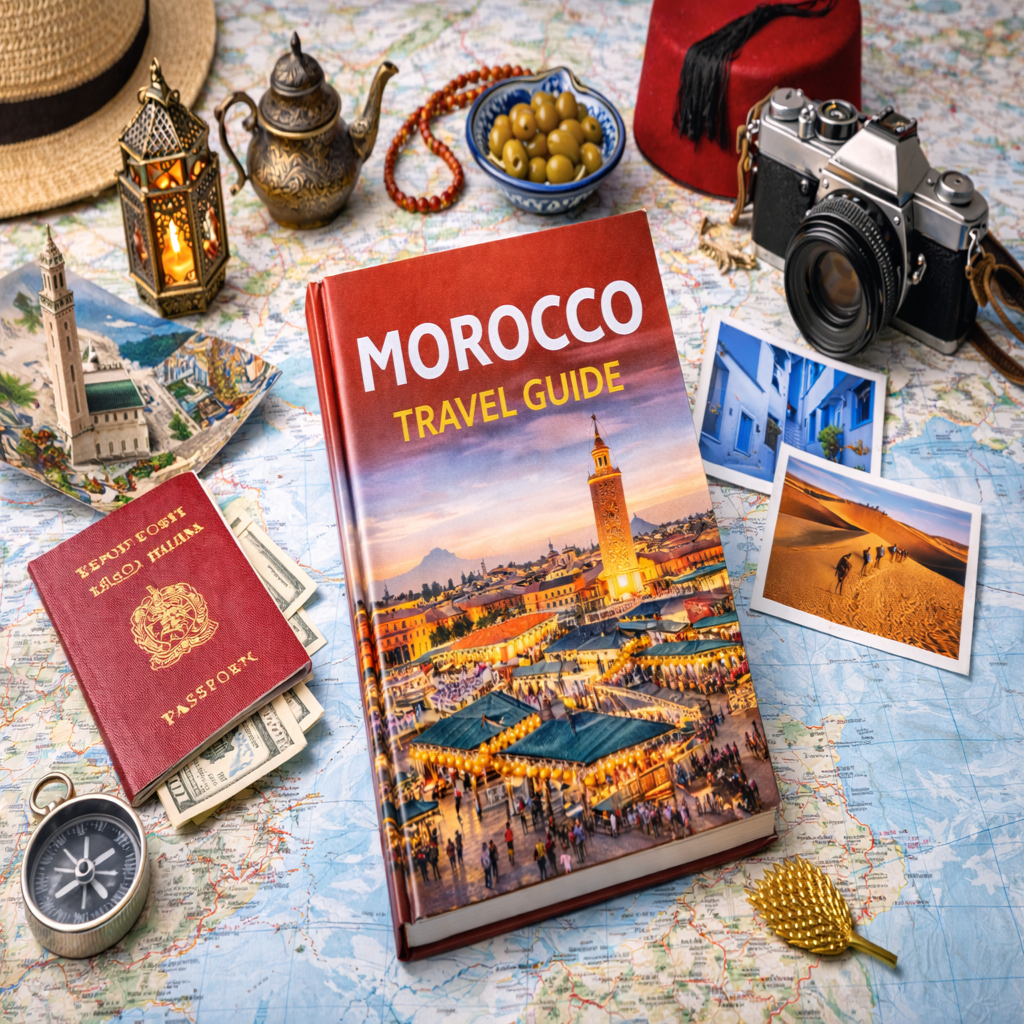
The moment I stepped out of Marrakech’s train station into a wall of heat, noise, and color, I knew Morocco would be unlike anywhere I’d traveled before. A man tried to sell me a monkey (yes, a live monkey), a snake charmer’s cobra swayed hypnotically nearby, and the call to prayer echoed across the medina’s rooftops. That sensory overload—simultaneously overwhelming and intoxicating—defines Morocco: a country where Africa meets Arabia, where ancient traditions collide with modern aspirations, and where every sense is constantly engaged.
Over the past six years and four extended trips to Morocco, I’ve navigated the chaotic souks of Fes, camped under stars in the Sahara, hiked the Atlas Mountains, gotten delightfully lost in blue-painted Chefchaouen, and learned that Morocco rewards both careful planning and surrendering to the adventure.
This comprehensive guide distills everything I’ve learned into practical advice for planning your Moroccan journey—from navigating medina mazes and avoiding scams to finding authentic experiences and understanding cultural nuances that make Morocco one of the world’s most captivating destinations.
When to Visit Morocco: Timing Your Trip
Spring (March-May): Ideal Conditions
Spring offers Morocco’s best weather—warm but not scorching (18-26°C/64-79°F), wildflowers blooming in valleys, snow still capping Atlas peaks, and comfortable desert temperatures. Tourism increases through the season but remains manageable.
Pros: Excellent weather across all regions, beautiful landscapes, comfortable desert camping, good hiking conditions, moderate prices early season.
Cons: Easter week brings European tourist surge, prices increase approaching summer, popular destinations get crowded by May.
Fall (September-November): Second Perfect Season
Fall rivals spring with pleasant temperatures, harvest season markets, fewer tourists than spring, and stable weather. Late September through October is arguably Morocco’s single best time.
Pros: Perfect temperatures, smaller crowds than spring, harvest festivals, excellent hiking weather, prices drop after summer.
Cons: November brings increasing rain, some mountain roads close due to early snow, days grow shorter.
Summer (June-August): Heat and Crowds
Summer means scorching temperatures in cities (35-45°C/95-113°F) and desert regions, though coasts and mountains remain pleasant. European vacation season brings maximum tourist numbers and premium prices.
Pros: Long daylight hours, beach towns at their best, mountain regions perfect, festival season, vibrant atmosphere.
Cons: Intense heat makes midday exploration miserable, Ramadan sometimes falls in summer (dates vary), highest prices, overwhelming crowds in popular destinations.
Winter (December-February): Budget Season
Winter brings cold nights, rain in northern regions, snow in mountains, but beautiful sunny days (12-20°C/54-68°F in most areas) and drastically fewer tourists. Best budget travel season.
Pros: Lowest prices and smallest crowds, clear sunny days, festive holiday atmosphere, authentic local experiences, mild desert temperatures.
Cons: Cold nights especially in desert and mountains, some riads lack heating, reduced hours at attractions, mountain passes sometimes close due to snow.
Ramadan considerations: During the Islamic holy month of fasting, restaurants close during daylight hours (except those specifically serving tourists), transport can be limited, and business hours are unpredictable. However, evening iftars (break-fast meals) and late-night festivities offer unique cultural experiences. Ramadan dates shift earlier by ~11 days each year (based on lunar calendar).
Essential Destinations Decoded
Marrakech: Sensory Overload (2-4 Days)
Marrakech epitomizes Morocco for most visitors—chaotic, colorful, exhausting, and exhilarating. The heart is Jemaa el-Fnaa square, transforming from fruit juice vendors and snake charmers by day to food stalls and street performers by night.
Medina exploration: Getting lost in the souks is the experience. Dedicated sections sell carpets, leather goods, metalwork, spices, and everything imaginable. Aggressive selling is normal—”just looking” and firm but polite refusals work. Hire official guides (badge displayed) if you want historical context and help navigating.
Key sites: Bahia Palace showcases Moroccan architecture and gardens. Saadian Tombs offer historical significance. Ben Youssef Madrasa (Islamic school) features stunning tile work and carved plaster. Majorelle Garden provides peaceful escape with Yves Saint Laurent’s restored botanical paradise.
Beyond the medina: Guéliz (new town) offers modern restaurants and cafés. Palmeraie palm groves (best explored by quad bike or camel). El Badi Palace ruins provide rooftop views and stork nests.
Where to stay: Budget riads in the medina ($25-50) offer traditional atmosphere. Mid-range riads ($70-120) provide rooftop terraces and pools. Luxury riads ($200+) pamper with full service. Guéliz hotels offer modern amenities with less medina chaos.
Fes: Morocco’s Spiritual Capital (2-3 Days)
Fes preserves medieval Morocco more authentically than tourist-heavy Marrakech. Fes el-Bali (old medina) is the world’s largest car-free urban zone—a labyrinth of 9,000+ alleys where donkeys remain primary transportation.
Essential experiences: Chouara Tannery provides iconic photo opportunities (prepare for intense smells—accept the mint leaves). Al-Qarawiyyin University and Mosque, founded in 859 AD, is the world’s oldest continuously operating educational institution. The Blue Gate (Bab Boujloud) marks the medina entrance. Countless fondouks (traditional inns) now house artisan workshops.
Practical advice: Hire an official guide for your first day—the medina is genuinely impossible to navigate independently without getting seriously lost. Expect to still get lost even with maps. Embrace it.
Food scene: Fes offers excellent traditional cuisine. Café Clock invented the camel burger. Street food in the medina is cheaper and often better than tourist restaurants.
Chefchaouen: The Blue Pearl (1-3 Days)
Chefchaouen’s blue-painted buildings create one of Morocco’s most photogenic destinations. This small mountain town offers relaxed vibes, stunning hiking, and a welcome break from aggressive selling in larger cities.
What to do: Wander endlessly photographing blue streets and doorways. Hike to Spanish Mosque for sunset views over town. Visit the kasbah and museum. Shop for locally-made textiles and leather goods. Relax in plaza cafés watching life unfold. Hike in nearby Rif Mountains (arrange guides for longer treks).
Atmosphere: Chefchaouen moves slowly. Cannabis culture is prevalent (kif is widely used), creating a laid-back but slightly hazy atmosphere. Many travelers plan 1-2 days and stay 3-5, seduced by the peaceful mountain setting.
Sahara Desert: Essential Experience (2-3 Days)
Desert excursions rank among Morocco’s most memorable experiences. Two main access points serve different areas.
Merzouga (Erg Chebbi dunes): Most popular, easily accessible from Marrakech or Fes. Massive sand dunes reach 150 meters. Standard tours include camel trek to desert camps, overnight in Berber tents, sunrise over dunes, and sometimes sandboarding.
M’Hamid and Erg Chigaga dunes: More remote, larger desert area, fewer tourists, more expensive to reach but more authentic experience. Better for travelers wanting serious desert immersion.
Booking advice: Book desert tours from gateway cities (Marrakech/Fes) or directly in Merzouga. Prices range $50-200+ per person depending on accommodation quality and tour length. Private tours cost more but offer flexibility. Shared tours are budget-friendly but follow fixed itineraries.
What to expect: Camel rides are uncomfortable but essential cultural experience. December-February nights get extremely cold—bring layers. Camps range from basic Berber tents to luxury permanent camps with proper beds and bathrooms. Stargazing is spectacular.
Atlas Mountains: Scenic Beauty (1-4 Days)
The Atlas Mountains provide Morocco’s most dramatic landscapes and Berber cultural experiences.
Imlil and Mount Toubkal: Base village for North Africa’s highest peak (4,167m). Multi-day Toubkal summit treks require guides and decent fitness. Day hikes in surrounding valleys offer stunning scenery without summit commitment.
Ourika Valley: Easy day trip from Marrakech, offering waterfalls, Berber villages, and beautiful valley views. Gets crowded on weekends when Marrakchis escape the city heat.
Ait Benhaddou: UNESCO World Heritage kasbah featured in countless films (Gladiator, Game of Thrones). Located on route between Marrakech and desert. Stunning fortified village, now largely inhabited by souvenir sellers, but architecture remains spectacular.
Dades and Todra Gorges: Dramatic rock formations and canyons between Marrakech and Merzouga. Beautiful drives, good hiking, authentic Berber hospitality in small guesthouses.
Essaouira: Coastal Escape (1-3 Days)
This Atlantic coast town provides the perfect antidote to inland intensity. Laid-back beach culture, constant ocean breezes, fresh seafood, and a thriving arts scene create a distinct atmosphere.
Attractions: Walled medina (more relaxed than Marrakech or Fes), fishing harbor’s blue boats, wide beaches (though Atlantic is cold for swimming), ramparts with cannons overlooking ocean, kite-surfing culture, argan oil cooperatives nearby.
Food focus: Port-side grills prepare fish and seafood bought from adjacent market—incredibly fresh and affordable. Beach cafés serve grilled sardines.
Day trip potential: Essaouira works as a Marrakech day trip (3 hours each way), but deserves overnight stays to experience the sunset-to-sunrise transformation.
Casablanca: Working City (Half Day-1 Day)
Morocco’s largest city and economic capital doesn’t offer traditional tourist attractions but provides authentic modern Morocco glimpses.
Hassan II Mosque: The reason to visit—spectacular mosque (one of few in Morocco allowing non-Muslim entry with guided tours), built partially over ocean, stunning architecture and craftsmanship. Tours run multiple times daily.
Otherwise: Casablanca is a working city. The corniche, art deco architecture, and Rick’s Café (yes, a tourist recreation of the fictional Casablanca café) provide modest interest. Most travelers use it as an arrival/departure point, visiting the mosque before continuing elsewhere.
Rabat: Capital Calm (1 Day)
Morocco’s capital offers a more European feel—orderly, clean, less chaotic than other cities. Good for travelers needing a break from medina intensity.
Sights: Kasbah of the Udayas with blue-and-white streets overlooking the ocean. Hassan Tower and Mohammed V Mausoleum. Royal Palace grounds. Chellah ruins and gardens.
Tangier: Gateway and Crossroads (1-2 Days)
Northern port city with distinct character shaped by European proximity and Beat Generation history. Once notorious for seediness, Tangier is rapidly modernizing while retaining edge.
Highlights: Kasbah area, Hercules Caves, Cap Spartel lighthouse, medina souks, Grand Socco square, American Legation Museum. Day trips to Chefchaouen (2 hours) or Spain (ferry to Tarifa takes 1 hour).
Understanding Moroccan Culture and Etiquette
Islam’s influence: Morocco is 99% Muslim. This shapes daily rhythms (five daily calls to prayer), modest dress expectations, alcohol availability (sold but not everywhere), and Friday as the holy day when some businesses close.
Hospitality culture: Moroccans are genuinely hospitable. Tea invitations, home visits, and lengthy conversations are cultural norms, not always sales tactics. Accept some invitations to experience authentic culture.
Bargaining: Expected in souks and markets, not in fixed-price shops or restaurants. Start at 40-50% of asking price, negotiate with good humor, walk away if unhappy. Don’t bargain for fun on items you won’t buy—it wastes sellers’ time.
Photography: Always ask before photographing people, especially women. Many expect payment for posed photos. Photographing police, military, or government buildings is prohibited.
Dress code: Morocco is relatively liberal for a Muslim country, but modesty shows respect. Men: shorts are fine but long pants are better. Women: shoulders and knees covered, loose clothing, scarf for hair covering useful in conservative areas and mosques. Beach towns are more relaxed.
Gender dynamics: Morocco is conservative. Women travelers may experience harassment (catcalling, staring, inappropriate comments). Traveling as a couple or in groups reduces this. Firm “no” and ignoring unwanted attention works better than engagement.
Ramadan respect: If visiting during Ramadan, don’t eat, drink, or smoke in public during daylight hours out of respect for those fasting. Tourist restaurants stay open but others close until sunset.
Left hand: The left hand is traditionally used for hygiene purposes. Use right hand for eating, giving/receiving items, and handshakes.
Transportation Navigation
Flights: Marrakech, Casablanca, and Fes have international airports. Ryanair and other budget carriers serve Morocco from Europe. Royal Air Maroc is the national carrier. Tangier airport serves northern region.
Trains: Excellent network connecting major cities—Marrakech to Casablanca (3 hours), Casablanca to Rabat (1 hour), to Tangier (5 hours), to Fes (4 hours). Comfortable, punctual, affordable. Book first class for comfort (only slightly more expensive). Buy tickets at stations; online booking available but unnecessary.
CTM Buses: Morocco’s best bus company connecting cities not served by trains. Comfortable, air-conditioned, reliable. Book in advance online or at stations. Cheaper local bus companies exist but CTM offers better experience.
Grand taxis: Shared Mercedes taxis connecting nearby cities. Six passengers (three in front, three in back). Cramped but efficient and cheap. Pay per seat or hire entire taxi for group. Negotiate prices before departure.
Petit taxis: City taxis, metered (insist on meter use or negotiate fixed price before starting). Small cars (usually Fiat Uno), allow maximum three passengers. Different colored by city. Inexpensive, abundant, essential for navigating larger cities.
Driving: Renting a car offers freedom for Atlas Mountains and desert regions but comes with challenges. Moroccan driving is aggressive, roads in remote areas are rough, navigation is difficult, and fake police checkpoints exist. International driving permit required. Consider hiring drivers for specific routes.
Within medinas: Walking is the only option. Expect to get lost repeatedly. Download offline maps (Maps.me works well). Hire guides for initial orientation.
Accommodation Wisdom
Riads: Traditional houses built around interior courtyards, converted to guesthouses. Offer authentic Moroccan experience, rooftop terraces, traditional breakfasts. Rooms vary in quality even within same riad. Medina locations mean navigating alleys with luggage. Book well-reviewed riads—quality varies enormously.
Hotels: Western-style hotels in new towns (villes nouvelles) offer easier access, modern amenities, and familiarity. Less atmospheric than riads but sometimes more practical.
Auberges: Mountain and rural guesthouses, often family-run. Basic comfort but authentic experiences and home-cooked meals. Essential for Atlas Mountains stays.
Desert camps: Range from basic Berber tents (shared toilets, mattresses on ground) to luxury permanent camps (private bathrooms, proper beds). Book based on comfort preferences and budget.
Booking advice: Book ahead for popular destinations during peak seasons. Last-minute deals exist in low season. Read recent reviews carefully—Moroccan accommodation standards vary wildly. Heating/cooling is important depending on season—ask before booking.
Food and Dining Guide
Essential dishes: Tagine (slow-cooked stew, named after conical pot), couscous (traditionally Friday lunch), pastilla (sweet-savory pie with pigeon or chicken, cinnamon and almonds), harira (hearty soup, especially during Ramadan), mechoui (slow-roasted lamb), mint tea (Morocco’s national drink).
Street food: Grilled meat skewers, snail soup, fried fish, msemen (square pancakes), chebakia (sesame cookies), fresh orange juice. Safe to eat from busy vendors where food is freshly prepared.
Restaurant tiers: Tourist restaurants in medinas overcharge for mediocre food. Local eateries with handwritten Arabic menus serve better food cheaper. Mid-range restaurants in new towns offer good value. High-end riads and restaurants provide excellent refined Moroccan cuisine for $30-50 per person.
Mint tea culture: Accepting tea invitations is part of social fabric. Three glasses is traditional (first bitter as life, second sweet as love, third soft as death). Refusing tea can offend, though one polite refusal is understood.
Food safety: Bottled water is essential—tap water isn’t safe for travelers. Cooked food from busy places is generally safe. Salads and uncooked vegetables can cause issues. Fruit you peel yourself is safe.
Alcohol: Sold in some restaurants, bars, and shops but not readily available. More accessible in tourist areas and new towns than medinas. Expensive compared to Europe.
Money and Budgeting
Currency: Moroccan Dirham (MAD). Officially not exportable, though small amounts can be kept. Exchange rates approximately 10 MAD = 1 USD or 1 EUR (varies).
Daily costs by tier:
- Budget: $25-40/day (hostel dorms, street food, public transport, limited activities)
- Mid-range: $60-100/day (private riad rooms, restaurant meals, tours, comfortable travel)
- Comfortable: $120-200+/day (nice riads, quality dining, private transport, guides)
ATMs: Widely available in cities. Use bank ATMs not standalone machines. Withdraw larger amounts to minimize fees. Carry cash—cards aren’t universally accepted.
Bargaining impact: Expect to pay 20-30% more than locals for most goods/services. Aggressive bargaining saves money but can create negative interactions. Find your comfort level.
Hidden costs: Official guides ($30-40 for half-day), entrance fees to sites ($2-7), tips for helpful locals (10-20 MAD appropriate), scam mitigation (paying unwanted “guides” to leave you alone).
Common Scams and How to Avoid Them
Fake guides: Men offering to show you to your riad, best restaurants, or around medinas. They expect payment and lead you to commission-earning shops. Politely refuse: “La shukran” (no thank you) and walk confidently even if lost.
Tannery tricks: Fake guides offer to show you to tanneries, take you to viewpoints with intense sales pressure for leather goods. Visit independently or with official guides.
Closed for prayer/holiday scam: “Helpers” inform you your hotel is closed or moved, offering to take you to alternative (commission-earning) accommodations. Hotels don’t close. Call your accommodation to confirm.
Carpet shops: Aggressive pressure to buy carpets after extended tea and conversations. Only enter carpet shops if genuinely interested in buying. Carpets can be beautiful and are good quality, but don’t feel obligated.
Price manipulation: Goods priced in dollars/euros instead of dirhams, misleading tourists on value. Always confirm currency and calculate exchange before agreeing to prices.
Restaurant bills: Check bills carefully. Incorrect totals or added items are common. Count change when paying.
Defense strategies: Walk confidently (even when lost), ignore aggressive touts, book official guides through hotels, research typical prices, don’t feel guilty saying no repeatedly, trust instincts when something feels off.
Sample Itineraries
Classic Morocco (10-12 Days)
Days 1-3: Marrakech – Medina exploration, Jemaa el-Fnaa, gardens, souks, day trip to Atlas Days 4-5: Essaouira – Coastal break, fresh seafood, relaxation Days 6-8: Fes – Ancient medina, tanneries, cultural immersion Days 9-10: Chefchaouen – Blue city, mountain scenery, relaxed pace Days 11-12: Return via Rabat or Casablanca – Hassan II Mosque, departure
This hits major highlights without exhaustion. All connected by trains/buses.
Morocco Plus Desert (12-14 Days)
Days 1-3: Marrakech – Essential exploration Days 4-6: Desert trip – Drive through Atlas, Ait Benhaddou, Dades Valley, Merzouga, camel trek, desert camping Days 7-8: Fes – Ancient city immersion Days 9-10: Chefchaouen – Mountain tranquility Days 11-12: Essaouira – Beach relaxation via Casablanca/Rabat Days 13-14: Marrakech – Final experiences, shopping, departure
Includes Morocco’s most desired experiences efficiently.
Northern Morocco Focus (7-10 Days)
Days 1-2: Tangier – Arrival, medina, Hercules Caves Days 3-5: Chefchaouen – Blue streets, hiking, relaxation Days 6-8: Fes – Medieval medina, cultural depth Days 9-10: Casablanca/Rabat – Mosque, capital, departure
Focuses on northern region, less traveling, deeper local experiences.
Adventure Morocco (14-16 Days)
Days 1-2: Marrakech – Base establishment Days 3-6: Toubkal Trek – Multi-day mountain hiking, summit attempt Days 7-9: Desert – Sahara exploration, camping Days 10-11: Dades/Todra Gorges – Rock formations, kasbahs Days 12-13: Atlas valleys – Berber villages, valleys Days 14-16: Marrakech/Essaouira – Recovery, beach time, departure
For active travelers wanting hiking, desert, and adventure focus.
Practical Packing and Preparation
Clothing: Layers for temperature variations (hot days, cold nights), modest coverage for cultural respect, comfortable walking shoes for cobblestone medinas, scarf (women for hair covering if needed, everyone for desert dust), light jacket even in summer (air conditioning, mountain evenings).
Sun protection: Morocco’s sun is intense. High SPF sunscreen, sunglasses, hat essential. Desert requires additional protection.
Health kit: Anti-diarrheal medication (stomach issues are common), hand sanitizer, basic first aid, any prescription medications (bring extras), insect repellent (mosquitos in some areas).
Electronics: Phone with international plan or local SIM, portable charger, universal adapter (Type C/E plugs), camera for incredible photo opportunities.
Money: Cash in euros or dollars to exchange, backup credit card, money belt or hidden pouch for passport and emergency funds.
Documents: Passport (valid 6+ months), travel insurance confirmation, accommodation bookings, vaccination records if applicable.
Useful items: Small daypack for daily excursions, reusable water bottle, Arabic phrasebook or translation app, wet wipes (bathrooms vary in quality), small flashlight (dark medina alleys, power outages).
Language and Communication
Languages: Arabic (official), Berber languages (Tamazight), French (widely spoken, colonial legacy), Spanish (northern regions), English (tourist areas, younger generation).
Essential Arabic phrases: “Salam aleikum” (peace be upon you – hello), “Shukran” (thank you), “La shukran” (no thank you – essential phrase!), “Inshallah” (God willing – explains why nothing happens on schedule), “Bismillah” (in God’s name – said before meals), “Wakha” (okay).
French phrases help: “Bonjour” (hello), “Merci” (thank you), “Combien?” (how much?), “Non merci” (no thank you).
Translation apps: Google Translate offline mode, camera translation for menus and signs. Download Arabic and French.
Numbers: Learn Arabic numbers 1-10 for market bargaining and prices.
Making Your Morocco Journey Unforgettable
Morocco challenges travelers. The aggressive selling, constant attention, navigation difficulties, and cultural differences exhaust many visitors initially. Push through the first few days. Once you adjust to the intensity and develop strategies for dealing with touts, Morocco reveals its magic.
Accept getting lost. Medinas are designed to confuse—narrow alleys, few signs, deliberate complexity. GPS helps but isn’t always accurate. Getting lost leads to unexpected discoveries and builds confidence.
Balance guided and independent exploration. Hire guides for initial orientation and historical context, but also wander independently to develop your own relationship with each destination.
Connect with locals beyond transactional relationships. Accept genuine tea invitations (distinguish from those leading to carpet shops). Stay in family-run riads or mountain auberges where interactions are authentic. Learn basic Arabic phrases—effort is appreciated enormously.
Embrace Morocco’s contradictions—ancient and modern, African and Arab, conservative and surprisingly liberal, frustrating and fascinating. These contradictions create the complexity that makes Morocco endlessly interesting.
Morocco isn’t easy travel, but it’s deeply rewarding. The sensory richness, cultural depth, landscape diversity, and authentic experiences create journeys that challenge, inspire, and transform.
Your Moroccan adventure awaits—prepare well, stay flexible, keep your sense of humor, and let Morocco’s chaos and beauty work their magic on you.
بالتوفيق (Bil-tawfiq) — Good luck!
What aspect of Morocco excites or concerns you most? Share your Morocco travel questions, experiences, or advice in the comments to help fellow GlobeTrailGuide readers prepare for their Moroccan adventures!