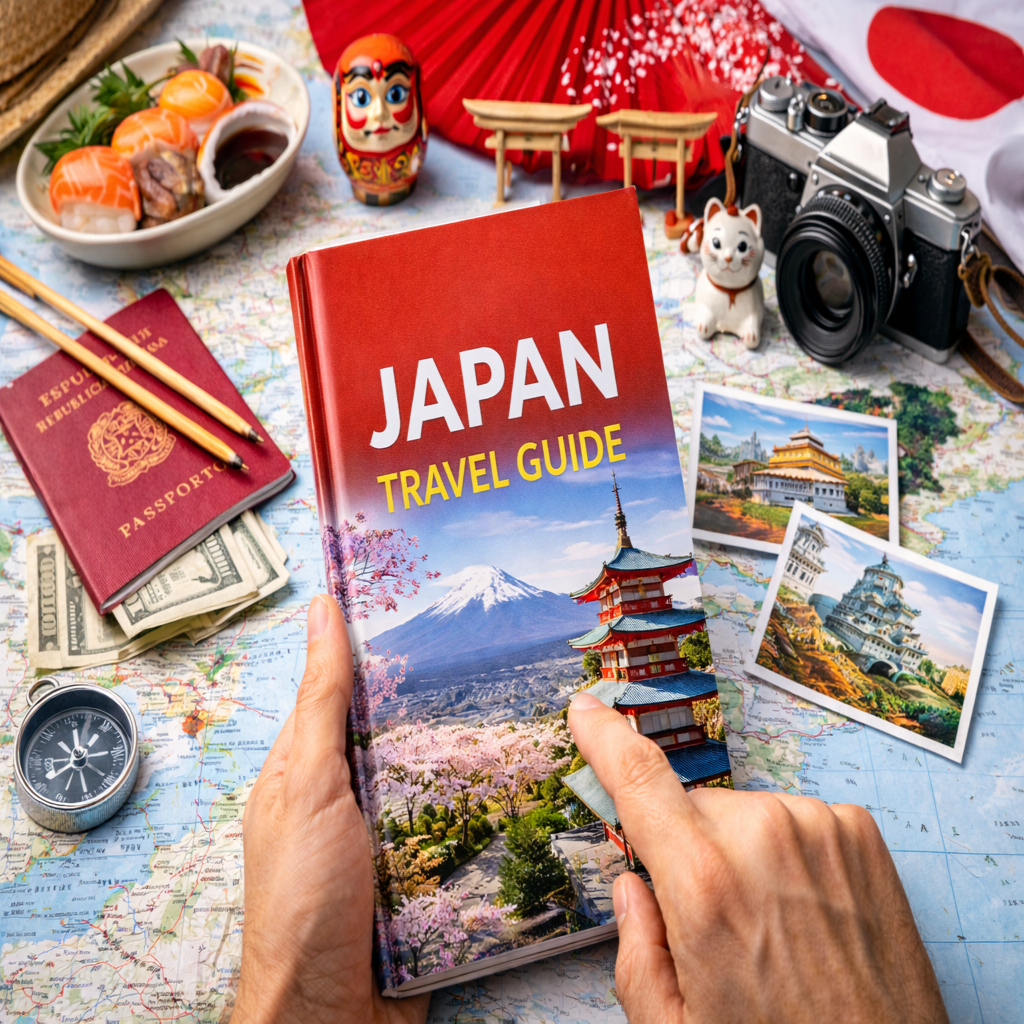
The first time I bowed to a vending machine attendant in Tokyo (yes, there are vending machine attendants in some places), I realized Japan operates on a completely different frequency than anywhere else I’d traveled. That moment of delightful confusion has repeated itself hundreds of times across my eight visits to Japan—a country where ancient temples sit beside neon-lit skyscrapers, where silence is respected as much as efficiency, and where a simple bowl of ramen can be an art form perfected over generations.
Japan isn’t just different—it’s magnificently, bewilderingly, enchantingly different in ways that make it one of the world’s most rewarding travel destinations. From the organized chaos of Tokyo to the serene temples of Kyoto, from snow monkeys bathing in hot springs to the tragic beauty of Hiroshima, from sushi that redefines your understanding of the word to Mount Fuji’s perfect cone, Japan delivers experiences that exist nowhere else on earth.
This comprehensive guide distills years of Japanese travel into practical advice for planning your perfect journey—whether you’re a first-timer navigating the basics or a return visitor seeking deeper experiences beyond the typical tourist trail.
When to Visit Japan: Seasons and Timing
Spring (Late March-May): Cherry Blossom Magic
Cherry blossom season (sakura) draws millions of visitors for good reason. The brief blooming period creates ethereal pink canopies in parks, temples, and streets nationwide. Peak bloom varies by region—late March in Tokyo and Kyoto, early April in northern areas—and lasts only 1-2 weeks per location.
Pros: Spectacular natural beauty, pleasant temperatures (10-20°C/50-68°F), numerous festivals, Golden Week holidays (late April-early May) showcase Japanese leisure culture.
Cons: Peak tourist season with premium prices, hotels book months ahead, popular sites overwhelm with crowds, Golden Week (April 29-May 5) sees domestic tourism surge with fully booked trains and accommodation.
Fall (October-November): Autumn Colors
Fall rivals spring for beauty as maple leaves turn brilliant reds and golds. Comfortable temperatures (12-20°C/54-68°F), clear skies, and harvest season make this arguably Japan’s best travel period.
Pros: Stunning autumn foliage, fewer crowds than cherry blossom season, excellent weather, food festivals celebrating harvest.
Cons: Still moderately busy and prices elevated, foliage timing varies by region and elevation, some mountain areas get cold quickly.
Summer (June-August): Festival Season Trade-offs
Summer brings spectacular festivals (matsuri), fireworks displays, and mountain hiking season, but also intense heat, humidity, and the rainy season (tsuyu) in June-early July.
Pros: Major festivals and events, access to Japanese Alps hiking, vibrant atmosphere, long daylight hours.
Cons: Oppressive heat and humidity (25-35°C/77-95°F), June rain can disrupt plans, Obon week (mid-August) sees domestic travel surge, higher prices at beach destinations.
Winter (December-February): Snow and Serenity
Winter offers excellent skiing, spectacular snow festivals, hot spring (onsen) season, and lowest tourist numbers. Northern regions and mountains get heavy snow; southern regions stay moderate.
Pros: Winter sports in Hokkaido and Japanese Alps, stunning snow festivals (Sapporo Snow Festival in February), lowest prices and smallest crowds, magical onsen experiences, illumination displays for Christmas and New Year.
Cons: Cold temperatures (0-10°C/32-50°F), some attractions have limited hours, New Year (Dec 28-Jan 4) sees domestic closures, daylight hours are shorter.
Essential Destinations Explained
Tokyo: Organized Chaos (4-6 Days Minimum)
Tokyo defies simple description—23 wards functioning as distinct neighborhoods, each with unique character. The city demands exploration district by district.
Shibuya and Harajuku: The famous scramble crossing, youth fashion culture, Meiji Shrine’s peaceful forest sanctuary, Takeshita Street’s controlled chaos, and trendy cafés define modern Tokyo energy.
Shinjuku: The world’s busiest train station, neon-lit entertainment district, Golden Gai’s tiny bars, government building’s free observation decks, and Kabukicho’s red-light atmosphere showcase Tokyo’s intensity.
Asakusa: Senso-ji Temple provides traditional Tokyo atmosphere, Nakamise shopping street sells traditional crafts, and the area maintains old Tokyo (shitamachi) character.
Ginza and Marunouchi: Luxury shopping, department store food halls (depachika), Imperial Palace gardens, and upscale dining represent Tokyo’s sophisticated side.
Akihabara and Ueno: Electronics and anime culture, maid cafés, Ueno Park’s museums and zoo, and Ameyoko market create eclectic experiences.
Tsukiji Outer Market and Toyosu: Seafood breakfast at outer market stalls (inner market moved to Toyosu), fresh sushi, and culinary experiences highlight Tokyo’s food obsession.
Must-do experiences: Sushi breakfast at Tsukiji Outer Market, Senso-ji Temple at sunrise before crowds, Shibuya crossing from Starbucks viewpoint, izakaya hopping in Golden Gai, teamLab Borderless digital art museum, Tokyo Skytree or Metropolitan Government Building observation decks.
Kyoto: Ancient Heart (4-6 Days)
Kyoto preserved Japanese culture through centuries as the imperial capital. Over 2,000 temples and shrines demand multiple visits to appreciate fully.
Eastern Kyoto (Higashiyama): Kiyomizu-dera Temple’s wooden stage, Philosopher’s Path walk, Ginkaku-ji (Silver Pavilion), traditional Gion district with geisha culture, and preserved streets create quintessential Kyoto atmosphere.
Arashiyama: Bamboo grove provides Instagram-famous scenery, Tenryu-ji Temple and gardens, monkey park, scenic river views, and tofu restaurants define this western district.
Northern Kyoto: Kinkaku-ji (Golden Pavilion) stuns with gold-leaf exterior, Ryoan-ji’s zen rock garden inspires contemplation, and less-crowded temples reward exploration.
Central Kyoto: Nijo Castle showcases shogun power, Nishiki Market offers culinary exploration, and downtown shopping provides modern contrast to temple-hopping.
Essential experiences: Fushimi Inari’s 10,000 torii gates (arrive before 7am to avoid crowds), traditional tea ceremony, early morning temple visits, kaiseki (multi-course) dining, geisha spotting in Gion evening, cycling between temples.
Day trips: Nara (45 minutes) for friendly deer and Todai-ji Temple’s giant Buddha, Osaka (30 minutes) for street food and nightlife, Uji for green tea culture.
Osaka: Japan’s Kitchen (2-3 Days)
Osaka brings energy, humor, and incredible food culture. Less refined than Tokyo or Kyoto, Osaka embraces fun and flavor.
Dotonbori: Neon-lit canal district epitomizes Osaka—street food stalls, restaurants, entertainment, and the famous Glico running man sign create sensory overload.
Food specialties: Takoyaki (octopus balls), okonomiyaki (savory pancakes), kushikatsu (fried skewers), and endless street food define Osaka’s “nation’s kitchen” reputation.
Osaka Castle: Historic landmark offers city views and museum, though heavily reconstructed rather than original.
Shinsekai: Retro neighborhood preserves old Osaka atmosphere with local drinking culture and kushikatsu restaurants.
Universal Studios Japan: Theme park appeals if you enjoy that experience, particularly Harry Potter area.
Hiroshima and Miyajima (2 Days)
Hiroshima balances tragic history with hopeful resilience. The Peace Memorial Park and Museum provide sobering, essential education about atomic bomb impacts. The preserved A-Bomb Dome stands as powerful reminder.
Miyajima Island (45 minutes away): The iconic “floating” torii gate of Itsukushima Shrine (currently under renovation until 2023, check status), tame deer wandering streets, ropeway to Mount Misen’s summit, and oyster specialties make this a spectacular day trip or overnight destination.
Hakone and Mount Fuji (2-3 Days)
Hakone offers hot springs, art museums, and Japan’s best Fuji views on clear days. The “Hakone Loop” combines train, cable car, ropeway, and boat for scenic transportation as attraction itself.
Highlights: Lake Ashi pirate ship cruise with Fuji backdrop, Open-Air Museum’s sculpture gardens, Owakudani volcanic valley’s black eggs, traditional ryokan onsen experiences.
Mount Fuji climbing: July-September only for summit attempts. Incredibly crowded. Not particularly scenic climb but significant achievement. Watching sunrise from summit (goraiko) is primary motivation.
Japanese Alps and Takayama (2-4 Days)
The Japanese Alps provide spectacular mountain scenery and preserved traditional villages.
Takayama: Beautifully preserved Edo-period streets, morning markets, sake breweries, excellent regional cuisine (Hida beef), and gateway to Shirakawa-go.
Shirakawa-go and Gokayama: UNESCO World Heritage villages with traditional gassho-zukuri farmhouses (thatched roofs). Particularly stunning in winter under snow.
Kamikochi and Matsumoto: Mountain hiking from Kamikochi valley, Matsumoto Castle’s original donjon, and access to Japan Alps trekking.
Hokkaido: Wild North (4-7 Days)
Japan’s northernmost island offers distinct character—wider spaces, winter sports, unique food culture, and natural landscapes.
Sapporo: City famous for beer, ramen, and February Snow Festival. Clean, organized, less frenetic than mainland cities.
Niseko and Furano: World-class skiing and snowboarding, powder snow quality, beautiful summer flower fields (Furano).
Hakodate: Historic port city with morning market, mountain ropeway views, and Western-influenced architecture.
National Parks: Daisetsuzan, Shiretoko (remote), and Akan-Mashu offer hiking, wildlife, and pristine nature.
Kyushu: Southern Character (5-7 Days)
Kyushu combines active volcanoes, hot springs, distinct regional culture, and historical sites.
Fukuoka: Modern city with incredible street food scene (yatai stalls), relaxed atmosphere, gateway to Kyushu.
Nagasaki: History as Japan’s Christian center, atomic bomb history, unique multicultural heritage, and harbor setting.
Beppu: Hot spring capital with different types of onsen, “hells” (spectacular hot spring viewing sites), and sand baths.
Kumamoto and Mount Aso: Japan’s largest active volcano caldera, castle town, and beautiful volcanic landscapes.
Japanese Culture and Etiquette Essentials
Bowing: Basic greeting and gratitude expression. Depth and duration vary by situation—slight nods for casual interactions, deeper bows for formal occasions. Don’t stress perfection as a tourist; attempt shows respect.
Shoes off culture: Remove shoes when entering homes, many restaurants, temples, traditional accommodations. Slippers often provided. Pay attention to where Japanese people remove shoes—follow their lead.
Chopstick etiquette: Never stick chopsticks vertically in rice (funeral symbolism), pass food plate-to-plate not chopstick-to-chopstick (funeral ritual), and use serving chopsticks when sharing dishes.
Onsen (hot spring) rules: Wash thoroughly before entering communal baths, tattoos often prohibited (covering small ones with bandages sometimes works), swimsuits not worn in traditional onsen, small towel can be brought but shouldn’t touch water.
Public behavior: No eating while walking (exception: festivals), no phone conversations on trains, quiet voices in restaurants, queuing is orderly and respected, no tipping anywhere (can cause offense).
Temple and shrine etiquette: Bow at torii gates, purify hands and mouth at water basin (temizuya), respectful photography (no photos inside certain areas), quiet observation.
Trash and recycling: Limited public trash cans. Carry small bag for your trash. Recycling is serious—follow sorting rules. Convenience stores have trash bins you can use.
Transportation Mastery
Japan Rail Pass: For foreign tourists only, purchased before arrival. Available for 7, 14, or 21 consecutive days. Covers most JR trains including shinkansen (bullet trains) except Nozomi/Mizuho fastest services.
Is JR Pass worth it? Tokyo-Kyoto roundtrip ($260) plus one more long journey breaks even with 7-day pass ($280). Calculate your specific itinerary. Not worth it if staying in one region.
How to use JR Pass: Exchange voucher for pass at major stations, reserve seats for shinkansen at ticket offices (free, recommended), show pass when entering/exiting gates (use manned gates not automatic).
IC Cards (Suica/Pasmo): Rechargeable smart cards work on trains, subways, buses, and convenience stores in most cities. Buy at any major station, load with yen, tap to enter/exit. Much easier than buying individual tickets.
Shinkansen experience: Book aisle seats on Mount Fuji side (right side traveling Tokyo to Kyoto). Fast, punctual, comfortable. Ekiben (train station bento boxes) enhance the experience.
City transportation: Tokyo and Osaka have complex but efficient subway systems. Google Maps provides excellent transit directions. Kyoto is better explored by bicycle or bus.
Taxis: Clean, safe, but expensive (starting at ~$6-7, quickly escalating). Rear doors open/close automatically. Drivers often don’t speak English—have address written in Japanese or show on phone.
Accommodation Options
Hotels: Western-style hotels range from business hotels ($60-100) to luxury properties ($300+). Excellent service standards. Often smaller rooms than Western equivalents.
Capsule hotels: Tiny sleeping pods ($25-50). Novel experience, practical for solo travelers. Shared bathrooms. Some are surprisingly nice with lounges and facilities.
Ryokan (traditional inns): Tatami mat rooms, futon bedding, communal onsen, kaiseki dinners and breakfast included in higher-end ryokan ($200-600+ per person). Essential Japanese experience. Book well ahead for quality properties.
Business hotels: Efficient, clean, small, affordable ($60-90). Chains like Toyoko Inn, Super Hotel, Dormy Inn across Japan. Perfect for budget-conscious travelers prioritizing location over space.
Airbnb: Available in major cities. Japan requires hosts be licensed. Can provide more space than hotels. Kitchen access useful for breakfast and snacks.
Booking advice: Book 2-3 months ahead for cherry blossom and fall foliage seasons. Last-minute deals possible in winter and summer. Japanese booking sites (Rakuten Travel, Jalan) sometimes offer better prices than international sites.
Food Culture Deep Dive
Restaurant types: Izakaya (pub-style sharing plates), ramen shops, sushi bars (conveyor belt casual vs. omakase high-end), tempura specialists, yakitori (grilled chicken skewers), tonkatsu (pork cutlet), kaiseki (formal multi-course), depachika (department store food halls).
Ordering tips: Many restaurants have plastic food displays (sampuru) outside—point to what you want. Ticket machines at entry for some ramen shops. Tablets or call buttons summon staff. English menus increasingly common in cities.
Budget eating: Convenience store food is surprisingly good and cheap—onigiri (rice balls), bento boxes, sandwiches. Ramen and gyudon (beef bowl) chains offer quality meals for $5-8. Set lunch menus (teishoku) provide value.
Must-try dishes: Authentic sushi and sashimi, ramen (many regional styles), tempura, wagyu beef, okonomiyaki, takoyaki, unagi (eel), tonkatsu, kaiseki if budget allows, seasonal specialties.
Drinking culture: Vending machines everywhere (hot and cold drinks). Beer, sake, and shochu are national drinks. Izakaya culture encourages drinking with food. “Kanpai!” (cheers) before first sip. Pouring for others is polite; never self-pour.
Convenience stores: 7-Eleven, Lawson, FamilyMart are life-savers. ATMs, food, toiletries, tickets, everything. Open 24/7. Higher quality than Western equivalents.
Money and Budgeting
Daily costs by tier:
- Budget: $60-90/day (hostels/capsules, convenience store meals, public transport)
- Mid-range: $130-200/day (business hotels, restaurant meals, activities, some taxis)
- Comfortable: $250-400+/day (nice hotels, quality dining, convenience over cost)
Cash culture: Japan is still largely cash-based despite being high-tech. Many smaller restaurants, shops, and temples don’t accept cards. Carry yen.
ATMs: 7-Eleven ATMs accept foreign cards reliably. Post office ATMs also work. Regular bank ATMs often don’t accept foreign cards.
Tipping: No tipping anywhere. Leaving tips can confuse or offend. Excellent service is standard expectation, not something extra deserving tips.
Sample Itineraries
Classic First-Timer (10-14 Days)
Days 1-4: Tokyo – Neighborhoods exploration, temples, Tsukiji, nightlife, day trip to Nikko Days 5-7: Hakone/Mt. Fuji – Onsen experience, Fuji views, scenic loop Days 8-11: Kyoto – Temple tours, Arashiyama, traditional experiences, day trip to Nara Days 12-13: Osaka/Hiroshima – Food culture, Miyajima, Peace Memorial Day 14: Return to Tokyo or direct departure
This covers Japan’s essential highlights efficiently using JR Pass for intercity travel.
Two-Week Deep Dive (14-16 Days)
Days 1-4: Tokyo – Comprehensive neighborhood exploration Days 5-6: Takayama and Shirakawa-go – Traditional villages, Japanese Alps Days 7-10: Kyoto – Temples, day trips to Nara and Osaka Days 11-12: Hiroshima and Miyajima – History and island beauty Days 13-14: Hakone – Onsen relaxation, Fuji views Days 15-16: Return to Tokyo – Shopping, final experiences
Adds Japanese Alps while maintaining classic route.
Off-Season Winter Wonder (12-14 Days)
Days 1-3: Tokyo – City exploration, winter illuminations Days 4-7: Hokkaido (Sapporo, Niseko) – Snow festival, skiing, winter landscapes Days 8-10: Takayama/Kanazawa – Snow-covered villages, seafood Days 11-12: Kyoto – Temples in snow, fewer crowds Days 13-14: Tokyo return – Final experiences
Perfect for winter sports and experiencing Japan’s quieter season.
Southern Adventure (10-12 Days)
Days 1-3: Tokyo – Entry point, initial experiences Days 4-5: Osaka – Food culture, base for Kyoto day trip Days 6-7: Hiroshima and Miyajima – History and beauty Days 8-10: Kyushu (Fukuoka, Nagasaki, Beppu) – Yatai food stalls, history, hot springs Days 11-12: Return – Via Osaka or direct from Fukuoka
Focuses on less-visited regions with distinct character.
Essential Packing and Preparation
Clothing: Layers essential—temperature variations between indoors/outdoors significant. Comfortable walking shoes (you’ll walk 10-15+ miles daily). Slip-on shoes helpful for frequent removal. Modest clothing for temples (covering shoulders and knees respectful).
Technology: Pocket WiFi rental or SIM card essential for navigation. Portable charger critical—intensive phone use for maps and translation drains batteries. Download offline translation apps and maps.
Toiletries: Bring deodorant (difficult to find in Japan), international-sized shampoo if specific needs (Japanese sizes small), feminine products if particular brands needed.
Money: Cash, cash, cash. Start with $500-800 in yen. Locate 7-Eleven ATMs for withdrawals.
Documentation: Passport (obviously), JR Pass voucher to exchange, travel insurance, accommodation confirmations, international driving permit if renting cars.
Useful items: Small day pack, reusable chopsticks if eco-conscious, lightweight rain jacket, luggage forwarding bags (takkyubin service common for sending luggage ahead).
Practical Tips for Smooth Travel
Language barrier solutions: Google Translate camera function is magic for menus and signs. Learn basic phrases: “Sumimasen” (excuse me), “Arigato gozaimasu” (thank you), “Eigo o hanasemasu ka?” (do you speak English?). Many Japanese study English but are shy speaking—patience and simple English helps.
Luggage forwarding: Takkyubin service ships luggage between hotels for ~$15-25 per bag, arriving next day. Use this to avoid carrying large bags on trains between cities. Hotels arrange this service.
Tattoo considerations: Many onsen, gyms, pools prohibit tattoos due to yakuza associations. Small tattoos can sometimes be covered with bandages. Research tattoo-friendly onsen if you have significant tattoos.
Quiet culture: Japanese trains and public spaces are remarkably quiet. Follow this example—no phone conversations on trains, quiet voices in restaurants, respectful behavior in public.
Power and connectivity: Japan uses 100V (same as US but different from Europe). Type A/B plugs (same as North America). Pocket WiFi rental from airport or SIM cards for unlocked phones essential for navigation.
Seasonal considerations: Rainy season (June-July) requires umbrella and flexibility. Summer requires serious heat preparation. Cherry blossom timing is unpredictable—forecasts update frequently.
Making Your Japan Journey Unforgettable
Japan rewards both planning and spontaneity. Book major experiences (sumo tournaments, TeamLab tickets, popular restaurants) weeks ahead, but leave room for wandering temple districts, discovering tiny ramen shops, and following your curiosity into unexpected neighborhoods.
Don’t try seeing everything. Japan deserves multiple visits. Choose experiences that genuinely interest you over checking boxes. One perfect kaiseki dinner means more than five rushed mediocre meals. A quiet morning at Fushimi Inari before crowds beats a crowded afternoon photo session.
Embrace cultural differences rather than fighting them. The efficiency, cleanliness, respect, and attention to detail that can feel overwhelming initially become things you miss when you leave. Japan operates smoothly when you work with cultural norms rather than against them.
Learn from every interaction. The 7-Eleven clerk wrapping your sandwich perfectly, the ryokan host presenting breakfast with care, the train conductor bowing to empty cars—these small moments reveal Japanese culture more than any temple visit.
Japan will challenge assumptions about how things should work and reveal entirely different approaches to design, service, food, efficiency, and social interaction. That disorientation mixed with wonder is exactly what makes Japan such an extraordinary destination.
Start planning your Japanese adventure. Whether you’re drawn to neon-lit Tokyo, ancient Kyoto temples, snow-covered Hokkaido, or all of the above, Japan promises experiences that will stay with you forever and call you back for return visits.
いってらっしゃい (Itterasshai) — Have a good trip!
What Japanese experience are you most excited about? Share your Japan travel questions, tips, or favorite moments in the comments to help fellow GlobeTrailGuide readers plan their perfect Japanese journey!