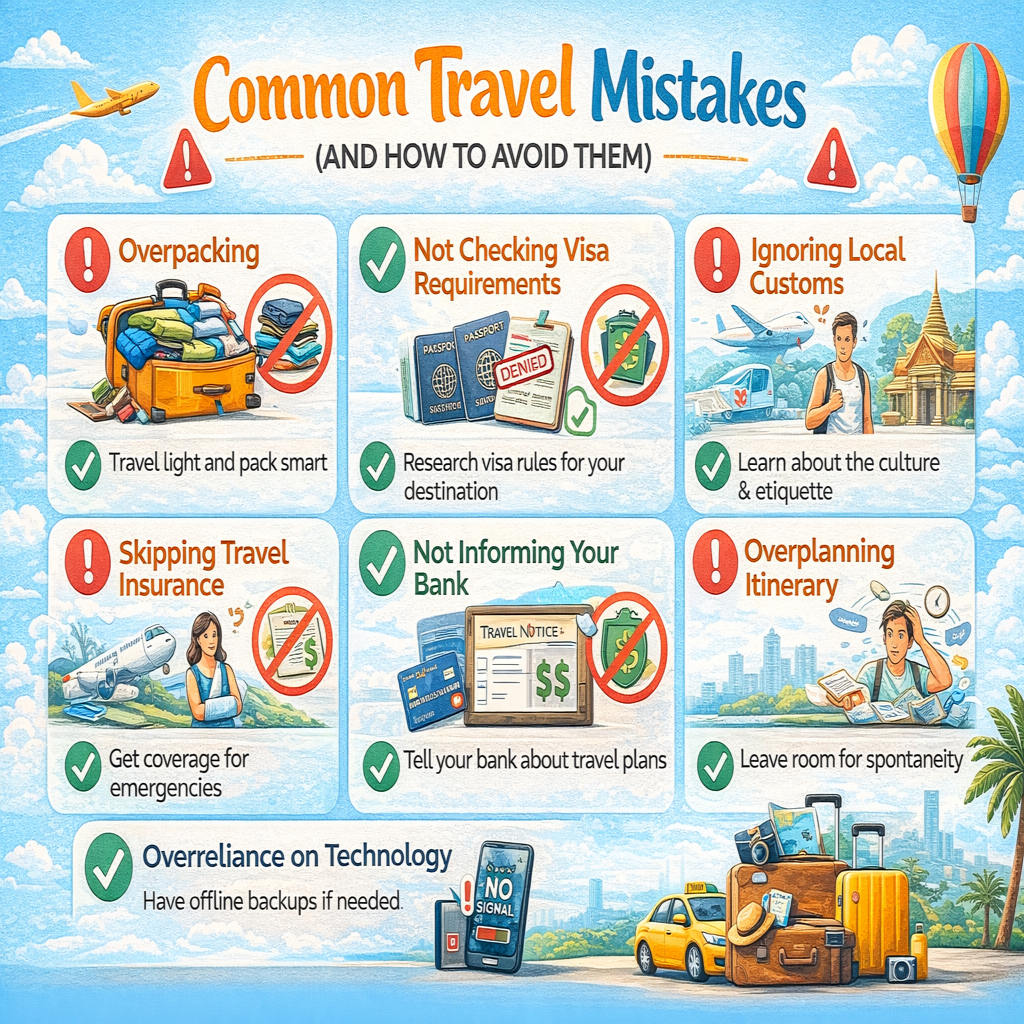
I’ve been traveling for over a decade, visiting dozens of countries across many continents. You’d think by now I’d have it all figured out. Yet just last year, I arrived in Istanbul having forgotten to check Turkey’s new visa requirements, spent three hours at immigration, and paid a hefty fine that could have funded two extra days of my trip.
Even experienced travelers make mistakes. The difference is we’ve learned to recognize, prevent, and quickly recover from them.
This comprehensive guide covers the most common travel mistakes that cost people time, money, stress, and enjoyment—from planning errors made months before departure to on-the-ground mishaps that derail even well-planned trips. More importantly, you’ll learn practical strategies to avoid these pitfalls entirely or minimize their impact when they occur.
Whether you’re a first-time international traveler or a seasoned globetrotter, you’ll find mistakes you’ve made or are currently making in this guide. Consider it your pre-trip insurance policy against preventable travel disasters.
Pre-Trip Planning Mistakes
Not Researching Visa Requirements Early Enough
This mistake ranges from mildly inconvenient to trip-canceling disastrous. Visa requirements change frequently, vary by nationality, and often require weeks or months of processing time.
Some countries offer visa-on-arrival or electronic visas processed in days, while others require in-person embassy appointments scheduled months in advance with extensive documentation. Missing these deadlines can mean postponing or canceling your entire trip after you’ve already paid for non-refundable flights and accommodation.
How to avoid it: Check visa requirements immediately after deciding on a destination, before booking anything. Use official government sources or embassy websites rather than third-party information that might be outdated. Set calendar reminders for application deadlines if visas require advance processing. Consider visa requirements when booking connecting flights—some countries require transit visas even if you’re not leaving the airport.
Sites like iVisa and VisaHQ consolidate requirements by nationality and destination, though always verify with official sources before relying on third-party information.
Booking Non-Refundable Flights Too Early
The cheapest flights aren’t always the best deal if your plans change. Non-refundable, non-changeable tickets lock you into specific dates regardless of work conflicts, family emergencies, or destination conditions.
Many travelers book the absolute cheapest option without considering that slightly more expensive refundable or changeable tickets provide valuable flexibility, especially for trips booked far in advance when circumstances are more likely to change.
How to avoid it: Consider the likelihood of needing to change plans before booking the cheapest non-refundable option. For trips more than six months out, trips during busy work periods, or international travel where external factors like political instability might affect plans, pay the premium for flexibility. Compare the change fee plus fare difference against the cost of a fully flexible ticket—sometimes the difference is minimal.
Credit cards with trip cancellation insurance can protect non-refundable bookings if you need to cancel for covered reasons like illness or family emergencies. Read policy details carefully to understand what’s covered.
Overpacking or Underpacking Critical Items
Overpacking is the classic travel mistake. You haul a massive suitcase through airports, cobblestone streets, and train stations only to wear the same five favorite items repeatedly while the rest takes up space and weight.
Underpacking critical items—adapters, medications, appropriate clothing for weather or cultural norms—forces expensive last-minute purchases or limits what you can do and see.
How to avoid it: Create a packing list at least two weeks before departure and revise it multiple times as you consider what you’ll actually wear versus what you think you should bring. Follow the “one week” rule regardless of trip length—pack for one week and plan to do laundry or wear items multiple times. Choose versatile, quick-dry clothing in neutral colors that mix and match.
For critical items, research what’s available at your destination. Major cities have pharmacies selling most medications and stores selling adapters and toiletries, often cheaper than home. Remote destinations require more careful packing of essentials.
Create a “never forget” list of items you absolutely need: passport, medications, chargers, glasses/contacts, credit cards. Check this list last before leaving for the airport.
Ignoring Travel Insurance Until It’s Too Late
Many travelers view insurance as an unnecessary expense, especially for short or domestic trips. Then someone gets seriously ill, needs emergency evacuation, has luggage stolen with expensive electronics, or faces trip cancellation due to family emergencies.
The cost of comprehensive travel insurance is typically 4-8% of total trip cost—a small price for protection against catastrophic financial loss and stress during emergencies.
How to avoid it: Purchase comprehensive travel insurance immediately after booking any non-refundable trip components. Waiting means you’re not covered if something happens between booking and purchasing insurance. Compare policies carefully focusing on medical coverage limits, emergency evacuation, trip cancellation reasons, and coverage for planned activities like adventure sports.
Read exclusions carefully—many policies don’t cover pre-existing conditions, certain high-risk activities, or travel to regions with active travel warnings. World Nomads, SafetyWing, and Allianz are popular options with solo travelers and long-term nomads.
For credit card travel insurance, understand exactly what’s covered and what requirements exist—many require you to book the entire trip on that specific card to qualify for coverage.
Creating Overly Ambitious Itineraries
The “see everything” approach leads to exhaustion, not fulfillment. Trying to visit seven European countries in ten days means spending more time in transit than actually experiencing places. You’ll return home exhausted, having checked boxes without genuine memories.
New travelers especially underestimate travel time between destinations, overlook that you need downtime, and forget that quality experiences require time to unfold.
How to avoid it: Apply the “half rule”—plan half as many activities as you think you can manage. Account for travel time between locations including getting to stations or airports, checking in, waiting, and getting from arrival points to accommodations. Build buffer days for rest, spontaneous discoveries, and recovering from jet lag or minor illness.
Choose depth over breadth. Three days immersed in one city creates more meaningful memories than three cities in three days. Allow time to wander aimlessly, sit in cafes, and stumble upon unexpected experiences rather than rushing from one scheduled activity to the next.
Not Checking Passport Validity Requirements
Many countries require passports valid for six months beyond your travel dates. Finding out your passport expires in four months when you’re checking in for an international flight means you’re not boarding that plane.
Passport renewal takes weeks or months depending on your country and whether you can access expedited services. This isn’t something you can fix last-minute.
How to avoid it: Check your passport expiration date when you start planning any international trip. If it expires within a year of your travel dates, renew it immediately even if it technically doesn’t expire before your trip. Research your destination’s specific validity requirements—some countries require six months remaining validity, others require only validity through your stay.
Check that your passport has adequate blank pages for stamps and visas. Some countries require specific numbers of blank pages for entry.
Neglecting to Notify Banks and Credit Card Companies
Your bank’s fraud detection system doesn’t know you’re traveling. Sudden charges from foreign countries trigger security locks, leaving your cards declined when you’re trying to pay for accommodation or withdrawal cash far from home.
Resolving this requires international calls, wait times, and verification processes—all while you’re trying to actually travel.
How to avoid it: Contact your bank and credit card companies at least one week before departure to notify them of travel dates and destinations. Many banks now allow travel notifications through mobile apps, making this quick and easy. Provide your complete itinerary including connection cities where you might make purchases.
Save international customer service numbers in your phone before departing—the toll-free numbers on your cards often don’t work from abroad. Know your cards’ emergency replacement procedures in case of loss or theft.
Booking Accommodation in the Wrong Location
The cheapest hotel is rarely a bargain when it’s an hour from anything you want to see and requires expensive taxis to reach. Accommodation location dramatically affects your entire trip experience and total costs.
Similarly, booking right in the tourist center might mean paying premium prices to be surrounded by other tourists rather than experiencing authentic local life.
How to avoid it: Research neighborhoods carefully before booking. Read recent reviews mentioning location, safety, noise levels, and proximity to public transportation. Use Google Maps to check walking distances to major attractions and transit stops—what looks close on a hotel website map might be a 40-minute walk in reality.
Consider your trip style. If you’re planning packed sightseeing days, central locations save time and transportation costs. If you prefer slower travel immersing in local life, residential neighborhoods offer better value and authenticity. For short trips, prioritize proximity to what you’ll actually do over nightly rate.
Check the area on Google Street View to see what the neighborhood actually looks like. What’s described as “charming and historic” might be “run-down and sketchy” in reality.
Not Researching Local Holidays and Events
Arriving in a new city to find everything closed for a national holiday, or discovering accommodation prices have tripled for a festival you didn’t know about, turns excitement into frustration fast.
Major holidays mean closed attractions, limited transportation, and crowded conditions. Some holidays are wonderful to experience, others make travel genuinely difficult.
How to avoid it: Research national holidays, local festivals, and major events when planning your trip. Sites like TimeAndDate.com list public holidays by country. Check if attractions you want to visit have specific closure days—many museums close Mondays, religious sites may limit tourist access during services.
Decide whether experiencing a festival or holiday enhances or complicates your plans. Some events are worth building trips around, others mean you should adjust your dates to avoid them entirely.
Religious holidays like Ramadan significantly affect travel in Muslim countries with reduced daytime restaurant hours and modified attraction schedules. Chinese New Year, Diwali, and other major celebrations mean travel chaos and inflated prices but also incredible cultural experiences if you plan accordingly.
Exchanging Money at Airports or Hotels
Airport and hotel currency exchange services offer convenience and terrible exchange rates that effectively charge you 10-15% for the privilege. That convenient exchange desk is the most expensive way to access local currency.
How to avoid it: Use ATMs to withdraw local currency at much better rates, ideally after arriving at your destination rather than at the airport where ATM fees may be higher. Choose a debit card or credit card with no foreign transaction fees. Always decline dynamic currency conversion when using cards—opt to be charged in local currency rather than your home currency for better rates.
Exchange a small amount of currency before departure only if you need cash immediately upon arrival before accessing ATMs. Many airports now have excellent public transportation accepting credit cards, eliminating the need for immediate cash.
Research your bank’s international ATM network partnerships to find fee-free withdrawal locations at your destination.
Packing and Preparation Mistakes
Packing Valuables in Checked Luggage
Checked luggage gets lost, delayed, damaged, and occasionally stolen. Packing expensive electronics, jewelry, important documents, or medications in checked bags means risking losing items that are difficult or impossible to replace while traveling.
Airlines have limited liability for lost luggage and typically won’t cover high-value items even when they do compensate for lost bags.
How to avoid it: Pack all valuables, medications, important documents, and essential items in carry-on baggage always. This includes one change of clothes so you have something to wear if your checked bag is delayed. Keep medications in original prescription bottles with your name on them to facilitate customs clearance.
For items that must go in checked luggage, photograph expensive items and keep receipts for travel insurance claims. Use TSA-approved locks on checked bags and distinctive luggage tags to prevent someone else accidentally taking your bag.
Consider shipping extremely valuable items separately through insured courier services rather than risking them in airline luggage systems, especially for expensive photography equipment or musical instruments.
Not Making Copies of Important Documents
Losing your passport, especially in a foreign country, is a nightmare scenario. Without identification, you can’t check into hotels, board flights, or prove who you are to your own embassy.
Having copies of important documents—passport, visas, insurance policy, prescriptions, credit cards—makes replacement and verification infinitely easier.
How to avoid it: Scan or photograph your passport, visas, travel insurance policy, credit cards (front and back), prescriptions, driver’s license, and any other critical documents. Store these in secure cloud storage accessible from any internet connection. Email copies to yourself and leave copies with a trusted contact at home.
Keep physical photocopies in your luggage separate from originals. When you use your passport for check-in at accommodation, hand them the photocopy if possible rather than your actual passport.
Record credit card customer service numbers separately from the cards themselves so you can report loss or theft even if you’ve lost the cards with the numbers on them.
Forgetting Adapters and Wrong Adapter Types
Not all power adapters are equal. Some countries use unique plug configurations, others have multiple systems in use simultaneously. Arriving without the right adapter means no phone charging, no laptop power, and no way to use the electronics you depend on.
Universal adapters work in many places but not everywhere, and cheap adapters often don’t actually work despite fitting the outlet shape.
How to avoid it: Research the specific plug types used in every country you’re visiting. Europe alone uses several different configurations. Buy quality adapters that match your destinations’ standards—universal adapters are convenient for multi-country trips but country-specific adapters often work more reliably.
Verify the voltage requirements of your electronics. Most modern phones and laptops handle 110-240V automatically, but some devices like hair dryers may require voltage converters not just plug adapters. Using voltage-specific devices with only a plug adapter can damage equipment or create fire hazards.
Pack a power strip if you’re traveling with multiple devices—plug your adapter into the wall, your power strip into the adapter, and charge everything at once from a single outlet.
Wearing Brand New Shoes on Travel Days
Breaking in shoes while traveling is masochistic. New shoes cause blisters, pain, and can genuinely ruin trips when you’re walking 10-15 miles daily exploring cities.
How to avoid it: Break in any new footwear for at least two weeks before your trip, wearing them for extended periods to identify any problematic areas. Bring shoes you’ve worn extensively and know are comfortable for long distances. Pack blister prevention supplies like moleskin or blister bandages regardless.
Prioritize function over fashion for travel shoes. Those cute but slightly uncomfortable shoes will be torture after three hours of walking. Save them for evening events and wear genuinely comfortable shoes for daytime exploration.
Not Downloading Offline Maps and Key Information
Relying entirely on internet connectivity means you’re lost, confused, and unable to navigate when WiFi is unavailable or your data doesn’t work. This happens more often than you’d expect, especially immediately after landing in a new country.
How to avoid it: Download offline maps for every destination using Google Maps or Maps.me before departure. Download offline translation app dictionaries. Save screenshots of important information like accommodation addresses, confirmation numbers, and emergency contacts. Download entertainment like books, podcasts, and shows for flights and internet-free downtime.
Take photos of your accommodation’s business card or write down the address in local language. When your phone dies or internet fails, you can still show taxi drivers where you need to go.
Create a note on your phone with critical information: accommodation addresses and phone numbers, emergency contacts, important phrases in local language, and your home country’s embassy contact details.
On-the-Ground Travel Mistakes
Not Staying Aware of Your Surroundings
Travel involves constant sensory overload—new sights, sounds, languages, and navigation challenges. In the distraction and excitement, many travelers become oblivious to their surroundings, making themselves targets for pickpockets, scams, and accidents.
Walking while staring at your phone, leaving bags unattended, displaying expensive equipment obviously, and being completely absorbed in photography means you’re not noticing people watching you or approaching you with bad intentions.
How to avoid it: Practice situational awareness without paranoia. Periodically scan your surroundings, notice who’s nearby, and identify exits and safe spaces. When consulting maps or phones, step to the side against buildings rather than stopping in the middle of walkways. Be especially vigilant in crowded tourist areas, public transportation, and during arrival/departure when you’re most disoriented.
Keep bags zipped and in front of you in crowded areas. Don’t display expensive jewelry or equipment unnecessarily. Walk with purpose and confidence even when you’re lost—looking confused and vulnerable attracts unwanted attention.
Trust your instincts. If something feels wrong, remove yourself from the situation even if you can’t articulate exactly why it feels off.
Accepting Help from Overly Friendly Strangers
Genuine kindness exists worldwide, but so do scams targeting tourists. The stranger who insists on helping carry your bag, the friendly local who offers to take you to an amazing restaurant their cousin owns, the helpful person who wants to take your photo then demands payment—these situations happen daily in tourist areas.
How to avoid it: Be cautiously polite with unsolicited help. Thank people but decline offers to carry bags, guide you places, or take you to specific shops or restaurants. If you need a photo, ask other tourists rather than accepting offers from locals hanging around tourist sites.
Be especially wary of any situation involving multiple people where one distracts you while another accesses your belongings. Common scams include: the “helpful” person who points out a stain on your clothes while their partner picks your pocket, the “injured” person who bumps into you creating confusion while someone steals your bag, the person who hands you a “gift” then demands payment.
Research common scams specific to your destination before arrival. Many cities have well-known scam patterns that are easy to avoid once you know what to look for.
Using Unlicensed Taxis and Transportation
That friendly driver offering cheap rides at the airport might be genuinely helpful or might be running an unlicensed taxi that charges 10 times the legitimate fare once you’re inside, or worse, takes you somewhere unsafe.
Unlicensed transportation has no accountability, no insurance, and no incentive to treat customers fairly since they’re operating illegally anyway.
How to avoid it: Use official airport transportation, licensed taxi stands, or rideshare apps like Uber and Grab. Research your destination’s legitimate transportation options before arrival—many cities have official airport shuttle services at fixed prices clearly posted.
When using taxis, confirm the driver uses the meter or agree on a price before entering the vehicle. If a driver refuses to use the meter, find another taxi. Take photos of taxi license information in case of disputes.
In some countries, certain rideshare apps are safer and more legitimate than street taxis. In others, official taxis are more reliable. Research your specific destination’s transportation landscape.
Not Learning Basic Local Phrases
Expecting everyone everywhere to speak English is disrespectful and impractical. While English is widely spoken in tourist areas, basic efforts to speak local languages show respect and dramatically improve interactions.
Many situations requiring help or information happen outside tourist zones where English is less common. Not knowing how to say “help,” “bathroom,” “hospital,” or “I don’t understand” can create genuinely difficult situations.
How to avoid it: Learn basic phrases before arrival: hello, please, thank you, excuse me, do you speak English, I don’t understand, where is, how much, help, bathroom, numbers 1-10. Download offline translation dictionaries and use Google Translate’s camera feature for reading signs and menus.
Make genuine efforts to use local language even when people speak English. Starting interactions in the local language before switching to English shows respect and usually results in friendlier, more helpful interactions.
Keep a small phrase book or phone notes with essential phrases written phonetically if pronunciation is challenging.
Eating Only at Tourist Restaurants
Restaurants near major tourist attractions charge premium prices for mediocre food because they don’t need repeat customers—tomorrow’s tourists will replace today’s disappointed diners. You’ll pay triple the price for half the quality compared to places locals actually eat.
How to avoid it: Walk at least 10-15 minutes away from major tourist attractions before choosing restaurants. Look for places with menus in local language and prices that seem reasonable in local currency. Use Google Maps to find highly-rated local spots, filtering for specific cuisines and reading reviews from locals not just tourists.
Ask accommodation staff, tour guides, or friendly locals for restaurant recommendations. People love sharing their favorite food spots and recommendations are usually far better than anything you’ll find near tourist landmarks.
Street food and local markets offer authentic, delicious, affordable meals in most destinations. Don’t let unfounded food safety fears prevent you from experiencing some of the best food your destination offers.
If you have specific dietary restrictions, research appropriate phrases to communicate them and whether your restrictions will be difficult to accommodate at your destination.
Converting Prices to Home Currency Constantly
Mentally converting every price to your home currency creates constant stress, makes you miss experiences because they seem expensive relative to home prices, and prevents you from understanding actual value in local context.
A $15 meal might seem expensive compared to lunch at home but could be a incredible multi-course feast representing excellent value at your destination.
How to avoid it: Establish a rough sense of local prices for basic items—coffee, meals, transportation—early in your trip. Evaluate prices against local context rather than home currency. Is this expensive or cheap for this place? Does this represent good value for what’s offered?
Budget in local currency and think about your spending in those terms rather than constantly converting. This reduces mental exhaustion and helps you make better decisions about where to spend money.
Save conversion calculations for major purchases, expensive tours, or ensuring you’re not being scammed. For daily spending, learn to think in local terms.
Ignoring Local Customs and Dress Codes
Wearing revealing clothing at religious sites, showing affection in conservative cultures, eating with your left hand in certain regions, pointing with your feet in Asia—these cultural missteps show disrespect and can genuinely offend locals.
Beyond specific faux pas, completely ignoring local cultural norms makes you stand out as a disrespectful tourist and can create uncomfortable or hostile situations.
How to avoid it: Research basic cultural norms before arrival including appropriate dress, gesture meanings, dining etiquette, and religious considerations. Pack modest clothing that covers shoulders and knees for visiting religious sites regardless of destination. Carry a scarf or shawl that can quickly add coverage when needed.
Observe locals and follow their lead. If shoes come off at the entrance, remove yours. If everyone is quiet and respectful, match that energy. When uncertain about etiquette, ask politely or observe before acting.
Remember that you’re a guest in someone else’s home. Even if you disagree with local norms or find them restrictive, basic respect requires following them during your visit.
Taking Photos Without Permission
Photographing strangers, particularly in cultures where photography is sensitive or in situations where people haven’t consented, is invasive and disrespectful. In some places it’s culturally offensive, in others it can create genuine safety issues for people who don’t want their images circulated.
Some religious sites, museums, and businesses prohibit photography entirely. Ignoring these rules can result in confrontations, deleted photos, confiscated equipment, or legal problems.
How to avoid it: Always ask permission before photographing people, using basic gestures if you don’t speak the language. Many people happily agree when asked respectfully and refuse when you don’t ask. Respect refusals immediately without argument.
Look for posted signs about photography restrictions in museums, religious sites, and businesses. When uncertain, ask staff before photographing. Be especially cautious photographing children, security personnel, military installations, or government buildings where photography may be restricted or prohibited.
When taking photos in markets or shops, be respectful of vendors and purchase something if you’re extensively photographing their goods or workspace.
Drinking Tap Water Without Research
Water safety varies dramatically worldwide. Drinking tap water that’s unsafe for unacclimated systems causes illness ranging from mild stomach upset to severe gastrointestinal infections that ruin days or weeks of travel.
Even in countries where locals drink tap water safely, their acclimated systems handle bacteria and pathogens that can sicken travelers.
How to avoid it: Research water safety for every destination before arrival. When tap water isn’t safe, use bottled water for drinking, brushing teeth, and washing fresh produce. Avoid ice in drinks unless you’re confident it’s made from purified water. Be cautious with fresh salads and raw foods that may have been washed in tap water.
Many hotels provide purified water dispensers or bottles. Carry a reusable water bottle and refill from safe sources. Consider a filtered water bottle like LifeStraw for destinations where buying bottled water constantly isn’t practical or environmentally sustainable.
Be aware that food poisoning is often blamed on water when the actual cause was poor food handling. Practice general food safety regardless of water quality.
Not Keeping Emergency Cash Hidden
If your wallet is stolen or you lose your credit cards, having no backup cash means you can’t pay for accommodation, transportation, or food while you wait for emergency card replacements or money transfers.
Keeping all your money together in one wallet or bag means losing everything at once.
How to avoid it: Keep emergency cash (equivalent to $100-200 USD) hidden separately from your daily wallet—in your luggage, hotel safe, or secure pouch. Divide money between multiple locations so losing one doesn’t mean losing everything.
Bring some USD or Euros as backup currency that’s widely accepted or can be exchanged almost anywhere if local currency runs out and ATMs are inaccessible.
Know how to receive emergency money transfers through services like Western Union if all payment methods fail simultaneously.
Social and Behavioral Mistakes
Constantly Complaining About Differences
Every destination has aspects that are different, inconvenient, or frustrating compared to home. Constant complaining about how things are better, easier, or more organized where you’re from is exhausting for travel companions and disrespectful to locals.
You chose to travel precisely to experience different ways of living. Complaining about differences defeats the entire purpose.
How to avoid it: Accept that things will be different and different isn’t inherently worse. When frustrated by inefficiency, confusing systems, or cultural differences, reframe complaints as observations or challenges to navigate rather than fundamental failures.
Before criticizing how something works, consider whether you fully understand the context, history, and reasoning behind it. What seems inefficient might be optimized for different priorities than what you’re accustomed to.
Save genuine complaints for serious issues affecting health, safety, or rights. Daily inconveniences are part of travel, not reasons for constant negativity.
Talking Loudly About Prices and Poverty
Loudly discussing how cheap everything is or how little money people make shows tremendous insensitivity and privilege. What seems remarkably affordable to you represents serious financial resources for local residents.
Similarly, treating poverty as a spectacle to photograph or discuss insensitively dehumanizes people experiencing difficult circumstances.
How to avoid it: Speak discreetly about prices and budget when necessary. Avoid comparisons emphasizing how much richer you are than local residents. Tip generously when service is good and recognize that “cheap” prices often mean low wages for workers.
Don’t photograph people in poverty without permission as if they’re tourist attractions. If you want to help with poverty or inequality, donate to reputable local organizations or volunteer with legitimate programs rather than taking poverty tourism photos for social media.
Not Tipping Appropriately
Tipping customs vary dramatically worldwide. Not tipping where it’s expected and compensates for low wages is unfair to service workers. Over-tipping where it’s not customary can create awkward situations or inflate expectations for future travelers.
How to avoid it: Research tipping customs for every destination before arrival. Understand whether service charges are automatically included in bills. Learn standard tipping percentages for restaurants, taxis, tour guides, and hotel staff. Keep small bills for tipping rather than always needing change.
When uncertain, err on the side of tipping modestly rather than not at all. Service workers who depend on tips appreciate generosity even if it slightly exceeds local norms.
In countries where tipping isn’t customary, respect local customs rather than imposing your home country’s tipping culture.
Staying Isolated in Tourist Bubbles
Never leaving touris areas, only interacting with other travelers, eating exclusively at Western restaurants, and avoiding any situation requiring language skills or cultural navigation means missing authentic travel experiences.
You could have stayed home and looked at photos if you’re only experiencing heavily curated tourist versions of destinations.
How to avoid it: Intentionally venture beyond tourist zones. Use public transportation instead of tourist shuttles. Eat at local restaurants even when menus require translation apps. Attempt conversations with locals even when challenging. Accept invitations to local experiences even when they’re outside your comfort zone.
Stay in residential neighborhoods rather than exclusively hotel districts. Shop at neighborhood markets instead of only souvenir shops. Attend local events, concerts, or festivals rather than only tourist shows.
The discomfort of navigating unfamiliar situations is where growth and authentic experiences happen.
Judging Local Lifestyles Through Your Cultural Lens
Different cultures have different values, priorities, and ways of living. Judging them as inferior because they don’t match your expectations demonstrates ethnocentrism and closes you off from understanding.
What seems illogical or inefficient might be optimized for different values like community, sustainability, tradition, or work-life balance rather than pure efficiency and profit.
How to avoid it: Approach cultural differences with curiosity rather than judgment. Instead of “Why do they do it this backward way?” ask “What values or priorities does this approach reflect?” Suspend judgment and seek to understand before evaluating.
Recognize that your way isn’t objectively correct, just familiar. Other cultures have functioned successfully for centuries with different approaches to time, relationships, work, family, and priorities.
Save moral judgments for genuine human rights issues. Daily lifestyle differences deserve curiosity and respect, not criticism.
Not Respecting Personal Space and Queuing Norms
Personal space expectations and queuing culture vary globally. What feels like rude crowding in one culture is normal proximity in another. Orderly queuing that seems obvious in some places is replaced by more assertive jostling in others.
Imposing your expectations and becoming irritated when locals follow different norms creates unnecessary stress and marks you as culturally inflexible.
How to avoid it: Observe and adapt to local norms around personal space and waiting in lines. In cultures with less personal space, being pressed close in public transportation or markets is normal, not hostile. In cultures without strict queuing, being more assertive prevents getting stuck forever waiting for your turn.
Don’t loudly complain about cultural differences or try to enforce your home country’s norms on locals. Adapt or accept frustration as part of the experience.
Broadcasting Your Travel Plans on Social Media
Posting real-time updates about your location, how long you’ll be away from home, when your house is empty, and exactly where you’re staying creates security risks both at home and while traveling.
Detailed location tagging tells everyone exactly where to find you, potential thieves when your home is empty, and can even create safety risks if someone with bad intentions tracks your movements.
How to avoid it: Post travel content after events happen rather than in real-time. Share general location (“exploring Japan”) rather than specific addresses. Wait until you’ve left accommodations before posting photos that identify where you stayed. Never post that your home is empty or will be unoccupied for extended periods.
Enable privacy settings so only trusted connections see your posts. Be especially cautious with Stories features that show recent, real-time content.
Consider whether constant social media documentation pulls you out of experiences and causes you to curate travel for appearance rather than genuine enjoyment.
Health and Safety Mistakes
Not Staying Hydrated in Different Climates
Dehydration causes headaches, fatigue, poor decision-making, and makes altitude sickness worse. Travel often involves more walking than usual, different climates, and disrupted routines that make maintaining hydration challenging.
How to avoid it: Carry a reusable water bottle everywhere and refill it constantly from safe sources. Set phone reminders to drink water if you’re bad at remembering. Drink extra water during flights which are extremely dehydrating. Be especially vigilant about hydration in hot climates, at altitude, and when consuming alcohol.
Monitor your urine color as a hydration indicator—dark yellow means you need to drink more water. Start each day by drinking a full glass of water before coffee or breakfast.
Ignoring Sun Protection
Sunburn ruins travel experiences and causes long-term skin damage. Different latitudes, altitudes, and reflection from water or snow intensify sun exposure beyond what you’re accustomed to.
How to avoid it: Pack and use high-SPF sunscreen daily regardless of whether you plan beach activities. Apply sunscreen 20 minutes before sun exposure and reapply every two hours and after swimming. Don’t forget often-missed spots like ears, back of neck, tops of feet, and hands.
Wear hats and sunglasses for additional protection. Seek shade during peak sun hours from 10am-2pm when UV radiation is strongest. Be especially careful at altitude, in tropical locations, and around reflective surfaces like snow and water.
Not Adjusting to Jet Lag Properly
Fighting jet lag by taking long naps upon arrival or staying on your home timezone schedule prolongs adjustment and makes you miserable for days.
How to avoid it: Start adjusting sleep schedule toward your destination timezone several days before departure if possible. During flights, set your watch to destination time and try to sleep according to that schedule. Upon arrival, force yourself to stay awake until a reasonable local bedtime regardless of exhaustion. Get sunlight exposure during destination daytime hours to help reset your circadian rhythm.
Stay hydrated and avoid excessive alcohol during flights and the first few days as both exacerbate jet lag. Consider melatonin supplements to help adjust sleep timing when crossing multiple time zones.
Accept that adjustment takes time—roughly one day per timezone crossed. Plan easier activities for your first day rather than ambitious sightseeing requiring full energy.
Walking Too Much Too Fast
Travel often involves dramatically more walking than daily life at home. Doing 20,000 steps daily on hard pavement in new shoes causes blisters, exhaustion, and injuries that limit what you can do for the rest of your trip.
How to avoid it: Build up endurance before your trip with long walks in your travel shoes. Pace yourself especially during the first days—alternate high-activity days with easier days. Take breaks every few hours to rest feet and prevent overexertion. Use public transportation strategically to reduce walking between distant sites.
Address hot spots and blisters immediately with moleskin or blister bandages before they become severe. Keep feet clean and dry. Change socks midday on high-activity days.
Not Getting Adequate Sleep
Travel excitement, uncomfortable beds, jet lag, noise, and packed itineraries often lead to chronic sleep deprivation. Running on insufficient sleep makes you irritable, impairs judgment, and compromises immune system function.
How to avoid it: Prioritize sleep as essential to enjoying your trip, not something to sacrifice for more sightseeing. Build in rest days or easy mornings where you can sleep late. Book accommodation with good reviews for comfort and quietness. Use earplugs and eye masks to improve sleep quality in hostels or noisy areas.
Listen to your body—if you’re exhausted, rest instead of pushing through. A full day of rest is better than getting sick from exhaustion and losing multiple days.
Ignoring Food Safety
Food poisoning ruins trips. While experiencing local cuisine is essential to travel, basic food safety awareness prevents preventable illness.
How to avoid it: Choose restaurants that are busy with locals, indicating freshness and safety. Be cautious with raw foods, seafood, and dairy in places with questionable refrigeration. Wash fruits and vegetables in purified water or peel them before eating. Avoid food that’s been sitting out in heat for extended periods.
Street food from busy vendors with high turnover is often safer than fancy-looking restaurants where food sits longer. Watch food being prepared and avoid anything that seems questionably handled.
Start with smaller portions of unfamiliar foods to test tolerance before committing to full meals. Carry anti-diarrheal medication and electrolyte packets for treating minor food poisoning.
Not Protecting Against Mosquito-Borne Illness
Malaria, dengue, Zika, and other mosquito-borne diseases affect travelers in tropical and subtropical regions. A single infected mosquito bite can cause serious, sometimes life-threatening illness.
How to avoid it: Research disease risks at your specific destination including seasons when mosquito-borne illness is most prevalent. Take anti-malarial medication if prescribed for your destination. Use DEET-based insect repellent liberally, especially during dawn and dusk when mosquitoes are most active. Wear long sleeves and pants in high-risk areas. Sleep under mosquito nets where appropriate.
Many travelers underestimate mosquito disease risk or find prevention inconvenient. The risk is real and the consequences potentially severe—protection is worth the minimal effort.
Money and Budget Mistakes
Not Having Multiple Payment Backup Options
Relying on a single credit card or payment method means being stranded if that card is declined, stolen, or lost. ATMs run out of money, card readers malfunction, and fraud detection systems freeze accounts at the worst possible moments.
How to avoid it: Carry at least three payment methods including two different credit cards, a debit card for ATM withdrawals, and emergency cash. Keep cards from different banks in case one institution has system issues. Store backup cards separately from your primary wallet so theft doesn’t eliminate all payment methods simultaneously.
Know how to access emergency funds through money transfer services if all cards fail. Have backup cards sent to you internationally if needed by giving trusted contacts access to your accounts or having cards registered to addresses in your destination if staying long-term.
Withdrawing Small Amounts Frequently
ATM fees add up quickly when you’re withdrawing money every other day. International withdrawal fees often include both your bank’s foreign transaction fee and the ATM operator’s fee—potentially $5-10 per withdrawal.
How to avoid it: Withdraw larger amounts less frequently to minimize total fees. Calculate maximum comfortable cash to carry and withdraw that amount every 5-7 days rather than $50 every day. Use a bank with no foreign ATM fee reimbursement if possible, or plan withdrawals to minimize total fee impact.
Balance minimizing fees against not carrying so much cash that losing it creates a crisis. Find your personal comfort level for cash carrying and optimize around that.
Falling for Dynamic Currency Conversion
When paying by card abroad, you’re often asked whether to pay in local currency or your home currency. Choosing your home currency seems convenient but uses terrible exchange rates that cost you 3-5% extra on every transaction.
How to avoid it: Always choose to pay in local currency when given the option. Your credit card company’s exchange rate is almost always better than the merchant’s dynamic currency conversion rate. The same applies to ATM withdrawals—always withdraw in local currency rather than accepting conversion to your home currency.
This option is presented as helpful but it’s actually a way for merchants and ATM operators to make extra money from uninformed customers.
Not Tracking Spending
Without monitoring spending, you can easily exceed your budget without realizing until money runs low. Daily small purchases add up invisibly until suddenly you’re booking earlier flights home because funds ran out.
How to avoid it: Use expense tracking apps like Trail Wallet to log spending daily in local currency. Categorize expenses to understand where money actually goes. Compare actual spending to your planned budget weekly and adjust behavior if overspending in certain categories.
Keep receipts in a designated pocket or wallet compartment and log them each evening. Build this into your daily routine like brushing teeth—quick, consistent tracking prevents budget surprises.
Calculate your daily spending average regularly. If your 10-day trip budget is $1000, you should average $100 daily. If you’re spending $150 daily by day four, you need to adjust immediately.
Being Cheap in Wrong Areas
Extreme budget consciousness sometimes prevents spending money on experiences that would actually make your trip significantly better. Refusing to pay $20 for a cooking class that becomes your favorite memory or skipping a $15 museum entrance that would have been fascinating represents false economy.
How to avoid it: Distinguish between waste and value. Budget accommodation and home-cooked meals free up money for experiences worth splurging on. Identify what matters most to you—food, activities, comfort, adventure—and allocate budget accordingly rather than trying to minimize every single expense equally.
Sometimes spending more actually saves money—a centrally located but slightly expensive hotel might eliminate transportation costs that would exceed the accommodation price difference.
Build a “splurge fund” into your budget specifically for unexpected opportunities or experiences worth the cost.
Not Understanding Local Scam Prices
Some destinations have well-known tourist price inflations where locals pay a fraction of what tourists are charged. Understanding rough local prices prevents overpaying dramatically for taxis, souvenirs, and services.
How to avoid it: Research typical prices for common purchases before arrival. Ask accommodation staff what reasonable prices are for taxis, meals, and souvenirs. When prices seem inflated, be willing to negotiate or walk away. Sometimes paying tourist prices is easier than arguing, but knowing when you’re being quoted 5x the legitimate price helps you decide when to push back.
In markets and with street vendors, negotiate respectfully. Start at 50-60% of the asking price and meet somewhere in the middle. Don’t negotiate aggressively over small amounts that are insignificant to you but meaningful to the vendor.
Technology and Communication Mistakes
Relying Entirely on Phone GPS
Phone batteries die, data connections fail, and GPS occasionally stops working exactly when you need it most. Complete dependence on phone navigation leaves you stranded when technology inevitably fails.
How to avoid it: Download offline maps before each destination. Carry a portable battery pack to prevent phone death. Take screenshots of key navigation information including accommodation address and important locations. Learn basic map reading skills and orient yourself to landmarks so you understand general directions even without GPS.
When possible, write down or photograph directions in local language to show people if you get lost without working GPS.
Not Backing Up Photos
Phones get stolen, cameras break, memory cards corrupt, and digital files disappear. Losing all your travel photos because you didn’t back them up is devastating and completely preventable.
How to avoid it: Enable automatic cloud backup of photos on WiFi. Use Google Photos, iCloud, Dropbox, or other cloud services to automatically sync photos daily. For important photos, manually back up to multiple locations including external hard drives. Don’t delete photos from memory cards until you’ve confirmed successful backup to at least two separate locations.
Consider backing up daily rather than waiting until trip’s end when you have thousands of photos and limited time before leaving.
Buying Overpriced International Phone Plans
Your home mobile carrier’s international roaming rates are almost always terrible compared to alternatives. Paying $10 daily for slow data that barely works is wasteful when much better options exist.
How to avoid it: Use eSIMs like Airalo, Holafly, or destination-specific carriers for dramatically cheaper data. Alternatively, buy local SIM cards upon arrival for the absolute cheapest data—often $20 provides more data than you’ll use in several weeks. Ensure your phone is unlocked before traveling if you plan to use local SIMs.
For short trips to multiple countries, eSIMs are convenient. For longer stays in one place, local SIMs provide best value. Research what works for your specific devices and destinations before departure.
Use WiFi calling through WhatsApp, FaceTime, or Skype for free calls home rather than paying for international voice minutes.
Posting Sensitive Information Publicly
Posting travel documents with visible passport numbers, boarding passes with bar codes, or accommodation addresses where you’re currently staying creates security risks including identity theft and real-world safety concerns.
How to avoid it: Review photos before posting to ensure no sensitive information is visible. Cover or blur passport numbers, boarding pass barcodes, credit card numbers, and detailed addresses. Be vague about exact accommodation locations until after you’ve left. Don’t share flight numbers and exact travel times publicly.
Adjust social media privacy settings so only trusted people see detailed location information. Consider whether information you’re sharing could be used by someone with malicious intent.
Not Learning Basic Phone Emergency Functions
Knowing how to quickly call emergency services, access emergency contacts when your phone is locked, or use offline features during crises could literally save your life.
How to avoid it: Learn how to emergency call on your phone—for iPhones, pressing the power button rapidly five times activates emergency SOS. Program ICE (In Case of Emergency) contacts in your phone. Know how to access medical information and emergency contacts from your locked screen. Save critical information like accommodation address and embassy phone number in offline-accessible notes.
Download offline translation for emergency phrases. Know the local emergency number for every destination—it’s not 911 everywhere.
Recovery Strategies When Mistakes Happen
Despite best preparation, mistakes happen. How you handle them matters more than avoiding them entirely.
Stay calm. Panic impairs problem-solving. Take deep breaths, assess the situation clearly, and methodically work through solutions.
Ask for help. Accommodation staff, other travelers, tourist information offices, and even friendly locals usually help enthusiastically when you explain problems clearly and politely.
Have backup plans. Emergency cash, backup credit cards, copies of documents, and knowledge of your embassy location help you recover from most travel disasters.
Learn and adjust. Each mistake teaches you something. Reflect on what went wrong and what you’d do differently without dwelling on self-blame. Experienced travelers have all made similar mistakes—you’re in good company.
Keep perspective. Most travel mistakes make good stories later. The disastrous navigation error that had you walking two hours in the wrong direction, the food poisoning that taught you about local pharmacy customs, the missed train that forced you to discover an unexpected town—these often become favorite travel memories years later.
Your Mistake-Minimizing Action Plan
Before your next trip, create a checklist covering these key areas:
Documents: Passport validity checked, visas arranged, copies made, travel insurance purchased.
Money: Multiple payment methods, banks notified, emergency cash prepared, local currency researched.
Health: Vaccinations received, medications packed, first-aid kit assembled, travel health information researched.
Communication: Phone unlocked, international plan arranged, offline maps downloaded, emergency contacts saved.
Cultural preparation: Basic phrases learned, local customs researched, appropriate clothing packed.
Safety: Accommodation location vetted, common scams researched, emergency numbers saved, situational awareness committed to.
Walk through this checklist for each trip, adjusting based on your specific destination and travel style. Some mistakes are inevitable—you’ll miss that bus, accidentally insult someone through cultural misunderstanding, or get lost despite careful navigation.
The goal isn’t perfection but minimizing preventable errors that cost money, time, and enjoyment so you can focus on the incredible experiences that make travel worthwhile.
Conclusion: Traveling Smarter, Not Just More
The difference between novice and experienced travelers isn’t that experienced travelers never make mistakes—it’s that they’ve learned which mistakes to avoid, how to recover quickly when errors occur, and how to treat mishaps as part of the adventure rather than trip-ruining disasters.
Every traveler in this guide’s mistakes section—including me. The difference is that each mistake taught something valuable that improved future trips. Your goal isn’t to travel perfectly but to travel consciously, learning from both your errors and others’ shared experiences.
Use this guide as your pre-trip reference before each journey. Skim relevant sections based on your destination and travel style. Share it with travel companions to get everyone on the same page about avoiding common pitfalls.
Most importantly, remember that some of your best travel stories will come from things that went wrong. The missed connection that forced you to spend a day in an unexpected city where you had incredible experiences. The language misunderstanding that led to a hilarious meal you’d never have ordered intentionally. The wrong bus that took you to a neighborhood you’d never have discovered otherwise.
Travel mistakes aren’t failures—they’re how you learn to travel better, build resilience, and create unexpected memories. The key is minimizing the serious, preventable errors while maintaining flexibility and humor about the small mishaps that make travel an adventure rather than a perfectly executed plan.
Safe travels, smart planning, and may your mistakes be minor and your memories magnificent.
What travel mistakes have you made that taught you valuable lessons? Share your stories and wisdom in the comments below to help fellow GlobeTrailGuide readers learn from your experiences. We’re all learning together.